Key takeaways
- Underground greenhouses maintain stable temperatures, often staying above 40°F even in winter conditions.
- Effective ventilation manages humidity, prevents fungal diseases, and supports strong plant growth.
- Passive ventilation systems, such as thermal chimneys, can move over 100 cubic feet per minute of air without electricity.
- Active ventilation, using fans powered by a 200-watt solar array, provides precise climate control for specific plant needs.
- Condensation management involves strategic surface insulation, consistent air circulation, and careful watering practices.
- Regularly monitoring humidity levels with a hygrometer, aiming for 60-70% for most plants, is essential for a productive environment.
Quick answer: To keep an underground greenhouse dry and fresh, implement effective ventilation systems, both passive (like thermal chimneys) and active (solar-powered fans), and manage condensation through consistent air circulation and careful watering. Regularly monitor humidity levels, aiming for 60-70%, to prevent fungal diseases and ensure optimal plant health.
In northern Minnesota, where winter temperatures can drop to -30°F, an underground greenhouse gives a unique advantage for year-round food production. These buried structures leverage the earth’s consistent temperature, typically staying above 40°F just six feet below the surface, even when outside conditions are harsh. However, this stable environment comes with its own set of challenges, primarily managing humidity and ensuring adequate air circulation to prevent condensation and plant diseases.
For homesteaders in regions like USDA zone 4 or 5, building an off-grid underground greenhouse means carefully considering how to move air and control moisture without relying on grid power. This article explores practical, data-backed strategies for ventilation and condensation control, which can help your underground growing space stay productive and healthy, potentially yielding 500 pounds of produce annually from a 200 square foot area.
The unique climate of an underground growing space
An underground greenhouse, sometimes called an earth-sheltered greenhouse or walipini, taps into the earth’s thermal mass, providing a remarkably stable temperature year-round. In USDA zone 6, for instance, soil temperatures at a depth of 10 feet typically fluctuate only between 45°F and 60°F, regardless of surface air temperatures that might swing from 0°F to 90°F. This thermal stability significantly reduces heating demands, potentially cutting energy costs substantially compared to above-ground structures. However, this consistent warmth, combined with plant transpiration, often leads to high humidity levels, which can exceed 90% if not managed, creating an ideal breeding ground for fungal pathogens like powdery mildew [5]. Without proper airflow, moisture from 100 square feet of plant canopy can release a significant amount of water vapor into the air daily.
Pockets of stale air
Beyond humidity, underground environments present other atmospheric considerations. The natural accumulation of carbon dioxide (CO2) from plant respiration and soil decomposition can reach levels above 1,000 parts per million (ppm) in poorly ventilated spaces, which can be beneficial for photosynthesis up to a point, but stagnant air also means a lack of fresh oxygen for plant roots and beneficial microbes [3]. Furthermore, without active air movement, pockets of stale air can form, leading to uneven temperatures and humidity, which stresses plants, potentially reducing yields. The USDA Natural Resources Conservation Service stresses the importance of good soil health and aeration, which extends to the air above the soil in a greenhouse setting [6]. Proper air exchange is also critical to prevent the buildup of other fugitive gases that can occur in underground spaces, a lesson learned from studies in underground mines [2].
Managing these atmospheric conditions is paramount for a productive underground growing space. For example, in a 300 square foot greenhouse with an 8-foot ceiling, you’re managing 2,400 cubic feet of air. Simply relying on passive heat transfer through the soil isn’t enough to control the internal atmosphere effectively. You need to actively or passively move thousands of cubic feet of air each hour to prevent issues. Understanding these challenges from the outset, before you break ground, can save hundreds of dollars in retrofits and prevent crop losses of 30% or more.
- Maintaining relative humidity between 60% and 70% for most plant species.
- Preventing stagnant air pockets that can harbor pests and diseases, potentially impacting 25% of your crop.
- Ensuring adequate CO2 exchange for optimal photosynthesis, ideally between 800-1200 ppm.
- Managing temperature stratification, where warm, moist air rises and cools against surfaces, leading to 5-10°F differences.
- Controlling condensation on structural elements and plant leaves, which can lead to leaf rot in 48 hours.
Harnessing natural forces for air movement
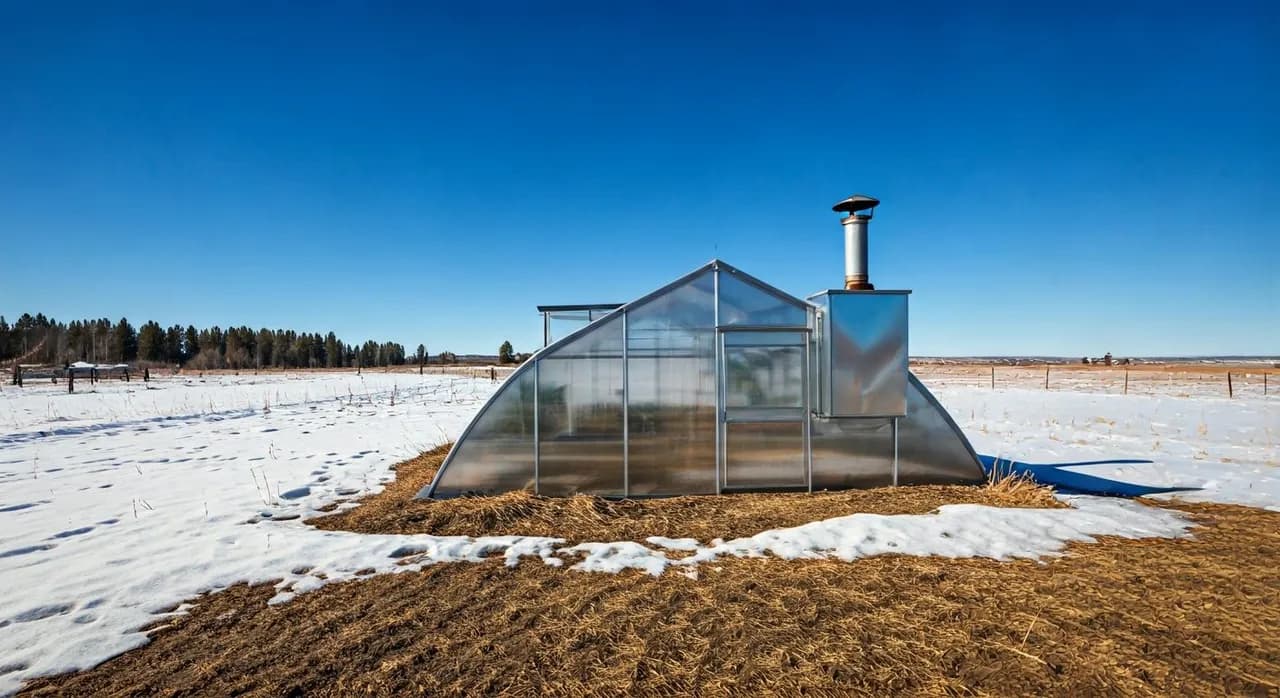
Passive ventilation relies on natural phenomena like the stack effect and wind pressure to move air without electricity, making it ideal for off-grid homesteads in places like rural Oregon. The stack effect, or thermal chimney, is particularly effective in underground greenhouses. It works on the principle that warm air rises. By creating a tall, dark-colored chimney on the north side of the greenhouse, and low air inlets on the south side, warmer, humid air from inside the structure rises and exits through the chimney, drawing in cooler, drier air from below. A chimney that is 15 feet tall and 18 inches in diameter can move over 100 cubic feet per minute (CFM) of air on a sunny day, even with a modest 10°F temperature differential between inside and outside air [5]. This can provide one air change every 20-30 minutes in a small 100 square foot greenhouse.
Reduce temperature extremes
Earth tubes, or ground-to-air heat exchangers, are another passive method that can both ventilate and pre-condition incoming air. These systems involve burying long runs of 6-inch or 8-inch diameter pipe, typically 50 to 100 feet long, at a depth of 6 to 10 feet. As fresh air is drawn through these pipes, it exchanges heat with the surrounding earth, warming it in winter by 5-10°F and cooling it in summer by a similar amount. This helps to reduce temperature extremes and lower the humidity of incoming air, especially in humid climates like the southeastern US, where summer humidity can reach 90%. Proper sizing is critical; a 200 square foot greenhouse might require one or two 8-inch diameter earth tubes for effective air exchange, providing 50-75 CFM each. For more on passive solar design, see our article on four-season greenhouse design.
Designing an effective passive system requires careful planning to ensure sufficient airflow. Inlet vents should be positioned low on the south wall, ideally covering 1-2% of the greenhouse’s floor area, so a 200 square foot greenhouse needs 2-4 square feet of inlet area. The exhaust chimney should be at least 10 feet taller than the inlets to maximize the stack effect. Using materials like black corrugated drain pipe for chimneys can absorb more solar radiation, increasing the temperature differential by an additional 2-3°F. This can boost airflow by 15-20% on a sunny day, making a significant difference in humidity control when outside temperatures are mild.
- Location and orientation: Optimize for prevailing winds and sun path, especially in regions with consistent wind patterns like the Great Plains.
- Inlet and outlet sizing: Ensure adequate cross-sectional area for airflow, often 1-2% of floor area, for example, two 12-inch by 12-inch inlets for a 144 square foot space.
- Insect screening: Use fine mesh (50-count) on all openings to prevent pests like whiteflies and aphids from entering.
- Adjustable dampers: Allow manual control over airflow rates to adapt to changing weather conditions, such as a sudden drop of 15°F in temperature.
- Material selection: Durable, non-toxic materials for earth tubes, like HDPE pipe, are preferred for longevity, often lasting 50 years or more.
Powering air movement with off-grid solutions
While passive methods are foundational, active ventilation provides precise control over airflow and humidity, especially during periods of low wind or insufficient temperature differentials, common in sheltered valleys in Appalachia. This typically involves exhaust fans and intake vents, often powered by off-grid solar systems. For a 200 square foot underground greenhouse in a humid climate, an exhaust fan can be used for humidity control. These fans can be wired to a thermostat or humidistat for automatic operation, kicking on when temperatures exceed 75°F or humidity surpasses 70%, thus preventing condensation and disease.
Putting it into practice
Powering these fans off-grid requires a reliable solar setup. A 200-watt solar panel array, paired with a 100 amp-hour deep-cycle battery and a charge controller, can easily run a 50-watt exhaust fan for 8-10 hours a day, even with several days of cloudy weather in the Pacific Northwest. This setup can cost between $600 and $1,200 for quality components. For more details on sizing your system, consult our guide on solar panels for off-grid living or off-grid and hybrid solar systems. Jet fans, commonly used in underground mines for powerful air movement, offer sturdy options for larger underground greenhouses, capable of moving thousands of CFM, although they consume significantly more power, perhaps 500 watts or more [4].
Choosing the right fan involves calculating your greenhouse volume. For a 10 ft by 20 ft greenhouse with an 8 ft ceiling, the volume is 1,600 cubic feet. To achieve one air change per minute, you need a fan rated for 1,600 CFM. However, for humidity control, 1.5 to 2 air changes per minute (2,400-3,200 CFM) is often recommended, especially for crops like tomatoes or cucumbers that transpire heavily. Consider a variable speed fan, which can adjust its output from 500 CFM to 2,500 CFM, allowing for nuanced control and energy savings of up to 30% during less demanding periods.
- Fan sizing: Calculate the cubic feet of your greenhouse and aim for 1-2 air changes per minute, for example, a 1600 CFM fan for a 1600 cubic foot space.
- Intake location: Position intake vents opposite exhaust fans for optimal cross-ventilation so air travels across the entire 10-20 foot width.
- Thermostat/humidistat: Automate fan operation based on temperature (e.g., 75°F) or humidity (e.g., 70%), with a typical accuracy of ±2°F or ±5% RH.
- Backup power: Consider a small generator (e.g., 1000-watt inverter generator) or larger battery bank (e.g., 200 amp-hour) for extended cloudy periods, especially in winter months in northern states.
- Fan type: Choose durable, moisture-resistant fans designed for continuous operation in humid environments, often rated IP55 or higher for water resistance.
Strategies for a dry and healthy growing environment
Condensation forms when warm, moist air comes into contact with a cooler surface, causing the water vapor to turn back into liquid. In an underground greenhouse, this often occurs on the roof, walls, and even plant leaves, leading to water dripping and potential fungal outbreaks like botrytis, which can destroy a significant portion of a crop in a week. The primary strategy for control is to reduce the relative humidity of the air and ensure surfaces are not significantly colder than the air. Insulating the interior surfaces, particularly the ceiling, can raise their temperature above the dew point. For instance, applying a 1-inch layer of rigid foam insulation (R-5 to R-6 value) to the inside of a concrete roof can significantly reduce condensation by keeping the surface 5-10°F warmer than an uninsulated surface. This is especially important in regions like the Northeast, where winter humidity can be high.
Careful watering practices
Beyond insulation, consistent air circulation is vital. Even with good ventilation, localized air movement around plants and surfaces prevents cold spots and stagnant, humid air. Small, low-wattage circulation fans, perhaps powered by a dedicated 50-watt solar panel, can move air at 50 CFM, preventing moisture from settling on leaves and stems, which can lead to disease. Also, careful watering practices are essential; watering plants in the morning allows excess moisture to transpire and be vented out during the day, rather than accumulating overnight when temperatures drop. Avoiding overwatering, especially in cooler temperatures below 60°F, reduces the amount of moisture released into the air by 10-20% [5].
Another effective method involves managing the temperature differential between the air and surfaces. If the air temperature is 70°F and the surface temperature is 55°F, condensation is highly likely at 70% relative humidity. By increasing the surface temperature by just 5°F through insulation or by slightly warming the air, you can prevent condensation. This is why a small amount of supplemental heat, perhaps from a 100-watt radiant heater, can be more effective at preventing condensation than simply running a fan, especially on cold nights in areas like the Rocky Mountains. Proper spacing of plants, allowing 6-12 inches between mature plants, also significantly improves air circulation and reduces localized humidity.
- Surface insulation: Use rigid foam (e.g., XPS or polyiso with R-values of 5-6 per inch) or bubble wrap on interior surfaces to raise their temperature by 5-10°F.
- Air circulation: Employ small fans (e.g., 50 CFM oscillating fans) to move air around plants and prevent cold spots, covering a 100-200 square foot area.
- Strategic watering: Water in the morning to allow for daytime evaporation and venting, reducing overnight humidity by 10-15%.
- Plant spacing: Ensure adequate space between plants (e.g., 6-12 inches for tomatoes) for air to flow freely, preventing localized humidity pockets.
- Drainage: Install proper drainage systems for any condensation that does occur, preventing puddles that can harbor pathogens and raising humidity by 5%.
Smart tools for a balanced underground ecosystem
To truly optimize an underground greenhouse, especially for specific crops or in challenging climates like the Pacific Northwest with its high rainfall, continuous monitoring and automation are invaluable. Simple digital hygrometers and thermometers, costing around $15-$30, provide real-time data on temperature and relative humidity. Placing several sensors at different heights (e.g., one foot, four feet, seven feet) and locations within the greenhouse can reveal temperature stratification or humidity pockets, helping you fine-tune your ventilation strategy. For example, if the humidity near the floor consistently reads 85% while the ceiling is 65%, you know you need more low-level air circulation, potentially increasing fan speed by 20%.
Advanced growers might consider a mechatronic ventilation system, which integrates sensors, microcontrollers, and actuators for fully automatic climate control [1]. These systems can be programmed to open and close vents, activate fans, or even adjust heating elements based on precise set points, such as maintaining 70°F and 65% relative humidity. For an off-grid setup, a low-power microcontroller (drawing less than one watt) can manage multiple sensors and control relays for fans and vents. Such a system, costing between $200 and $500 for components, can maintain ideal conditions, which can help plants thrive and may increase yields compared to manual adjustments, especially for high-value crops.
Automated controls can cut daily greenhouse chores from several hours down to less than 30 minutes. For instance, automatic vent openers, often solar-powered, can open vents when temperatures exceed 75°F and close them when they drop below 60°F, preventing heat loss. Data logging features, common in systems costing $100-$300, allow you to review environmental conditions over weeks or months, identifying patterns and optimizing settings for different seasons or crop cycles. This data-driven approach can lead to a reduction in energy use by preventing unnecessary fan operation.
- Digital hygrometers/thermometers: Affordable sensors for real-time data, with an accuracy of ±2% RH and ±1°F.
- Smart controllers: Microcontrollers (e.g., Arduino, Raspberry Pi) for automated fan/vent control, typically consuming less than five watts.
- Vent actuators: Solar-powered automatic vent openers that respond to temperature changes, lifting up to 15 pounds and opening vents by 12-18 inches.
- Data logging: Systems that record environmental data over time (e.g., every 15 minutes) to identify trends and optimize settings.
- Remote monitoring: Wi-Fi or cellular-enabled sensors that send data to your phone, allowing you to check conditions from 50 miles away and adjust settings remotely.
Passive vs. Active Ventilation in Underground Greenhouses
Feature | Passive Ventilation | Active Ventilation |
|---|---|---|
Energy Use | Zero electricity, relies on natural forces | Requires electricity, typically 50-200 watts for fans |
Control Level | Limited, dependent on external conditions | Precise, automated with sensors and timers |
Installation Cost | Lower, primarily materials for chimneys/earth tubes (e.g., $200-$500) | Higher, includes fans, solar panels, batteries, controllers (e.g., $500-$1500) |
Maintenance | Minimal, occasional cleaning of vents and screens | Regular checks of electrical components, fan motors, and batteries |
Effectiveness | Good for general air exchange and temperature moderation | Superior for humidity control, CO2 management, and specific temperature targets |
Best For | Small to medium greenhouses in mild climates | Larger greenhouses, challenging climates (e.g., high humidity), or specific crop needs |
Stable Temperatures: Underground greenhouses maintain soil temperatures between 45°F and 60°F at 10 feet deep, even in USDA zone 6 winters.
Air Changes: A 200 square foot underground greenhouse benefits from 1-2 air changes per minute for optimal humidity control.
Solar Power: A 200-watt solar panel array can power a 50-watt exhaust fan for 8-10 hours daily.
References
- DEVELOPMENT OF A MECHATRONIC GREENHOUSE VENTILATION SYSTEM WITH BUILT-IN AIR HEATING FOR AUTOMATIC TEMPERATURE CONTROL (2025).
- Fugitive greenhouse gas emissions in ventilation air from Australian underground coal mines (2012).
- CO2 underground sequestration and greenhouse gases mitigation in Japan (2005).
- New applications of jet fans in underground mines for haulage ramps and block cave ventilation control (2023).
- Optimization of Greenhouse Ventilation for Humidity Control and Energy Conservation (1987).
- USDA Natural Resources Conservation Service (2024).