Key takeaways
- Proper draft management, including chimney height and diameter, ensures complete combustion and minimizes creosote in rocket stoves.
- Using dry wood with less than 20% moisture content significantly reduces creosote formation and improves stove efficiency.
- Regular cleaning of the chimney and heat riser, typically every 30-60 days during heavy use, prevents dangerous creosote accumulation.
- Maintaining high combustion temperatures, often above 1,100°F (593°C), is key to burning off volatile gases before they condense as creosote.
- Essential safety measures include 18-inch clearances from combustibles, carbon monoxide detectors, and readily available fire extinguishers.
- Rocket stoves designed with both rocket and top-lit updraft (TLUD) principles can achieve high thermal efficiencies.
Quick answer: To manage rocket stove draft and creosote for safe, efficient heating, ensure proper chimney design, use dry wood, maintain high combustion temperatures, and perform regular cleaning. These practices prevent dangerous creosote buildup and maximize thermal efficiency.
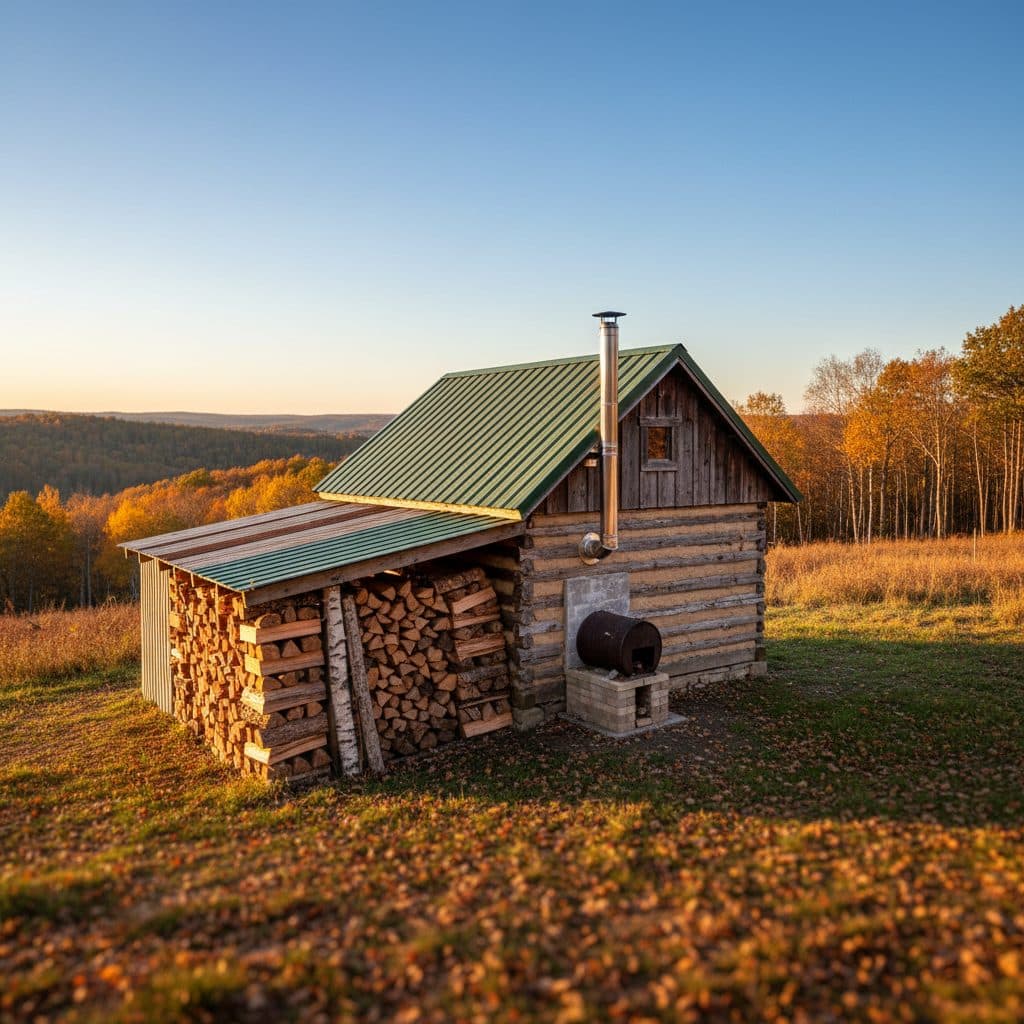
In northern Michigan, where winter temperatures can drop to -20°F (-29°C) for weeks, reliable heating is an absolute necessity. A rocket stove offers high thermal efficiency and reduced fuel consumption compared to traditional wood stoves, but operating it safely requires managing draft and preventing creosote accumulation. Unchecked creosote buildup or weak chimney draw creates smoke backup and chimney fire hazards.
Rocket stoves can achieve thermal efficiencies exceeding 60%, significantly outperforming open fires and simple box stoves [1]. This efficiency comes from burning volatile wood gases at temperatures above 1,100°F (593°C) inside an insulated combustion core. Maintaining safe operation for primary space heating in USDA zone 5 requires dry fuel, correct flue sizing, and regular chimney maintenance.
Understanding the rocket stove principle for efficient combustion
A rocket stove relies on an insulated L-tube or J-tube configuration to maintain high core combustion temperatures. Incoming air feeds burning wood at the base of the fuel feed, drawing flame and smoke horizontally into an insulated vertical heat riser where temperatures exceed 1,100°F (593°C). At this temperature, wood coals and volatile pyrolysis gases burn completely before entering exhaust runs. Combining rocket stove layout with top-lit updraft (TLUD) principles increases overall thermal efficiency [1].
The role of primary and secondary air
Effective combustion in a rocket stove relies on a precise balance of primary and secondary air. Primary air is drawn in at the bottom of the fuel magazine, feeding the initial combustion of the solid wood. As the gases rise into the combustion chamber, secondary air is introduced, often through carefully placed vents, to ensure that all volatile compounds are fully oxidized. This dual air supply is critical for achieving a clean burn and preventing creosote formation, which can occur when these gases cool before complete combustion. Maintaining an optimal air-to-fuel ratio, sometimes as high as 30:1, is key to maximizing efficiency and reducing emissions [1].
- Fuel magazine: Holds wood vertically, feeding it into the combustion chamber.
- Combustion chamber: Where primary burning and gasification occur at high temperatures.
- Heat riser: Insulated vertical tube that maintains high temperatures for complete gas combustion.
- Heat exchanger: Transfers heat to cooking surfaces or thermal mass.
- Chimney/flue: Vents exhaust gases safely outdoors.
Mastering draft for clean combustion
Proper draft is the engine of a rocket stove, pulling fresh air into the combustion chamber and expelling exhaust gases. Without adequate draft, a stove will smoke, burn inefficiently, and rapidly accumulate creosote. The height and diameter of your chimney are primary factors influencing draft. For most homestead-scale rocket stoves, a minimum chimney height of 10 feet above the stove top, extending at least 2 feet above the highest point of the roof within 10 feet horizontally, is a good starting point. A 6-inch diameter flue is common, providing sufficient volume for exhaust gases from a typical rocket stove burning 1-2 pounds of wood per hour.
Optimizing chimney design and placement
Beyond basic dimensions, chimney design and placement significantly impact draft. Straight, vertical runs are best, as every elbow or horizontal section reduces draft by creating turbulence and cooling the gases. Insulating the chimney, especially for exterior runs in colder climates like USDA zone 4, helps keep exhaust gases hot, maintaining their buoyancy and thus, the draft. A well-insulated chimney can maintain flue gas temperatures above 250°F (121°C) at the exit, which is critical for preventing condensation and creosote formation. For those integrating solar power into their off-grid setup, understanding how various systems interact, from heating to solar panels for off-grid living, is key to a self-sufficient homestead.
- Chimney height: At least 10 feet above the stove, 2 feet above roof peak.
- Diameter: Typically 6 inches for residential rocket stoves.
- Insulation: Essential for exterior runs to maintain flue gas temperature.
- Straight runs: Minimize elbows and horizontal sections for optimal draft.
- Cap: Prevents rain and wildlife entry, but should not restrict airflow.
Preventing creosote buildup
Creosote is a highly flammable byproduct of incomplete wood combustion, and its accumulation in a chimney poses a significant fire risk. It forms when unburned volatile gases cool and condense on cooler surfaces within the flue. There are three main types: flaky, tarry, and glazed. Glazed creosote, which is hard and shiny, is the most dangerous and difficult to remove, often forming when flue temperatures drop below 250°F (121°C). Preventing creosote is far easier and safer than removing it, and it starts with proper fuel management and high combustion temperatures.
Fuel quality and combustion temperature
The single most important factor in preventing creosote is using dry, seasoned wood with a moisture content of 20% or less. Wet wood burns at lower temperatures, producing more smoke and unburned gases, which readily condense into creosote. The USDA Natural Resources Conservation Service stresses the importance of proper wood seasoning for efficient burning [5]. Also, maintaining high combustion temperatures within the rocket stove, ideally above 1,100°F (593°C), ensures that these volatile gases are fully consumed before they can escape into the flue. A well-designed rocket stove, like those incorporating both rocket and TLUD principles, is engineered to achieve and sustain these high temperatures, reducing creosote formation significantly compared to open fires.
- Dry wood: Moisture content below 20% is ideal for clean burning.
- High temperatures: Maintain combustion above 1,100°F (593°C) in the heat riser.
- Proper draft: Ensures sufficient oxygen for complete combustion.
- Insulated flue: Keeps exhaust gases hot, preventing condensation.
- Avoid smoldering: Do not restrict airflow to ‘slow burn’ the stove.
Essential safety measures and installation
Operating any wood-burning appliance, including a rocket stove, demands strict adherence to safety protocols to prevent fires and carbon monoxide poisoning. This is especially true for off-grid installations where professional inspections might be less frequent. A critical first step is ensuring adequate clearances to combustible materials. For most solid fuel appliances, a minimum of 18 inches of clearance from walls, ceilings, and other flammable surfaces is recommended, though specific stove designs might allow for reduced clearances with proper shielding. Always consult your stove’s manufacturer specifications or local building codes, which might require even greater distances,
Carbon monoxide detection and fire suppression
Beyond physical clearances, install battery-backed carbon monoxide detectors on every living level and near sleeping quarters. Carbon monoxide (CO) is an odorless, colorless byproduct of incomplete combustion. Keep an ABC-rated fire extinguisher within 10 feet of the stove installation. Inspect the stove body and flue joints every 30 days during the heating season for cracks, warped seals, or fly-ash accumulation.
- Clearances: Maintain 18 inches (or more) from all combustible materials.
- Floor protection: Install a non-combustible hearth extending 18 inches in front and 8 inches to the sides and rear.
- CO detectors: Install on every level and near sleeping areas.
- Fire extinguisher: Keep an ABC-rated extinguisher within 10 feet of the stove.
- Smoke detectors: Essential for early fire warning, especially with any wood-burning appliance.
Maintenance and long-term operation
Consistent maintenance is the cornerstone of safe and efficient rocket stove operation. Neglecting routine cleaning and inspection can lead to reduced performance, increased creosote buildup, and ultimately, a higher risk of chimney fires. During periods of heavy use, such as the coldest months in USDA zone 6, a chimney inspection and cleaning should occur every 30 to 60 days. This frequency might be reduced to quarterly or even annually for stoves used less often or in warmer climates. The goal is to remove any creosote accumulation before it reaches a thickness of 1/4 inch, which is considered a dangerous threshold.
Cleaning procedures and material considerations
Clean the chimney and heat riser with a wire or poly brush sized to the flue (such as a 6-inch brush for a 6-inch pipe). Access points, including removable elbow caps and sealed soot-cleanout tees, allow scraping without dismantling the entire pipe run. Continuous-burn stoves with movable combustion assemblies require scheduled cleanings to maintain full intake draw [2]. Stainless steel flues resist creosote adhesion and corrosion better than galvanized pipe, lasting over 15 years with proper maintenance.
- Chimney brush: Use one sized correctly for your flue, typically 6 inches.
- Clean-out access: Ensure easy access points for cleaning the flue and heat riser.
- Protective gear: Wear a respirator, gloves, and eye protection during cleaning.
- Ash removal: Empty the ash pit regularly so ashes are cold before disposal.
- Seal integrity: Check gaskets and seals around doors and connections for leaks annually.
Choosing the right fuel and stove design
Fuel quality directly governs heat output and flue safety. While rocket stoves burn small-diameter branches and scrap wood, fuel moisture must remain low. Hardwoods such as oak, maple, and hickory in the eastern US provide dense heat value per cord, burning longer and hotter than softwoods. Wood should season six to 18 months until internal moisture drops below 20%. Burning wet wood drops core firebox temperatures and rapidly deposits heavy creosote.
Multi-fuel capability and design considerations
Some modified rocket designs burn agricultural waste, dense wood pellets, or charcoal alongside stick wood [3]. Dense insulation around the combustion core and heat riser—using dry perlite or vermiculite mixed with clay—keeps heat concentrated inside the core rather than radiating out early. A well-insulated heat riser maintains internal temperatures above 1,200°F (649°C), consuming volatile wood smoke before exhaust gases enter thermal mass benches or chimneys.
- Hardwoods: Offer higher BTU content and longer, hotter burns.
- Seasoned wood: Requires moisture content below 20%.
- Insulated designs: Improve combustion efficiency and reduce creosote.
- Multi-fuel options: Provide flexibility for diverse biomass sources.
- Heat riser diameter: A 6-inch diameter is common for good performance.
Comparison of rocket stove vs. traditional wood stove performance
Feature | Rocket stove | Traditional wood stove |
|---|---|---|
Thermal efficiency | 60-80% (with heat exchanger) [1] | 40-60% (older models often lower) |
Fuel consumption | Low (burns small diameter wood, 1-2 lbs/hour) | Moderate to high (requires larger logs, 3-5 lbs/hour) |
Combustion temperature | High (1,100-1,200°F / 593-649°C) | Moderate (500-800°F / 260-427°C) |
Creosote production | Low (due to complete combustion) | Moderate to high (especially with wet wood or poor draft) |
Smoke output | Very low (clean burn) | Moderate to high (visible smoke) |
Heat output range | Typically 5,000-20,000 BTU/hr | Typically 20,000-80,000 BTU/hr |
Fuel Moisture: Using wood with over 30% moisture content can reduce heat output by 25% and increase creosote production by 300%.
Chimney Clearance: Maintain a minimum of 18 inches clearance from combustible materials around your rocket stove and flue pipe.
Combustion Temperature: Optimal rocket stove combustion occurs at temperatures above 1,100°F (593°C) for minimal creosote formation [1].
Cleaning Frequency: During heavy use, inspect and clean your rocket stove chimney every 30-60 days to prevent creosote buildup over 1/4 inch thick.
References
- Synergistic Integration of Top-lit Up Draft and Rocket Principles in a Novel Biomass Cook Stove for Enhanced Thermal Efficiency.
- Improved Biomass Cook Stove with a Movable Combustion Chamber that Incorporates Top-lit Up Draft and Rocket Principles for Continuous Operation.
- Design And Fabrication of Multi- Fuel Biomass Cook Stove That Works on Both Rocket and Top-Lit Up Draft Gasification Principles.
- Design and Performance Evaluation of Rocket Stove for Cleaner Cooking in Rural Ethiopia (2020).
- USDA Natural Resources Conservation Service.