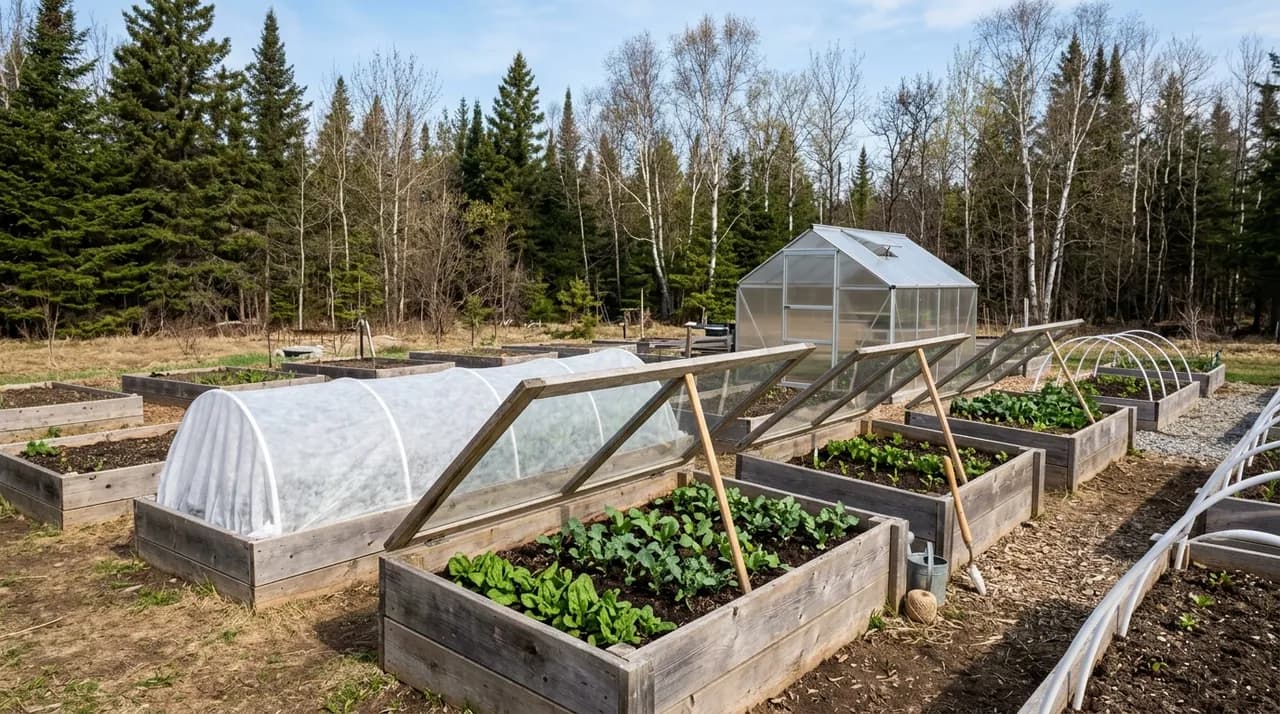
Cultivating vegetable crops across much of Canada requires adapting to a sharply defined, compressed summer season. With late frosts lingering into late May or early June and early autumn freezes threatening by September, relying exclusively on open-ground planting severely limits the range and productivity of home kitchen gardens. Season extension structures (ranging from simple fabric row covers to rigid timber cold frames and unheated high tunnels) enable northern growers to harvest fresh greens earlier in spring and protect fruiting crops well into autumn.
To discover more regional strategies and seasonal growing calendars tailored to northern climates, visit the Canadian growing hub.
The three core season-extension methods
Passive season-extension relies on capturing solar energy during daylight hours, cutting convective heat loss from Arctic winds, and creating a buffered microclimate around plant foliage and root zones. Three practical structures form the backbone of Canadian cold-climate cultivation:
1. Cold frames: low-profile heat sinks
A cold frame is a bottomless wooden, masonry, or straw-bale box with a sloped transparent lid made of glass sashes or twin-wall polycarbonate, oriented toward the southern sun:
- Thermal function: The heavy solid walls protect low-growing plants from chilling winds, while the sloped glazing traps solar thermal radiation, warming the enclosed soil several weeks before surrounding garden beds thaw.
- Practical role: Cold frames excel as intermediate transit zones for hardening off greenhouse seedlings before outdoor transplanting. They also work as dedicated micro-beds for overwintering hardy spinach, corn salad, and winter lettuces that resume growth as soon as late-winter sunlight strengthens.
- Ventilation management: Because enclosed air volumes are small, temperatures inside a closed cold frame can spike rapidly on bright, sunny spring afternoons. Manually propping lids open or installing heat-activated automatic vent openers is essential to prevent heat scorch.
2. Floating row covers and low tunnels
Floating row covers are lightweight, spunbond polypropylene fabrics draped directly over plants or supported by flexible wire or conduit hoops:
- Thermal function: Spunbond fabric allows rainfall, air, and the majority of ambient sunlight to pass through while trapping long-wave thermal radiation radiating from the soil at night. A standard garden fleece buffers temperatures against sudden late-spring frost dips.
- Practical role: Low tunnels are quick to erect over standard garden beds, providing immediate shelter for early direct-seeded root crops, peas, and brassica transplants. In addition to frost buffering, row covers form a physical barrier against early-season insect pests, such as flea beetles and cabbage root fly.
- Structural limitations: During heavy late-spring snowfalls, unsupported floating covers can be crushed against tender seedlings. Using sturdy wire hoops prevents snow loads from flattening foliage.
3. High tunnels and hoop houses
High tunnels are walk-in structures constructed from bent steel or heavy PVC ribs covered with UV-stabilized greenhouse polyethylene sheeting:
- Thermal function: Unlike small frames, high tunnels encompass a substantial volume of air and large expanses of soil. The internal soil mass acts as a thermal ballast, absorbing heat during long summer days and slowly releasing warmth overnight.
- Practical role: High tunnels protect heat-demanding crops from cold driving rain, high winds, and hail. By keeping foliage dry, they significantly reduce the incidence of rain-spread fungal diseases such as tomato late blight. In the Canadian climate, an unheated high tunnel buys several additional weeks of growing conditions in both spring and autumn, turning marginal fruiting crops into dependable producers.
To coordinate structure preparation with early seedling schedules, consult our detailed guide on when to start seeds indoors in Canada.
Crop strategy: extension vs variety selection
A frequent error in short-season gardening is assuming that every slow-maturing vegetable can be forced to maturity simply by erecting a plastic cover. Understanding which crops genuinely benefit from physical protection versus which are better addressed through cultivar selection is essential:
Crops that benefit most from season extension
- Heat-demanding Solanaceae: Indeterminate tomatoes, sweet bell peppers, and eggplants require prolonged thermal accumulation (accumulated growing degree days) to set and ripen fruit. In zones 2 through 4, growing these species inside a high tunnel or beneath protected covers provides the extra degree hours necessary for full fruit color and sugar development.
- Hardy winter greens: Spinach, mache, winter claytonia, kale, and Asian greens tolerate sub-zero night temperatures as long as they are sheltered from wind and repeated snow-thaw cycles. An unheated cold frame or low tunnel allows homesteaders to harvest fresh salad greens through November and December.
- Early spring root crops: Sowing radishes, spring turnips, and early carrots beneath low tunnels in April produces harvests well before open-field ground can even be raked.
When to choose fast-maturing varieties instead
Physical season extension requires materials, monitoring, and daily ventilation. For many staple vegetables, selecting short-season cultivars bred specifically for northern conditions is more reliable and labor-efficient than building complex protective structures:
- Determinate and dwarf tomatoes: Instead of protecting sprawling late-season beefsteak vines from autumn frosts, northern gardeners achieve dependable yields by choosing early-maturing determinate varieties (such as Glacier, Sub-Arctic Plenty, or Stupice) that set and ripen fruit rapidly in short northern summers. Our guide on the best tomatoes to grow in Canada details cultivars that succeed in brief northern summers.
- Bush squashes and early sweetcorn: Long-vining winter squashes needing over one hundred frost-free days frequently suffer from late-season frost bite on immature fruit. Compact bush varieties with early maturity ratings are more likely to fully cure fruit on the vine without protective covers.
- Dry beans and storage grains: Large-scale staple crops are impractical to cover at homestead scale. Regional heritage seeds selected for cold soil emergence and rapid flowering can improve harvest odds without plastic infrastructure.
Operational tips for cold-climate structures
Operating season-extension structures in northern environments presents unique physical demands that differ from temperate climates:
- Manage snow shedding: Hoop house and high tunnel roof pitch must be steep enough to shed heavy, wet spring snow. Structures with shallow roof angles risk catastrophic frame collapse under sudden late-season blizzards.
- Incorporate thermal mass: Placing dark containers filled with water along the north interior wall of a cold frame or high tunnel absorbs excess solar heat during midday and radiates heat back into the canopy overnight, dampening temperature swings.
- Anchor firmly against gales: Northern spring cold fronts generate severe wind gusts. Secure polyethylene covers with ground earth anchors, battens, or deeply buried trenching to prevent high winds from tearing films away from the frame.
Combining unheated covers with cold-adapted varieties allows Canadian gardeners to extend harvests earlier in spring and later into autumn.