Key takeaways
- Shade netting reduces water usage by 20-30% for fruit trees in hot, arid climates.
- Netting protects fruit from sunburn, cracking, and pest damage, increasing marketable yield by up to 50%.
- Selecting the correct shade percentage (typically 30-50%) allows sufficient photosynthesis while supporting fruit development.
- Proper installation requires durable poles, tensioning, and secure anchoring to withstand desert winds up to 60 mph.
- Netting improves fruit quality, extending harvest windows and reducing heat stress on trees in temperatures over 100°F.
- Consider white or light-colored netting to reflect more heat and reduce under-netting temperatures by 10-15°F.
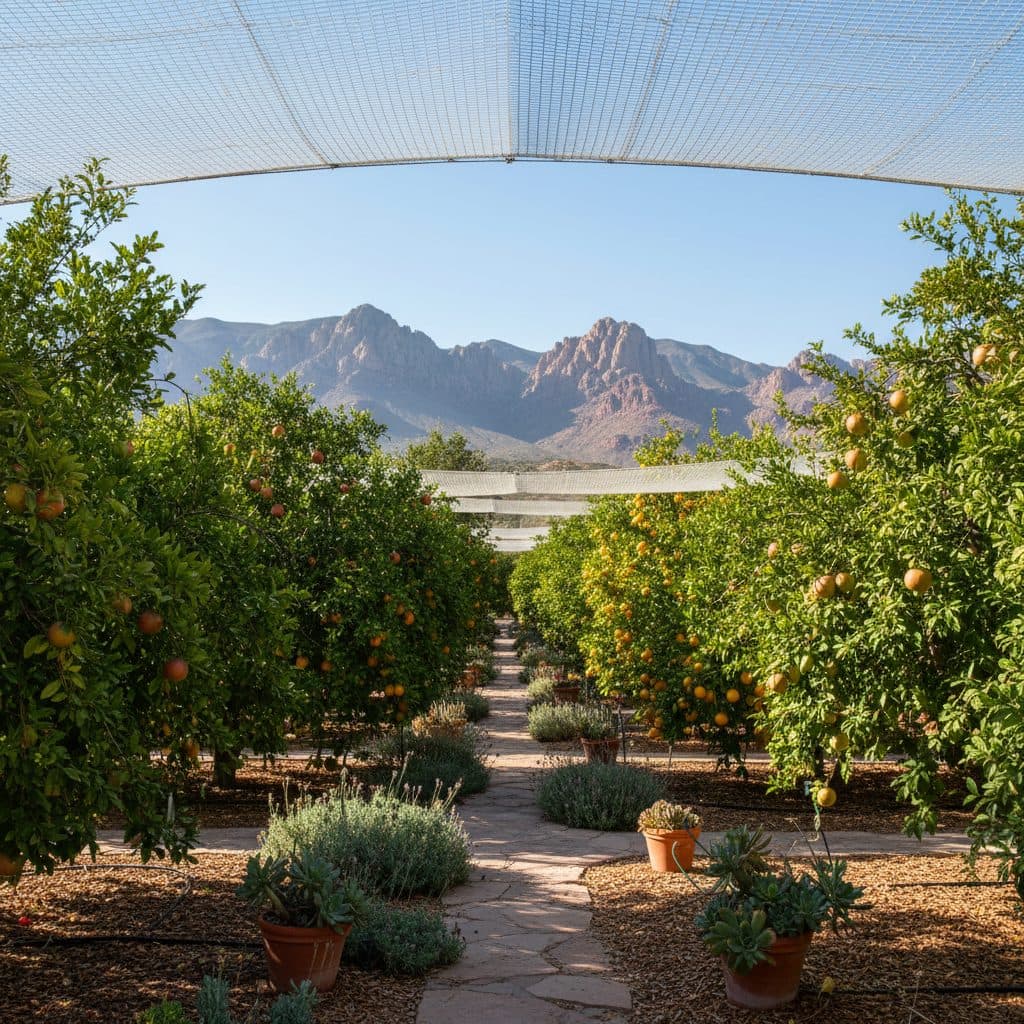
Quick answer: Shade netting protects fruit trees in hot, arid climates by reducing water needs by 20-30%, preventing sunburn, and lowering under-netting temperatures by 10-15°F. This creates a more favorable microclimate, improving fruit quality and yield.
In the extreme heat of the desert Southwest, where summer temperatures frequently exceed 100°F, protecting backyard fruit trees is a significant challenge for growers. Regions like Phoenix, Arizona, and Palm Springs, California, in USDA zones 9b and 10a, regularly experience long stretches of days above 110°F, with some days reaching 120°F. These conditions can severely stress fruit trees, leading to reduced yields, sunburned fruit, and even tree death if not managed properly. Historically, fruit trees have been a staple in US gardens for over one hundred years, with catalogs dating back to 1920 showcasing a wide variety of options for home growers [5].
For growers in these arid environments, shade netting offers a practical and effective solution to mitigate the harsh effects of intense sun and high temperatures. This approach can reduce the need for irrigation by 20-30%, conserve soil moisture, and create a more favorable microclimate for fruit development. With the right netting material, proper installation, and regular maintenance, growers can keep fruit trees productive in desert conditions.
The desert challenge for fruit trees
Growing fruit trees in the desert Southwest presents a unique set of obstacles that can severely impact plant health and fruit production. The primary concerns revolve around extreme heat, intense solar radiation, and water scarcity. In areas like Tucson, Arizona, and Las Vegas, Nevada, summer temperatures routinely climb above 105°F for weeks at a time, with some years seeing more than one hundred days over 100°F. This relentless heat can cause fruit to sunburn, foliage to scorch, and sap flow to slow, leading to overall tree stress. Young trees, especially those under three years old, are particularly vulnerable to these conditions, often struggling to establish a robust root system in the dry, often poor-quality desert soils [6].
Understanding heat stress impacts
Beyond the direct heat, the desert environment also features very low humidity, often below 10%, which exacerbates water loss through evapotranspiration. While some drought-tolerant varieties exist, most common fruit trees (such as citrus, peaches, and apples) require consistent moisture to produce quality fruit. The average annual rainfall in many desert regions is less than 10 inches, making supplemental irrigation essential. Without protection, this combination of high temperatures, intense sun, and limited water can lead to significant crop loss, sometimes as high as 70% in unprotected orchards during peak summer months. Growers must actively manage these factors to ensure their trees remain productive and healthy for many years, as nurseries have been providing fruit and nut trees for Western growers since at least 1939 [2].
- leaf scorch and wilting
- fruit sunburn and cracking
- reduced photosynthesis rates
- decreased fruit size and sugar content
- increased susceptibility to pests and diseases
Choosing the right shade netting
Selecting the appropriate shade netting is a critical step in protecting fruit trees from the desert’s harsh climate. The most important factor is the shade percentage, which typically ranges from 30% to 50% for fruit trees. A 30% shade net is often suitable for areas with intense but not extreme heat, allowing sufficient light for photosynthesis while reducing sunburn. For regions consistently exceeding 110°F, a 40% or 50% shade net might be more appropriate, offering greater protection. Too much shade, however, can reduce fruit sugar content and overall yield, so a balance is key. Studies suggest that white or light-colored netting can reduce under-netting temperatures by an additional 10-15°F compared to black netting, due to better reflection of solar radiation.
Netting materials and durability
The material and construction of the netting also play a significant role in its effectiveness and longevity. Most shade nets are made from high-density polyethylene (HDPE) that is UV-stabilized to withstand years of sun exposure without degrading. A good quality net should have a lifespan of at least six to eight years, even under direct desert sun. Knitted nets resist unraveling better than woven nets if punctured and allow better airflow. Mesh size is another consideration; while most shade nets have a fine enough mesh to deter larger pests, some specialized nets offer tighter weaves for insect exclusion. Greenhouse climate control resources discuss similar principles for managing airflow and light.
- 30-50% shade percentage for most fruit trees
- white or light-colored netting for extra cooling
- UV-stabilized high-density polyethylene (HDPE)
- knitted construction for durability
- mesh size appropriate for pest exclusion
Installation and maintenance for longevity
Proper installation of shade netting is paramount to its effectiveness and longevity, especially in the desert Southwest where winds can be significant. A robust support structure is essential, typically consisting of sturdy poles (such as galvanized steel or heavy-duty wood) set 8-10 feet apart and anchored at least 18 inches deep in concrete or with earth anchors. The height of the structure should allow for at least 3-4 feet of clearance above the mature canopy of your fruit trees, preventing the netting from rubbing against leaves or fruit. This clearance also ensures good air circulation, which helps prevent humidity buildup and fungal issues under the net. In areas prone to high winds, like those experiencing gusts up to 60 mph during monsoon season, additional bracing and tensioning cables are highly recommended to prevent the structure from collapsing.
Seasonal deployment and care
For many desert growers, shade netting is a seasonal deployment. It is typically installed in late spring, around April or May, when temperatures begin to consistently exceed 90°F, and removed in early fall, usually October or November, after the intense heat subsides. This allows trees to receive full sun during cooler months, which can be beneficial for fruit ripening and overall tree vigor. Regular inspection of the netting for tears or damage is important; minor repairs can extend the life of the net by several years. Before storing for the winter, clean the netting to remove dust and debris, then fold it neatly to prevent rodent damage. Checking the support system annually for loose connections or corroded parts maintains structural integrity over its six to eight year lifespan. For more details on tree care, see our guide on how to prune fruit trees.
- galvanized steel or heavy-duty wood poles
- anchors set 18 inches deep or more
- 3-4 feet clearance above tree canopy
- tensioning cables for wind resistance
- seasonal installation and removal
Beyond heat: additional benefits and considerations
While heat protection is the primary driver for shade netting in the desert Southwest, its benefits extend far beyond simply lowering temperatures. One significant advantage is pest exclusion. The physical barrier of the netting can deter a range of pests, from birds and rodents that might damage ripening fruit, to larger animals like fruit bats, which have been shown to cause significant damage to backyard lychee trees in other regions [3]. This can lead to a substantial increase in marketable yield, sometimes by as much as 50%, as fewer fruits are lost to predation. This physical barrier reduces the need for chemical pest treatments.
Water conservation and fruit quality
Shade netting also conserves water. By reducing direct solar radiation and wind exposure, shade netting significantly lowers evapotranspiration rates. This means fruit trees require 20-30% less irrigation water, a vital saving in arid regions where water resources are precious. The cooler, more stable microclimate under the net also positively impacts fruit quality. Fruits are less likely to suffer from sunburn, cracking, or premature drop. They often develop better color, more consistent sizing, and can even have improved sugar content by 10-15% due to reduced stress. This extended period of optimal conditions can also lengthen the harvest window by one to two weeks, allowing for more flexible picking times and potentially higher yields per tree, which is a key consideration for growers in USDA zone 9b and 10a.
- reduces bird and rodent damage
- deters larger fruit-eating pests
- decreases irrigation needs by 20-30%
- prevents fruit sunburn and cracking
- improves fruit color, size, and sugar content
Integrating netting with other resilient practices
Shade netting is a powerful tool, but its effectiveness is amplified when integrated with other climate-resilient growing practices. For desert fruit trees, soil moisture retention is paramount. Applying a 3-4 inch layer of organic mulch, such as wood chips or straw, around the base of trees helps to cool the soil, suppress weeds, and significantly reduce evaporation. This mulch layer can reduce soil moisture loss by up to 25%. Incorporating compost and other organic matter improves soil water-holding capacity by 10-15%, making irrigation more effective. The USDA Natural Resources Conservation Service emphasizes the importance of these practices for sustainable agriculture in arid regions [6].
Holistic tree care for desert success
Beyond soil management, selecting appropriate drought-tolerant varieties of fruit trees can further enhance resilience. While shade netting protects sensitive varieties, incorporating heat- and drought-tolerant species (such as certain fig, pomegranate, or jujube cultivars) diversifies the orchard. For more guidance on suitable plants, explore resources like drought-tolerant trees and shrubs by USDA zone. Proper irrigation techniques, such as drip systems that deliver water directly to the root zone, can achieve 90% water efficiency compared to less efficient sprinkler systems. Combining shade netting, mulch, compost, and drip irrigation protects fruit trees in USDA zones 9b and 10a and sustains annual fruit production.
- apply 3-4 inches of organic mulch
- incorporate compost for soil health
- select drought-tolerant fruit tree varieties
- utilize efficient drip irrigation systems
- monitor soil moisture regularly
Comparison of Shade Netting Percentages for Desert Fruit Trees
Shade Percentage | Recommended Use | Temperature Reduction (Approx.) | Light Transmission |
|---|---|---|---|
30% | Moderate sun, less extreme heat (e.g., coastal desert fringes, USDA zone 9a) | 5-8°F | 70% |
40% | General desert use, high sun intensity (e.g., Phoenix, Arizona, USDA zone 9b) | 8-12°F | 60% |
50% | Extreme heat, very high solar radiation (e.g., Palm Springs, California, USDA zone 10a) | 12-15°F | 50% |
Water Savings: Shade netting can reduce the irrigation needs of fruit trees by 20-30% in arid climates, saving thousands of gallons of water annually for a small orchard.
Yield Protection: Protecting fruit from sunburn and pests with netting can increase marketable yields by up to 50%, ensuring more fruit reaches harvest in good condition.
Temperature Mitigation: White shade netting can lower under-netting temperatures by 10-15°F compared to ambient desert temperatures exceeding 100°F.
Frequently asked questions
What shade percentage is best for desert fruit trees?
For most fruit trees in the desert Southwest, a 30-50% shade net is recommended. In regions with consistent temperatures above 105°F, a 40% or 50% net provides better protection, while still allowing enough light for fruit development.
How much water can shade netting save?
Shade netting can reduce the water requirements for fruit trees by 20-30% in arid environments. This is due to reduced direct sun exposure and lower rates of evapotranspiration from leaves and soil.
Does shade netting affect fruit quality?
Yes, shade netting can significantly improve fruit quality. It prevents sunburn, reduces cracking, and can lead to more consistent fruit size and potentially higher sugar content by 10-15%, especially in temperatures above 100°F.
How long does shade netting last in the desert?
High-quality, UV-stabilized HDPE shade netting can last for six to eight years or more in the desert sun. Proper installation and seasonal storage can extend its lifespan beyond this period.
Can shade netting protect against pests?
Yes, shade netting provides a physical barrier that can deter various pests, including birds, rodents, and even larger animals like fruit bats, which can cause significant damage to fruit crops [3].
References
- Very attractive prices on evergreens, boxwood, shrubs, shade and fruit trees, grape vines, roses, etc. : eight special collections at material discounts / (1928). Very attractive prices on evergreens, boxwood, shrubs, shade and fruit trees, grape vines, roses, etc. : eight special collections at material discounts /.
- Catalog of fruit, nut and shade trees, rose bushes : acclimated Western Oregon grown nursery stock … : nut and fruit trees, shade trees, berry bushes, grapes, (1939). Catalog of fruit, nut and shade trees, rose bushes : acclimated Western Oregon grown nursery stock … : nut and fruit trees, shade trees, berry bushes, grapes,.
- Quantifying the damage caused by fruit bats to backyard lychee trees in Mauritius and evaluating the benefits of protective netting (2019). Quantifying the damage caused by fruit bats to backyard lychee trees in Mauritius and evaluating the benefits of protective netting.
- Winter Pest Management in Backyard Deciduous Fruit Trees (2009). Winter Pest Management in Backyard Deciduous Fruit Trees.
- Descriptive catalogue : fruit trees, small fruit plants, shade and ornamental trees … (1920). Descriptive catalogue : fruit trees, small fruit plants, shade and ornamental trees ….
- USDA Natural Resources Conservation Service (2024). USDA Natural Resources Conservation Service.