Key takeaways
- April brings warming soils (7°C to 10°C) across the UK, marking the peak outdoor sowing window for hardy root crops and legumes.
- Direct sow carrots, parsnips, beetroot, spinach, Swiss chard, leeks, broad beans, and second early peas into prepared beds.
- Plant second early and maincrop seed potatoes into deep trenches or ridges, and finish planting onion and shallot sets.
- Sow tender summer crops (tomatoes, courgettes, sweetcorn, runner beans, squashes) under cover on warm windowsills or unheated greenhouses.
- Keep horticultural fleece on hand to shield tender emerging seedlings and fruit tree blossoms from unpredictable late April frosts.
Quick answer: In April, UK gardeners direct sow hardy vegetables outdoors, including carrots, beetroot, parsnips, leeks, peas, and broad beans, while planting maincrop seed potatoes and onion sets. Tender crops like courgettes, tomatoes, runner beans, and sweetcorn should be sown indoors under cover for planting out in late May.
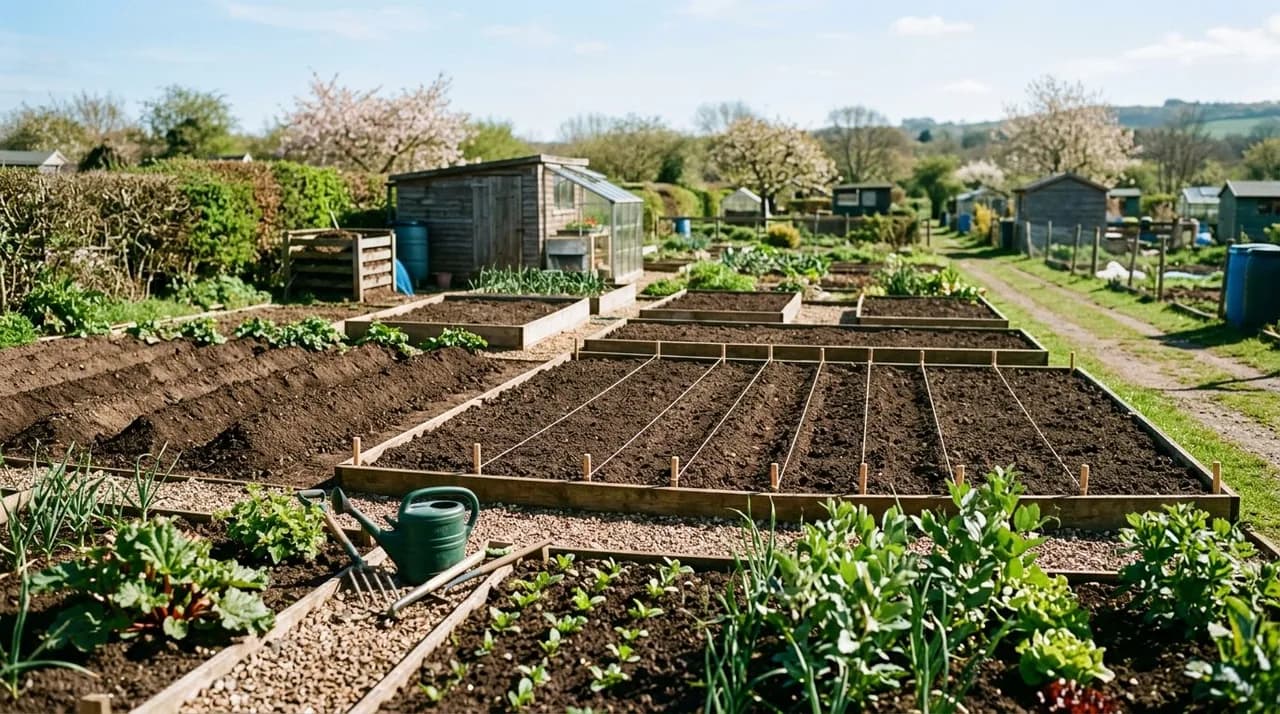
April is the defining transition month in the British gardening calendar. As day length increases rapidly and soil temperatures consistently climb between 7°C and 10°C, UK vegetable plots and allotments burst into active growth.
However, April weather is notoriously fickle. Bright, sunny afternoons can be followed by sudden hail showers, biting northerly winds, and overnight ground frosts. Successful April growing requires balancing enthusiasm with protective cultural techniques.
By categorizing your sowings into hardy outdoor crops, tuber plantings, and tender indoor starts, you can establish an organized, high-yielding allotment that supplies fresh produce through summer and autumn.
Direct sowing outdoors: hardy roots, legumes, and brassicas
Cool, moist April soil provides ideal conditions for germinating frost-hardy seeds directly in open ground:
+-----------------------------------------------------------------------+
|                   APRIL OUTDOOR DIRECT SOWING CALENDAR                |
+-------------------+-----------------------+---------------------------+
| CROP              | SOWING DEPTH          | SPACING & TECHNIQUE       |
+-------------------+-----------------------+---------------------------+
| Carrots           | 1 cm (fine drill)     | 15-20 cm rows; fleece on  |
| Parsnips          | 1.5 to 2 cm           | 30 cm rows; slow to show  |
| Beetroot          | 2 cm                  | 20-25 cm rows; multi-sow  |
| Peas & Broad Beans| 4 to 5 cm             | 5-8 cm apart in flat band |
| Swiss Chard       | 2 cm                  | 30 cm rows; thinned       |
+-------------------+-----------------------+---------------------------+
1. Root vegetables (carrots, parsnips, beetroot)
- Carrots: Sow early and maincrop cultivars in fine, stone-free drills. Cover immediately with fine insect mesh or horticultural fleece to block the first seasonal flight of carrot root fly (Chamaepsila rosae).
- Parsnips: April is a solid sowing window for parsnips, which need a long season. May sowings still crop, but the roots finish smaller. Use fresh seed, as parsnip seed loses viability rapidly after one year. Germination often takes three to four weeks in cool soil.
- Beetroot: Direct sow bolt-resistant varieties (such as 'Boltardy'). Alternatively, multi-sow three to four seeds per cell in modular trays for planting out as clumps in early May.
2. Spring legumes (peas and broad beans)
- Peas: Sow second early and maincrop wrinkly-seeded cultivars directly into flat-bottomed trenches 5 cm deep. Support emerging vines with hazel pea sticks or wire netting.
- Broad Beans: Make your final spring sowing of longpod broad beans directly into double rows for late summer harvesting.
3. Alliums and hardy leafy greens
- Leeks: Sow seeds in a dedicated outdoor seedbed or modular tray to produce sturdy pencil-thick transplants for summer planting.
- Spinach, Chard, and Radishes: Sow successional rows every two to three weeks to ensure continuous tender harvests before summer heat sets in.
For later sowings, see what to plant in May in the UK.
Planting seed potatoes, onion sets, and shallots
April is the primary month for putting seed tubers and allium sets into open ground:
[ Chitted Seed Potatoes ] ----> Plant in trenches 10-15 cm deep, space 35-40 cm apart
[ Onion & Shallot Sets ]  ----> Press gently into firm soil, leaving tip exposed
1. Maincrop and second early potatoes
If you chitted your seed potatoes (encouraged sturdy green sprouts on egg boxes in bright, cool rooms), plant them out in early to mid-April:
- Dig trenches 10 to 15 cm deep, spacing rows 75 cm apart for second earlies and 90 cm apart for maincrop varieties.
- Place tubers with sprouts facing upward, spacing them 35 to 40 cm apart along the trench.
- Cover with loose, compost-rich soil and draw the earth up into a gentle ridge.
- As green shoots emerge, continue drawing soil up over the stems (earthing up) to protect delicate growth from late frosts and prevent tuber greening. For full crop advice, see how to grow potatoes.
2. Onion and shallot sets
Finish planting onion and shallot sets during the first two weeks of April:
- Space onion sets 10 to 15 cm apart and shallots 15 to 20 cm apart in rows spaced 25 to 30 cm apart.
- Press sets gently into loose soil until just the papery tip protrudes.
- Keep bird netting draped over sets for the first fortnight, as curious blackbirds frequently pluck newly planted bulbs from the soil.
Sowing tender crops under cover for summer planting
Do not sow frost-sensitive summer crops outdoors in April. Instead, start them indoors on a sunny windowsill, heated propagator, or unheated greenhouse:
+-----------------------------------------------------------------------+
|                 APRIL INDOOR / UNDER COVER SOWING LIST                |
+-------------------+-----------------------+---------------------------+
| CROP              | GERMINATION TEMP      | POTTING CONTAINER         |
+-------------------+-----------------------+---------------------------+
| Tomatoes          | 18°C to 22°C          | Modular tray or 7.5cm pot |
| Courgettes        | 20°C to 24°C          | 9 cm individual pots      |
| Runner Beans      | 15°C to 20°C          | Deep root trainers / pots |
| Sweetcorn         | 18°C to 22°C          | Modular cell trays        |
| Winter Squashes   | 20°C to 24°C          | 9 cm individual pots      |
+-------------------+-----------------------+---------------------------+- Courgettes and Squashes: Sow seeds on their side 2 cm deep in 9 cm pots filled with quality peat-free potting compost. Placing seeds on their edge prevents moisture from pooling on the flat seed face, preventing seed rot.
- Tomatoes: Prick out young tomato seedlings into individual 7.5 cm pots once their first true leaves appear, keeping them in bright light to avoid leggy stems. Learn more about tomato care in how to grow tomatoes.
- Runner Beans and French Beans: Sow indoors in deep modular root trainers or 7.5 cm pots in mid-to-late April. Indoor-started bean seedlings develop strong root systems protected from destructive slugs. For full cultivation steps, read how to grow runner beans.
- Sweetcorn: Sow individual kernels in deep modules in mid-April. Sweetcorn resents root disturbance, so modular trays allow planting out in May with intact root plugs.
Soil preparation and working with peat-free compost
Warm, aerated, biologically active soil supports vigorous April seedling development:
Allotment soil preparation
- Fork over compacted beds on dry days to allow spring wind and sunshine to warm the soil profile.
- Rake the surface into a fine, crumbly tilth before drawing seed drills with the corner of a draw hoe.
- Avoid working heavy clay soil while it is soaking wet, which compresses soil structure into dense clods.
Managing peat-free compost for seedlings
When raising container seedlings, use modern peat-free compost blends made from composted wood fibre, coir, and bark. Remember that peat-free surfaces dry to a pale shade quickly while the root zone below remains moist; test soil moisture by inserting a finger 2 cm deep before watering. See our guide to peat free compost.
Essential April allotment maintenance and frost protection
Protect your young plantings through April's volatile weather shifts:
- Managing Late Frosts: Keep rolls of agricultural fleece or cloches ready on the plot. Drape fleece loosely over emerging potato shoots and seedling beds on clear, starry evenings when night temperatures threaten to drop below freezing.
- Weed Hoeing: Hoe between vegetable rows on bright, breezy mornings using an oscillating or Dutch hoe. Slicing weed seedlings at soil level while they are small desiccates them quickly in the wind.
- Slug Vigilance: Emerging April seedlings are vulnerable to slug damage after spring rain. Apply biological parasitic nematodes (Phasmarhabditis hermaphrodita) when soil temperatures exceed 5°C, or use physical copper barriers and beer traps.