Key takeaways
- September is the autumn restart month across the UK, shifting focus to overwintering crops and soil protection.
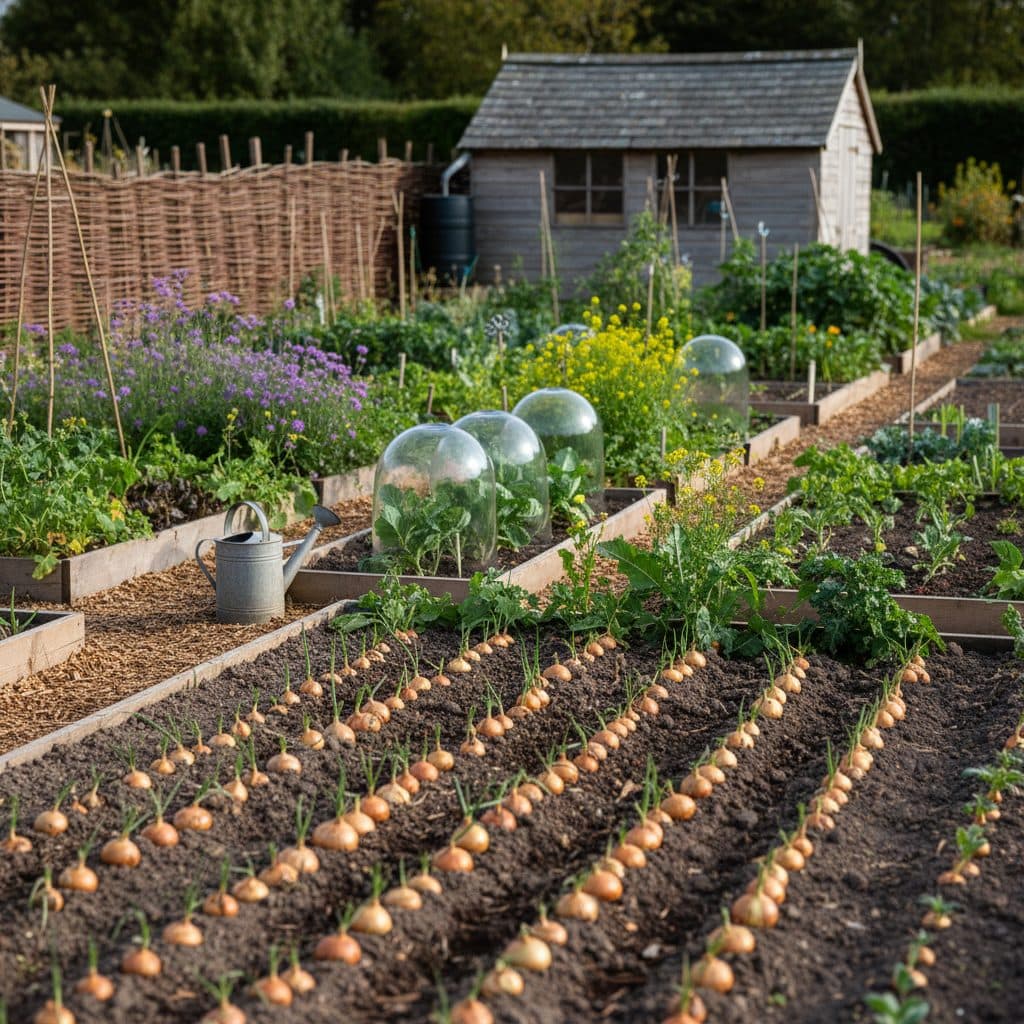
- Plant autumn-planting onion sets, shallots, and hardneck garlic cloves in well-drained allotment beds.
- Direct sow hardy winter salads including corn salad, winter purslane, land cress, and oriental greens.
- Sow fast-growing green manures (phacelia, crimson clover, winter grazing rye) to protect soil from winter nutrient leaching.
- Transplant spring cabbage seedlings into final positions for sweet, tender spring greens in April and May.
Quick answer: In September in the UK, plant autumn-planting alliums including onion sets, shallots, and garlic cloves for early summer harvests next year. Direct sow hardy winter salads such as corn salad, land cress, and winter spinach, transplant spring cabbages, and sow green manures on empty beds to protect soil structure through winter.
As the summer garden winds down and the harvest of sweetcorn, squashes, and maincrop potatoes reaches its peak, September offers a second planting season for British allotment gardeners. Soil in September is at its annual best: deeply warmed by months of summer sun yet recharged with gentle autumn rains. Understanding what to plant in september uk allows you to use spent summer beds for cold-hardy winter crops.
September is a practical window to establish overwintering vegetables that will survive sub-zero frosts and provide fresh harvests during the "hungry gap" of early spring. Combining food crops with restorative green manures protects bare soil from winter erosion while securing an early head start on the following year's harvest.
Overwintering alliums: onion sets, shallots, and garlic
Autumn is the traditional time to plant hardy alliums that require winter chilling (vernalisation) to develop large, multi-clove bulbs.
+---------------------+-----------------------+-----------------------------------------+
| Allium Crop         | Planting Depth & Gap  | Harvest Window                          |
+---------------------+-----------------------+-----------------------------------------+
| Autumn Onion Sets   | Tip level with soil   | June to July (6–8 weeks ahead of spring)|
| Autumn Shallots     | 2.5 cm deep; 15 cm gap| June to July                            |
| Hardneck Garlic     | 3 to 5 cm; 15 cm gap  | June to July                            |
| Elephant Garlic     | 8 to 10 cm; 25 cm gap | July                                    |
+---------------------+-----------------------+-----------------------------------------+
Autumn-planting onion sets (Allium cepa)
Planting autumn onion sets (such as Radar, Senshyu Yellow, or Electric) in late September gives you a harvest of mature bulbs in June, a full six to eight weeks ahead of spring-sown onions.
- Push sets into firm, weed-free soil so just the pointed tip protrudes above the surface.
- Space sets 10 to 12 cm apart in rows spaced 25 to 30 cm apart.
- Cover with netting for the first fortnight to prevent birds from plucking the shiny bulbs out of the ground.
Garlic cloves (Allium sativum)
Garlic demands a period of cold winter temperatures below 10°C to trigger bulb division into individual cloves. Plant certified seed garlic cloves pointed-end up, 3 to 5 cm deep. For detailed bed preparation and cultivation rules, see our guide on how to grow garlic.
To compare seasonal workflows across the calendar year, review what we started in what to plant in january uk and what to plant in june uk.
Hardy greens and spring brassicas
September provides the ideal soil temperatures for germinating cool-season leafy greens that withstand autumn frosts.
+-----------------------------------------------------------------------------------+
|  [September Greens & Brassica Sowing List]                                        |
|                                                                                   |
|  - Spring Cabbages: Transplant young seedlings into beds 30 cm apart for greens   |
|  - Winter Spinach: Sow perpetual spinach / beet spinach for continuous picking    |
|  - Lambs Lettuce (Corn Salad): Direct sow cold-hardy rosettes for winter salads   |
|  - Oriental Brassicas: Sow mizuna, mibuna, pak choi, and mustard greens           |
|  - Winter Radishes: Sow Black Spanish and daikon mooli for crisp root harvests    |
+-----------------------------------------------------------------------------------+
Spring cabbages
If you sowed spring cabbage seeds in July or August, September is the time to transplant the sturdy young plants into their final positions. Space them 30 cm apart. You can harvest alternate plants as tender, loose "spring greens" in March and leave the remaining plants to form dense, firm hearts in May.
Cut-and-come-again winter salads
- Corn salad (Lamb's lettuce): Extremely cold-hardy rosettes that thrive in cold, wet conditions without rotting.
- Winter purslane (Claytonia): Succulent, tender heart-shaped leaves packed with vitamin C.
- Land cress (Barbarea verna): A peppery watercress substitute that shrugs off heavy frost.
For managing root health and mounding techniques on the allotment, review earthing up potatoes.
Sowing winter radishes, turnips, and root crops
September is the final opportunity to sow fast-growing, cold-hardy autumn root vegetables directly into garden beds:
- Winter radishes (Black Spanish Round, Daikon Mooli): These large roots develop crisp, peppery flesh in cool autumn soil. Unlike spring radishes that turn woody in heat, winter radishes hold in the ground through November and store for months in cool cellars.
- Early turnips (Purple Top Milan, Snowball): Direct sow in shallow drills 1 cm deep. In warm September soil, seedlings emerge in four to six days, yielding tender, sweet golf-ball-sized roots in six to eight weeks.
- Overwintering carrots: In mild southern areas of the UK, sow fast-maturing early Nantes carrots beneath fleece or glass cloches in early September for early spring finger carrots.
Autumn bed preparation and no-dig feeding
As summer crops vacate the plot, September is the ideal moment to feed the soil biology before winter dormancy:
- Surface mulching: In no-dig allotment systems, apply a 5 cm layer of mature, weed-free garden compost or well-rotted manure directly over cleared beds.
- Worm action: Soil earthworms remain highly active during warm September and October rains, pulling organic compost down into the subsoil channels and creating fertile, aerated planting beds ready for spring sowing.
- Protecting empty soil: Any bed not planted with overwintering vegetables or green manures should be covered with thick cardboard and straw, or a breathable weed-suppressing membrane, to prevent winter weed seed germination and torrential rain compaction.
Sowing green manures to protect winter soil
Leaving bare soil exposed to heavy winter rains causes essential nutrients, especially soluble nitrates, to leach away into the subsoil while pounding raindrops destroy delicate surface soil aggregates.
Overwintering green manures like winter tares (Vicia sativa) and winter grazing rye (Secale cereale) hold nitrogen and protect soil structure until spring. Fast-growing crimson clover and phacelia can also be sown now: in all but the mildest areas they will winter-kill with the first hard frosts, leaving an easily cleared surface mulch.
+---------------------+-----------------------+---------------------------------------+
| Green Manure        | Growth Habit          | Soil & Ecological Benefits            |
+---------------------+-----------------------+---------------------------------------+
| Phacelia            | Fast green biomass    | Winter-kills in frost; easy mulch     |
| Crimson Clover      | Nitrogen-fixing legume| Winter-kills; fixes autumn nitrogen   |
| Winter Grazing Rye  | Cold-hardy grass      | Overwinters; massive root matrix      |
| Winter Tares        | Cold-hardy legume     | Overwinters; thrives on heavy clay    |
+---------------------+-----------------------+---------------------------------------+
How to manage autumn green manures:
- Broadcast seeds evenly over cleared, raked bed surfaces in early September.
- Lightly rake the seed into the soil and water well.
- Allow the green manure to grow through autumn, forming a thick carpet.
- In late winter or early spring (four weeks before spring planting), cut down the foliage and incorporate it into the top 10 cm of soil or chop and drop it beneath a layer of compost in no-dig beds.
- Allow three to four weeks between digging in winter grazing rye and sowing fine seeds like carrots or parsnips, as decomposing rye roots release natural germination-inhibiting compounds.
Essential September allotment maintenance
- Cure winter squashes and pumpkins: Place a tile or wooden slate beneath developing squashes to keep them off damp ground. Snip off leaves shading the fruit to allow the autumn sun to ripen and harden their skins.
- Lift maincrop potatoes: Lift remaining maincrop potatoes on dry sunny days. Allow skins to cure in the shade for a few hours before storing in breathable hessian or paper sacks in a dark, frost-free shed.
- Clear spent summer crops: Remove spent tomato haulms and bean vines. Shred healthy foliage and add to the compost heap; dispose of any diseased material showing signs of late blight.
- Install cloches and fleece: Erect low hoops or cloches over autumn salad beds toward the end of September to extend harvesting through the first hard frosts of October.