Key takeaways
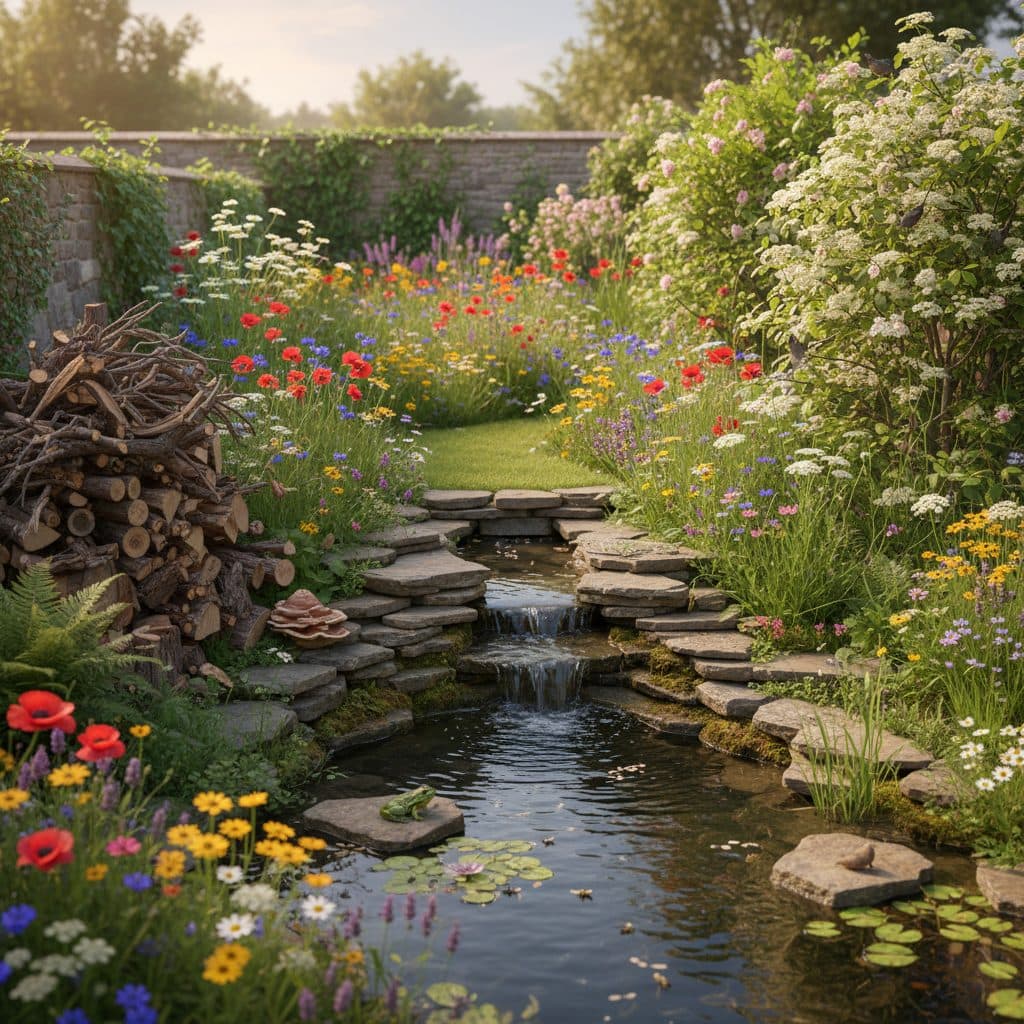
- Create a wildlife pond with gently sloping shallow margins and escape ramps to support amphibians, dragonflies, and drinking birds.
- Cut 13 cm by 13 cm "hedgehog highways" at the base of boundary fences to connect suburban garden foraging corridors.
- Plant mixed native hedgerows comprising hawthorn, blackthorn, hazel, and field maple to provide continuous nectar, nesting shelter, and autumn berries.
- Construct dedicated deadwood log piles and stone cairns in partial shade to shelter overwintering stag beetles, toads, and beneficial predatory ground beetles.
- Leave perennial flower stems and seed heads standing undisturbed until late February to provide winter food for goldfinches and shelter for insects.
Quick answer: Creating a thriving wildlife garden in the UK requires establishing interconnected micro-habitats: a stepped wildlife pond with beach margins, native flowering hedges, decaying deadwood shelters, and pesticide-free pollinator borders. Cutting 13 cm hedgehog gaps in fence lines, building beetle banks, and leaving autumn leaf litter undisturbed provides vital food, water, and shelter for native British fauna year-round.
Modern urbanization and intensive agriculture have fragmented British wildlife habitats, causing severe declines in native songbirds, pollinators, amphibians, and hedgehogs. Transforming an ordinary lawn or allotment into a wildlife-friendly space creates an essential sanctuary for biodiversity.
You do not need a vast rural estate to make an impact. Even a modest suburban garden or allotment plot can support dozens of species when designed with purposeful habitat layers.
By replacing sterile turf and close-board fencing with stepped ponds, native flora, and interconnected foraging corridors, you can establish a thriving garden for wildlife in the UK.
The core habitat layers of a UK wildlife garden
A truly biodiverse garden provides four fundamental requirements: clean freshwater, physical shelter, nesting territory, and a year-round food web.
+-------------------------------------------------------------------+
|                 THE 5-TIER WILDLIFE HABITAT PYRAMID               |
|                                                                   |
|   [Canopy & Hedges]    Native hawthorn, hazel, rowan, ivy         |
|           |            (Nesting birds, caterpillars, berries)     |
|   [Perennial Borders]  Single-flowered nectar & pollen plants     |
|           |            (Bees, hoverflies, butterflies)            |
|   [Wetland / Pond]     Stepped wildlife pond with beach margin    |
|           |            (Frogs, newts, dragonflies, bathing birds) |
|   [Ground Decay Zone]  Log piles, leaf mould, compost heaps       |
|           |            (Stag beetles, fungi, slow worms, toads)   |
|   [Corridor Links]     13x13 cm hedgehog fence gaps               |
|                        (Unbroken nocturnal mammalian pathways)    |
+-------------------------------------------------------------------+
+------------------------+-----------------------------------+-------------------------+
| Wildlife Feature | Target British Species | Primary Ecological Role |
+------------------------+-----------------------------------+-------------------------+
| Stepped Wildlife Pond | Common frogs, smooth newts, birds | Hydration & breeding |
| Hedgehog Highway | West European hedgehog | Foraging corridor access|
| Decaying Log Pile | Stag beetles, centipedes, fungi | Detritivore food web |
| Native Mixed Hedgerow | Song thrush, yellowhammer, dormice| Nesting & winter berries|
| Mini Wildflower Meadow | Solitary bees, hoverflies, moths | Pollen & larval food |
+------------------------+-----------------------------------+-------------------------+Designing a stepped wildlife pond
A body of clean, standing water is the single most effective feature you can introduce to support wildlife. Unlike ornamental fish ponds, a wildlife pond must be designed for easy entry and exit by terrestrial creatures.
+-------------------------------------------------------------------+
|                 WILDLIFE POND CROSS-SECTION PROFILE               |
|                                                                   |
|   (Bank Plants)       [Marginal Shelf]              [Deep Zone]   |
|   Marsh Marigold      Water Mint / Iris             Oxygenators   |
|       \               15 cm Depth                   60-80 cm Deep |
|  ~~~~~~~~~~~~~~~+------------------+          +-----------+  |
|  Sloping Pebble Beach                   \          /           |  |
|  (Gentle Exit Ramp)                      _**_**__/            |  |
|                                                                   |
+-------------------------------------------------------------------+
Essential pond specifications
- Sloping Pebble Beach: Grade at least one side to a gentle slope (less than 20 degrees) lined with smooth rounded stones, allowing hedgehogs, fledglings, and frogs to climb out easily without drowning.
- Stepped Marginal Shelves: Excavate shelves at 15 cm and 30 cm depths to support native marginal plants like marsh marigold (Caltha palustris), brooklime (Veronica beccabunga), and water forget-me-not (Myosotis scorpioides).
- Deep Frost-Free Zone: Ensure the central basin reaches 60 cm to 80 cm deep so aquatic life can survive beneath winter ice.
- No Domestic Fish: Never stock goldfish or koi in a dedicated wildlife pond, as they consume amphibian eggs, dragonfly nymphs, and beneficial aquatic microfauna.
Learn how to build and maintain balanced natural ponds in building small backyard wildlife pond, configure safe pond beaches using pond shelves beach frogs birds, and achieve biological clarity with healthy small pond no electricity.
Creating hedgehog-friendly corridors
The West European hedgehog (Erinaceus europaeus) roams between 1 and 2 kilometres each night while foraging for beetles, caterpillars, and earthworms. Solid boundary fences and brick walls trap hedgehogs in isolated fragments, leading to localized population collapse.
+-------------------------------------------------------------------+
|               HEDGEHOG HIGHWAY BOUNDARY SPECIFICATION             |
|                                                                   |
|    +---------------------------------------------------------+    |
|    |               Solid Timber Boundary Fence               |    |
|    |                                                         |    |
|    |     [========== 13 cm Wide by 13 cm High ==========]    |    |
|    |     |                                              |    |    |
|    +-----+                  Ground Level                +----+    |
|    ===============================================================|
+-------------------------------------------------------------------+
Installing hedgehog highways
- Cut a 13 cm by 13 cm square gap at the bottom of timber gravel boards or boundary fence panels. This aperture is large enough for an adult hedgehog but too small for most pet dogs.
- Coordinate with your neighbours to connect entire streets of gardens into an unbroken foraging network.
- Build a quiet hibernation box filled with dry untreated straw tucked underneath a dry hedge or garden shed, away from noisy family activity.
Deadwood, beetle banks and rock cairns
Decaying organic matter is the foundation of terrestrial woodland ecology. In tidy gardens, removing dead branches and clearing leaf litter removes essential shelter for beneficial predatory insects.
+------------------------+-----------------------------------+-------------------------+
| Feature Type           | Materials Required                | Inhabiting Organisms    |
+------------------------+-----------------------------------+-------------------------+
| Partially Buried Logs  | Untreated oak, beech, or birch    | Stag beetle larvae      |
| Sun-Warmed Rock Cairn  | Field stones, broken clay tiles   | Common lizards, toads   |
| Tussock Grass Bank     | Cocksfoot and Yorkshire fog grass | Carabid ground beetles  |
| Open Compost Heap      | Raw garden clippings & leaves     | Slow worms, worms       |
+------------------------+-----------------------------------+-------------------------+
Bury the lower third of several thick hardwood logs vertically or horizontally into damp soil in a shady corner. Decaying wood provides food for saproxylic invertebrates like the protected stag beetle (Lucanus cervus), whose larvae spend up to six years feeding on rotten subterranean wood.
Discover how predatory insect shelters eliminate garden pests naturally in beetle banks bug hotels overwintering predators.
Planting for pollinators and birds across the seasons
Selecting wildlife garden plants requires providing open, accessible nectar and pollen from early spring until late autumn, followed by high-energy berries and seed heads through winter.
+--------------------+-------------------------+--------------------+------------------------+
| Season             | Top Plant Species       | Botanical Name     | Target Wildlife        |
+--------------------+-------------------------+--------------------+------------------------+
| Early Spring       | Goat Willow / Pussy Willow| *Salix caprea*   | Early bumblebee queens |
| Late Spring        | Red Campion, Bugle      | *Ajuga reptans*    | Butterflies, hoverflies|
| Summer             | Viper's Bugloss, Borage | *Echium vulgare*   | Long-tongued bees      |
| Autumn             | Ivy, Michaelmas Daisy   | *Hedera helix*     | Late wasps, hoverflies |
| Winter             | Teasel, Common Knapweed | *Dipsacus fullonum*| Goldfinches (seeds)    |
+--------------------+-------------------------+--------------------+------------------------+
Always choose single, open-flowered varieties rather than double-petalled hybrids. Double flowers have bred out their reproductive stamens and nectaries in favour of extra petals, rendering them sterile and useless to foraging pollinators.
Livestock Safety Caution: If your garden borders agricultural paddocks or horse pastures, do not allow toxic wildflowers such as Common Ragwort (Jacobaea vulgaris) or Foxglove (Digitalis purpurea) to spread into grazing land or cut hay, as they contain lethal pyrrolizidine alkaloids and cardiac glycosides.
For plant lists that support diverse native insect populations, explore plants for pollinators and discover native meadow establishment techniques in how to create a wildflower meadow.
Year-round wildlife garden management
Maintaining a wildlife sanctuary requires shifting from sterile tidiness to ecological stewardship.
+-------------------------------------------------------------------+
|               SEASONAL WILDLIFE MAINTENANCE CALENDAR              |
+-------------------------------------------------------------------+
| [Spring]  Clean bird baths weekly; avoid cutting hedges (nesting) |
| [Summer]  Top up ponds with rainwater; keep shallow dishes filled |
| [Autumn]  Stack pruned branches into log piles; leave leaf mulch  |
| [Winter]  Keep pond surface ice-free; leave standing seed heads   |
+-------------------------------------------------------------------+
Refrain from using synthetic pesticides, weedkillers, or molluscicides. Slugs and snails are vital food for hedgehogs, song thrushes, and ground beetles; introducing toxic chemicals poisons the very creatures you are working to attract.