A small, natural-looking backyard wildlife pond with native plants, surrounded by a garden and a rain barrel, under soft morning light on a US homestead.
Key takeaways
- Careful siting is crucial, considering sunlight, runoff, and tree proximity to ensure pond health and longevity.
- Designing varied depths, including shallow shelves and a deep zone of at least 24 inches, supports diverse aquatic life.
- EPDM liners, at least 45 mil thick, offer superior durability and flexibility for long-term pond integrity.
- Native aquatic plants are essential for water purification, oxygenation, and providing habitat for local wildlife.
- Integrating a wildlife pond with rainwater harvesting and passive irrigation systems improves water conservation and the resilience of the landscape.
Quick answer: Building a small backyard wildlife pond significantly increases local biodiversity by attracting beneficial insects, amphibians, and birds, while also enhancing water management through retention and groundwater recharge.
In the humid subtropical climate of USDA zone 8b, where summer rains can be heavy but dry spells are common, managing water effectively is key to a thriving garden. While rainwater harvesting systems capture runoff from roofs, a backyard wildlife pond offers another layer of water management and ecological benefit. A well-designed pond becomes part of your property’s water cycle: it supports local biodiversity and can contribute to passive irrigation strategies.
For growers in regions like the arid Southwest or the temperate Northeast, creating a small aquatic habitat can transform a yard into a more resilient ecosystem. The USDA Natural Resources Conservation Service emphasizes the importance of water management for healthy landscapes, and a pond fits right into that philosophy [1]. This article will guide you through the practical steps of planning and building a small backyard wildlife pond, focusing on siting, sizing, and choosing the right liner, all while considering its role in a broader water-wise landscape.
Why a backyard pond? more than just aesthetics
A backyard pond offers significant benefits beyond visual appeal, acting as a critical component of a resilient landscape, particularly for water management and biodiversity. In regions like the Pacific Northwest, where annual rainfall can exceed 40 inches, capturing and retaining water on-site reduces stormwater runoff and recharges groundwater [2]. A small pond, even one with a surface area of 50 square feet, can hold hundreds of gallons of water, providing a consistent water source for plants and wildlife during drier periods. This localized water retention is a core principle of passive irrigation earthworks, where water is slowed, spread, and sunk into the landscape.
Moreover, these ponds create essential habitat. Research indicates that even small water features can increase local biodiversity by 30% or more, attracting beneficial insects, amphibians, and birds [3]. For instance, a pond in a suburban yard in USDA zone 6 can quickly become home to native frogs, dragonflies, and various bird species, which in turn help with pest control and pollination in your garden. The presence of these creatures contributes to a healthier, more balanced ecosystem, reducing the need for chemical interventions. Consider integrating your pond with other water-saving practices, such as directing overflow from a rainwater harvesting system into a bog filter adjacent to the pond.
ecological and hydrological benefits
- habitat creation: Attracts native frogs, salamanders, dragonflies, and birds.
- water retention: Stores hundreds of gallons, reducing stormwater runoff by up to 90% in some cases [2].
- groundwater recharge: Allows water to slowly infiltrate the soil, replenishing local aquifers.
- microclimate moderation: Evaporation from the pond can slightly cool surrounding areas during hot summers.
- natural pest control: Dragonflies and frogs consume mosquitoes and other garden pests.
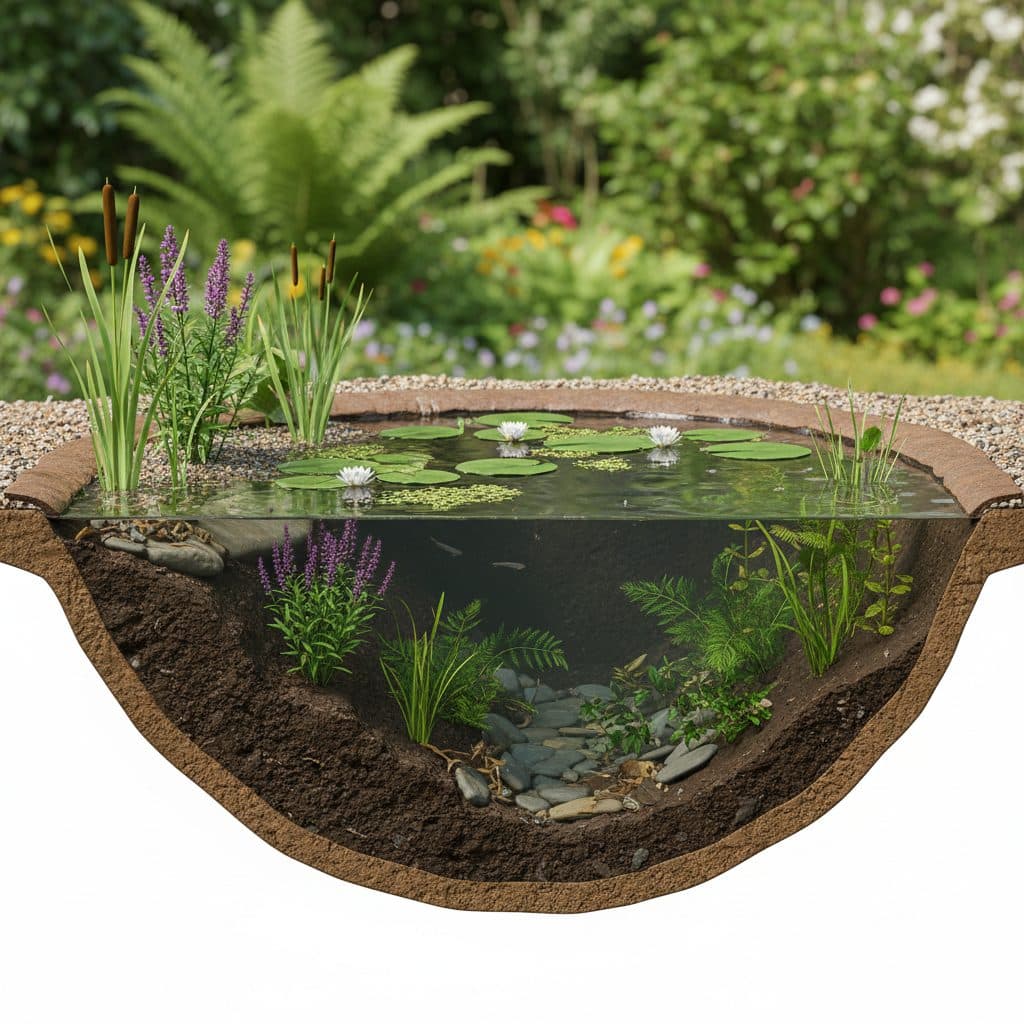
Cross-section diagram illustrating the different depth zones of a backyard wildlife pond, including a shallow shelf, a deep zone, the pond liner, and various types of emergent, submerged, and floating aquatic plants.
Siting your pond for success
The location of your backyard wildlife pond is one of the most important decisions: it influences everything from water quality to maintenance. A pond needs a spot that receives adequate sunlight — ideally, four to six hours of direct sun per day for healthy plant growth, but not so much that it causes excessive algae blooms. In hotter climates, like USDA zone 9, afternoon shade can be beneficial to prevent overheating. Avoid areas directly under large deciduous trees, as falling leaves will decompose in the water, adding nutrients that fuel algae and requiring frequent cleaning. If a tree cannot be avoided, consider a netting system during autumn.
Furthermore, consider the natural slope of your yard. Placing a pond at the lowest point of a gentle slope can allow it to passively collect rainwater runoff, integrating it with your property’s natural drainage patterns. However, ensure that runoff from fertilized lawns or chemically treated areas does not flow directly into the pond, as this can introduce harmful pollutants. The USDA Natural Resources Conservation Service advises careful consideration of water flow and potential contaminants when designing water features [1]. Also, locate your pond away from underground utilities like septic lines or electrical conduits, maintaining at least a 10-foot buffer from any known underground infrastructure for safety and accessibility.
main siting considerations
- sunlight exposure: Aim for four to six hours of direct sunlight daily for optimal plant health.
- tree proximity: Avoid placing directly under large trees to minimize leaf litter and root intrusion.
- drainage patterns: Utilize natural slopes for passive water collection, but divert contaminated runoff.
- utility lines: Maintain a safe distance, typically 10 feet or more, from underground pipes or wires.
- visibility and access: Choose a spot that allows for easy viewing and maintenance, such as near a path or patio.
Sizing and shaping your aquatic habitat
The size and shape of your pond will dictate its ecological function and aesthetic appeal. For a truly resilient wildlife pond, a minimum depth of 24 inches in at least one section is recommended, especially in regions with cold winters, such as USDA zone 5. This depth allows aquatic life, like frogs and fish, to overwinter below the ice line. Shallower areas, or ‘shelves,’ are equally important, providing critical zones for emergent plants and easy access for small animals to drink or bathe. These shelves should be 6 to 12 inches deep and encompass at least 25% of the pond’s surface area.
While there’s no strict maximum size for a backyard pond, a typical small wildlife pond might range from 50 to 150 square feet in surface area, holding anywhere from 500 to 1,500 gallons of water. An irregular, kidney-bean or figure-eight shape often looks more natural than a perfect circle or rectangle, blending seamlessly into the landscape. Incorporating varied depths and contours mimics natural aquatic environments, supporting a wider array of species. When filling your pond, a reliable water source is essential; consider an expandable hose with a 7-pattern spray nozzle for controlled filling and minimal disturbance to the liner. Remember, the goal is to create a diverse habitat, not just a static pool.
design principles for wildlife ponds
- minimum depth: At least 24 inches deep in one area for overwintering aquatic life.
- shallow shelves: Create ledges 6 to 12 inches deep for emergent plants and wildlife access.
- varied contours: Irregular shapes and gradual slopes mimic natural ponds and enhance habitat diversity.
- surface area: A pond of 50 to 150 square feet is manageable for most backyards.
- volume capacity: Aim for a minimum of 500 gallons to maintain stable water conditions.
Choosing the right liner
The pond liner is the foundation of your aquatic system, responsible for holding water and preventing leaks. The most recommended material for small backyard wildlife ponds is EPDM (ethylene propylene diene monomer) rubber. EPDM liners are highly flexible, resistant to UV degradation, and can last for 20 to 30 years, even in harsh climates like the intense sun of USDA zone 10. They are also considered fish-safe and plant-safe, making them ideal for a living ecosystem. A minimum thickness of 45 mil (0.045 inches) is standard, but 60 mil offers enhanced puncture resistance, especially if you anticipate heavy foot traffic during maintenance or have rocky soil.
Other options exist, though with trade-offs. PVC (polyvinyl chloride) liners are less expensive initially but are less flexible, more prone to UV damage, and generally have a shorter lifespan of 10 to 15 years. They can also become brittle in cold temperatures, which is a concern in northern states. Preformed rigid plastic ponds are easy to install but limit design flexibility and are often too shallow for proper wildlife habitat. For a pond that will integrate with a sustainable water system, such as one fed by a solar water pump, a durable and long-lasting liner like EPDM reduces future maintenance and ensures water retention. Always calculate the liner size by adding twice the maximum depth to both the length and width of your pond, plus an extra 2 feet for overlap.
liner material considerations
- EPDM rubber: Durable, flexible, UV-resistant, and lasts 20 to 30 years.
- PVC: Less expensive, but shorter lifespan (10 to 15 years) and less flexible.
- preformed plastic: Easy to install, but restricts shape and depth options.
- thickness: 45 mil is standard for EPDM, 60 mil offers increased puncture resistance.
- cost vs. longevity: Invest in a quality liner to avoid costly repairs down the line.
Planting your pond: native species and water quality
Once your pond is dug and lined, the next crucial step is planting. Native aquatic plants are vital for a healthy wildlife pond, providing oxygen, filtering nutrients, and offering habitat for various creatures. For instance, in the southeastern US, species like pickerelweed (Pontederia cordata) and water lilies (Nymphaea odorata) thrive, providing nectar for pollinators and shade for fish. Avoid invasive species at all costs; even seemingly innocuous plants like water hyacinth can quickly overtake a small pond, outcompeting natives and depleting oxygen. The USDA National Agroforestry Center emphasizes the importance of native species for ecological balance [5].
Aim for a diversity of plant types: submerged, emergent, and floating. Submerged plants, like hornwort (Ceratophyllum demersum), oxygenate the water and provide cover for fish. Emergent plants, such as cattails (*Typha latifolia) or Chinese Water Chestnut (Eleocharis dulcis), grow with their roots in water and foliage above the surface, offering nesting sites and perches. Floating plants, like duckweed (Lemna minor*) or water lettuce (Pistia stratiotes), provide shade, reducing algae growth, but need to be managed to prevent overgrowth. A good rule of thumb is to cover about 50% to 70% of the pond’s surface with plants, ensuring a balance between open water and planted areas.
essential pond plant types
- submerged plants: Oxygenate water and provide cover for aquatic animals (e.g., hornwort).
- emergent plants: Offer nesting sites and filter nutrients (e.g., pickerelweed, cattails).
- floating plants: Provide shade, reduce algae, and offer shelter (e.g., water lilies, duckweed).
- native species: Crucial for supporting local wildlife and maintaining ecological balance.
- plant coverage: Aim for 50% to 70% of the pond’s surface area to be planted.
Integrating with passive irrigation and water harvesting
A backyard wildlife pond can be more than a standalone feature; it can be a central component of an integrated water management system. By connecting your pond to a rainwater harvesting setup, you can ensure a consistent supply of clean, chemical-free water. For example, directing overflow from a 500-gallon rain barrel into a pond can keep it topped off during dry periods, reducing reliance on municipal water. This approach aligns with the principles of passive irrigation, where water is captured and distributed naturally across the landscape, minimizing active intervention.
Consider designing your pond with an overflow mechanism that directs excess water into a swale or rain garden. This allows water to slowly infiltrate the soil, benefiting nearby trees or garden beds. In arid regions like Arizona, where annual rainfall might only be 10 to 12 inches, every drop counts, and such systems can significantly reduce irrigation needs for drought-tolerant plants. You can also incorporate wicking beds or ollas around the pond’s perimeter, which will benefit from the higher water table and humidity created by the pond. The Sustainable Agriculture Research & Education (SARE) program highlights these integrated water strategies as key to resilient farming and gardening practices [3]. By thinking of your pond as part of a larger hydrological system, you maximize its utility and ecological impact.
passive irrigation integration strategies
- rainwater harvesting connection: Direct overflow from rain barrels into the pond to maintain water levels.
- swales and rain gardens: Design pond overflow to feed into these features for passive landscape irrigation.
- wicking beds: Place wicking beds near the pond to benefit from consistent moisture and reduced watering.
- ollas: Bury ollas in soil around the pond to provide sub-surface irrigation to nearby plants.
- permaculture design: Integrate the pond into a broader permaculture plan for maximum water efficiency.
Comparison of Common Pond Liner Materials
Feature | EPDM Rubber (45 mil) | PVC (20 mil) | Preformed Plastic |
|---|---|---|---|
Lifespan | 20-30 years | 10-15 years | 5-10 years |
Flexibility | Excellent | Good (can stiffen in cold) | Rigid |
UV Resistance | Excellent | Fair (degrades over time) | Good |
Puncture Resistance | Very Good | Fair | Good (can crack) |
Cost (per sq ft) | Moderate to High | Low to Moderate | Moderate |
Wildlife Safe | Yes | Generally Yes | Yes |
Water Retention: A 100 square foot pond with an average depth of 1.5 feet can hold approximately 1,122 gallons of water, significantly reducing stormwater runoff by up to 90% [2].
Plant Coverage: Aim for 50% to 70% of your pond’s surface area to be covered by native aquatic plants to ensure optimal oxygenation, nutrient filtration, and habitat provision.
Frequently asked questions
How deep should a small wildlife pond be?
For a small wildlife pond, a minimum depth of 24 inches in at least one section is recommended, particularly in regions with cold winters like USDA zone 5, to allow aquatic life to overwinter below the ice line.
What kind of liner is best for a wildlife pond?
EPDM (ethylene propylene diene monomer) rubber liners, at least 45 mil thick, are generally considered the best choice due to their flexibility, UV resistance, and long lifespan of 20 to 30 years, making them safe for plants and animals.
How much sunlight does a pond need?
A pond typically needs four to six hours of direct sunlight per day for healthy plant growth and to prevent excessive algae, though in very hot climates like USDA zone 9, some afternoon shade can be beneficial.
Can I use tap water to fill my pond?
While you can use tap water, it often contains chlorine or chloramines that can harm aquatic life. It’s best to let tap water sit for 24-48 hours to allow chemicals to dissipate, or use a dechlorinator, especially for the initial fill of several hundred gallons.
How do I prevent mosquitoes in my pond?
A healthy wildlife pond with moving water, native fish like mosquito fish (Gambusia affinis), and dragonfly larvae will naturally control mosquito populations. Ensure there are no stagnant pockets and maintain a balanced ecosystem to prevent mosquito breeding.
References
- USDA Natural Resources Conservation Service (2024). USDA Natural Resources Conservation Service.
- EPA — Soak Up the Rain (2024). EPA — Soak Up the Rain.
- SARE — Sustainable Agriculture Research & Education (2023). SARE — Sustainable Agriculture Research & Education.
- ATTRA / NCAT Sustainable Agriculture (2023). ATTRA / NCAT Sustainable Agriculture.
- USDA National Agroforestry Center (2023). USDA National Agroforestry Center.