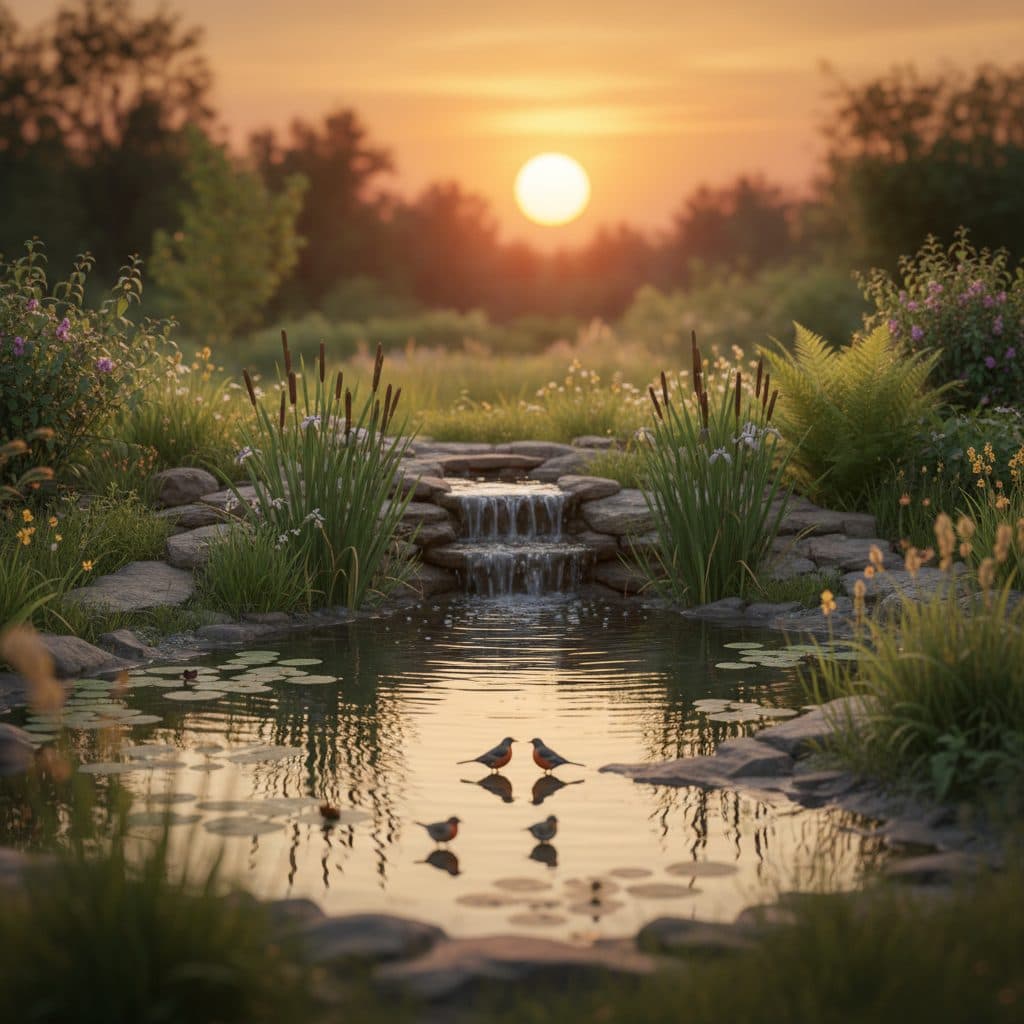
Key takeaways
- Water features provide necessary hydration and cooling for local wildlife, especially on hot days above 85°F.
- Proper design and construction, including durable liners and stable edging, are essential for feature longevity and safety.
- Incorporating diverse water depths, from one-inch puddles to 18-inch ponds, supports a wider range of species.
- Strategic placement of water features can reduce ambient air temperatures by 2 to 5 degrees Fahrenheit through evaporative cooling.
- Native aquatic plants and surrounding vegetation improve habitat value and help maintain water quality.
- Regular maintenance, such as cleaning and refilling, ensures water features remain safe and beneficial for wildlife.
Quick answer: Water features can lower ambient garden temperatures by 2 to 5 degrees Fahrenheit, especially in arid regions like USDA Zone 9, through evaporative cooling. They also provide hydration and habitat for local wildlife.
In many parts of the United States, from the dry heat of Arizona to the humid summers of the Southeast, gardens can become challenging environments for both plants and wildlife during peak temperatures. In USDA zone 9, summer days often exceed 95°F, making reliable water sources important. A well-designed water feature provides hydration for birds, insects, and small mammals while noticeably cooling the immediate garden microclimate.
Integrating ponds, bird baths, or water bowls creates habitat that supports local wildlife. Gardens designed with diverse habitats, including water features, can attract up to 40% more insect and bird species than gardens lacking these elements [5]. The following guide details how to select, construct, and maintain water features that support wildlife and cool garden spaces.
Choosing the right water feature for your garden
Selecting an appropriate water feature depends on your garden’s size, your budget, and the types of wildlife you aim to support. A simple bird bath, for instance, requires minimal space and can be purchased at a modest cost. These features are particularly effective in attracting small songbirds and pollinators, especially if they have a shallow basin no deeper than two inches at its center [4]. In contrast, a small pond measuring 4 by 6 feet can vary in cost to install, offering habitat for frogs, salamanders, and aquatic insects.
Considerations for diverse wildlife support
To maximize wildlife benefit, consider features that offer varied depths. A graduated edge, starting from one inch and sloping to six inches, allows different species to access water safely. For example, bees and butterflies prefer very shallow puddles or damp sand, while larger birds might enjoy a deeper bathing area. Providing a consistent water source in your garden, especially during hot days above 85°F, can significantly benefit local wildlife by offering hydration and cooling opportunities [1].
- Bird baths: Ideal for small birds and insects, with a depth of one to two inches.
- Container ponds: Flexible and movable, suitable for small spaces, usually 10 to 30 gallons.
- Ground-level puddles: Essential for pollinators, often created with a shallow dish and stones.
- Small ponds: Support a wider range of species, requiring depths of at least 18 inches for fish in colder zones.
Remember that even a modest water source, like a 5-gallon bucket sunk into the ground and filled with pebbles, can provide vital hydration. Accessibility and consistent availability matter most during dry spells or heat waves when natural water sources are scarce.
Designing for cooling and aesthetics
The placement of your water feature plays a dual role: maximizing its cooling effect and integrating it harmoniously into your garden’s design. To achieve noticeable cooling, locate features where prevailing winds can carry moisture into seating areas or near heat-sensitive plants. Evaporative cooling from water features can reduce ambient air temperatures in their immediate vicinity by 2 to 5 degrees Fahrenheit, particularly noticeable in dry climates like USDA zone 9 in California [1]. Shading the water feature with plants or a pergola can also reduce water loss due to evaporation on hot days.
Integrating plants for habitat and shade
Surrounding a water feature with native plants provides cover and habitat for wildlife while improving edge stability. For instance, planting native sedges or rushes around the edges of a pond offers cover for amphibians and insects. Consider species like Chinese Water Chestnut (Eleocharis dulcis) for its submerged stems, which provide shelter. Avoid invasive species like Water Chestnut (Trapa natans), which can quickly overtake a pond and escape into local waterways. These plants also help filter water, reducing the need for chemical treatments.
- Native marginal plants: Provide cover and nesting sites for birds and insects.
- Submerged plants: Oxygenate the water and offer habitat for aquatic invertebrates.
- Floating plants: Reduce algae growth by shading the water surface and offer cover.
- Overhanging trees/shrubs: Offer shade, reduce evaporation, and provide perching spots for birds.
When planning, think about the overall flow of your garden. A small, bubbling fountain near a patio can provide both soothing sounds and a cooling mist, while a larger pond might be a central focal point. Proper construction, including selecting durable liners and ensuring stable edging, is necessary for long-term function and safety in garden design [2].
Construction and maintenance considerations
Building a durable water feature requires careful planning and execution. For ponds, a flexible liner made of EPDM rubber, a durable, thick liner is a common choice, offering a long lifespan. Ensure the liner is properly seated and protected from punctures by a layer of underlayment, often a geotextile fabric. The edges of the feature should be stable and level, preventing water loss and providing safe access for wildlife. Historically, water features were often built using methods like 'well-tempered clay' to create durable, natural-looking ponds that could last for decades [3].
Routine care for a healthy ecosystem
Regular maintenance keeps a water feature functional. For bird baths, daily cleaning and refilling are recommended, especially during hot weather, to prevent mosquito breeding and bacterial growth. A simple scrub brush and fresh water are usually sufficient. For larger ponds, a partial water change every few months can help maintain water quality. Consider adding a small pump and filter system for ponds over 50 gallons to keep water circulating and clear, reducing the buildup of debris and algae.
- Daily: Refill bird baths and small containers, check for debris.
- Weekly: Clean bird baths thoroughly, skim leaves from ponds.
- Monthly: Check pump and filter systems, top off larger features due to evaporation.
- Seasonally: Trim aquatic plants, remove excess organic matter, perform partial water changes.
The USDA Natural Resources Conservation Service recommends specific water management practices for wildlife habitats, such as maintaining minimum water depths of 18 inches for fish in ponds in colder climates [6]. This depth helps prevent the pond from freezing solid in winter, protecting aquatic life. Using an Expandable Garden Hose can make refilling and cleaning tasks much easier.
Supporting diverse plant and animal life
A well-planned water feature attracts a wide array of species beyond just birds. Consider the needs of insects, which are foundational to many ecosystems. Simple water bowls and containers, with depths ranging from one to three inches, offer accessible water sources for a variety of garden wildlife, including pollinators and small birds [4]. Adding a few smooth stones or marbles to shallow dishes provides safe landing spots for bees and butterflies to drink without falling in. Shallow water sources support local pollinator populations, which help pollinate garden crops and flowers.
Selecting appropriate aquatic plants
Aquatic plants play an important role in a healthy water feature ecosystem. They provide oxygen, food, and shelter, while also helping to control algae. For example, water lilies (Nymphaea spp.) offer shade for fish and reduce surface evaporation. Submerged oxygenators, such as Anacharis (Egeria densa), release oxygen into the water, benefiting fish and other aquatic creatures. When selecting plants, always prioritize native species that are well-suited to your USDA zone, as they require less maintenance and are less likely to become invasive.
- Emergent plants: Cattails (Typha latifolia) or Pickerelweed (Pontederia cordata) provide vertical structure and cover.
- Floating plants: Duckweed (Lemna minor), which can be very aggressive and may require management, or Water Hyacinth (Eichhornia crassipes, where non-invasive) offer shade and consume excess nutrients.
- Submerged plants: Hornwort (Ceratophyllum demersum) or Vallisneria americana oxygenate the water and provide fish habitat.
- Marginal plants: Irises (Iris versicolor) or Marsh Marigold (Caltha palustris) soften edges and provide transition zones for wildlife.
Beyond plants, consider adding a small log or a few rocks to your pond’s edge, creating a ramp for small animals like frogs or even hedgehogs to enter and exit safely. This exit ramp helps small animals leave the water safely. Using a 5 L Garden Pressure Sprayer can be useful for spot watering new marginal plants.
Comparing common garden water features
Feature Type | Typical Size | Cost Range (USD) | Primary Wildlife Benefit | Maintenance Level |
|---|---|---|---|---|
Bird Bath | 18-30 in diameter | $50-$200 | Birds, small insects | Low (daily refill, weekly clean) |
Container Pond | 10-50 gallons | $100-$500 | Frogs, aquatic insects, small birds | Medium (weekly top-off, monthly cleaning) |
Pre-formed Pond | 20-100 sq ft | $500-$2,000 | Fish, amphibians, diverse insects | Medium (monthly checks, seasonal clean) |
Liner Pond | 50+ sq ft | $1,000-$5,000+ | Full aquatic ecosystem, large wildlife | High (regular monitoring, annual deep clean) |
Cooling effect: Water features can reduce local air temperatures by 2 to 5 degrees Fahrenheit, especially in dry climates like USDA zone 9.
Wildlife boost: Gardens with water features can attract up to 40% more insect and bird species than gardens without standing water.
References
- Put out water for the wildlife in your garden on hot days (2016).
- Construction Detailing for Landscape and Garden Design (2019).
- ‘Well Temper’d Clay’: Constructing Water Features in the Landscape Park (2001).
- Water bowls and containers (2019).
- Why Garden for Wildlife? (2019).
- USDA Natural Resources Conservation Service (2024).