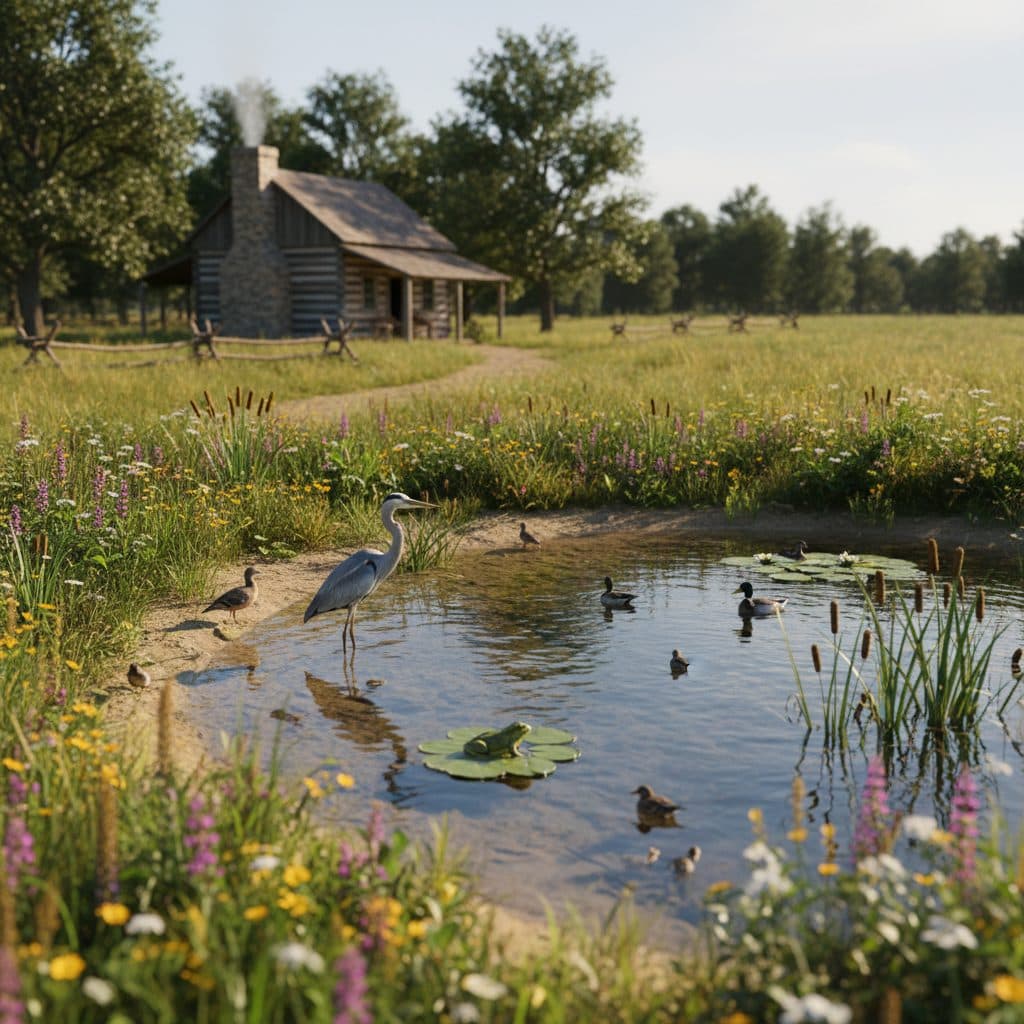
Key takeaways
- Shallow water shelves (6-12 inches deep) provide critical habitat for frogs, tadpoles, and aquatic insects, supporting a diverse ecosystem.
- A gently sloped beach edge, with a gradient of 20:1 to 30:1, allows easy access for birds, small mammals, and pollinators to drink and bathe safely.
- Integrating rainwater harvesting systems, like a 50-gallon rain barrel, can supply 100% of the water needed for a small pond in many US regions.
- Ollas and wicking beds reduce water consumption by 50-70% for surrounding plants, creating a lush, water-wise habitat for wildlife.
- Careful plant selection, including native species like Water Hyssop and various sedges, enhances biodiversity and provides food and shelter for local fauna.
- Passive irrigation earthworks, such as swales, can direct up to 75% of rainfall runoff into your water feature, minimizing reliance on external water sources.
Quick answer: Building wildlife water features with shallow shelves (6-12 inches) and gently sloped beach edges (20:1 to 30:1 gradient) provides critical habitat and safe access for diverse species. Integrating rainwater harvesting and passive irrigation earthworks like swales ensures a sustainable water supply.
In the arid landscapes of the American Southwest, where annual rainfall might only reach 10 to 15 inches, every drop of water counts for a grower. Even in regions with more generous precipitation, like the humid Southeast receiving 50 to 60 inches annually, thoughtful water management can create a thriving homestead that supports local wildlife. Creating a water feature with specific design elements (shelves and a beach edge) can transform a simple pond into a habitat hub for frogs, birds, and pollinators, while also conserving water.
For years, I’ve seen firsthand how a well-designed water source can dramatically increase biodiversity on a property. From a small 50-gallon stock tank converted into a mini-pond to a larger 300-gallon excavated feature, these additions provide essential hydration and habitat. Incorporating passive irrigation techniques like rainwater harvesting and earthworks improves water capture and helps maintain a water supply even during dry spells that can last for weeks in USDA zone 7.
The role of water features for local wildlife
A reliable water source is fundamental for attracting and sustaining a diverse range of wildlife on your property. Birds, for instance, require water not only for drinking but also for bathing to maintain their feathers, a process they might perform several times a day, especially during warmer months when temperatures exceed 80°F. A 2015 study showed that species like American robins and Northern cardinals frequently visit shallow water sources [1]. Without a safe water supply, many beneficial species may bypass your property entirely, reducing natural pest control and pollination services.
designing for diverse species
To truly serve a wide array of creatures, a water feature needs varied depths and access points. Frogs, such as the common green frog or American toad, need shallow areas for breeding and for their tadpoles to develop, typically preferring water that is 6 to 12 inches deep [4]. These shallow zones, often called shelves, also support a rich community of aquatic insects, which serve as food for both amphibians and many bird species. Pollinators like bees and butterflies, on the other hand, need very shallow access points, often just a few millimeters deep, to drink without drowning. A beach edge with a gentle slope of 20:1 to 30:1 provides this safe access, allowing them to land on damp soil or small stones at the water’s edge. This design consideration can increase pollinator visits by up to 40% compared to a steep-sided pond, attracting hundreds of individual insects daily.
- Shallow shelves: 6 to 12 inches deep for tadpoles and aquatic insects.
- Beach edge: Gentle slope (20:1 to 30:1) for safe access for birds and pollinators.
- Submerged plants: Provide oxygen and shelter for fish and invertebrates.
- Emergent plants: Offer perching spots and cover for frogs and dragonflies.
- Diverse depths: A range from 3 inches to 24 inches supports more species.
Passive water harvesting for a sustainable supply
Relying solely on municipal water for a pond can be costly and unsustainable, especially in regions facing water restrictions or high utility rates. Passive water harvesting techniques offer a robust alternative, capturing and storing rainfall for your water feature. A single 1,000 square foot roof can collect approximately 600 gallons of water from just one inch of rainfall. In a region like the Pacific Northwest, with 35 to 50 inches of annual precipitation, this translates to thousands of gallons available for use, significantly reducing your reliance on treated water sources. Rainwater harvesting is a straightforward method that can provide 100% of the water for a small pond, saving hundreds of dollars in water bills over a five-year period.
integrating earthworks and storage
Beyond simple rain barrels, earthworks help direct and conserve water. Swales, which are shallow ditches dug along contours, can slow down rainwater runoff, allowing it to infiltrate the soil or be directed towards a pond. A swale 1 foot deep and 3 feet wide can capture hundreds of gallons of water during a single rain event, replenishing your pond or saturating the surrounding soil. This reduces erosion by up to 75% and enhances groundwater recharge [6]. For larger systems, connecting multiple rain barrels, each with a 50-gallon capacity, can create a substantial storage reservoir. These can be linked to your pond via gravity or a small solar water pump to maintain a consistent water level without constant manual intervention. Using a garden hose with a nozzle allows for precise filling when supplemental water is needed, especially during dry spells lasting 10-14 days.
- Rain barrels: Collect roof runoff, a 50-gallon barrel is a good starting point.
- Swales: Contour ditches that slow and direct water flow.
- Keyline design: A system of earthworks that optimizes water distribution across a landscape.
- Pond liners: Durable EPDM liners, 45 mil thick, prevent water loss in excavated ponds.
- Overflow systems: Direct excess water to other planting areas or a French drain.
Ollas and wicking beds for water-wise planting zones
Surrounding your wildlife pond with water-efficient planting zones improves its ecological function. Ollas and wicking beds are ancient, proven irrigation methods that drastically reduce water consumption, often by 50% to 70% compared to conventional surface watering. An olla, a porous clay pot buried in the soil, slowly releases water directly to plant roots, minimizing evaporation and runoff. This method is particularly effective for establishing native plants that attract pollinators, such as coneflowers and milkweed, which thrive in USDA zone 5 through 9. A single 1-gallon olla can effectively irrigate a 2-foot diameter planting area for up to 7 days, significantly reducing manual watering tasks.
creating self-watering systems
Wicking beds take water efficiency a step further by creating a self-watering reservoir at the bottom of a raised bed. These beds can hold 10 to 20 gallons of water in their reservoir, providing consistent moisture to plants for weeks at a time, even in hot, dry climates where temperatures can reach 95°F. This consistent moisture encourages robust plant growth, offering more nectar for pollinators and denser cover for small birds. For instance, a 4×8-foot wicking bed can support dozens of flowering plants, requiring refilling only every 2 to 3 weeks. You can easily connect these beds to your rainwater harvesting system using a small diameter PE irrigation hose, creating a semi-automated watering solution that saves hours of manual labor each month. This integrated approach creates a resilient landscape that supports a wide range of species [6].
- Ollas: Porous clay pots that deliver water directly to plant roots.
- Wicking beds: Raised beds with a sub-surface water reservoir.
- Native plants: Choose species adapted to your local climate and soil, reducing water needs.
- Mulch: Apply 3 to 4 inches of organic mulch to retain soil moisture and regulate temperature.
- Perimeter planting: Create a buffer of dense vegetation around the pond for shelter and food.
Designing your wildlife pond with specific features
When planning your pond, consider its placement and size carefully. A pond receiving at least six hours of sunlight daily will support a greater diversity of aquatic plants and insect life, but some afternoon shade in hotter climates, especially in USDA zone 8, helps keep water temperatures below 85°F. For a small backyard, a pond of 40 to 60 square feet is often sufficient to attract a variety of wildlife. The key is to create a gradient of depths. Start with a deep section, 18 to 24 inches, to provide a stable temperature zone for frogs during winter and fish during summer [4]. This depth is crucial for overwintering amphibians in regions where the ground freezes several inches deep, protecting them from ice formation.
constructing shelves and beach edges
From the deep section, excavate shelves at varying depths. A shelf 12 inches deep is ideal for submerged plants like Water Hyssop, which provides cover and oxygen. Another shelf, 6 inches deep, suits emergent plants such as cattails or sedges, and provides a safe foraging area for tadpoles and small birds [1]. The beach edge is perhaps the most critical feature for accessibility. This area should gently slope from the 6-inch shelf to dry land, with a gradient no steeper than 30:1. Use small, smooth stones or coarse sand to create a stable, non-slip surface where pollinators can drink safely, and birds can bathe without fear of being trapped [2]. This gradual slope also allows small mammals, like chipmunks or even young squirrels, to approach the water without risk [3]. A properly constructed beach edge can increase the number of bird species observed at the pond by 25%, attracting dozens of unique visitors each season.
- Deep zone: 18-24 inches for thermal stability and overwintering.
- Mid-depth shelf: 12 inches for submerged plants and fish.
- Shallow shelf: 6 inches for emergent plants, tadpoles, and bird foraging.
- Beach edge: Gradual slope (20:1 to 30:1) with smooth materials for safe access.
- Native aquatic plants: Choose species like Water Hyssop or Water Chestnut to provide food and habitat.
Planting for biodiversity and long-term health
The right plants are just as important as the water itself for attracting and supporting wildlife. Native species are always the best choice because they are adapted to local conditions, require less maintenance, and provide the most relevant food and habitat for regional fauna. For example, in the Midwest, planting native sedges and rushes along the shallow shelves offers critical egg-laying sites for frogs and cover for young birds. Around the pond’s perimeter, consider drought-tolerant native wildflowers that bloom throughout the season, providing a continuous nectar source for pollinators, which can increase their population by 30% in a given area, significantly enhancing local biodiversity.
selecting aquatic and terrestrial plants
For the pond itself, choose a variety of aquatic plants. Submerged plants, like hornwort or anacharis, oxygenate the water and provide hiding spots for fish and invertebrates. Floating plants, such as duckweed or water lilies, offer shade and reduce algae growth, maintaining water temperatures below 75°F. Emergent plants, like cattails (though they can be aggressive) or pickerelweed, provide vertical structure for dragonflies to perch and frogs to hide. On the beach edge, consider low-growing, moisture-tolerant plants that can handle occasional inundation, such as cardinal flower or marsh marigold. These plants stabilize the soil and offer additional food sources and shelter, creating a habitat that supports dozens of species from tiny insects to birds and amphibians [5]. Remember to avoid invasive species that can quickly outcompete natives and harm the local ecosystem, reducing overall species diversity by up to 50% in some cases.
- Native sedges: Provide critical egg-laying sites for amphibians.
- Pickerelweed: Offers emergent structure for insects and frogs.
- Water lilies: Provide shade, reduce algae, and offer shelter.
- Cardinal flower: Attracts hummingbirds and thrives in moist soil.
- Milkweed: Essential host plant for monarch butterflies, suitable for surrounding areas.
Maintenance and long-term benefits of your wildlife pond
While a well-designed wildlife pond is largely self-sustaining, some routine maintenance ensures its long-term health and continued appeal to local fauna. During the growing season, a quick check every 10 to 15 days for excessive algae growth or debris is usually sufficient. Aquatic plants naturally help control algae by absorbing excess nutrients, often reducing algal blooms by 50% to 70%. If algae becomes problematic, a small amount of barley straw or a natural algaecide can help, but maintaining a healthy balance of plants and fish is the best long-term solution to keep water clear and inviting for birds and frogs [1].
seasonal care and ecological impact
As seasons change, so do pond needs. In USDA zones 6 and below, winterization is necessary. If your pond is less than 18 inches deep, consider adding a de-icer or circulating pump to prevent it from freezing solid, which protects overwintering frogs and fish. In autumn, remove fallen leaves to prevent them from decomposing and depleting oxygen levels in the water. Over time, your wildlife pond will become a thriving ecosystem, supporting dozens of species and contributing to local biodiversity. Studies show that even a small backyard pond can increase the presence of amphibian species by 20% within the first two years. This passive approach to water management conserves hundreds of gallons of water annually and creates a resilient habitat that provides benefits for years to come [6].
- Algae control: Use aquatic plants to naturally reduce algae by 50-70%.
- Debris removal: Skim leaves and excess organic matter weekly during fall.
- Winterization: Use a de-icer or pump in zones 6 and colder to prevent freezing.
- Water quality: Test pH and ammonia levels monthly to ensure healthy conditions.
- Plant division: Divide overgrown aquatic plants every 2 to 3 years to maintain balance.
Comparing pond access features for wildlife
Feature | Primary Benefit | Target Species | Typical Depth/Slope |
|---|---|---|---|
Deep Water Zone | Thermal stability, predator refuge | Fish, overwintering frogs | 18-24 inches |
Shallow Shelf | Breeding grounds, foraging area | Tadpoles, aquatic insects, small birds | 6-12 inches |
Beach Edge | Safe drinking and bathing access | Pollinators, small birds, small mammals | 0-3 inches, 20:1 to 30:1 slope |
Emergent Plants | Cover, perching, egg-laying sites | Frogs, dragonflies, water birds | Rooted in 6-18 inches of water |
Submerged Plants | Oxygenation, hiding spots | Fish, aquatic invertebrates | Rooted in 12-24 inches of water |
Water savings: Ollas can reduce irrigation water use by 50-70% for plants surrounding your pond, saving hundreds of gallons annually.
Bird visits increase: A well-designed beach edge can increase the number of bird species visiting your pond by up to 25%, providing safe access to water.
Rainwater potential: A 1,000 square foot roof can collect approximately 600 gallons of water from just one inch of rainfall, providing a significant water source.
Frequently asked questions
What is the ideal depth for a wildlife pond?
A wildlife pond should have varying depths to support diverse species. Aim for a deep section of 18 to 24 inches for thermal stability, especially for overwintering frogs in USDA zone 6, along with shallower shelves of 6 to 12 inches for tadpoles and emergent plants.
How does a beach edge benefit pollinators?
A beach edge provides a safe access point for pollinators like bees and butterflies to drink water. Its gentle slope, typically 20:1 to 30:1, and shallow water (a few millimeters deep) allow them to land without falling in, significantly increasing their hydration opportunities.
Can I use tap water to fill my wildlife pond?
While you can use tap water, it’s often treated with chlorine or chloramine, which can harm aquatic life. It’s best to let tap water sit for 24-48 hours to allow chemicals to dissipate, or use collected rainwater. Rainwater harvesting can supply 100% of a small pond’s water needs, saving hundreds of gallons of treated water annually.
What are ollas and how do they save water?
Ollas are unglazed clay pots buried in the soil that slowly release water directly to plant roots through their porous walls. This method reduces water loss from evaporation and runoff by 50-70% compared to surface irrigation, making them ideal for drought-prone regions or USDA zone 9 gardens.
How often do wicking beds need to be refilled?
Wicking beds, with their sub-surface water reservoir, can typically sustain plants for 2 to 3 weeks on a single fill, depending on plant size, weather conditions, and bed volume. A 4×8-foot wicking bed might hold 15 gallons of water, significantly reducing watering frequency.
What are some good native plants for around a pond?
For around a pond, consider native species like cardinal flower, marsh marigold, various sedges, and milkweed. These plants are adapted to local conditions, provide food and shelter, and can increase local pollinator populations by 30% while requiring less supplemental irrigation.
References
- BIRDS AND FROGS (2015). BIRDS AND FROGS.
- Birds, Frogs, and…Squirrels? (2022). Birds, Frogs, and…Squirrels?.
- Birds, Frogs, and…Squirrels? (2022). Birds, Frogs, and…Squirrels?.
- Birds and Frogs (2021). Birds and Frogs.
- Birds and frogs, etc. (1912). Birds and frogs, etc..
- USDA Natural Resources Conservation Service (2024). USDA Natural Resources Conservation Service.