Key takeaways
- Zone 3 gardens experience severe winter minimums of -40°C and a short frost-free season of 90 to 110 days.
- Last spring frosts typically occur in late May or early June, with the first autumn frosts arriving by early September.
- Pre-warming soil with clear plastic or dark compost gives cold-hardy crops a two-week head start.
- Focus on fast-maturing cultivars (under 70 days) and frost-tolerant cool-season vegetables.
- Extremely hardy perennial fruits like haskaps, saskatoon berries, and sour cherries thrive and crop reliably in Zone 3.
Quick answer: Zone 3 gardening requires selecting short-season, cold-tolerant vegetable varieties, utilizing season-extension tools like cold frames and floating row covers, and pre-warming garden soil in spring. With winter lows reaching -40°C and only 90 to 110 frost-free days, success depends on timing crops precisely between late May and early September.
Gardening in Canadian Zone 3 (spanning the Canadian Prairies across Manitoba, Saskatchewan, Alberta, and northern regions) presents one of the most extreme climatic challenges in North America. Winter temperatures regularly drop to -40°C (-40°F), and the frost-free window spans a brief 90 to 110 days. (Note on zone systems: this guide uses the USDA Hardiness Zone scale of -40°C / -40°F winter minimums, standard in seed catalogues. On the Canadian Plant Hardiness (NRCan) map, these prairie regions generally correspond to Zone 4.) Yet, despite these rigorous conditions, zone 3 gardening can be exceptionally productive, yielding sweet root vegetables, crisp brassicas, and hardy berries.
The northern climate provides distinct horticultural advantages: long summer daylight hours (up to 16 to 18 hours of sunlight daily in June and July) fuel rapid photosynthesis, while cool night temperatures concentrate natural sugars in cool-season crops. Working with the climate allows cold-climate gardeners to harvest reliable crops each season.
Understanding the Zone 3 climate and growing season
Navigating Zone 3 requires precise timing around frost dates and soil temperature thresholds across the short northern summer.
+---------------------+-----------------------+---------------------------------------+
| Season Metric       | Typical Range         | Horticultural Strategy                |
+---------------------+-----------------------+---------------------------------------+
| Winter Minimum      | -40°C to -34°C        | Deep snow cover, hardy rootstocks     |
| Frost-Free Days     | 90 to 110 days        | Fast-maturing varieties (<70 days)    |
| Last Spring Frost   | Late May to Early June| Cloches, fleece, cold frames          |
| First Autumn Frost  | Early to Mid-September| Row covers, timely root lifting       |
| Peak Summer Daylight| 16 to 18 hours daily  | Accelerates cool-crop growth rates    |
+---------------------+-----------------------+---------------------------------------+
Because the frost-free window is compressed, every week counts. Direct-sowing warm-loving crops like melons, long-season winter squashes, or field tomatoes into cold soil in early spring will fail. Instead, gardeners divide their crop strategy into two distinct categories: cold-hardy staples and accelerated warm-season crops.
To prepare containers and beds for extreme winters, see our advice on overwintering container gardens.
Best vegetables for Zone 3 gardens
Cold-hardy vegetables survive light spring and autumn frosts down to -3°C (26°F) and improve in flavour as starch converts to protective plant sugars.
+---------------------+-----------------------+---------------------------------------+
| Vegetable Group     | Recommended Species   | Maturity Window / Notes               |
+---------------------+-----------------------+---------------------------------------+
| Root Crops          | Carrots, Beets, Turnip| 50 to 65 days; sweetens after frost   |
| Brassicas           | Kale, Cabbage, Kohlrabi| Tolerates light snow; spring/fall     |
| Alliums             | Garlic, Leeks, Scallion| Autumn-planted garlic overwinter well |
| Leafy Greens        | Spinach, Swiss Chard  | Fast harvest; bolts under long days   |
| Legumes             | Shelling Peas, Snap   | Germinates in cold 5°C soil           |
| Short-Season Warm   | Bush Beans, Zucchini  | Direct sow once soil hits 15°C        |
+---------------------+-----------------------+---------------------------------------+
1. Hardy cool-season staples
- Leafy greens: Spinach, kale, Swiss chard, and Asian greens (pak choi, tatsoi) germinate in cool spring soil. Sow spinach very early to harvest before intense midsummer daylight triggers bolting.
- Root vegetables: Carrots, parsnips, turnips, rutabagas, and beetroot thrive in cool Prairie soils. Carrots left in the ground until the first light autumn frosts develop exceptional sweetness. For preservation techniques, see how to store carrots.
- Brassicas: Cabbage, broccoli, kohlrabi, and Brussels sprouts perform remarkably well. Start brassicas indoors in April to transplant out in late May under protective fleece.
2. Warm-season crops: picking the right cultivars
To grow warm-season vegetables in Zone 3, look specifically for varieties bred for northern latitudes with days to maturity ratings under 65 to 70 days:
- Tomatoes: Grow fast-maturing varieties (55 to 65 days to maturity) such as determinate bush types (Sub-Arctic Plenty, Manitoba) and early cold-tolerant indeterminates (Stupice), which need sturdy staking.
- Squash and Cucumbers: Select early bush zucchini, Pattypan summer squash, and compact pickling cucumbers that mature rapidly.
- Bush beans: Green and yellow wax bush beans mature in 50 to 55 days, yielding heavy flushes before autumn cold arrives.
For broader soil management under cold regimes, consult our guide on soil amendments demystified.
Season extension and soil warming techniques
Zone 3 gardeners cannot rely solely on the open calendar; utilizing simple season-extension techniques adds three to five productive weeks to both ends of the growing season.
+-----------------------------------------------------------------------------------+
|  [Spring Soil Warming Flow]                                                       |
|       |                                                                           |
|       +--> Snow Melt (Early April) => Clear snow off beds                         |
|       |                                                                           |
|       +--> Pre-Warming (Mid-April)  => Lay clear plastic film over raised beds    |
|       |                                                                           |
|       +--> Early Sowing (Late April)=> Sow peas, spinach under cold frame / cloche|
|       |                                                                           |
|       +--> Main Planting (Late May) => Plant out hardened starts under fleece     |
+-----------------------------------------------------------------------------------+- Raised beds for early drainage: Raised beds drain excess snowmelt rapidly and warm up two to three weeks earlier in spring than flat, heavy ground.
- Pre-warming soil with clear plastic: In mid-April, lay clear agricultural plastic or dark landscape fabric over garden beds. Clear plastic creates a greenhouse effect, raising soil temperatures by 5°C to 8°C and allowing early seed sowing.
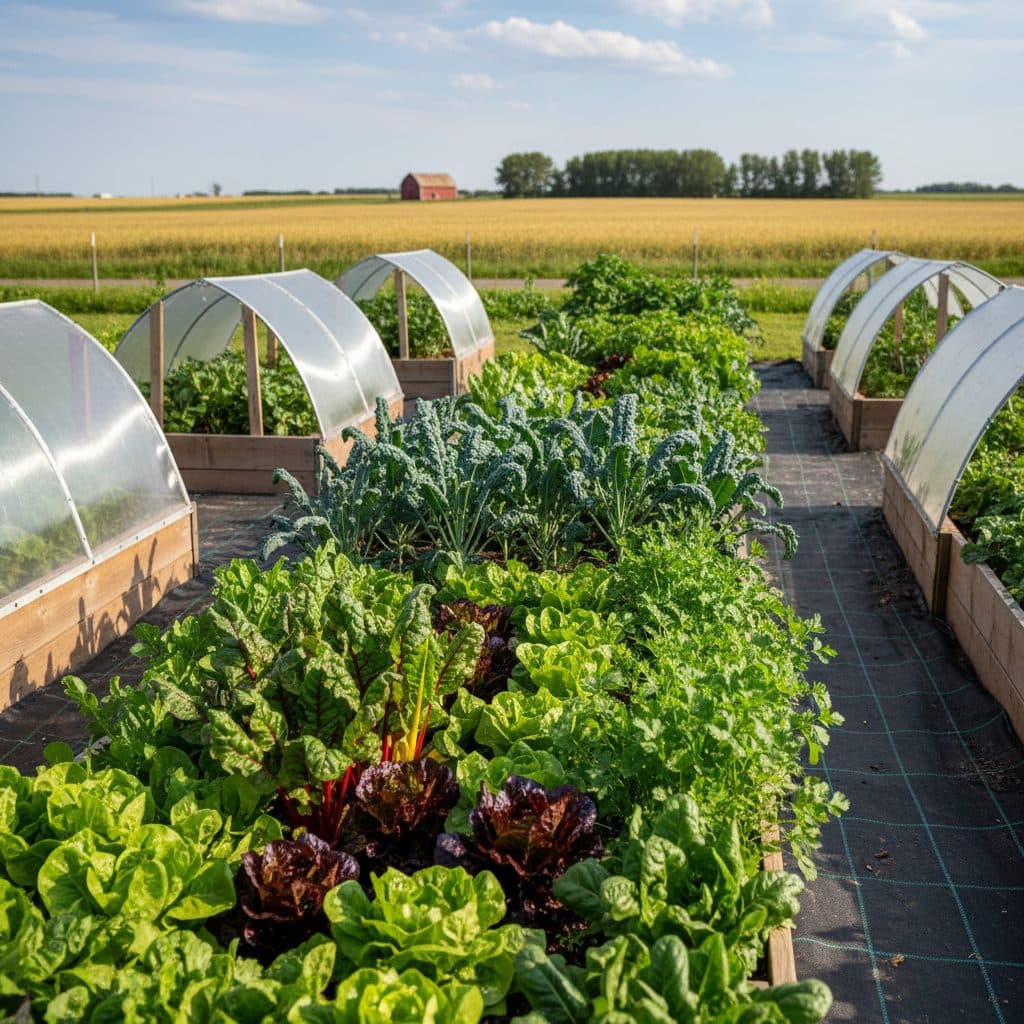
- Cold frames and mini hoop tunnels: Low polyethylene tunnels or glass cold frames protect young transplants from biting northern winds and late spring snowstorms.
- Floating row covers: Lightweight floating row covers add roughly 1.5°C to 2°C (3°F to 4°F) of frost protection, while heavier frost blankets or low poly tunnels gain up to 4°C (7°F).
- Windbreaks: Establishing sturdy shelterbelts of hardy shrubs on the north and west sides of the garden intercepts cold Prairie winds, creating a warm microclimate for delicate crops.
Soil building and microclimate design on the Prairies
In Zone 3, dark soil absorbs solar radiation far more effectively than light-coloured ground. Amending garden beds heavily with dark, well-decomposed organic matter and aged manure improves water-holding capacity and creates a darker thermal mass that warms up earlier each morning.
Positioning garden beds against south-facing fences, dark outbuilding walls, or thermal heat sinks (such as dark water-filled barrels or stone retaining walls) creates localized microclimates that remain 3°C to 5°C warmer than the surrounding open yard. These warm pockets allow gardeners to ripen tender squash and tomatoes reliably even in cool Prairie summers.
Perennial fruits and shrubs that survive -40°C
Perennial food production is fully achievable in Zone 3 by selecting cultivars naturally adapted to harsh continental winters:
- Haskaps (Honeyberries, Lonicera caerulea): Exceptionally hardy down to -45°C. Their blossoms withstand -7°C frosts in spring, producing nutritious blue berries in June ahead of strawberries.
- Saskatoon berries (Amelanchier alnifolia): Native to the Canadian Prairies, this rugged shrub produces sweet, almond-flavoured purple berries reliable through any winter.
- Sour cherries: University of Saskatchewan dwarf sour cherries (Carmine Jewel and the Romance Series: Romeo, Juliet, Crimson Passion) produce cold-hardy bushes packed with rich, tart fruit that thrive in Zone 3.
- Raspberries: Summer-bearing cultivars like Boyne and Latham offer proven cold hardiness.
- Apples on hardy rootstocks: Cold-hardy cultivars such as Goodland, Norland, and Battleford grafted onto Siberian crab (Malus baccata) rootstocks withstand deep Prairie freezes.
Pair these perennials with indoor soil biology like vermicomposting at home to maintain living compost year-round.