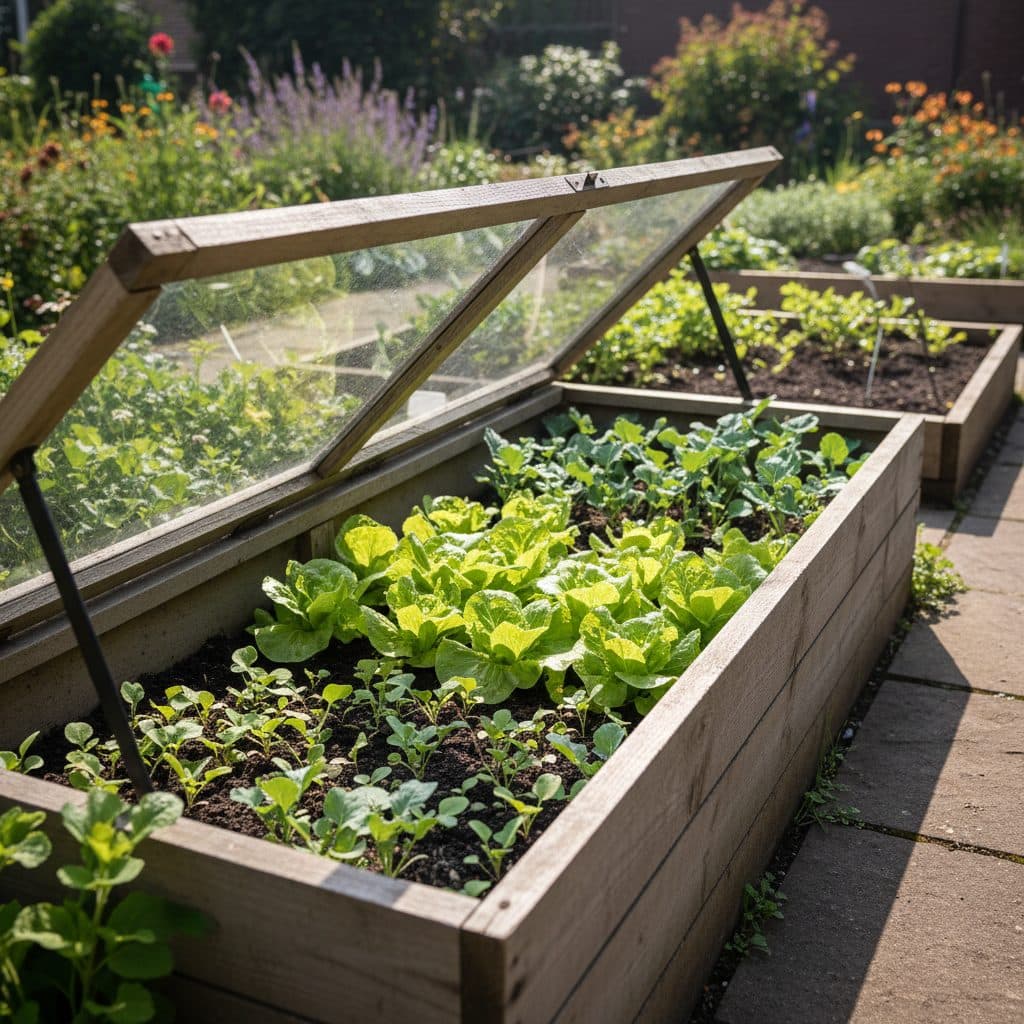
Key takeaways
- Position cold frames facing south or south-east to capture maximum sunlight and thermal energy during low-angle UK winter days.
- Use cold frames in early spring to gradually harden off tender seedlings started on indoor windowsills before outdoor transplanting.
- Prop the lid on sunny days to prevent heat build-up, and ventilate on damp days to cut humidity and reduce damping-off.
- Overwinter hardy winter salads and greens inside the frame, growing them to size by early November to harvest from standing crops through midwinter.
- Insulate the frame structure during severe freezing spells using horticultural fleece, old blankets, or straw bales along outer walls.
Quick answer: A cold frame is an unheated, low-profile growing structure with a transparent glass or polycarbonate lid (the light) and solid timber, brick, or masonry walls. UK gardeners use cold frames year-round to bridge the gap between warm indoor propagation and cold outdoor beds. They shield delicate seedlings from wind and torrential rain, harden off transplants in spring, and provide sheltered microclimates for harvesting winter greens.
Variable British weather can make early seed starting and winter food production challenging. Sudden spring frosts, relentless cold winds, and torrential autumn rain frequently damage young plants before they establish resilience in open garden soil.
A cold frame provides an economical, space-efficient microclimate that captures solar radiation and traps residual warmth from the earth. It is a miniature unheated greenhouse that buffers seedlings against temperature fluctuations without requiring electric heating cables or large footprints.
Mastering cold frame ventilation, seasonal sowing calendars, and site positioning allows you to extend your productive growing season by several months. Whether building a simple DIY timber box or installing a traditional brick frame, following proven management practices ensures thriving crops from January to December.
How a cold frame works: thermal dynamics and microclimates
A cold frame relies entirely on passive solar heating and thermal mass. Solar radiation passes through the transparent lid, warming the soil, masonry walls, and plant tissue inside.
+------------------------+-----------------------------------+-----------------------------------+
| Component              | Material Options                  | Performance Characteristics       |
+------------------------+-----------------------------------+-----------------------------------+
| Transparent Lid (Light)| Horticultural glass (4 mm)        | High clarity, heavy, wind-stable  |
| Polycarbonate Lid      | Twin-wall polycarbonate (6-10 mm) | Superior insulation, shatterproof |
| Timber Walls           | Untreated larch, cedar, scaffold  | Durable; line treated boards      |
| Masonry Walls          | Brick, stone, concrete blocks     | High thermal mass, absorbs day heat|
+------------------------+-----------------------------------+-----------------------------------+
During daylight hours, the soil absorbs heat and slowly re-radiates it through the night. Even during freezing weather, an unheated cold frame typically keeps interior temperatures 2°C to 5°C higher than the surrounding outdoor air, and cuts the drying, chilling effect of wind on foliage.
Ground insulation can be further enhanced by sinking the frame 10 cm to 15 cm into the ground or piling autumn leaves around the outside timber walls. This perimeter insulation buffers the internal root zone from deep ground frost during extended winter freezes.
Optimal siting and orientation
To maximise light capture and wind protection across British gardens:
- South-Facing Aspect: Position the sloping glass lid facing true south or south-east to capture low winter sun.
- Wall Backing: Place the frame against a sheltered south-facing brick wall or sturdy garden shed. The wall absorbs daytime solar energy and radiates warmth back into the frame overnight.
- Good Drainage: Avoid positioning cold frames in low-lying hollows where cold air pools (frost pockets) or where winter rainwater gathers. If your garden sits on heavy clay, integrate the frame on top of no dig raised beds to ensure free drainage.
- Wind Shelter: Situate the frame out of strong prevailing south-westerly gales. Keep the southerly aspect and filter the south-westerly wind with hedging or a permeable fence set back a few metres, rather than turning the frame away from the sun.
+-------------------------------------------------------------------+
|                 COLD FRAME STRUCTURAL PROFILE                     |
+-------------------------------------------------------------------+
|        Back Wall: 45 cm high (Sheltered against north wind)       |
|        \                                                         |
|         \   Sloping Glass/Polycarbonate Lid (15-20 degree slope) |
|          \                                                       |
|           Front Wall: 30 cm high (Facing South for maximum sun)   |
| ================================================================= |
|              Deep Garden Soil / Gravel / Capillary Matting        |
+-------------------------------------------------------------------+
Hardening off seedlings in spring
The most critical role for a cold frame between March and May is hardening off indoor-grown seedlings. Plants raised on warm windowsills or under grow lights have thin leaf cuticles and tender stems that scorch or snap if moved directly into open garden beds.
The 7-day hardening off protocol
+-------------------------------------------------------------------+
|               STEP-BY-STEP HARDENING OFF SCHEDULE                 |
+-------------------------------------------------------------------+
| Day 1 to 2: Move trays to cold frame at 10:00; lid propped 5 cm.  |
|             Close lid completely at 16:00 before temperatures drop.|
| Day 3 to 4: Prop lid open 15 cm during day; close lid overnight.  |
| Day 5 to 6: Remove lid entirely on mild days; leave open a crack  |
|             overnight if no frost is forecast.                    |
| Day 7+:     Leave fully open day and night; transplant to beds.   |
+-------------------------------------------------------------------+
This systematic exposure thickens plant cell walls, strengthens stems against wind, and prevents transplant shock. For hardy seeds started in late winter, this technique complements winter sowing milk jugs methods and protects seedlings from damping-off complications explained in preventing damping off seedling failure.
Managing ventilation and temperature control
Overheating poses a greater risk to young plants inside a cold frame than cold weather. On clear, sunny March mornings, internal temperatures can quickly soar above 30°C within an hour, scorching foliage and drying out seed trays.
Manual vs automatic venting
- Wooden Prop Sticks: Notch a sturdy wooden batten at 5 cm, 15 cm, and 30 cm increments to adjust lid opening height according to weather conditions.
- Automatic Solar Vent Openers: Install a wax-cylinder autovent mechanism. As temperatures rise above 18°C, the wax expands and automatically pushes a piston to open the lid, closing it again as the air cools in late afternoon.
Preventing fungal diseases
High humidity combined with stagnant air encourages botrytis (grey mould) and damping-off fungi. Always provide slight ventilation on damp, overcast days when outdoor temperatures exceed 7°C to maintain gentle air movement.
Water plants in the morning rather than the evening so that surface moisture on leaves evaporates before the cold frame is closed at sunset. Avoid splash-watering delicate leaves, applying water directly to the soil or using capillary matting beneath module trays.
Year-round cold frame cropping calendar
A cold frame should remain productive through every season of the year.
+-------------------+---------------------------------------------------+
| Season            | Primary Cold Frame Activities                     |
+-------------------+---------------------------------------------------+
| Late Winter       | Early sowings of broad beans, peas, spinach, kale |
| Early Spring      | Hardening off tomatoes, brassicas, sweet peas     |
| Summer            | Cuttings (shaded/closed); basil; aubergines       |
| Autumn            | Sowing winter salads, protecting tender cuttings  |
| Winter            | Overwintering mizuna, winter lettuce, lamb's salad|
+-------------------+---------------------------------------------------+
Winter salads (November to March)
Direct-sow cold-tolerant salad crops in late August or September so plants reach near-full size by early November. Below ten hours of daylight through midwinter across most of Britain, salad growth all but stops — you are harvesting from standing plants rather than growing new leaf, with fresh regrowth resuming from February:
- Lamb's Lettuce (Corn Salad / Mache): Unfazed by severe frost; holds nutty rosettes all winter.
- Mizuna and Mibuna: Cold-hardy peppery Japanese greens that hold well through winter and reshoot in early spring.
- Winter Density Lettuce: Compact, sweet cos-type lettuce bred specifically for winter protection.
- Land Cress: Peppery watercress substitute that thrives in cool, damp soil.
Summer propagation (June to August)
In mid-summer, shade the glazing with shade paint or mesh and keep the lid closed or barely cracked to hold humidity around cuttings of rosemary, lavender, thyme, and sage, venting on hot afternoons (keep lids fully open or off only when growing hardy, established container stock).
A cold frame fits into a seasonal workflow and belongs in an allotment first year plan, giving reliable harvests and vigorous transplants throughout the year.