Key takeaways
- Spent coffee grounds are near-neutral to mildly acidic (pH 6.5 to 6.8); brewing leaches out the water-soluble acids into your cup.
- Coffee grounds act as a "green" nitrogen-rich organic material in compost with a carbon-to-nitrogen (C:N) ratio of approximately 20:1.
- Never apply thick, solid surface layers of coffee grounds; fine particles cake together into a water-repellent (hydrophobic) crust.
- Incorporate grounds directly into garden soil at modest rates, not exceeding 10% to 15% of total soil volume.
- Composting coffee grounds before garden application produces the safest, most biologically beneficial soil amendment.
Quick answer: Spent coffee grounds are an excellent organic soil amendment and compost ingredient rich in nitrogen and organic matter. Contrary to popular myth, spent grounds will not dramatically acidify soil because brewing washes out most acidity. Mix grounds into compost or blend lightly into soil at under 15% volume.
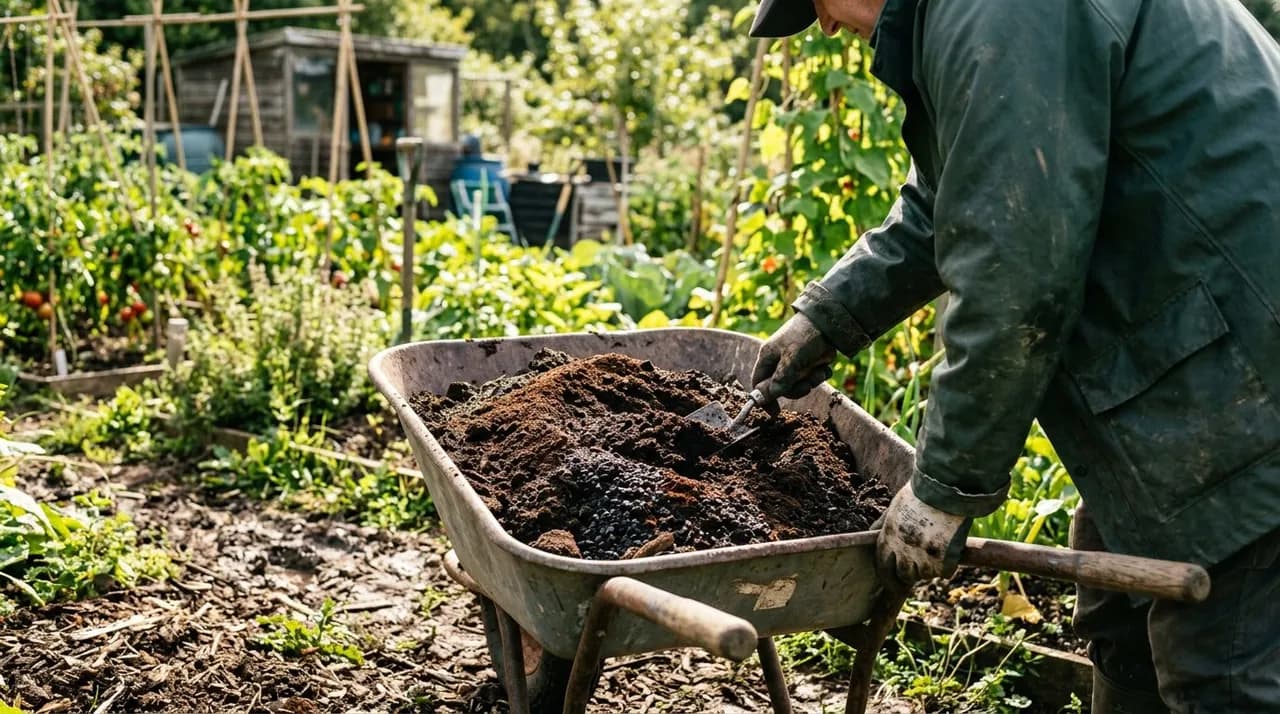
Spent coffee grounds are widely used in home gardens as a free source of organic matter. Coffee shops regularly give away heavy bags of spent grounds, offering home gardeners a steady supply of dark, organic material.
However, widespread gardening folklore has created persistent misconceptions regarding how coffee grounds behave in soil. Many gardeners believe that spreading thick layers of spent grounds will instantly acidify soil for blueberries and azaleas, or create an impenetrable barrier against slugs and garden pests.
Understanding the chemistry and physical properties of spent coffee grounds helps gardeners use them effectively in vegetable beds, borders, and compost heaps.
Soil chemistry and myth-busting: the pH reality
The most pervasive myth surrounding coffee grounds is their supposed extreme acidity:
+-----------------------------------------------------------------------+
|                    COFFEE GROUNDS PH FACT CHECK                       |
+-------------------+-----------------------+---------------------------+
| MATERIAL          | TYPICAL PH RANGE      | HORTICULTURAL IMPACT      |
+-------------------+-----------------------+---------------------------+
| Unbrewed Grounds  | Acidic (pH 4.5 - 5.0) | High soluble acid content |
| Brewed Beverage   | Acidic (pH 4.8 - 5.2) | Acids extract into drink  |
| Spent Grounds     | Mildly Acidic (6.5-6.8)| Near-neutral soil impact  |
+-------------------+-----------------------+---------------------------+
Why spent grounds do not acidify soil
Unbrewed, roasted coffee beans do contain organic chlorogenic and aliphatic acids. However, these acids are highly water-soluble. When hot water passes through coffee grounds during brewing, most of the water-soluble acids are carried off into the cup.
The remaining spent grounds typically test between pH 6.5 and 6.8, a near-neutral to mildly acidic range. Applying spent coffee grounds will not drastically lower the pH of alkaline soils, nor will it provide sufficient acidification for ericaceous, acid-loving species like blueberries, rhododendrons, or camellias. For true soil pH management, see our guide on soil amendments demystified.
The nutrient profile and trace minerals
Spent coffee grounds contain roughly 2% nitrogen by dry weight, along with essential micronutrients including potassium, phosphorus, calcium, magnesium, and copper. As soil microbes decompose the grounds, these bound nutrients are gradually released into plant-available forms over several months.
Proper direct soil application vs surface crusting hazards
How you apply coffee grounds to garden beds determines whether they help or hinder plant growth:
[ Correct Application ]   -----> Mixed into top 5-10 cm of soil at <15% volume, covered by mulch
[ Dangerous Mistake ]     -----> Spread as a 2-3 cm thick pure surface mulch (Cakes into crust)
The hydrophobic crusting hazard
One of the most damaging mistakes a gardener can make is spreading a thick, pure layer (over 1 cm / 0.5 in) of coffee grounds across the soil surface:
- Because coffee grounds consist of fine, uniform micro-particles, drying causes them to compact and interlock into a dense, cement-like crust.
- This dried layer becomes hydrophobic (water-repellent), preventing rain and irrigation water from penetrating down to plant roots while blocking soil gas exchange.
- Water simply beads up and runs off the crust, leaving the root zone beneath parched and starved of oxygen.
Correct direct incorporation rules
- Blend Thoroughly: If adding raw spent grounds directly to vegetable beds or planting borders, mix them thoroughly into the top 5 to 10 cm (2 to 4 inches) of native soil.
- Volume Threshold: Never let coffee grounds exceed 10% to 15% of the total soil volume in any bed. High concentrations can release natural polyphenols that temporarily inhibit seed germination and stunt delicate young seedlings (an allelopathic effect).
- Top with Coarse Mulch: If lightly scattering grounds over the soil surface, apply only a dusting and immediately cover with 5 cm of coarse wood chips or shredded leaves to maintain moisture permeability.
Composting coffee grounds: greens, browns, and ratios
By far the safest, most effective way to utilize spent coffee grounds is running them through an active compost pile:
+-----------------------------------------------------------------------+
|                    COFFEE GROUNDS IN COMPOST                          |
+-----------------------------------------------------------------------+
|  Color: Dark Brown           --> ACTS AS A GREEN (High Nitrogen)      |
|  Carbon-to-Nitrogen (C:N):   --> Approximately 20:1                   |
|  Recommended Pile Volume:    --> 10% to 20% of total compost volume   |
+-----------------------------------------------------------------------+
Why coffee grounds are "greens"
In composting terminology, "greens" are nitrogen-rich materials that provide protein for decomposing microorganisms, while "browns" are carbon-rich structural materials. Despite their dark brown color, coffee grounds have a C:N ratio of roughly 20:1, placing them firmly in the green category alongside fresh grass clippings and kitchen vegetable scraps.
Building a balanced compost pile
- Layer coffee grounds alongside high-carbon browns such as dry autumn leaves, straw, shredded cardboard, or coarse sawdust.
- Aim for a balanced volume ratio: roughly three parts dry brown carbon materials to one part coffee grounds and green kitchen waste.
- Keep coffee grounds below 20% of the total pile volume. Because grounds are dense and have fine particle size, exceeding 20% can restrict airflow within the pile, creating soggy, anaerobic pockets.
- Turn the pile regularly to maintain oxygen flow. Thermophilic bacteria rapidly colonize coffee grounds, generating sustained heat that breaks down organic residues and pasteurizes weed seeds.
Learn more about managing pile temperature and moisture in our foundation overview of composting and hot vs cold composting methods.
Coffee grounds in worm bins and container gardens
Vermicomposting systems and container plantings benefit from coffee grounds when managed with care:
[ Worm Bin Best Practice ]
Worms do not eat raw grounds directly; they graze on the fungal microbes growing on them.
Sprinkle 1-2 tablespoons per week across one corner of the bin; avoid overfeeding.- Worm Farm Usage: Composting worms (Eisenia fetida) readily tolerate spent coffee grounds. The fine grit assists worm gizzard digestion, while the organic matter supports microbial growth. Add grounds in small pinches, along with crushed eggshells for grit and slow calcium release; bin acidity comes from fruit and kitchen scraps, not from the near-neutral grounds. For full worm care, see vermicomposting at home.
- Potted Plants: Avoid mixing raw grounds into small houseplant containers, where limited soil volume and sluggish indoor microbial activity can lead to surface mold, fungus gnat attraction, and drainage clogging. Use fully finished, aged compost instead.
Pest deterrent claims: fact vs fiction
Home gardeners frequently hear claims that coffee grounds eliminate common garden pests:
- Slugs and Snails: Spreading a band of dry, abrasive grounds creates a mild physical barrier that crawling pests dislike crossing. However, as soon as morning dew or rain wets the grounds, the barrier effect diminishes completely.
- Cats and Mammals: The bitter residual aroma of coffee grounds mildly discourages some neighborhood cats from digging in freshly turned garden beds, though results vary widely between animals.
- Ants and Mosquitos: Coffee grounds do not eliminate ant colonies or repel flying insects in garden settings. Use targeted cultural and biological controls for proven pest defense as detailed in integrated pest management for home gardens.