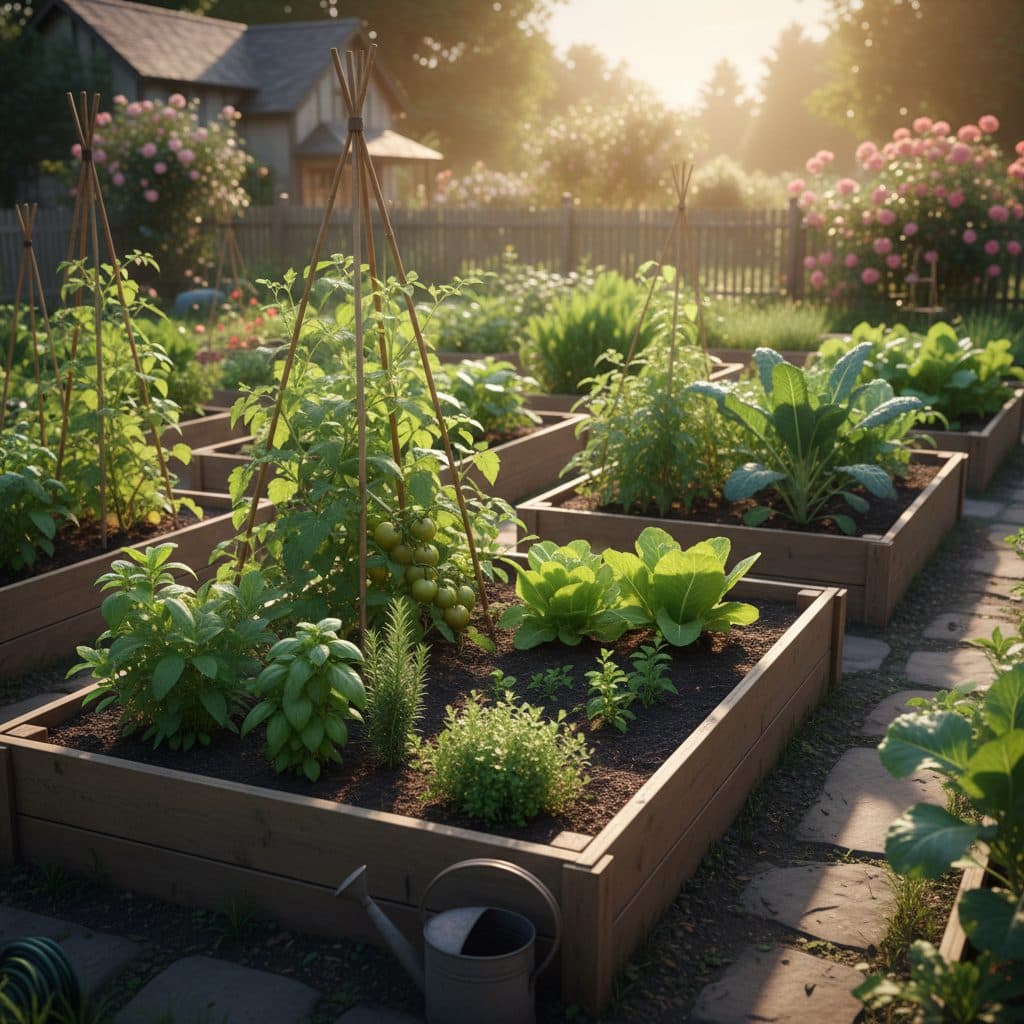
Key takeaways
- Balance greens and browns for an approximate 30:1 carbon-to-nitrogen ratio.
- Maintain 40% to 60% moisture, resembling a wrung-out sponge.
- Turn your pile weekly to introduce oxygen and prevent compaction, especially in warm months.
- Build a pile at least 3 ft x 3 ft x 3 ft (27 cubic feet) for effective heat generation.
- Consider adding biochar or vermicompost to boost microbial activity and nutrient cycling.
- Monitor temperature with a compost thermometer for optimal breakdown, aiming for 130-160°F.
Quick answer: A compost pile won’t heat up or break down due to imbalanced carbon-to-nitrogen ratios, insufficient moisture, or lack of aeration. To restart it, adjust these elements, ensuring a 30:1 C:N ratio, 40-60% moisture, and regular turning.
Many gardeners across the US, from the humid Southeast to the drier plains of USDA zone 5, encounter a common frustration: a compost pile that just won’t heat up or break down. You’ve diligently collected kitchen scraps and yard waste, but after weeks, the pile remains cold, looking much the same as when you started. This isn’t just about speed; an active, hot compost pile reaching 130°F to 160°F matters because it kills weed seeds and pathogens and creates a safer, richer amendment for your garden beds.
Understanding the science behind decomposition is the first step to reviving a dormant pile. Microorganisms are the true workers in your compost, and they require specific conditions to thrive. If your pile is stubbornly cold, it’s likely missing one or more of these critical elements. We’ll explore the common culprits, from imbalanced carbon-to-nitrogen ratios to insufficient moisture, and provide concrete steps to get your compost actively breaking down within days, transforming waste into nutrient-rich soil for your plants.
Balancing the carbon-nitrogen ratio for active decomposition
The foundation of a successful, hot compost pile lies in achieving the correct carbon-to-nitrogen (C:N) ratio. Microorganisms, the tiny engines of decomposition, need both carbon for energy and nitrogen for protein synthesis to multiply rapidly. An optimal C:N ratio of approximately 30:1 is widely recommended for most backyard composting systems [1]. If your pile is predominantly ‘brown’ materials like dry leaves or wood chips, it’s too high in carbon and will decompose very slowly, often remaining cold for months.
identifying and adjusting your C:N ratio
Conversely, a pile with too much ‘green’ material, such as fresh grass clippings or food scraps, will have an overly low C:N ratio, leading to anaerobic conditions and a foul, ammonia-like odor. For example, fresh grass clippings have a C:N ratio around 19:1, while dry straw can be as high as 80:1. To correct an imbalance, you need to add the missing component. If your pile is cold and dry, add more nitrogen-rich materials. A 500 g bag of fermented soybean meal organic fertilizer can provide a significant nitrogen boost, or simply layer in fresh kitchen scraps or manure.
To jumpstart a cold, carbon-heavy pile, aim to mix in roughly one part ‘greens’ for every two to three parts ‘browns’ by volume. This adjustment can dramatically increase microbial activity, often raising the pile’s internal temperature by 20°F to 30°F within 24 hours. Regular monitoring and adjustment of these components are key to maintaining a consistently active pile that reaches 130°F or higher.
- Browns (high carbon): dry leaves, straw, wood chips, shredded paper, pine needles.
- Greens (high nitrogen): fresh grass clippings, kitchen scraps, coffee grounds, manure, green plant trimmings.
- Ideal ratio: approximately 30 parts carbon to one part nitrogen.
- Signs of too much carbon: cold, dry, slow decomposition.
- Signs of too much nitrogen: foul odor, slimy texture, rapid initial heating followed by cooling.
Ensuring adequate moisture and airflow in your compost
Beyond the right C:N ratio, moisture and aeration are non-negotiable for a thriving compost pile. Microorganisms require water to live and move, but too much water displaces oxygen, leading to anaerobic conditions and a putrid smell. The ideal moisture content for a compost pile is between 40% and 60% [1], similar to a wrung-out sponge. In regions like the arid Southwest, maintaining this moisture level can be a challenge, often requiring supplemental watering, especially during dry spells that last more than one week.
testing moisture and improving aeration
To test your pile’s moisture, grab a handful of material and squeeze it. If a few drops of water emerge, it’s generally well-hydrated. If no water comes out, it’s too dry; if water streams out, it’s too wet. A 3-in-1 soil pH, moisture, and fertility meter can provide a more precise reading. For aeration, oxygen is vital for aerobic bacteria. Without enough oxygen, decomposition slows dramatically, and undesirable anaerobic bacteria take over, producing methane and other unpleasant gases.
Turning your compost pile regularly is the most effective way to introduce oxygen. For a hot pile, turning every 2 to 3 days is ideal, especially when the internal temperature drops below 130°F after peaking at 150°F or more. Even turning once a week can significantly improve airflow and redistribute moisture, ensuring all parts of the pile are exposed to optimal conditions. Building a pile with a minimum dimension of 3 ft x 3 ft x 3 ft also helps maintain porosity, preventing compaction that stifles air circulation.
- Ideal moisture: 40% to 60%, like a damp sponge.
- Too dry: decomposition slows, pile remains cold.
- Too wet: anaerobic conditions, foul odors, slimy materials.
- Aeration method: turn the pile every 2 to 7 days.
- Pile structure: avoid compaction by layering coarse materials.
Size, temperature, and microbial activity
The physical size of your compost pile directly impacts its ability to generate and retain heat. A pile that is too small, say 2 ft x 2 ft x 2 ft, simply doesn’t have enough mass to insulate itself and reach the critical temperatures needed for rapid decomposition. For most backyard composters, a minimum dimension of 3 ft x 3 ft x 3 ft (totaling 27 cubic feet) is recommended [1]. This volume allows for sufficient microbial activity to build up internal heat, often reaching 130°F to 160°F, which is essential for killing weed seeds and pathogens effectively within 3 days of sustained heat.
monitoring and maintaining optimal temperatures
Once your pile reaches these temperatures, it signifies that the thermophilic (heat-loving) bacteria are hard at work. If your pile hits 160°F or higher, it’s time to turn it to prevent overheating, which can kill off beneficial microbes. A compost thermometer is an invaluable tool for monitoring these internal temperatures, providing precise data that guides your turning schedule. In cooler climates, such as USDA zone 4 in the Upper Midwest, maintaining these temperatures can be challenging in late fall, often requiring a larger pile or additional insulation.
Microbial activity is the engine of composting. Factors like pH, nutrient availability, and the presence of beneficial organisms all play a role. A pH between 6.0 and 8.0 is generally suitable for most compost microbes. If your pile is struggling to heat up despite correct C:N and moisture, consider whether the materials themselves are too coarse or lack sufficient surface area for microbes to colonize. Shredding or chopping materials to 2 inches or smaller can significantly accelerate decomposition, allowing microbes to access more organic matter.
- Minimum pile size: 3 ft x 3 ft x 3 ft (27 cubic feet).
- Optimal temperature range: 130°F to 160°F for rapid breakdown.
- Temperature monitoring: use a compost thermometer for accuracy.
- Material size: chop materials to 2 inches or less for faster decomposition.
- pH range: generally 6.0 to 8.0 for microbial health.
Advanced strategies: Biochar and vermicomposting
Sometimes, even with careful management, a compost pile can benefit from an extra boost. Two amendments, biochar and vermicompost, can significantly improve microbial activity and the overall quality of your finished product. Biochar, a charcoal-like material produced by heating biomass in a low-oxygen environment, offers an incredibly porous structure. Adding 5% to 10% biochar by volume to your compost pile creates vast surface areas for microbes to colonize, improving aeration and nutrient retention within the pile [6].
integrating biochar and vermicompost
Biochar’s stable carbon structure also helps to stabilize nitrogen, reducing nutrient loss and preventing ammonia odors, especially in nitrogen-rich piles. For example, a compost pile struggling with a slightly high nitrogen content can benefit from biochar’s ability to adsorb excess nitrogen. This can help maintain a balanced environment for microbes, leading to more efficient decomposition and a richer final product. Mixing biochar into your pile as you build it, or incorporating it during a turn, ensures even distribution and maximum benefit.
Vermicomposting, or composting with worms (typically red wigglers, Eisenia fetida), introduces a different set of decomposers that excel at breaking down food scraps and other soft organic materials. While not a ‘hot’ composting method, integrating vermicompost into a traditional pile, or even starting a small worm bin alongside your main pile, can provide a steady supply of highly active microbes and nutrient-rich castings. A handful of finished vermicompost added to a struggling hot pile can inoculate it with a diverse community of beneficial organisms, helping to kickstart a stalled process, particularly in cooler climates where thermophilic activity might naturally slow down below 100°F.
- Biochar benefits: improved aeration, microbial habitat, nutrient retention, odor reduction.
- Vermicompost benefits: introduces diverse microbial communities, nutrient-rich castings.
- Application rate for biochar: 5% to 10% by volume.
- Worm species for vermicomposting: Red wigglers (Eisenia fetida) are common.
- Combined approach: use vermicompost to inoculate a cold compost pile.
Composting Methods: Hot Pile vs. Vermicompost
Feature | Hot Composting | Vermicomposting |
|---|---|---|
Speed | 3 weeks to 3 months | 2 to 6 months |
Temperature | 130-160°F | Room temperature (55-77°F) |
Materials | Yard waste, kitchen scraps, manure (balanced C:N) | Kitchen scraps, paper, soft organic matter |
Space | Minimum 3 ft x 3 ft x 3 ft | Small bins, indoor or outdoor |
Maintenance | Regular turning, moisture checks | Feeding worms, bedding maintenance |
Ideal C:N Ratio: An approximate 30:1 carbon-to-nitrogen ratio is optimal for rapid decomposition and heat generation in a compost pile.
Optimal Temperature: Maintain 130-160°F for effective pathogen kill and weed seed destruction, typically achieved within 3 days of sustained heat.
Minimum Pile Size: A compost pile should be at least 3 ft x 3 ft x 3 ft (27 cubic feet) to generate sufficient heat and maintain microbial activity.
Frequently asked questions
What is the ideal temperature for a hot compost pile?
The ideal temperature range for a hot compost pile is between 130°F and 160°F, which effectively kills most pathogens and weed seeds within 3 days of sustained heat. Temperatures above 160°F can harm beneficial microbes.
How often should I turn my compost pile?
For rapid decomposition and to maintain optimal temperatures, turn your compost pile every 2 to 3 days, or at least once a week, to introduce oxygen and redistribute moisture. This helps prevent anaerobic conditions and odors.
What does a 30:1 carbon-to-nitrogen ratio mean?
A 30:1 carbon-to-nitrogen ratio means for every 30 parts of carbon-rich material (‘browns’), you should add one part of nitrogen-rich material (‘greens’) by weight, which fuels microbial activity and heat generation.
My compost pile smells bad, what’s wrong?
A foul odor, often like ammonia or rotten eggs, indicates too much nitrogen or insufficient oxygen. To fix this, add more carbon materials (like shredded leaves) and turn the pile immediately to introduce air, aiming for a 30:1 ratio.
Can I add meat or dairy to my compost pile?
It is generally not recommended to add meat, dairy, or oily foods to home compost piles as they can attract pests like rodents and raccoons, decompose slowly, and create unpleasant odors. Stick to plant-based scraps and yard waste for best results.
How long does it take for compost to be ready?
A well-managed hot compost pile can produce finished compost in as little as 3 weeks to 3 months, especially if turned frequently. A slower, passive pile might take 6 months to over a year to fully decompose into usable material.
References
- Bibliography (2024). Bibliography.
- Semiotics for Screenwriters (2024). Semiotics for Screenwriters.
- Closing Thoughts (2024). Closing Thoughts.
- The Narrative Level (2024). The Narrative Level.
- Break It Down (2025). Break It Down.
- USDA Natural Resources Conservation Service (2024). USDA Natural Resources Conservation Service.