Key takeaways
- Maintaining an ideal carbon-to-nitrogen ratio of 30:1 is crucial for efficient composting, with green materials providing nitrogen and brown materials providing carbon.
- Microbial activators, such as EM-4 solutions or specific fungal inoculants, introduce beneficial microorganisms that significantly speed up the decomposition process.
- Nutrient-rich organic materials like alfalfa meal, comfrey leaves, and fresh manure act as natural accelerators by providing essential nitrogen and micronutrients for microbial growth.
- Biochar is a long-term compost accelerator and soil amendment. It gives microbes a stable habitat and improves nutrient retention in the finished compost.
- Proper moisture levels, aeration, and regular turning are as important as accelerators for achieving a hot compost pile that reaches 130°F to 160°F.
- Compost activators can effectively reduce the time needed to produce usable compost by 30% to 50%, particularly with materials like grass clippings.
Quick answer: Natural compost accelerators, such as microbial activators (e.g., EM-4), nutrient-rich organic materials (e.g., alfalfa meal), and biochar, significantly speed up decomposition by optimizing microbial activity, C:N ratios, and moisture levels. These methods can reduce composting time by 30-50% by creating ideal conditions for microorganisms.
In my garden in central Pennsylvania, USDA zone 6b, I’ve learned that making good compost means creating the right conditions for microorganisms to do their work efficiently. While a well-built pile will eventually break down, many growers, myself included, look for ways to speed up the process. This is where natural compost accelerators come in handy, helping to turn kitchen scraps and yard waste into nutrient-rich soil amendment in a fraction of the time.
The goal is to provide the ideal environment for the microbial populations responsible for decomposition. Research from the University of Illinois has shown that compost activators can reduce composting time for grass clippings by 30% to 50% [1]. This article will explore several natural activators that actually work, to help you produce compost faster for your garden or farm.
Understanding the science behind compost acceleration
Composting is a biological process driven by billions of microorganisms, primarily bacteria and fungi, that break down organic materials into humus. For these microbes to thrive and work quickly, they need a balanced diet of carbon and nitrogen, adequate moisture, and sufficient oxygen. The ideal carbon-to-nitrogen ratio (C:N) for composting is around 30:1 [6]. Too much carbon slows the process, while too much nitrogen can lead to ammonia odors and nutrient loss. Accelerators often work by optimizing one or more of these factors.
the role of temperature and moisture
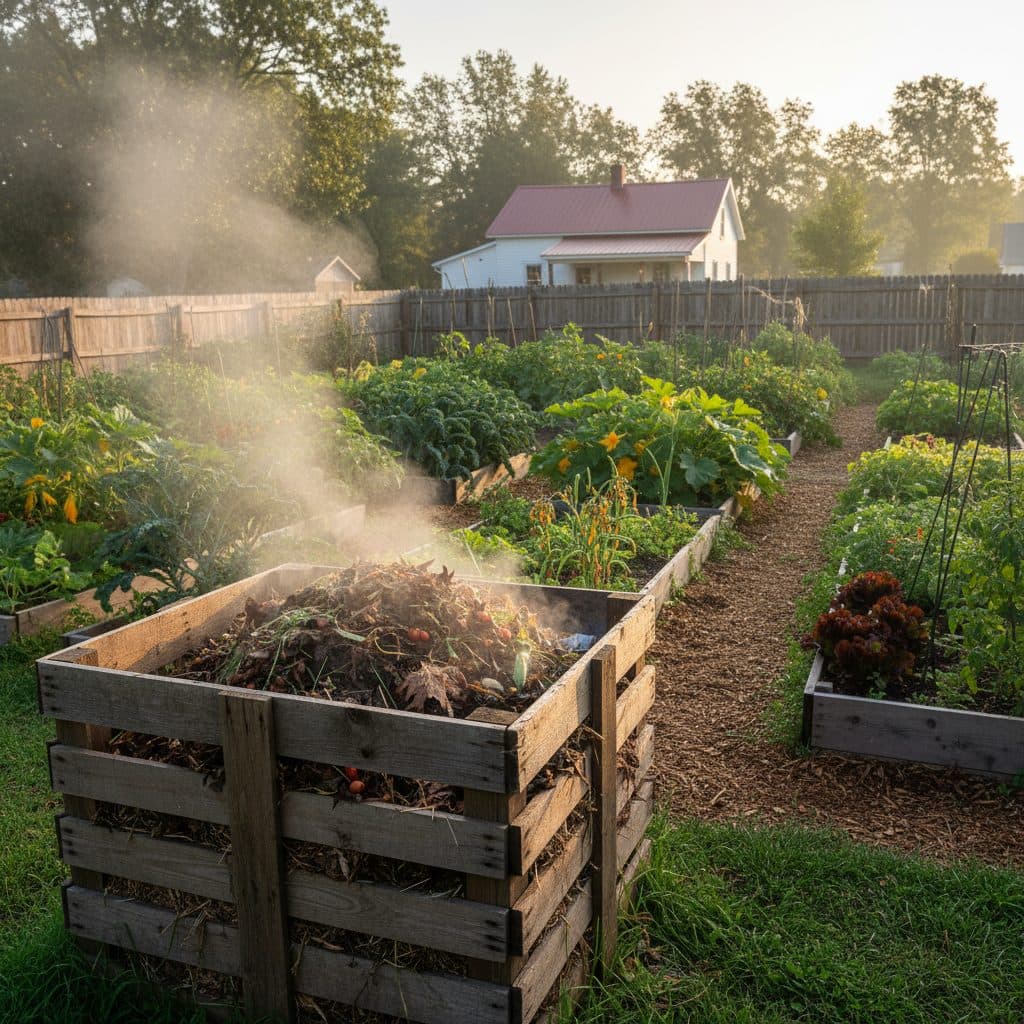
A healthy, active compost pile generates heat, with optimal temperatures ranging from 130°F to 160°F. This heat is a byproduct of microbial activity and helps kill weed seeds and pathogens. Maintaining a consistent moisture level, similar to a wrung-out sponge, is also critical; too dry, and microbial activity slows; too wet, and the pile becomes anaerobic and smelly. Regular turning helps introduce oxygen, which is essential for the aerobic bacteria that perform most of the decomposition. For monitoring these conditions, a reliable 3-in-1 Soil pH, Moisture & Light Meter can be very useful.
- Carbon-rich materials: brown leaves, wood chips, straw, shredded paper
- Nitrogen-rich materials: grass clippings, food scraps, fresh manure, alfalfa meal
- Optimal C:N ratio: approximately 30:1 for rapid decomposition
- Ideal moisture content: 40% to 60%, like a damp sponge
- Target temperature range: 130°F to 160°F for pathogen control
Microbial activators: boosting beneficial bacteria and fungi
One of the most direct ways to accelerate composting is by introducing a concentrated dose of beneficial microorganisms. These microbial activators, often sold as liquid concentrates or dry powders, contain specific strains of bacteria, fungi, and actinomycetes that are particularly efficient at breaking down organic matter. In regions like Surabaya, Indonesia, researchers have shown that bio-activators such as EM-4 (Effective Microorganisms) can significantly improve the quality of compost made from household organic waste [4]. These solutions essentially jump-start the microbial community in a new pile, especially one that might be lacking in diverse microbial life.
applying EM-4 and other liquid cultures
EM-4, for example, is a widely available product containing lactic acid bacteria, yeasts, and photosynthetic bacteria. To use it, you typically dilute the concentrate with water, often at a ratio of 1:100 or 1:500, and then spray it onto your compost layers as you build the pile. Other traditional activators, like ‘Leri water’ (rice washing water), have also been studied for their effectiveness in composting, demonstrating their ability to enhance the process [4]. These activators are particularly useful when starting a pile with mostly ‘brown’ materials that might be low in microbial diversity. Consider adding a small amount of finished compost from a healthy pile to a new one; this acts as a natural microbial inoculant, introducing billions of helpful organisms.
- EM-4: contains lactic acid bacteria, yeasts, photosynthetic bacteria
- Leri water: traditional rice washing water, rich in starches and microbes
- Fungal inoculants: specific fungi strains for lignin breakdown
- Actinomycetes: filamentous bacteria, good for breaking down tough materials
- Finished compost: a natural source of diverse microbial populations
Nutrient-rich activators: feeding the microbial workforce
Beyond directly adding microbes, you can accelerate composting by providing a rich food source for the existing microbial population. Materials high in nitrogen are particularly effective because nitrogen is a key building block for microbial proteins and enzymes. When added to a carbon-heavy pile, these ‘green’ materials quickly kick-start decomposition. For instance, a small amount of fresh chicken manure, with its high nitrogen content (around 1.6% N), can significantly boost a sluggish compost pile. In agricultural waste composting, different bio-activators have shown varying effects on compost quality, often tied to their nutrient profiles [5].
common nitrogen sources for composting
Alfalfa meal is an excellent natural activator, with a nitrogen content of about 2.5% to 3%. It also contains trace minerals and growth hormones that further stimulate microbial activity. Comfrey leaves are also rich in nitrogen, potassium, and calcium, and their rapid decomposition helps to heat up a pile quickly. Simply chop these materials into smaller pieces – 1 to 2 inches is ideal – and mix them into your compost. You can also use a product like Fermented Soybean Meal Organic Fertilizer, which offers a slow-release nitrogen boost, typically around 7% nitrogen.
- Alfalfa meal: 2.5% to 3% nitrogen, plus trace minerals
- Comfrey leaves: high in nitrogen, potassium, and calcium
- Fresh manure: chicken (1.6% N), cow (0.6% N), horse (0.7% N)
- Urine: diluted 1:10 with water, a potent nitrogen source
- Blood meal: very high nitrogen, around 12% to 13% N
Biochar: a long-term accelerator and soil amendment
While not an immediate ‘activator’ in the same way as microbial solutions or nitrogen-rich materials, biochar plays a significant role in accelerating the overall composting process and enhancing the quality of the finished product. Biochar is a highly porous form of charcoal produced by heating biomass in the absence of oxygen. Its unique structure provides an enormous surface area—up to 400 square meters per gram—that acts as a stable habitat for beneficial microorganisms [6]. When added to a compost pile, biochar inoculates the pile with these microbes and improves aeration, leading to more efficient decomposition.
integrating biochar into your compost system
To use biochar effectively, it’s best to ‘charge’ it first by soaking it in a nutrient-rich liquid like compost tea or liquid manure for a few days before adding it to your pile. This fills its pores with nutrients and microbes, making it even more effective. Add biochar at a rate of 5% to 10% of the total volume of your compost pile. Once the compost is finished, the biochar remains, continuing to provide its benefits as a long-term soil amendment, improving water retention by up to 20% and nutrient availability in your garden beds. This makes it a valuable addition for growers in arid regions like USDA zone 9 in California, where water conservation is critical.
- Porous structure: provides vast surface area for microbial colonization
- Improved aeration: prevents anaerobic conditions in the pile
- Nutrient retention: reduces nutrient leaching from compost
- Long-term soil amendment: lasts for hundreds of years in soil
- Carbon sequestration: locks carbon away from the atmosphere
Comparison of Composting Activator Types
Activator Type | Primary Mechanism | Typical Application Rate | Composting Time Reduction |
|---|---|---|---|
Microbial Solutions (e.g., EM-4) | Introduces beneficial microorganisms | 1:100 to 1:500 dilution, sprayed on layers | Up to 50% (for grass clippings) [1] |
Nitrogen-Rich Materials (e.g., Alfalfa Meal) | Feeds existing microbes, balances C:N ratio | 1-2 cups per cubic yard of compost | 20-40% (depends on initial C:N) |
Biochar | Provides microbial habitat, improves aeration/retention | 5% to 10% of total pile volume | 10-25% (enhances long-term, indirect acceleration) |
C:N Ratio: An ideal carbon-to-nitrogen ratio of 30:1 is crucial for efficient microbial decomposition in a compost pile [6].
Compost Temperature: Maintaining a compost pile temperature between 130°F and 160°F helps destroy weed seeds and pathogens, ensuring a safe end product [6].
Decomposition Speed: Compost activators can accelerate the breakdown of organic materials, reducing the composting time by 30% to 50% for common materials like grass clippings [1].
Frequently asked questions
What is the best natural compost accelerator?
The ‘best’ accelerator depends on your compost pile’s needs. For a nitrogen boost, alfalfa meal or fresh manure work well. For microbial inoculation, EM-4 solutions or a shovel of finished compost are highly effective, often reducing composting time by 30% or more.
How often should I add an accelerator to my compost?
For most activators, incorporate them as you build your compost pile, layering them in every 6 to 12 inches of new material. For liquid microbial solutions, apply them each time you add a significant amount of new material or turn the pile, typically every 3 to 7 days.
Can I use human urine as a compost accelerator?
Yes, human urine is a potent, nitrogen-rich compost accelerator. It should be diluted with water at a 1:10 ratio to prevent ammonia odors and then sprinkled over brown, carbon-rich materials. This can significantly increase microbial activity and heat generation in the pile.
Do compost activators work on all types of organic waste?
Compost activators are most effective on a diverse range of organic waste, particularly when there’s a good mix of green and brown materials. While they can speed up decomposition for materials like grass clippings by 30-50% [1], very tough or woody materials may still take longer to break down even with activators.
Is biochar a compost accelerator or a soil amendment?
Biochar functions as both. When added to a compost pile, its porous structure provides a habitat for beneficial microbes, accelerating decomposition. Once the compost is mature, the biochar acts as a long-term soil amendment, improving water retention by up to 20% and nutrient availability in the soil for hundreds of years [6].
What is the ideal carbon-to-nitrogen ratio for composting?
The ideal carbon-to-nitrogen (C:N) ratio for efficient composting is approximately 30:1 [6]. This balance ensures that microorganisms have enough carbon for energy and enough nitrogen for building their bodies, leading to rapid and effective decomposition of organic materials.
References
- Evaluation of Compost Activators for Composting Grass Clippings (1996). Evaluation of Compost Activators for Composting Grass Clippings.
- Accelerators and Activators (2017). Accelerators and Activators.
- Influence of non-metabolic microbial growth promotors (cAMP – activators) on the sensitivity to antimicrobials in the actually multiresistant microbial strains (2017). Influence of non-metabolic microbial growth promotors (cAMP – activators) on the sensitivity to antimicrobials in the actually multiresistant microbial strains.
- Variation of Bio-Activators (EM-4 and Leri Water) in Processing Household Organic Waste into Organic Compost Ready to Use in Gebang Putih Surabaya (2022). Variation of Bio-Activators (EM-4 and Leri Water) in Processing Household Organic Waste into Organic Compost Ready to Use in Gebang Putih Surabaya.
- THE EFFECT OF DIFFERENT BIO ACTIVATORS ON QUALITY COMPOST OF AGRICULTURAL WASTE (2023). THE EFFECT OF DIFFERENT BIO ACTIVATORS ON QUALITY COMPOST OF AGRICULTURAL WASTE.
- USDA Natural Resources Conservation Service (2024). USDA Natural Resources Conservation Service.