Key takeaways
- Damping-off can take out most of a tray of seedlings, and it affects growers across many US regions.
- Pythium thrives in cool, wet soil conditions, often below 60°F, causing pre-emergence or root rot.
- Rhizoctonia prefers warmer, slightly drier conditions, typically above 70°F, leading to stem lesions at the soil line.
- Sterilize all seed-starting equipment and use a fresh, sterile seed starting mix to prevent pathogen introduction.
- Maintain consistent, moderate moisture levels and ensure good air circulation, aiming for 50% to 60% relative humidity.
- Promptly remove any affected seedlings and adjust environmental conditions to prevent the disease from spreading to healthy plants.
Quick answer: Damping-off is caused by a mix of true fungi and fungus-like water molds, and it shows up as collapsed stems at the soil line or as seed that never emerges at all. Prevention involves sterilizing equipment, using sterile mix, maintaining moderate moisture, and ensuring good air circulation.
In many US gardens, from the humid Southeast to the dry Southwest, starting seeds indoors is a common practice to get a jump on the growing season. However, a silent killer known as damping-off disease can swiftly destroy young seedlings, and once it takes hold in a tray the losses can run to nearly all of it. This fungal problem is a significant setback for home growers and commercial nurseries alike: promising trays of tiny green sprouts can turn into collapsed stems within a day or two.
Understanding what damping-off looks like and the specific pathogens behind it, like Pythium and Rhizoctonia, is the first step toward prevention. While it can feel devastating to lose an entire tray of tomato or pepper seedlings that you’ve nurtured for one to two weeks, practical strategies exist to mitigate the risk. By focusing on proper sanitation, environmental control, and careful observation, you can protect your investment of time and effort to ensure a higher success rate for your garden, whether you are growing in USDA zone 3 or USDA zone 10.
What damping-off looks like
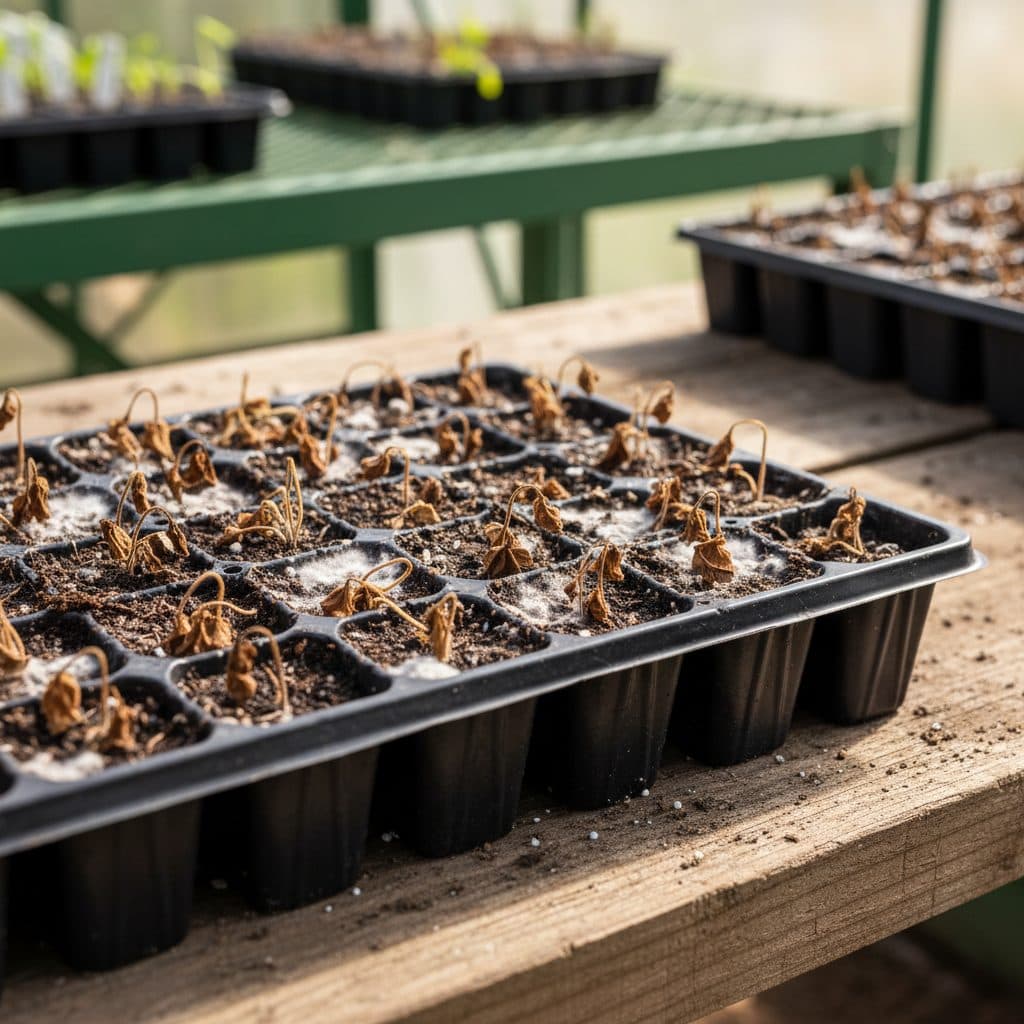
Damping-off manifests in a few distinct ways, so it pays to observe your seedlings closely, especially during their first two weeks of growth. The most common symptom is when seedlings emerge from the soil but then suddenly collapse, often appearing pinched or water-soaked at the soil line. This collapse can happen within 24 to 48 hours of symptoms appearing. You might also notice a fuzzy, white, or grayish mold growth on the soil surface or on the dying stems, particularly in trays with high humidity levels, perhaps above 70%.
Identifying the signs of trouble
Another indicator is a failure of seeds to germinate altogether, known as pre-emergence damping-off, where the pathogen attacks the seed or sprout before it even breaks the soil surface. For seedlings that do emerge, the stem near the soil line might appear discolored — brown or black — and become soft, causing the plant to topple over. This is particularly noticeable on plants with delicate stems, like lettuce or basil, which might have a stem diameter of less than 0.1 in. Early detection helps prevent the disease from spreading across an entire tray of 24 to 72 seedlings. For more on successful starts, consider reviewing our seed starting for beginners guide.
- Sudden collapse of young seedlings, often within one to two weeks of germination.
- Stems appear pinched, water-soaked, or discolored (brown/black) at the soil line.
- Fuzzy white or gray mold visible on soil surface or dying plant tissue.
- Seeds fail to emerge from the soil, indicating pre-emergence infection.
- Slowed growth or stunted development in otherwise healthy-looking seedlings.
The water mold: Pythium
One of the primary culprits behind damping-off is Pythium, a genus of oomycetes often referred to as water molds. Despite its name, it’s not a true fungus but shares many characteristics with fungi and thrives in similar conditions. Pythium is particularly problematic in cool, excessively wet soil environments. If your seed starting mix stays saturated for extended periods, especially when temperatures are consistently below 60°F, you’re creating an ideal breeding ground for this pathogen. It can attack seeds before they germinate, causing them to rot, or it can infect the roots and lower stems of young seedlings, leading to root rot and the characteristic collapse.
Conditions favoring Pythium
This pathogen reproduces rapidly in waterlogged conditions, utilizing spores that can swim through water films in the soil. A soil temperature range of 50°F to 60°F, combined with poor drainage in seedling trays — perhaps with holes smaller than 0.1 in or blocked entirely — significantly increases the risk of Pythium outbreaks. Many growers in cooler USDA zones, like zone 4 or 5, who start seeds early in the season, must be especially vigilant about managing soil moisture and temperature. For example, overwatering can reduce oxygen levels in the soil, stressing young roots and making them more susceptible to attack by Pythium, which can cost you most of a tray.
- Excessively wet or waterlogged seed starting mix.
- Cool soil temperatures, typically between 50°F and 60°F.
- Poor drainage in seedling trays, leading to standing water.
- Compacted soil or seed mixes that retain too much moisture.
- Contaminated water sources or unsterilized propagation tools.
The fungus: Rhizoctonia
Another significant contributor to damping-off is Rhizoctonia solani, a true fungus that behaves somewhat differently from Pythium. While Pythium prefers cool, wet conditions, Rhizoctonia tends to be more active in warmer, slightly drier environments. This pathogen often causes damping-off after seedlings have emerged, leading to lesions or cankers on the stem at or just below the soil line. These lesions girdle the stem, cutting off nutrient and water flow, causing the seedling to wilt and eventually collapse. It’s a common issue for growers in warmer climates, such as USDA zone 9 or 10, or those using heat mats to maintain soil temperatures above 70°F for faster germination.
How Rhizoctonia operates
Rhizoctonia can persist in soil and on plant debris for long periods, making sanitation extremely important. It doesn’t require standing water to spread but can move through soil particles, infecting roots and stems. Optimal conditions for Rhizoctonia activity are typically soil temperatures between 70°F and 80°F, which overlaps the bottom-heat range growers use for warm-season crops — peppers in particular germinate best nearer 80°F to 85°F. If your seed starting mix is not sterile or if you reuse trays without proper cleaning, you significantly increase the risk of a Rhizoctonia outbreak. Even minor soil compaction can create microclimates that favor its growth.
- Warmer soil temperatures, typically between 70°F and 80°F.
- Soil that is moist but not necessarily waterlogged.
- Unsterilized seed starting mix or reused contaminated trays.
- Presence of plant debris in the growing medium.
- Poor air circulation around seedlings, allowing fungal spores to settle.
Prevention is key to success
The most effective strategy against damping-off is prevention, as treating an established infection is often difficult and rarely fully successful. Start with a sterile foundation: always use a fresh, soilless seed starting mix, as garden soil can harbor numerous pathogens and weed seeds. Sterilize all your seed trays, pots, and tools before each use. A 10% bleach solution (one part bleach to nine parts water) can be effective, followed by a thorough rinse. Work in a ventilated space, wear gloves and eye protection, and never mix bleach with ammonia or acidic cleaners, which produces toxic gas. Alternatively you can pasteurize mix by heating it to 180°F for at least 30 minutes.
Best practices for healthy seedlings
Proper watering is paramount. Water from the bottom to encourage root growth downwards and keep the soil surface drier, which discourages fungal spores. Ensure your seedling trays have open drainage holes so water runs out freely instead of pooling in the bottom of the cell. Maintain consistent soil moisture — moist, not saturated, and never bone dry. Good air circulation is also vital; use a small fan to gently move air around your seedlings for a few hours each day. This helps reduce humidity around the plants, aiming for 50% to 60% relative humidity, and strengthens stems, making them less susceptible to disease. Consider using a 24-cell seedling propagation tray with a dome to manage humidity effectively during initial germination, but remove the dome once seedlings emerge.
- Always use a fresh, sterile, soilless seed starting mix.
- Sterilize all trays, pots, and tools with a 10% bleach solution or heat.
- Water from the bottom to keep the soil surface drier and prevent overwatering.
- Ensure excellent drainage in all seedling containers, with large enough holes.
- Provide good air circulation with a fan to reduce humidity around plants.
- Avoid overcrowding seedlings; thin them to at least 1 in apart if necessary.
Managing an outbreak
Even with the best preventative measures, damping-off can sometimes occur. If you spot a collapsed seedling, act quickly to contain the spread. Immediately remove any infected plants, including the surrounding soil, to prevent fungal spores from infecting neighboring healthy seedlings. Dispose of these plants in the trash, not your compost pile, as the pathogens can survive and reinfect future plantings. Once an outbreak begins it can spread across a tray within a day or two if conditions stay favorable for the fungi.
Responding to disease in your trays
After removing infected plants, assess your environmental conditions. Is the soil too wet? Is the air circulation poor? Adjust your watering schedule to allow the top 0.5 in of soil to dry slightly between waterings, and increase air movement with a fan. If you are using a humidity dome, remove it entirely. Consider increasing the spacing between your remaining healthy seedlings to at least 1 in apart to improve air flow around each plant. While chemical fungicides are available, they are often not practical or desirable for home gardeners and can be less effective once the disease is established. Focusing on environmental adjustments is usually the most sustainable approach, protecting your remaining plants, whether you’re growing herbs or vegetables. For tips on specific plants, check out our guide on starting a herb garden.
- Promptly remove and discard all infected seedlings and surrounding soil.
- Reduce watering frequency, allowing the top 0.5 in of soil to dry out.
- Increase air circulation immediately by using a fan and removing humidity domes.
- Thin remaining healthy seedlings to improve spacing, aiming for 1 in between plants.
- Avoid disturbing the soil around healthy plants to prevent pathogen spread.
Key Differences Between Pythium and Rhizoctonia
Characteristic | Pythium | Rhizoctonia |
|---|---|---|
Pathogen Type | Oomycete (water mold) | True Fungus |
Preferred Soil Temp. | Cool (50-60°F) | Warm (70-80°F) |
Moisture Preference | Excessively wet, waterlogged | Moist, but not waterlogged |
Primary Symptoms | Pre-emergence rot, root rot, water-soaked stem collapse | Post-emergence stem lesions at soil line, wilting |
Spread Mechanism | Swimming spores in water films | Mycelial growth through soil, plant debris |
Visible Mold | Often less visible, sometimes cottony white | Less common, sometimes web-like on soil |
Seedling Loss: Damping-off can take out most or all of an affected tray, which makes it one of the costlier seed-starting failures.
Sterilization Temp: Heating seed starting mix to 180°F for at least 30 minutes kills most soil-borne pathogens and weed seeds.
Humidity Target: Maintaining relative humidity between 50% and 60% around seedlings significantly reduces conditions favorable for damping-off fungi.
Frequently asked questions
Can damping-off affect mature plants?
Damping-off as a syndrome — sudden toppling at the soil line — affects young seedlings, typically in their first one to three weeks, because older plants develop lignified stems that resist collapse. The pathogens themselves do not disappear, though. Pythium and Rhizoctonia go on to cause root rot, crown rot and stem canker in established plants, so the sanitation habits are worth keeping past the seedling stage.
Is it possible to save seedlings once damping-off starts?
Once a seedling shows clear signs of damping-off, it is usually too late to save that individual plant, as the stem or roots are already severely damaged. However, you can save the remaining healthy seedlings in the tray by promptly removing infected plants and adjusting environmental conditions, such as reducing humidity from 80% to 55%.
What is the best type of seed starting mix to prevent damping-off?
The best seed starting mix is a sterile, soilless blend, typically composed of peat moss, perlite, and vermiculite. These mixes offer good drainage and aeration, which are critical for preventing waterlogging and maintaining a balanced moisture level, which is why they are a safer starting point than garden soil.
How often should I water my seedlings to avoid damping-off?
Watering frequency depends on environmental factors like temperature and humidity, but a good rule of thumb is to water when the top 0.5 in of the seed starting mix feels dry to the touch. Bottom watering is recommended to keep the soil surface drier, and open drainage holes that let water run straight out help prevent overwatering.
Can reusing old seed starting mix cause damping-off?
Yes, reusing old seed starting mix significantly increases the risk of damping-off because it can harbor dormant fungal spores and other pathogens from previous crops. These pathogens can remain viable for several months, especially in warmer conditions above 70°F, ready to infect new seedlings. Always use fresh, sterile mix for each new batch of seeds.
Does good air circulation really make a difference?
Absolutely. Good air circulation, achieved by using a small fan for a few hours daily, helps reduce the relative humidity immediately around the seedlings, ideally keeping it between 50% and 60%. This prevents the stagnant, moist conditions that Pythium and Rhizoctonia thrive in, and it also helps strengthen seedling stems, making them more resilient to disease and less likely to collapse.