Key takeaways
- Tree squirrels and chipmunks have distinct behaviors; squirrels prefer trees, while chipmunks are ground dwellers, impacting deterrent strategies.
- Physical barriers like hardware cloth (1/4 in mesh) are highly effective for protecting raised beds from digging pests.
- Capsaicin-based repellents, derived from plants like Bird’s Eye Chili, can deter squirrels from seeds without harming birds.
- Strategic bird feeder placement and baffles (at least 18 in wide) prevent squirrels from accessing feed.
- Eliminating alternative food sources and maintaining a tidy garden reduces the attractiveness of your yard to these rodents.
- Integrated pest management, combining multiple deterrent methods, yields the best long-term results against persistent populations.
Quick answer: To deter squirrels and chipmunks from raised beds and bird feeders, use physical barriers like 1/4-inch mesh hardware cloth, capsaicin-based repellents, and strategic bird feeder placement with baffles. Understanding their distinct behaviors, such as squirrels being arboreal and chipmunks ground-dwellers, helps tailor effective integrated pest management strategies.
In my two decades of growing in USDA Zone 6, from the fertile soils of Pennsylvania to the high desert of Colorado, I’ve learned that a productive garden often attracts more than just beneficial insects. Squirrels and chipmunks, while undeniably charismatic, can be a real nuisance, especially when they eye your ripening tomatoes or raid your carefully stocked bird feeders. These small rodents, with their insatiable appetites and impressive agility, can decimate a crop or empty a feeder in a matter of hours.
Understanding their behavior and preferences is the first step toward effective management. Chipmunks, for instance, are primarily ground dwellers, rarely climbing more than a few feet, while tree squirrels are adept climbers, often traversing 30 ft or more to reach a food source. This distinction, supported by research on their skeletal morphology, helps us choose the right deterrents for the right pest in the right place. The following strategies work, based on field experience and research on squirrel and chipmunk behavior.
Understanding your furry garden visitors
Before you can effectively deter squirrels and chipmunks, you need to know who you’re dealing with. While both are members of the Sciuridae family, their habits differ significantly. Tree squirrels, like the common Eastern gray squirrel found across much of the eastern US, are arboreal, spending most of their time in trees. Their scapular morphology, or shoulder blade structure, is adapted for climbing, allowing them to navigate branches with remarkable dexterity [1]. They can jump 10 ft horizontally and drop 20 ft without injury.
chipmunk vs. squirrel behaviors
Chipmunks, on the other hand, are primarily terrestrial. Research indicates they are ground-dwelling creatures, and their skeletal structure reflects this, making them less adapted for extensive climbing compared to their tree-dwelling cousins [3]. You’ll typically see them darting across the ground, foraging for seeds, nuts, and even beetle larvae [4]. In a typical garden in the Midwest, you might find a chipmunk burrow entrance less than 6 in from your raised bed, while a squirrel might be raiding a bird feeder 15 ft up in a nearby oak tree. Knowing these behavioral differences helps tailor your deterrent strategies.
- Tree Squirrels: Primarily arboreal, adept climbers, often found in trees 20 ft or higher.
- Chipmunks: Primarily terrestrial, typically found on the ground or low structures, rarely climbing above 5 ft.
- Diet: Both are omnivores, consuming seeds, nuts, fruits, fungi, and insects [5].
- Activity: Most active during daylight hours, especially morning and late afternoon.
- Habitat: Squirrels nest in tree cavities or dreys; chipmunks burrow underground, often with multiple entrances.
Physical barriers for raised beds
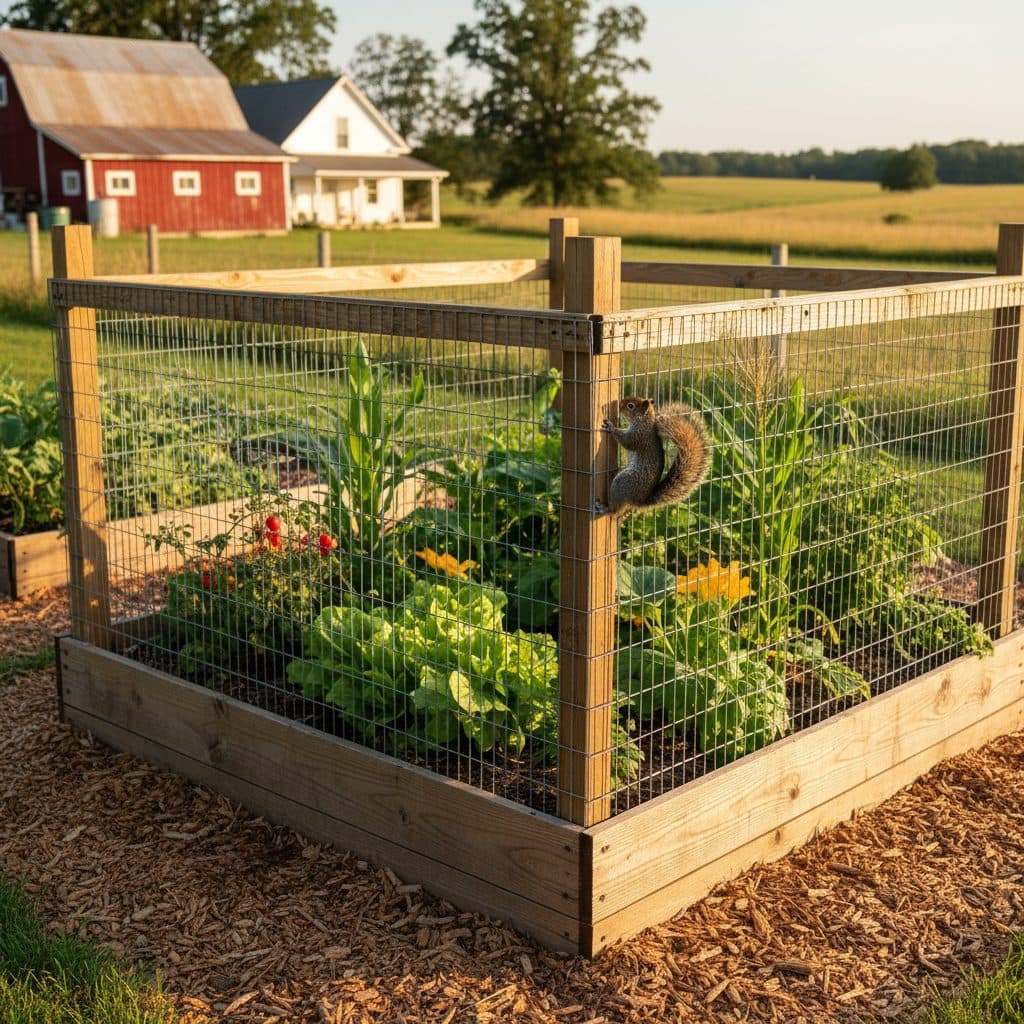
When it comes to protecting raised garden beds, physical barriers are often the most reliable defense. These structures prevent direct access to your precious plants and soil. For beds up to 24 in high, a simple fence made of hardware cloth or chicken wire can be very effective. I’ve found that 1/4 in mesh hardware cloth works best, as it’s too small for even young chipmunks to squeeze through, and it’s robust enough to deter persistent chewers. Install it around the perimeter of your metal raised garden beds, burying the bottom edge at least 6 in deep to prevent digging underneath.
overhead protection and netting
For crops like corn or berries that are particularly attractive, consider constructing a full cage over the raised bed. This can be made with PVC pipe or wood frames covered with bird netting or more hardware cloth. Ensure any openings are less than 1 in wide. In my garden in northern California, I once lost 80% of my strawberry crop to chipmunks before installing a net tunnel that reduced losses to less than 5%. Remember, squirrels can jump, so any overhead netting needs to be secured tightly and extend over the entire planting area to be effective.
- Hardware Cloth: Use 1/4 in mesh for digging pests, burying 6-12 in deep.
- Fencing Height: For chipmunks, a fence 18-24 in high is often sufficient.
- Overhead Cages: Essential for tree squirrels, covering the entire bed with netting or wire.
- Secure Edges: Ensure all edges are tightly secured to prevent entry points.
- Material Durability: Opt for galvanized steel hardware cloth for longevity, lasting 10+ years.
Taste and scent deterrents
While physical barriers are robust, taste and scent deterrents offer another layer of protection, particularly useful for areas where physical exclusion is impractical. Capsaicin, the compound that gives chili peppers their heat, is a potent deterrent for squirrels and chipmunks. These rodents find the taste and smell highly unpleasant, but birds are unaffected due to different taste receptors. You can make a homemade spray using Bird’s Eye Chili or other hot peppers, mixing 2 tablespoons of chili powder with 1 gallon of water and a dash of dish soap. Apply this solution weekly, or after rain, to plant leaves, fruits, and even birdseed.
natural repellents and companion planting
Other strong scents can also deter these pests. Sprinkling cayenne pepper, garlic powder, or even dried blood meal around the base of plants can create an unwelcoming environment. For example, applying 1 cup of dried blood meal around a 4 ft x 8 ft raised bed can deter digging for several days. Companion planting with strong-smelling herbs like mint, garlic, or marigolds might offer some protection, though their effectiveness varies. While not a standalone solution, integrating these methods as part of an integrated pest management strategy can significantly reduce damage.
- Capsaicin Spray: Mix 2 tablespoons chili powder per 1 gallon water; reapply weekly.
- Garlic/Cayenne Powder: Sprinkle around plant bases or feeder poles, reapplying every 3-5 days.
- Predator Urine: Available commercially, can deter for 7-10 days, but may require frequent reapplication.
- Mint/Marigolds: Plant around vulnerable crops; their strong scent may confuse pests.
- **Fermented Soybean Meal**: Can be used as a soil amendment, but its scent might also deter some pests when freshly applied near beds.
Protecting bird feeders from raids
Bird feeders are prime targets for squirrels and chipmunks, who are always on the lookout for an easy meal. The key to protecting them lies in strategic placement and specialized equipment. First, place feeders at least 10 ft away from trees, fences, or structures that squirrels can use as launching pads. A squirrel can leap 8-10 ft horizontally, so giving them ample distance matters. For pole-mounted feeders, a baffle is indispensable. These are dome-shaped or cylindrical barriers that prevent squirrels from climbing up or down to the feeder.
baffles and feeder types
A good baffle should be at least 18 in in diameter or length and installed 5-6 ft off the ground. In my experience in the Pacific Northwest, a 24 in diameter stovepipe baffle on a metal pole has proven nearly 95% effective against squirrels. There are also squirrel-proof feeders designed with weight-activated perches that close off access to the seed when a heavy animal, like a squirrel, lands on them. While these can be more expensive, costing $40-$80, they offer a long-term solution. Regularly cleaning up spilled seed also helps, as a single cup of fallen seed can attract several chipmunks.
- Feeder Placement: Position feeders 10-12 ft from trees or structures.
- Pole Baffles: Install baffles at least 18 in wide, 5-6 ft off the ground.
- Dome Baffles: Use above hanging feeders, at least 15 in in diameter.
- Weight-Activated Feeders: Invest in feeders that close under squirrel weight, often 4-6 oz.
- Cleanliness: Sweep up spilled seed daily to remove ground-level food sources.
Integrated strategies and long-term control
Effective squirrel and chipmunk deterrence combines multiple methods into one integrated approach. This includes modifying the environment, using physical barriers, and employing repellents. One crucial step is to eliminate alternative food sources. This means harvesting fruits and vegetables promptly, cleaning up fallen nuts from oak or pecan trees, and securing trash cans with tight-fitting lids. A single mature oak tree can drop hundreds of acorns, providing ample food for dozens of squirrels.
habitat modification and trapping
Reduce potential shelter by trimming overgrown shrubs and sealing any openings into sheds or garages that are larger than 1 in. For persistent problems, especially with chipmunks, live trapping can be an option, but check local regulations first; many states, including New York, have rules about relocating wildlife. If relocating, transport the animal at least 3-5 miles away to prevent its return. For a more holistic approach, consider using fermented soybean meal as a soil amendment, improving soil health which can indirectly support stronger plants more resistant to pest damage, although it’s not a direct deterrent.
- Remove Food Sources: Promptly harvest crops and clean up fallen nuts or berries, reducing available food by 50% or more.
- Secure Trash: Use heavy-duty trash cans with locking lids to prevent access to food waste.
- Trim Vegetation: Keep tree branches and shrubs trimmed at least 6 ft away from your house or feeders.
- Seal Entry Points: Close any gaps larger than 1 in in sheds, garages, or foundations.
- Trapping: If legal, use live traps and relocate animals 3-5 miles away, releasing them into suitable habitat.
Deterrent Methods Comparison for Squirrels and Chipmunks
Method | Effectiveness | Effort Level | Cost (Approx.) |
|---|---|---|---|
Hardware Cloth Barriers | High (90%+) for digging/climbing | Medium (initial setup) | $20-$50 per bed |
Capsaicin Sprays | Medium (60-80%) for taste | High (frequent reapplication) | $5-$15 per bottle |
Bird Feeder Baffles | High (85-95%) for climbing | Low (initial setup) | $20-$40 per baffle |
Habitat Modification | Medium (50-70%) for overall reduction | Medium (ongoing maintenance) | Variable (minimal to moderate) |
Live Trapping | High (for individual animals) | High (monitoring, relocation) | $25-$60 per trap |
Digging Depth: To deter chipmunks and squirrels from digging under fences, bury hardware cloth at least 6-12 in deep.
Feeder Distance: Position bird feeders at least 10 ft away from any structures or trees to prevent squirrels from jumping.
Frequently asked questions
What’s the main difference between deterring squirrels and chipmunks?
The primary difference lies in their movement patterns. Squirrels are adept climbers, often found 20 ft or higher in trees, requiring overhead protection for feeders and gardens. Chipmunks are ground dwellers, rarely climbing more than 5 ft, so burying barriers 6-12 in deep is crucial to stop their digging.
Are capsaicin-based repellents safe for birds?
Yes, capsaicin-based repellents are generally safe for birds. Birds have different taste receptors than mammals and do not perceive capsaicin’s heat, allowing them to eat treated seeds or plants without discomfort. I’ve used a 2 tablespoon per gallon solution for years without issues.
How high should a fence be to keep out chipmunks?
For chipmunks, a fence around a raised bed should be at least 18-24 in high. However, the more critical aspect is burying the fence material, such as 1/4 in hardware cloth, at least 6-12 in deep to prevent them from digging underneath the barrier.
How far away should bird feeders be from trees to deter squirrels?
To effectively deter squirrels, bird feeders should be placed at least 10 ft away from any trees, fences, or structures. Squirrels can jump 8-10 ft horizontally, so this distance makes it difficult for them to leap to the feeder.
Can companion planting really deter squirrels and chipmunks?
Companion planting with strong-smelling herbs like mint or garlic might offer some minor deterrence by masking the scent of desirable plants. However, it’s generally not a standalone solution and is less effective than physical barriers or taste repellents for persistent populations, providing perhaps a 10-20% reduction in activity.
Is it legal to trap and relocate squirrels or chipmunks?
The legality of trapping and relocating wildlife varies significantly by state and even by local municipality across the US. Before attempting to trap, always check your local wildlife regulations; some areas prohibit relocation, while others require specific permits or distances for release, often 3-5 miles away.
References
- Morphological Evolution of the Scapula in Tree Squirrels, Chipmunks, and Ground Squirrels (Sciuridae): An Analysis Using Thin-Plate Splines (1993). Morphological Evolution of the Scapula in Tree Squirrels, Chipmunks, and Ground Squirrels (Sciuridae): An Analysis Using Thin-Plate Splines.
- MORPHOLOGICAL EVOLUTION OF THE SCAPULA IN TREE SQUIRRELS, CHIPMUNKS, AND GROUND SQUIRRELS (SCIURIDAE): AN ANALYSIS USING THIN-PLATE SPLINES (1993). MORPHOLOGICAL EVOLUTION OF THE SCAPULA IN TREE SQUIRRELS, CHIPMUNKS, AND GROUND SQUIRRELS (SCIURIDAE): AN ANALYSIS USING THIN-PLATE SPLINES.
- Curious Kids: Why do chipmunks live on the ground but squirrels live in trees? (2020). Curious Kids: Why do chipmunks live on the ground but squirrels live in trees?.
- Chipmunks and Squirrels Eating Beetle Larvae at the Pas, Manitoba (1981). Chipmunks and Squirrels Eating Beetle Larvae at the Pas, Manitoba.
- Observations on Chipmunks and Mantled Squirrels in Northeastern California (1955). Observations on Chipmunks and Mantled Squirrels in Northeastern California.
- Evolution of sweet taste perception in hummingbirds (2015). Evolution of sweet taste perception in hummingbirds.