Key takeaways
- Selecting the right evergreen groundcover for your USDA zone can reduce weed pressure by 70% or more.
- Dense, low-growing groundcovers outcompete weeds for light, water, and nutrients, minimizing manual labor.
- Many evergreen groundcovers offer additional benefits like erosion control, reduced watering, and habitat for beneficial insects.
- Consider plant spread rate, mature height, and light requirements to ensure effective, long-term weed suppression.
- Initial planting density is crucial; planting 8 to 12 inches apart helps establish a weed-choking mat faster.
- Even established groundcovers benefit from a 2-inch layer of organic mulch initially to further suppress emerging weeds.
Quick answer: Evergreen groundcovers reduce weeding by creating a dense, year-round living barrier that outcompetes weeds for light, water, and nutrients. They suppress weed germination and growth, potentially cutting manual weeding labor by 70% or more.
In many parts of the United States, from the humid southeast to the temperate Pacific Northwest, managing weeds is a constant chore. A typical acre of cultivated land can require significant hours of weeding annually For growers and homesteaders looking to cut down on this labor, evergreen groundcovers offer a practical, year-round solution, effectively reducing weed germination and growth by creating a living barrier. These plants maintain their foliage through all four seasons, ensuring continuous coverage and competition against unwanted vegetation.
This guide focuses on selecting evergreen groundcovers that perform well across various USDA hardiness zones, providing dense, low-maintenance cover that actively suppresses weeds. We’ll explore species proven to thrive in different climates, from the cold winters of USDA zone 5 to the milder conditions of zone 9, helping you choose the right plant for your specific site conditions and minimize your weeding efforts by as much as 70% [2]. The goal is to establish a self-sustaining system that requires less intervention over time, freeing up valuable hours for other tasks on your property.
Understanding how groundcovers suppress weeds
Evergreen groundcovers suppress weeds primarily by outcompeting them for essential resources: sunlight, water, and soil nutrients. Once established, a dense mat of groundcover foliage creates significant shade, blocking light to the soil surface and preventing weed seeds from germinating or emerging seedlings from thriving. Research from 2003 showed that mixed species groundcover installations under shade trees reduced weed biomass by 75% compared to unplanted areas [2]. This physical barrier is particularly effective against annual weeds that rely on light for initial growth. Many groundcovers also develop extensive root systems that draw water and nutrients from the soil, leaving less for opportunistic weeds.
the role of plant density and spread
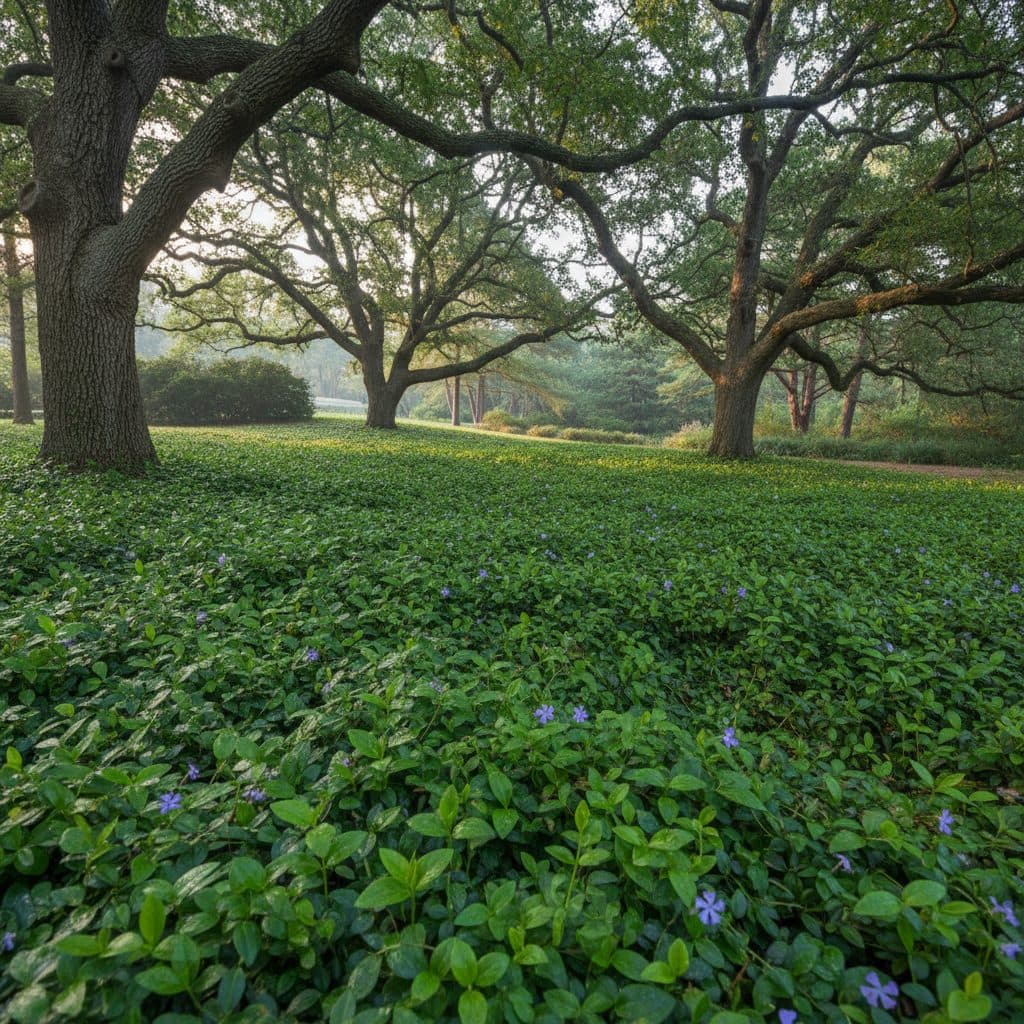
The effectiveness of weed suppression is directly related to the groundcover’s planting density and its mature spread. For instance, planting a species like Vinca minor at 8-inch intervals will create a full canopy much faster than planting at 18-inch intervals, achieving full coverage within one growing season in USDA zone 6. A faster establishment period means less opportunity for weeds to take hold. Some groundcovers, such as certain Juniperus varieties, can spread rapidly, colonizing an area quickly. Choosing plants with a vigorous, mat-forming habit is key to long-term success, reducing the need for manual weeding significantly once established.
- Dense foliage blocks sunlight, preventing weed seed germination.
- Extensive root systems outcompete weeds for water and nutrients.
- Rapid spread quickly covers bare soil, denying weeds space.
- Living mulch moderates soil temperature, reducing weed vigor.
- Some species release allelopathic compounds, inhibiting weed growth.
Broadleaf evergreens for diverse US climates
Broadleaf evergreen groundcovers offer robust weed suppression and often provide attractive foliage or flowers. For USDA zones 5 through 9, Pachysandra terminalis (Japanese Spurge) is a classic choice, forming a dense, 6 to 10-inch tall carpet in shaded areas. It spreads steadily by rhizomes, covering an area of 1 square foot per year once established. In a trial, Pachysandra reduced weed cover by 80% compared to control plots [2]. Another excellent option is Vinca minor (Periwinkle), suitable for USDA zones 4 through 9, which thrives in partial to full shade and can spread rapidly annually. Its trailing stems root as they go, quickly forming a thick, 4 to 6-inch tall mat that chokes out most weeds. For those in warmer regions, consider drought-tolerant options like Ceanothus griseus horizontalis (Carmel Creeper) in USDA zones 8-10, which can spread up to 15 feet wide and is highly effective at covering large, sunny slopes.
managing establishment and spread
When planting broadleaf evergreens, proper spacing is critical for rapid weed suppression. For Pachysandra or Vinca, planting plugs 6 to 8 inches on center will achieve full coverage within two seasons in optimal conditions. Initial weeding is essential for the first 12 to 18 months, ensuring the groundcover gets a head start. A 2-inch layer of fine shredded bark mulch applied after planting can significantly reduce weed pressure during this establishment phase, [5]. Some species, like Vinca, can be vigorous spreaders, so consider their growth habit when planting near garden beds or paths to prevent encroachment; a 6-inch deep root barrier can help contain them.
- Pachysandra terminalis: USDA zones 5-9, shade, 6-10 in tall, spreads 1 ft²/year.
- Vinca minor: USDA zones 4-9, partial to full shade, 4-6 in tall, spreads 12-18 in/year.
- Epimedium spp. (Barrenwort): USDA zones 4-9, partial to full shade, 8-12 in tall, slower spread but very dense.
- Ajuga reptans (Bugleweed): USDA zones 3-9, sun to partial shade, 4-6 in tall, spreads rapidly via stolons.
- Liriope spicata (Creeping Lilyturf): USDA zones 5-10, sun to shade, 10-15 in tall, forms dense clumps.
Coniferous and succulent evergreens for challenging sites
For sunny, dry, or sloped areas where broadleaf options might struggle, coniferous and succulent evergreens provide robust, low-maintenance weed suppression. Juniperus horizontalis (Creeping Juniper) cultivars, such as ‘Blue Rug’ or ‘Wiltonii’, are excellent choices for USDA zones 3 through 9. Note that some juniper species can be toxic to livestock, particularly pregnant cattle. These junipers form a dense, prostrate mat, typically 6 to 12 inches tall, spreading 6 to 8 feet wide over five years. Their tough, needle-like foliage effectively smothers weeds and provides year-round interest. They are particularly valuable for erosion control on slopes, where their extensive root systems stabilize soil. For extremely dry conditions, consider succulent groundcovers like Sedum spurium (Two-row Stonecrop) or Sedum album (White Stonecrop), hardy in USDA zones 3 through 9. These sedums form a tight, 2 to 6-inch tall carpet, requiring minimal water once established and tolerating full sun and poor soils.
selecting for specific conditions
When choosing coniferous or succulent groundcovers, match the plant to the specific site conditions. Creeping junipers prefer full sun and well-drained soil, tolerating a wide range of pH levels from 5.0 to 8.0. They are also deer resistant, a significant advantage in areas with high deer populations. Sedum varieties are ideal for rock gardens, green roofs, or areas with shallow soil, as they can thrive with less than 3 inches of soil depth. Their ability to store water in their leaves makes them exceptionally drought-tolerant, reducing irrigation needs by 70% compared to traditional turfgrass [1]. Initial planting density for junipers can be 3 to 5 feet on center, while sedums can be planted 6 to 12 inches apart for quicker coverage. Both types benefit from a one-time application of a slow-release granular fertilizer at planting.
- Juniperus horizontalis (Creeping Juniper): USDA zones 3-9, full sun, 6-12 in tall, spreads 6-8 ft wide.
- Sedum spurium (Two-row Stonecrop): USDA zones 3-9, full sun, 2-6 in tall, drought tolerant.
- Sedum album (White Stonecrop): USDA zones 3-9, full sun, 2-4 in tall, excellent for shallow soils.
- Arctostaphylos uva-ursi (Bearberry): USDA zones 2-7, sun to partial shade, 6-12 in tall, slow-growing, excellent for sandy soils.
- Thymus serpyllum (Creeping Thyme): USDA zones 4-9, full sun, 1-4 in tall, fragrant, tolerant of foot traffic.
Selecting groundcovers for specific USDA zones
Matching the groundcover to your specific USDA hardiness zone matters for long-term success and effective weed suppression. For growers in colder regions, such as USDA zones 3 to 5, plants like Juniperus horizontalis cultivars or Arctostaphylos uva-ursi are excellent choices, reliably surviving winter temperatures down to -40°F. In these zones, it’s crucial to select plants with proven cold hardiness to ensure they provide continuous, evergreen coverage. For example, Euonymus fortunei ‘Coloratus’ (Purple Wintercreeper) is hardy in USDA zones 4-9 and can quickly cover large areas, turning an attractive purplish-red in winter. Its aggressive growth, spreading rapidly, makes it a formidable weed suppressor, but also requires monitoring to prevent overgrowth.
regional considerations and microclimates
Even within a USDA zone, regional factors like rainfall, humidity, and soil type can influence plant performance. In the Pacific Northwest (USDA zones 7-9), Gaultheria procumbens (Wintergreen) thrives in acidic, moist soils and partial shade, forming a 4 to 6-inch tall mat. Meanwhile, in the arid Southwest (USDA zones 8-10), Dalea greggii (Gregg’s Dalea) is a native, nitrogen-fixing groundcover that excels in full sun and dry conditions, spreading 3 to 6 feet wide. Consider nitrogen-fixing groundcovers to improve soil fertility over time. Always check local extension office recommendations for species known to perform well in your specific county or region. For example, in Florida (USDA zones 8-10), Phyla nodiflora (Frogfruit) is a native alternative to turfgrass, tolerating both drought and occasional flooding, and providing excellent weed control over a large area per plant.
- USDA zones 3-5: Juniperus horizontalis, Arctostaphylos uva-ursi, Euonymus fortunei ‘Coloratus’.
- USDA zones 6-7: Pachysandra terminalis, Vinca minor, Epimedium spp., Ajuga reptans.
- USDA zones 8-9: Ceanothus griseus horizontalis, Dalea greggii, Phyla nodiflora, Liriope spicata.
- USDA zones 10-11: Lantana montevidensis, Gazania rigens (trailing varieties), Myoporum parvifolium.
- Always choose species specifically rated for your zone’s minimum winter temperatures.
Maintenance practices for lasting weed suppression
Even the most vigorous evergreen groundcovers benefit from a few key maintenance practices to ensure their long-term effectiveness in suppressing weeds. During the first one to two years after planting, consistent weeding of any emerging invasives is crucial. Hand-pulling weeds before they set seed can significantly reduce future weed populations. After establishment, a 1 to 2-inch layer of organic mulch, such as shredded leaves or compost, applied every two to three years, can further enhance weed suppression and improve soil health. This practice also helps retain soil moisture, potentially reducing irrigation needs. For certain species, like Euonymus fortunei, occasional pruning may be necessary to contain their spread and prevent them from climbing adjacent shrubs or structures, ensuring they remain an effective groundcover.
integrated weed management strategies
For persistent weed issues, integrating groundcovers with other methods can provide a more robust solution. For example, in areas with heavy weed pressure, laying down a layer of cardboard or newspaper under the groundcover at planting can provide an initial weed barrier that decomposes over 6 to 12 months. This method can significantly reduce weed emergence in the first season. For larger areas or pathways adjacent to groundcover beds, consider using living mulch cover crops in combination with your evergreen selections. Regular monitoring, perhaps once a month during the growing season, allows for early detection and removal of any particularly aggressive weeds before they become established. Remember, a healthy, dense groundcover is your best defense, reducing the need for chemical herbicides by a significant margin.
- Weed emerging invasives by hand for the first 1-2 years.
- Apply 1-2 inches of organic mulch every 2-3 years to enhance suppression.
- Prune vigorous spreaders to maintain boundaries and density.
- Consider cardboard or newspaper as an initial weed barrier for heavy pressure.
- Monitor monthly for aggressive weeds and remove promptly.
Evergreen Groundcover Comparison for US Growers
Plant Name | USDA Zones | Light Needs | Mature Height | Spread Rate | Key Benefits |
|---|---|---|---|---|---|
Pachysandra terminalis | 5-9 | Shade/Partial Shade | 6-10 in | 1 ft²/year | Dense, classic shade groundcover |
Vinca minor | 4-9 | Partial Shade/Shade | 4-6 in | 12-18 in/year | Tolerant, fast-spreading, purple flowers |
Juniperus horizontalis | 3-9 | Full Sun | 6-12 in | 6-8 ft wide (5 years) | Drought tolerant, erosion control, deer resistant |
Sedum spurium | 3-9 | Full Sun | 2-6 in | 6-12 in/year | Extremely drought tolerant, good for poor soils |
Ajuga reptans | 3-9 | Sun/Partial Shade | 4-6 in | Rapid via stolons | Fast growing, purple foliage/flowers |
Arctostaphylos uva-ursi | 2-7 | Sun/Partial Shade | 6-12 in | Slow, 1-2 ft wide (5 years) | Native, cold hardy, erosion control |
Weed Reduction: Properly selected and established evergreen groundcovers can reduce weed pressure by 70% to 80% compared to bare soil [2].
Water Savings: Many drought-tolerant groundcovers, like Sedum, can cut irrigation needs by 70% compared to traditional turfgrass in USDA zones 7-9 [1].
Labor Reduction: By minimizing weeding, growers can save significant hours of labor per acre annually, shifting resources to other tasks.
Frequently asked questions
How quickly do evergreen groundcovers suppress weeds?
The speed of weed suppression depends on the species and planting density. Fast-spreading varieties like <em>Vinca minor</em> planted 8 inches apart can achieve strong coverage within one to two growing seasons, reducing weed emergence in that timeframe.
Can groundcovers eliminate all weeds?
No, groundcovers significantly reduce weed pressure, but they rarely eliminate all weeds. Persistent or aggressive weeds may still emerge, especially during the first 12 to 18 months of establishment, requiring occasional hand-pulling.
Do I need to prepare the soil before planting?
Yes, proper soil preparation is crucial. Clear the area of existing weeds and amend the soil with 2 to 3 inches of compost to improve drainage and fertility. This gives the groundcovers a strong start and helps them outcompete weeds more effectively.
Are there evergreen groundcovers that tolerate foot traffic?
Some evergreen groundcovers, like <em>Thymus serpyllum</em> (Creeping Thyme) or <em>Phyla nodiflora</em> (Frogfruit), can tolerate light to moderate foot traffic. These species are typically low-growing, resilient, and can withstand occasional walking without significant damage, making them suitable for pathways or between stepping stones in USDA zones 4-9.
What is the best groundcover for deep shade in USDA zone 6?
For deep shade in USDA zone 6, <em>Pachysandra terminalis</em> (Japanese Spurge) is an excellent choice. It forms a dense, 6 to 10-inch tall carpet, effectively suppressing weeds and thriving in conditions where many other plants struggle, requiring minimal maintenance once established.
References
- Evapotranspiration Rates of Turf Weeds and Groundcovers (1989). Evapotranspiration Rates of Turf Weeds and Groundcovers.
- Reducing Weeds in Ornamental Groundcovers under Shade Trees through Mixed Species Installation (2003). Reducing Weeds in Ornamental Groundcovers under Shade Trees through Mixed Species Installation.
- AN INTRIGUING EVERGREEN, UMMM, CONIFER (2024). AN INTRIGUING EVERGREEN, UMMM, CONIFER.
- Robot dog uses flamethrower to suppress weeds (2024). Robot dog uses flamethrower to suppress weeds.
- Woodchips on Arable Land Suppress Weeds (2018). Woodchips on Arable Land Suppress Weeds.
- USDA Natural Resources Conservation Service (2024). USDA Natural Resources Conservation Service.