Key takeaways
- Start young figs in a 30 cm pot and step up to a final 40 cm to 45 cm container to suppress rampant leaf growth and stimulate heavy fruiting.
- Position potted figs against a warm, sunny, south- or south-west-facing masonry wall to maximise summer heat.
- Water consistently throughout summer and feed weekly with a high-potassium liquid fertiliser once fruitlets form.
- Overwinter potted figs by moving containers into an unheated shed or wrapping pots in fleece to prevent frost penetration.
- Pinch out shoot growing tips in midsummer at five leaves to encourage tiny embryo figs for the following season.
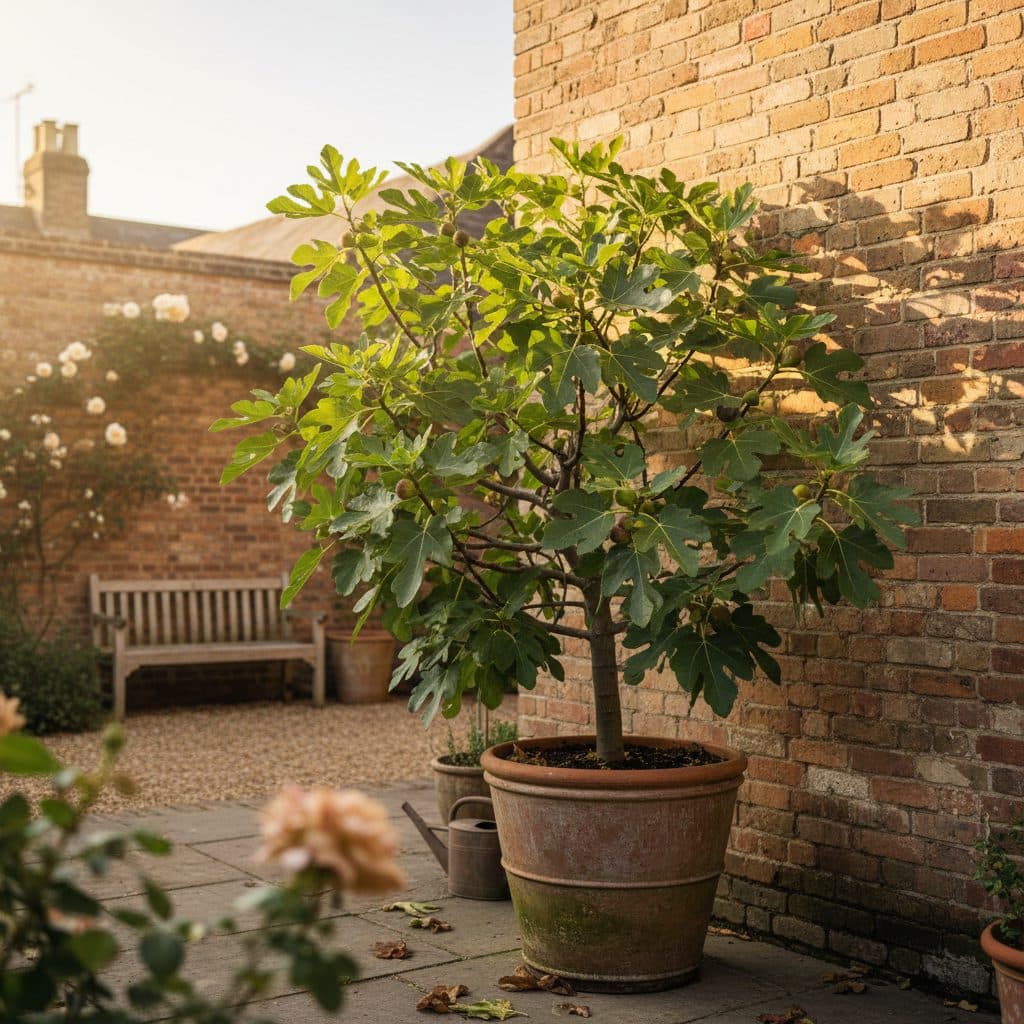
Quick answer: Growing a fig tree in pot is the most reliable method for producing ripe figs in the UK climate. Confining the vigorous root system within a 35 cm to 45 cm container curbs excessive leafy shoot growth and forces the tree to direct energy into developing sweet, heavy crops against a sunny south-facing wall.
Figs (Ficus carica) bring a distinct Mediterranean charm to British gardens, but when planted unrestricted directly into open garden soil, their vigorous root networks produce massive amounts of coarse timber and enormous foliage with very little fruit. Cultivating a fig tree in pot solves this problem by mimicking the rocky, constrained cliffside soils where figs naturally thrive.
In the UK, root restriction is the single most critical factor for reliable fig crops. Confining the roots encourages the tree to produce short, stout fruiting spurs rather than long, barren vegetative shoots. Combined with the mobility of a container—which allows you to chase the sunniest courtyard microclimates and shelter trees from freezing winter gales—container cultivation makes growing figs achievable in almost any UK garden.
Whether you have a paved patio, a modest suburban balcony, or an allotment greenhouse, understanding container selection, potting media, watering routines, and seasonal pruning will reward you with heavy harvests of rich, sun-ripened figs.
Why root restriction is essential for UK figs
Unchecked fig roots range far beyond the canopy in fertile garden loam. When roots roam freely, the tree channels all its photosynthetic energy into vegetative growth, producing massive canopy spreads and giant leaves that shade out developing fruit.
+-------------------------------------------------------------------------------+
|                       HOW ROOT RESTRICTION DRIVES FRUIT                       |
|                                                                               |
|   UNRESTRICTED IN OPEN GROUND:                                                |
|   Deep roaming roots  --> Rapid nitrogen uptake --> Giant stems & barren tree |
|                                                                               |
|   RESTRICTED IN CONTAINER (35-45 cm):                                         |
|   Bound root network  --> Stress signaling      --> Short spurs & heavy figs  |
+-------------------------------------------------------------------------------+
Confining the roots limits water and nitrogen uptake, which curbs shoot extension and leaves more of the tree's carbohydrate available for fruit. For gardeners choosing productive cultivars, the classic fig-brown-turkey remains the most reliable outdoor variety across the UK, noted for its hardiness and reliable breba-crop potential.
Choosing containers and potting mix for growing figs UK
Selecting the right container volume and potting medium provides the balance of moisture retention, drainage, and root confinement necessary for growing figs uk gardeners value.
+------------------------+-----------------------------------+-----------------------------------+
| Container Attribute    | Recommended Specification         | Horticultural Rationale           |
+------------------------+-----------------------------------+-----------------------------------+
| Initial Pot Diameter   | 30 cm to 35 cm (12 to 14 inches)  | Prevents waterlogging young roots |
| Mature Pot Diameter    | 40 cm to 45 cm (16 to 18 inches)  | Balances tree stability & yields  |
| Material Choice        | Heavy terracotta or thick plastic | Terracotta provides ballast wind  |
| Compost Blend          | John Innes No. 3 + 20% grit       | Loam-based buffer; excellent drain|
| Drainage Requirement   | Multiple wide bottom holes        | Stagnant water rots fleshy roots  |
+------------------------+-----------------------------------+-----------------------------------+
Avoid planting a small nursery fig straight into a massive container. Oversized pots hold excess wet compost that stays cold and waterlogged in British springs, rotting young feeder roots. Start with a 30 cm pot and step up gradually over three to four years to a final 40 cm to 45 cm container.
Always use a loam-based potting compost such as John Innes No. 3 mixed with coarse horticultural grit or perlite. Peat-free multi-purpose composts decompose and compact too quickly in long-term containers, whereas loam-based mixes maintain open soil structure, hold essential minerals, and provide necessary physical ballast against strong winds.
Summer fig tree care UK: siting, watering and nutrition
Warmth and sunshine are non-negotiable for ripening figs in Britain. Place your container against a south-facing or south-west-facing brick wall or sheltered fence. Masonry absorbs solar radiation during the day and gently re-radiates heat back onto the foliage and pot throughout cool British nights.
Proper fig tree care uk practices during the active growing season include:
- Watering: During hot summer spells, potted figs transpire substantial moisture through their broad, lobed leaves. Water thoroughly whenever the top 2 cm of compost feels dry. In July and August, a mature tree in full leaf may require daily watering. Never allow the root ball to dry out completely, as water stress causes fruitlets to turn yellow and drop prematurely.
- Feeding: Once fruitlets begin swelling in late spring, feed the tree weekly with a high-potassium liquid fertiliser, such as organic tomato food or comfrey tea. Avoid high-nitrogen feeds, which counteract root restriction and cause unwanted spurts of soft foliage.
- Mulching: Top-dress the compost surface with a 3 cm layer of composted bark or gravel to conserve soil moisture and keep surface roots cool during intense afternoon heat.
For other productive dwarf tree options that complement potted figs on small patios, explore our selection of fruit trees for small gardens.
Pruning and pinching out for maximum fruit
Pruning potted figs differs from standard fruit tree maintenance. In the UK climate, figs produce two crops of fruitlets, but only one has time to ripen outdoors.
Wear gloves and long sleeves — fig sap irritates skin and can cause blistering in sunlight; wash any sap off straight away.
+-------------------------------------------------------------------------------+
|                       UK FIG FRUIT DEVELOPMENT CYCLE                          |
|                                                                               |
|   Spring (April–May)     --> Tiny overwintered pea-sized embryo figs awaken   |
|   Summer (June–July)     --> Embryos swell into the ripening (breba) crop     |
|                              carried over from last season                    |
|   Midsummer (Late June)  --> PINCH OUT new shoot tips at 5 leaves             |
|   Late Summer (August)   --> Harvest ripe summer crop; remove large green figs|
|   Autumn (October)       --> Retain only tiny pea-sized embryos for next year |
+-------------------------------------------------------------------------------+
The midsummer pinch
In late June or early July, pinch out the growing tips of all new leafy shoots, leaving five leaves on each stem. This stops wasteful vegetative extension and directs all summer sap into swelling the current season's crop while encouraging embryo fruitlet formation at the shoot bases for the following year.
Managing fruitlet generations
By late August, you will notice two distinct sizes of fruit on your tree:
- Ripening Summer Crop: Large, softening figs that turn brownish-purple and hang downwards. Harvest and enjoy these immediately.
- Late-Formed Large Fruitlets: Walnut-sized green figs that formed in late summer. These will never ripen before autumn chills arrive and will rot over winter. Snap these off cleanly in October.
- Tiny Embryo Figs: Pea-sized buds nestled near the stem tips. These are next year's crop. Protect these carefully through winter.
For detailed pruning cuts across diverse warm-climate orchard species, consult our comprehensive guide on pruning care pomegranates figs persimmons mulberries.
Overwintering fig trees in the UK
While established fig trees planted in open soil withstand moderate cold, potted figs are vulnerable because their root systems lack the insulating thermal mass of surrounding earth. Freezing temperatures penetrating through container walls can kill delicate feeder roots.
Follow these proven steps for overwintering fig trees:
- Move to Sheltered Quarters: If space allows, move the container into an unheated shed, garage, porch, or cold greenhouse in late November after leaf fall. Because dormant figs have shed their leaves, they require no light during winter storage.
- Insulate Outdoor Pots: If the container is too heavy to move, push it firmly against a sheltered house wall. Wrap the entire pot in several layers of bubble wrap or hessian, and top-dress the root zone with straw.
- Fleece the Canopy: In frosty northern regions or during severe cold snaps, drape the upper branches in breathable horticultural fleece to protect the vulnerable pea-sized embryo figs from ice and freezing winds.
- Winter Moisture: Water sparingly once every four to six weeks during winter, providing just enough moisture to prevent the compost from drying out into dust.