Key takeaways
- Annual vines offer rapid, seasonal coverage, often reaching 10-15 feet in one growing season.
- Perennial climbers provide long-term structure and coverage, typically establishing in two to three years.
- Soil preparation with amendments like compost can boost growth rates for both types.
- Consider mature size and support structures; some vines can reach 30 feet or more.
- Proper watering, especially 1 inch per week during dry spells, matters for establishment.
- Select species appropriate for your USDA hardiness zone to ensure survival and vigor.
Quick answer: For rapid, seasonal coverage in USDA Zone 6, choose annual vines that grow 10-15 feet in one season. For long-term structure and beauty, perennial climbers establish in 2-3 years and provide lasting coverage.
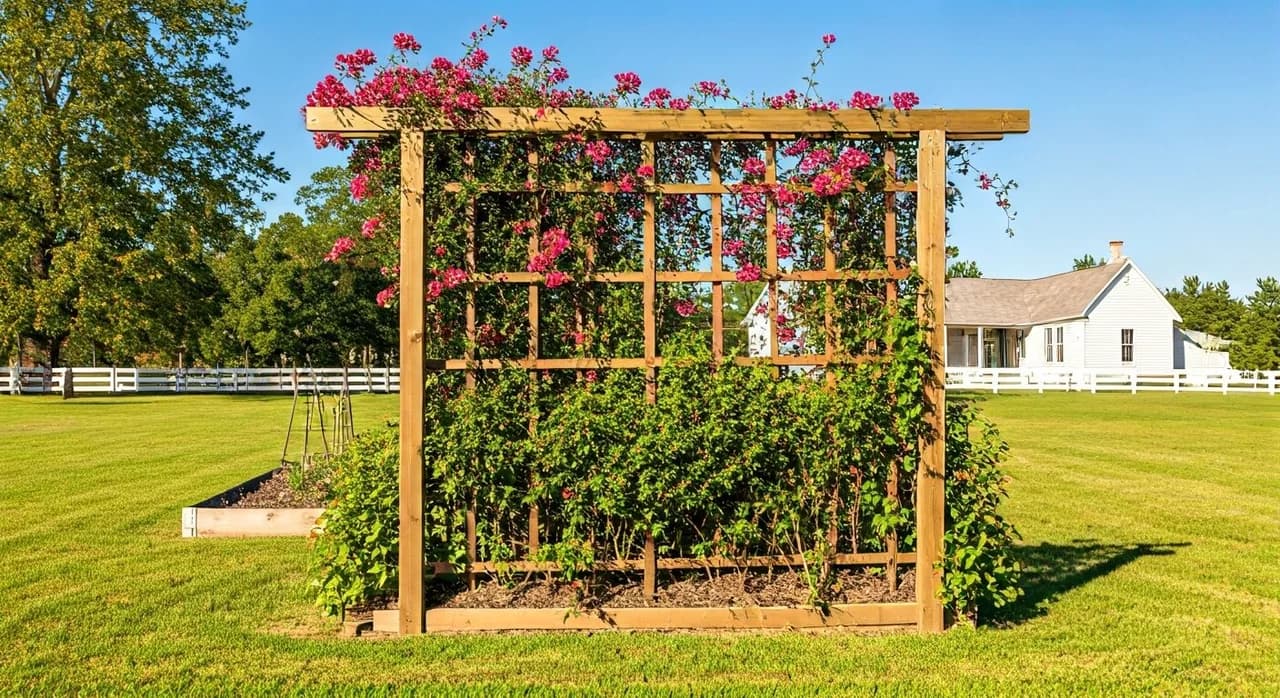
In many parts of the United States, from the humid Southeast to the dry plains of the Midwest, gardeners often face the challenge of quickly covering an unsightly fence, an old shed, or a blank wall. Perhaps you’ve just installed a new trellis in your backyard in USDA zone 6, and you want to see it covered in green and blooms by summer. The good news is, you have two primary categories of flowering vines to choose from: annuals and perennials. Both types offer solutions, but they come with different timelines, maintenance needs, and long-term commitments.
Understanding the distinctions between these plant types matters when making a choice that fits your goals and your growing season, which can range from 120 days in northern states to over 300 days in the warmest southern regions. This article will walk you through the practical considerations, from planting to long-term care so you pick the right vine for your specific cover-up project, whether it’s a quick fix or a lasting landscape feature.
The urgency of annual vines for immediate impact
When speed is the primary concern, annual vines are often the best choice for gardeners across the US, from USDA zone 3 to 10. These plants complete their entire life cycle—from seed to flower to seed—within a single growing season. This means they put all their energy into rapid growth, often reaching impressive lengths of 10 to 15 feet in just a few months. For instance, the Cypress Vine (Ipomoea quamoclit) was described in 1927 catalogues as reaching 10-15 feet in a single season, providing a quick, dense screen [5].
Popular annuals like Morning Glory (Ipomoea purpurea) and Hyacinth Bean (Lablab purpureus) can quickly transform a bare structure into a colorful display. They are excellent for temporary screens, adding privacy to a patio for one season, or simply bringing a burst of color to a garden party. Seeds for these vigorous growers were commonly available in 1928, making them an economical choice for widespread planting [2]. While they require replanting each spring, their quick cover and abundant blooms make them a good option for immediate landscaping needs.
Selecting and planting annual vines
When selecting annual vines, look for varieties known for their vigorous growth and dense foliage. For example, ‘Heavenly Blue’ Morning Glory is a classic choice, and it can grow 8-10 feet tall in full sun. Plant seeds after the last frost, typically when soil temperatures are consistently above 60°F. Soaking hard-coated seeds for 12-24 hours before planting can improve germination rates. Ensure your planting site receives at least six hours of direct sunlight daily for optimal flowering. If you are looking for plants that can deter deer, consider varieties like Hyacinth Bean, though no plant is truly deer-proof, as discussed in our guide on deer resistant plants.
- Choose a sunny location with at least six hours of direct light.
- Prepare soil by adding 2-3 inches of compost for better drainage and nutrients.
- Plant seeds or young plants after the last frost date for your USDA zone.
- Provide a sturdy support structure like a trellis or netting from the start.
- Water consistently, aiming for 1 inch of water per week, especially during dry spells.
The long-term investment of perennial climbers for lasting beauty
For gardeners seeking a permanent, structural cover that improves year after year, perennial climbers are the answer. These vines return from their rootstock each spring, providing a lasting framework and often developing a fuller display over time. While they don’t offer the immediate gratification of annuals, their long-term benefits are substantial. Perennial climbers like Wisteria were listed in early 20th-century catalogs, often needing two to three years to establish a strong flowering habit [1]. Once established, they can live for decades, providing consistent coverage and beauty.
Species like Clematis, Trumpet Vine (Campsis radicans), and Climbing Roses are excellent choices for zones 4 through 9. For instance, a general catalogue from 1910 offered hardy perennial flowering plants, including various vines and climbers [1]. Some vigorous perennial vines, such as Trumpet Vine, can spread aggressively, sometimes covering 30 feet or more of a structure if left unchecked. This vigorous growth makes them ideal for covering large areas, but also necessitates regular pruning to manage their size and spread.
Managing perennial vine establishment
The first two to three years are critical for perennial climbers. During this time, the plant is focusing its energy on developing a strong root system and woody stems, rather than prolific flowering. Early 20th-century price lists often showed perennial vines like Clematis priced between 25 cents and 75 cents per plant, depending on variety and size [0, 1]. Ensure the plant receives consistent moisture, about 1 inch of water per week, and consider a balanced fertilizer like a 10-10-10 formulation in early spring to support initial growth. Proper initial training onto a sturdy support will guide its growth and prevent future problems.
- Select a perennial climber suited to your USDA hardiness zone.
- Prepare a large planting hole, at least 18 inches wide and deep, with compost.
- Plant the vine at the correct depth, often with the crown slightly below soil level for Clematis.
- Provide a strong, permanent support structure that can handle mature weight, such as an arbor.
- Prune lightly in the first year to encourage branching and structural development.
Site selection and soil preparation for optimal growth
Regardless of whether you choose an annual or perennial vine, proper site selection and soil preparation are foundational for success. Most flowering vines thrive in full sun, meaning at least six hours of direct sunlight per day. In hotter climates, like USDA zone 9, some afternoon shade can prevent scorching for plants like Clematis. A site with good air circulation also helps prevent fungal diseases, which can reduce foliage quality.
Soil quality is paramount. Vines prefer well-draining soil rich in organic matter. Before planting, amend your soil with 2 to 3 inches of good quality compost or aged manure, thoroughly mixing it into the top 12 inches of the existing soil. This improves soil structure, water retention, and nutrient availability. For instance, adding organic matter can increase the soil’s water holding capacity. If your soil is heavy clay, consider creating a raised bed or adding a significant amount of grit to improve drainage. You can monitor your soil moisture levels with a soil moisture meter to ensure consistent hydration, especially during dry periods.
Understanding soil needs
Different vines have specific soil pH preferences, though most are tolerant of a range between 6.0 and 7.0. A soil test can provide precise information about your soil’s composition and nutrient levels. For instance, if your soil is deficient in phosphorus, adding bone meal can promote better root development and flowering, potentially increasing bloom count. The USDA Plant Hardiness Zone Map provides guidance for over 13,000 plant species, helping growers select plants suitable for their local climate, but local soil conditions are equally important for vigorous growth [6].
- Test your soil pH and nutrient levels to identify deficiencies.
- Amend heavy clay soils with 30-50% organic matter and grit for drainage.
- For sandy soils, incorporate 2-4 inches of compost to improve water retention.
- Ensure the planting area has good air circulation to reduce disease risk.
- Consider the mature size of the vine when preparing the planting area, allowing for a 2-3 foot spread.
Support structures and ongoing maintenance
A vine is only as good as its support. Whether you’re planting an annual or a perennial, a sturdy structure is non-negotiable. For annuals, a simple netting or a lightweight trellis can suffice, as they typically only need to support 5-10 pounds of foliage. Perennials, however, will grow much larger and heavier, potentially becoming very heavy at maturity. Wholesale nurseries in 1922 offered hardy flowering shrubs, vines, and climbers, often alongside recommendations for sturdy support systems [3]. A strong arbor, a heavy-duty trellis, or a reinforced fence is essential for perennial climbers to prevent collapse and ensure safety.
Training your vines from the start matters. Gently guide new growth onto the support structure, especially for twining vines like Morning Glory or Clematis. For clinging vines like Trumpet Vine, ensure the surface is rough enough for their aerial rootlets to attach. Regular pruning is also vital, particularly for perennials. Annual vines generally require little pruning beyond tidying up, but perennials often need annual cuts to maintain shape, encourage flowering, and remove dead or diseased wood. A general rule for many perennials is to remove no more than one-third of the plant’s total mass in a single season.
Watering and fertilization strategies
Consistent watering is critical for all vines, especially during their establishment phase and dry spells. Aim for 1 inch of water per week, either from rainfall or irrigation. Overwatering can be as detrimental as underwatering, leading to root rot and a reduction in plant vigor. Fertilization needs vary; annuals benefit from a balanced liquid feed every 4-6 weeks during their active growing period. Perennials typically need a slow-release granular fertilizer in early spring, such as a 5-10-5 or 10-10-10 formulation, or an organic option like fermented soybean meal organic fertilizer, which provides a steady supply of nitrogen over 60-90 days.
- Install support structures before planting to minimize root disturbance.
- Choose materials like treated wood, metal, or heavy-duty plastic for perennial supports.
- Train young vines by gently weaving new shoots onto the support every 7-10 days.
- Prune perennial vines according to their specific needs, often in late winter or early spring.
- Monitor for pests and diseases regularly, addressing issues promptly to prevent widespread damage to the plant.
Annual Vines vs. Perennial Climbers: Main differences
Feature | Annual Vines | Perennial Climbers |
|---|---|---|
Growth Rate | Very fast, 10-15 ft in one season | Moderate to fast, 5-15 ft per year after establishment |
Longevity | One growing season | Many years, often decades |
Maintenance | Replant annually, minimal pruning | Annual pruning, training, long-term care |
Cost | Low (seeds often <$1 per packet) | Higher initial cost (plants $15-$40+) |
Winter Hardiness | Dies back after first frost | Returns annually in appropriate USDA zones (e.g., 4-9) |
Bloom Time | Typically summer to fall, continuous | Specific bloom windows, often spring/early summer |
Rapid Growth: Many annual vines, such as Morning Glory, can add 10-15 feet of growth in a single season, providing quick coverage.
Long-Term Investment: Perennial climbers like Wisteria can live for 50 years or more, offering decades of beauty and structural coverage.
References
- General catalogue with prices : of ornamental and shade trees, flowering shrubs, vines, roses, bulbs, and perennial plants (1910).
- of] hardy perennial flowering plants, annual flowering plants, vegetable plants / (1928).
- Autumn 1922 : wholesale special offers of our standard “quality first” deciduous trees, evergreens, hardy flowering shrubs, vines and climbers, garden roses, he (1922).
- Ornamental trees, shrubs, vines and perennial plants, flowering bulbs, roses, fruit trees, small fruits, landscape service / (1916).
- of] hardy perennial flowering plants, annual flowering plants, vegetable plants / (1927).
- USDA Natural Resources Conservation Service (2024).