Key takeaways
- Select climbers based on your USDA hardiness zone, sun exposure, and the type of support structure available for optimal growth.
- Deciduous climbers like trumpet vine and Virginia creeper can add 10 to 30 feet of growth annually, providing rapid seasonal coverage.
- Evergreen options such as Confederate jasmine offer year-round screening, growing 10 to 20 feet over a few seasons in warmer climates.
- Aggressive growers require consistent pruning, sometimes up to 30% of their mass each year, to prevent them from overwhelming structures or nearby plants.
- Ensure adequate soil drainage and nutrient availability, as fast-growing plants demand more resources to sustain their rapid development.
- Consider the plant’s climbing mechanism (twining, tendrils, or adhesive pads) to match it with the appropriate fence or wall material.
Quick answer: To achieve rapid coverage with fast-growing climbers, select plants based on your USDA hardiness zone, sun exposure, and support structure. Consistent pruning, adequate soil drainage, and sufficient nutrients are necessary for managing their vigorous growth.
In many US backyards, an unsightly chain-link fence or a drab retaining wall can detract from the overall appeal. Perhaps a neighbor’s shed or an old utility box needs a quick disguise. The good news is that you don’t have to wait years for a solution. With the right selection, fast-growing climbing plants can turn these eyesores into dense green screens or flowering displays, often covering 10 to 20 feet in a single growing season.
Choosing the correct climber for your specific site conditions, including your USDA hardiness zone and available sunlight, is essential for healthy growth. For instance, a trumpet vine in USDA zone 7 can easily add 15 feet of new growth each year, while an aggressive climbing fig might cover 20 feet of a wall in USDA zone 9 within two seasons. This article will guide you through selecting and managing these vigorous plants to achieve rapid, effective coverage.
Understanding fast growth and support needs
When we talk about “fast-growing” climbers, we’re often looking at plants that can extend their reach by 10 to 20 feet or more in a single year, given ideal conditions. For example, native coral honeysuckle (Lonicera sempervirens) can put on 15 feet of growth in a season in USDA zone 6, while a vigorous trumpet vine might reach 20 feet in USDA zone 7. This rapid expansion requires two main things: sufficient nutrients and a sturdy support structure. A weak trellis won’t hold up a mature vine; large wisterias and trumpet vines get heavy enough to pull down fences, gutters and light arbors. Consider using sturdy metal or pressure-treated wood supports, especially for vines expected to reach heights of 25 feet or more, as mentioned in the Manual of Climbers and Wall Plants [1].
Choosing the right support for your climber
The type of support needed depends on how the plant climbs. Some, like clematis, are twining vines that wrap their stems or petioles around thin structures, needing wires or narrow trellises less than one inch in diameter. Others, such as Virginia creeper, use adhesive pads or rootlets to cling directly to surfaces, making them ideal for solid walls but potentially damaging to paint or mortar over 10 to 15 years. Still others, like climbing roses, are scramblers that need to be tied to a support every 12 to 18 inches. Understanding these mechanisms helps your chosen plant cover the desired area without collapsing or needing constant intervention. For instance, a climbing fig can attach directly to a masonry wall, covering 20 square feet in its first full growing season in USDA zone 9.
- Twining stems: clematis, wisteria, honeysuckle
- Tendrils: passion flower, grapes, sweet pea
- Adhesive pads or rootlets: Virginia creeper, climbing fig
- Thorns or stiff stems (scramblers): climbing roses, bougainvillea
- Leaning or sprawling: some larger shrubs trained as climbers
Deciduous powerhouses for quick coverage
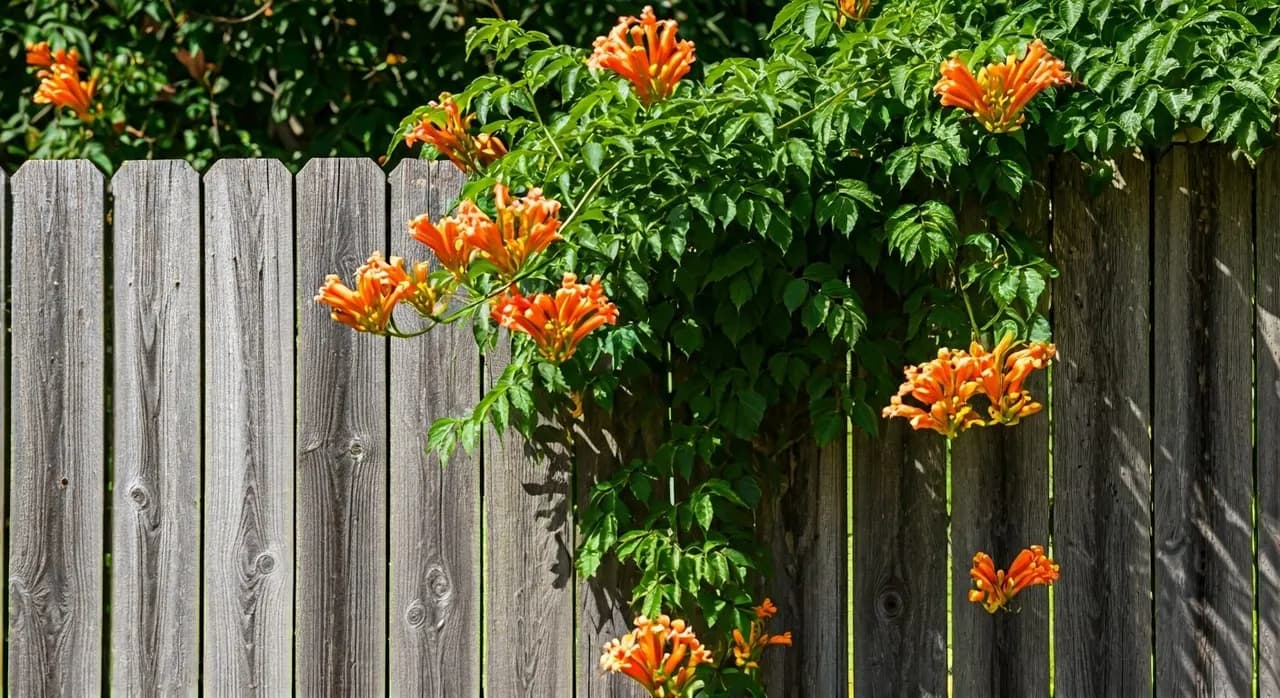
Deciduous climbers offer some of the fastest growth rates, quickly providing a lush green screen during the spring and summer months. While they drop their leaves in fall, their dense summer foliage can completely obscure an undesirable view. One of the most vigorous is the trumpet vine (Campsis radicans), which can easily grow 15 to 20 feet in a single season in USDA zones 4 through 9. Its striking orange or red, trumpet-shaped flowers also attract hummingbirds, adding another dimension to your garden. However, it can be aggressive, requiring annual pruning to keep its spread in check, sometimes removing 25% of its growth.
Vigorous options for seasonal screening
Another excellent choice is Virginia creeper (Parthenocissus quinquefolia), hardy in USDA zones 3 to 9. This native vine can grow 10 to 30 feet per year, covering large areas rapidly. Its leaves turn a brilliant red in the fall, offering seasonal interest before dropping. It attaches to surfaces with adhesive pads, making it suitable for brick or stone walls. For a more fragrant option, consider honeysuckle (Lonicera sempervirens), which can grow 10 to 20 feet annually in USDA zones 4 to 9. Its tubular flowers come in various colors and attract pollinators. Ensure adequate watering, especially during dry spells, as these fast growers can consume 5 to 10 gallons of water per week in hot climates to sustain their rapid expansion. You can monitor soil moisture with a soil moisture meter to ensure they are properly hydrated.
- Trumpet vine: 15-20 feet annually, attracts hummingbirds, USDA zones 4-9
- Virginia creeper: 10-30 feet annually, bright red fall color, USDA zones 3-9
- Honeysuckle: 10-20 feet annually, fragrant flowers, USDA zones 4-9
- Silver Lace Vine (Fallopia baldschuanica): 15-25 feet annually, white flowers, USDA zones 4-8; a knotweed relative that suckers and self-sows hard and is very difficult to remove once established, so site it where you can contain it
Evergreen options for year-round screening
For continuous coverage throughout the year, evergreen climbers are the ideal choice, particularly in warmer regions of the US. These plants maintain their foliage even through winter, providing a constant screen against unwanted views. Confederate jasmine (Trachelospermum jasminoides) is a popular evergreen vine, hardy in USDA zones 8 to 10, that can grow 10 to 20 feet in a few seasons. It produces highly fragrant, star-shaped white flowers in late spring and early summer. It’s an excellent choice for covering fences or arbors in the southern states, often adding 5 to 8 feet of growth per year once established.
Persistent foliage for all seasons
Another evergreen option is climbing fig (Ficus pumila), also known as creeping fig. This plant is incredibly tenacious, attaching firmly to surfaces with aerial rootlets and capable of covering 20 to 30 feet of a wall in USDA zones 8 to 11. It’s a very fast grower, often adding 8 to 12 feet annually, but its strong attachment can damage mortar or paint over 10 to 15 years, so choose its location carefully. For a slightly less aggressive option, some varieties of English ivy (Hedera helix) can provide evergreen coverage in USDA zones 5 to 9, growing 6 to 10 feet per year. However, English ivy is considered invasive in many regions, so check local regulations before planting. For any evergreen, consistent watering during dry periods is essential to maintain its vigor and leaf retention, especially when temperatures exceed 90°F for several days.
- Confederate jasmine: 10-20 feet overall, fragrant white flowers, USDA zones 8-10
- Climbing fig: 20-30 feet overall, very strong attachment, USDA zones 8-11
- English ivy: 6-10 feet annually, invasive potential, USDA zones 5-9
- Chilean jasmine: 8-10 feet annually, pink flowers, USDA zones 9-11
- Carolina jessamine (Gelsemium sempervirens): 10-20 feet overall, yellow flowers, USDA zones 7-10; every part of the plant, including the flowers and nectar, is poisonous to people, pets and livestock, so keep it off fences bordering pasture, paddock or play areas
Flowering climbers for beauty and speed
Many fast-growing climbers also offer spectacular floral displays, combining quick coverage with aesthetic appeal. Clematis, particularly the vigorous Montana varieties, can grow 15 to 20 feet in a single season in USDA zones 6 to 9. These produce masses of small, delicate flowers in spring that form a dense curtain of color. They prefer their ‘feet in the shade and head in the sun,’ meaning their roots should be kept cool and moist, while the foliage thrives in full sun for at least 6 hours daily. A 2-inch layer of mulch can help maintain soil moisture and temperature.
Adding color and fragrance to your screen
Climbing roses, especially ramblers, can quickly cover a fence or arbor, growing 10 to 20 feet in two to three seasons in USDA zones 5 to 9. While not as fast as some other vines, their profusion of blooms makes them a popular choice. They require strong support and regular tying to ensure good coverage. For a more exotic look, passion flower (Passiflora incarnata) offers distinctive, complex blooms and can grow 10 to 20 feet annually in USDA zones 6 to 9. It’s a vigorous vine that can spread rapidly, sometimes covering 100 square feet in a single season in warmer climates. These flowering climbers attract pollinators such as bees and butterflies. Companion planting can also help deter pests.
- Clematis (Montana varieties): 15-20 feet annually, spring blooms, USDA zones 6-9
- Climbing roses (Ramblers): 10-20 feet in 2-3 seasons, diverse colors, USDA zones 5-9
- Passion flower: 10-20 feet annually, unique blooms, USDA zones 6-9
- American wisteria (Wisteria frutescens): 10-15 feet annually, fragrant pendulous flowers, USDA zones 5-9; choose this native species over Chinese and Japanese wisteria, which are invasive across much of the eastern US and heavy enough to pull down arbors; all wisteria seed pods are poisonous if eaten
- Bougainvillea: 8-12 feet annually, colorful bracts, USDA zones 9-11 (as perennial)
Managing aggressive growers
While fast growth is desirable for quick coverage, it often comes with the need for diligent management. Many of the climbers mentioned, such as trumpet vine and Virginia creeper, can become aggressive if left unchecked, potentially overwhelming structures, shading out other plants, or even invading natural areas. For example, a trumpet vine can send out runners 20 feet from the main plant in a single season in USDA zone 7. Regular pruning is the most effective way to control their size and spread. Aim to prune these vigorous vines at least once a year, typically in late winter or early spring before new growth begins, removing up to 30% of the plant’s mass to maintain its shape and vigor.
Strategies for containment and control
For particularly aggressive species like climbing fig or some wisterias, which can exert significant force on structures, more intensive management might be necessary. Consider installing root barriers, such as heavy-duty plastic or metal sheets buried 18 to 24 inches deep, to prevent underground spread. For vines that cling directly to walls, be aware that their adhesive pads can be difficult to remove and may leave residue or damage paint if the vine is pulled off. In some cases, selecting a less aggressive alternative or providing a freestanding trellis 6 to 12 inches away from a wall can prevent damage. Always research the specific growth habits and potential invasiveness of a plant in your local area before you plant it. The USDA Natural Resources Conservation Service provides resources on invasive species in different regions [2].
- Annual pruning: Remove 20-30% of growth in late winter or early spring.
- Root barriers: Install 18-24 inch deep barriers for spreading species.
- Containment planting: Grow in large containers (20+ gallon) to restrict root spread.
- Regular inspection: Check for unwanted shoots or tendrils every 2-4 weeks during growing season.
- Selective removal: Cut back any growth that extends beyond desired boundaries.
Comparison of Fast-Growing Climbing Plants
Plant Name | USDA Zones | Annual Growth (ft) | Sun Exposure | Climbing Type |
|---|---|---|---|---|
Trumpet Vine | 4-9 | 15-20 | Full Sun | Twining/Aerial Rootlets |
Virginia Creeper | 3-9 | 10-30 | Full Sun to Part Shade | Adhesive Pads |
Confederate Jasmine | 8-10 | 5-8 (established) | Full Sun to Part Shade | Twining |
Clematis (Montana) | 4-9 | 15-20 | Full Sun | Twining Petioles |
Honeysuckle (L. sempervirens) | 4-9 | 10-20 | Full Sun to Part Shade | Twining |
Rapid Coverage: Many fast-growing climbers can add 10 to 20 feet of new growth in a single season, quickly obscuring unwanted views.
Support Strength: Size your support for the weight of a fully grown vine, not the plant you buy; a dense mature vine gets heavy enough to pull down a light trellis.
Frequently asked questions
How fast do these climbers actually grow?
The growth rate varies by species and conditions, but many fast-growing climbers can add 10 to 20 feet of new growth in a single season. For example, a trumpet vine in USDA zone 7 can easily achieve 15 feet of growth annually with adequate sun and water.
Will fast-growing climbers damage my fence or wall?
Some climbers, like climbing fig or Virginia creeper, use adhesive pads or rootlets that can damage paint or mortar over 10 to 15 years. Twining vines are generally less damaging but require a sturdy trellis or wires for support, which should be installed 6 to 12 inches away from the structure.
What kind of support do I need for these plants?
The support depends on the plant’s climbing mechanism. Twining vines need thin structures like wires or narrow trellises (less than one inch thick). Scramblers like climbing roses need to be tied to a sturdy arbor or fence every 12 to 18 inches. Ensure the support can hold the weight of the fully grown plant, which is far more than the young vine you plant.
Are there any fast-growing climbers that are also deer resistant?
While no plant is completely deer-proof, some fast-growing climbers are less appealing to deer. Trumpet vine is generally left alone by deer. You can explore more options in our article on deer resistant plants, which notes that deer resistance can vary by region and deer population density.
How much sun do fast-growing climbers need?
Most fast-growing climbers thrive in full sun, meaning at least 6 hours of direct sunlight per day, to achieve their maximum growth potential. Some, like honeysuckle or Confederate jasmine, can tolerate part shade, but they will flower less freely and grow more slowly than they would in full sun.
References
- Manual of Climbers and Wall Plants (1995). Manual of Climbers and Wall Plants.
- USDA Natural Resources Conservation Service (2024). USDA Natural Resources Conservation Service.