Key takeaways
- Fusarium and Verticillium wilts are distinct soil-borne fungal diseases that can cause significant tomato crop loss, often 30% or more in affected fields.
- Early symptoms include yellowing and wilting of lower leaves, often on one side of the plant, progressing upwards over several weeks.
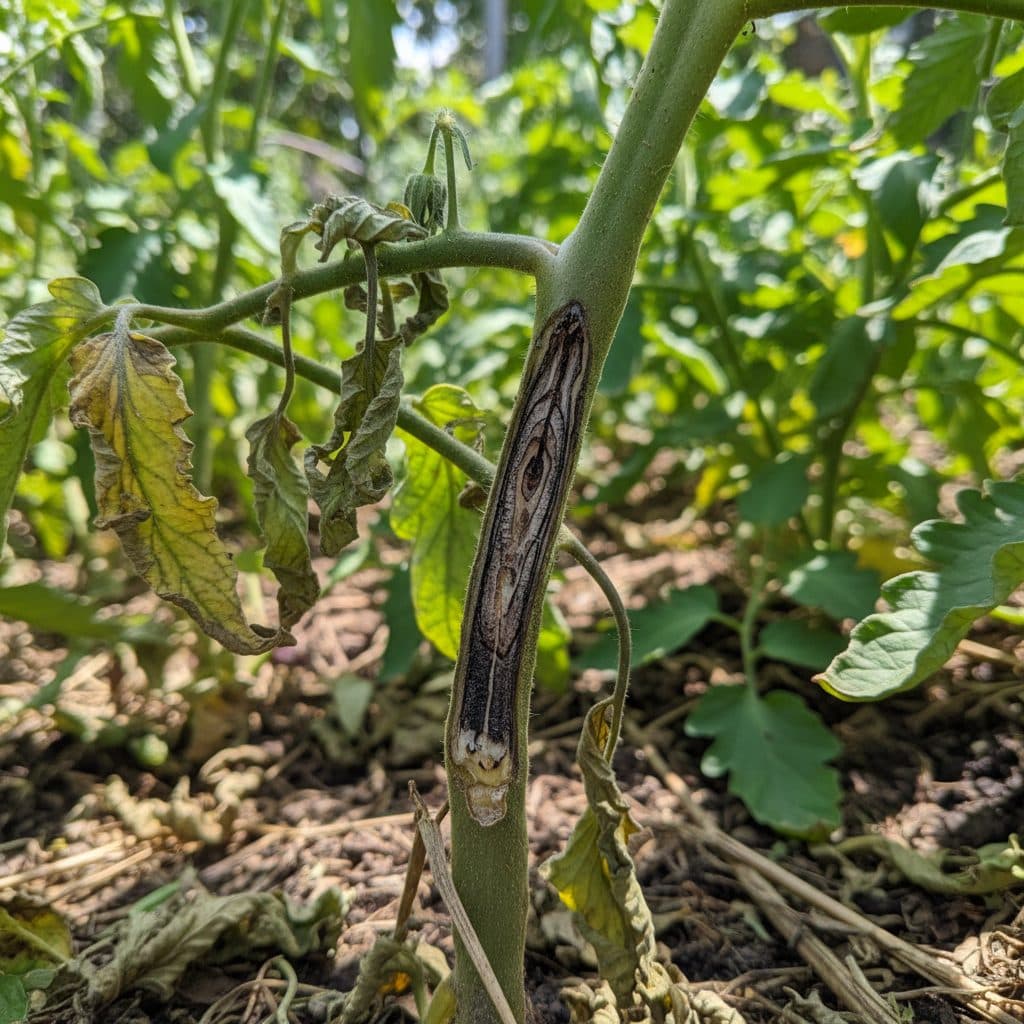
- Internal stem discoloration (brown for Fusarium, light brown for Verticillium) helps identify the disease when the stem is cut lengthwise.
- Cultural practices like crop rotation (for three to five years), improving soil drainage, and managing soil pH (6.0 to 6.8) can reduce disease pressure.
- Planting tomato varieties with genetic resistance, indicated by ‘F’ for Fusarium and ‘V’ for Verticillium on seed packets, is the most effective prevention.
- Maintaining healthy soil with organic amendments and proper watering practices helps plants resist disease, reducing stress by up to 25%.
Quick answer: To protect tomato yields from Fusarium and Verticillium wilt, identify symptoms like unilateral yellowing or vascular discoloration, then implement cultural practices such as crop rotation and soil pH management. Planting resistant varieties marked ‘F’ or ‘V’ on seed packets is the most effective prevention.
In many parts of the US, from the humid Southeast to the arid West, growing tomatoes can be a rewarding challenge. However, two common soil-borne fungal diseases, Fusarium wilt and Verticillium wilt, can quickly turn a promising crop into a disappointment. These pathogens are responsible for significant yield reductions, sometimes exceeding 30% in a single growing season if left unchecked.
Identifying these fungal diseases and knowing what steps to take helps protect yields. While they share similar visible symptoms, their internal effects and management approaches differ. Identifying symptoms, managing soil, and choosing resistant varieties protects tomato plants in USDA zone 5 or zone 9.
Understanding Fusarium wilt in tomatoes
Fusarium wilt, caused by the fungus Fusarium oxysporum f. sp. lycopersici, is a persistent problem in many US gardens, especially in warmer climates like Florida or parts of California. This fungus thrives in soil temperatures between 75°F and 90°F, making it particularly destructive during hot summer months. The disease enters the plant through the roots, then colonizes the xylem (the water-conducting tissues), blocking water and nutrient flow. This internal blockage is why symptoms often appear even when soil moisture is adequate, leading to plant stress that can reduce fruit set by 20% or more.
Identifying Fusarium wilt symptoms
Initial symptoms typically appear on older, lower leaves. You might notice yellowing on one side of a leaf or one side of the entire plant. This unilateral symptom is a strong indicator of Fusarium wilt. Leaves will then wilt, often during the hottest part of the day, and may recover overnight, only to wilt again. Over several weeks, the yellowing and wilting progress upwards, eventually affecting the entire plant. If you cut the stem lengthwise near the base of an infected plant, you’ll see a dark brown discoloration in the vascular tissue, a clear sign of the fungus at work. This discoloration can extend several inches up the stem. Crop rotation is an effective strategy for managing this disease, with a recommended three to five years between tomato plantings in affected soil.
- Initial yellowing on lower leaves, often unilateral.
- Wilting during midday heat, with some recovery overnight.
- Stunted plant growth and reduced fruit size.
- Dark brown discoloration in the vascular tissue when stems are cut.
- Premature plant death, often within four to six weeks of symptom onset.
Understanding Verticillium wilt in tomatoes
Verticillium wilt, caused by Verticillium dahliae, is another widespread soil-borne pathogen affecting tomatoes, particularly in cooler regions or during cooler parts of the growing season, such as in USDA zone 5 or 6. This fungus prefers soil temperatures between 68°F and 75°F, making it a threat in many northern states and higher elevations. Like Fusarium, Verticillium enters through the roots and obstructs the plant’s vascular system, leading to water and nutrient deprivation. This disease can affect over 200 plant species, including common garden vegetables and ornamentals, making crop rotation important for long-term control.
Identifying Verticillium wilt symptoms
Symptoms of Verticillium wilt are often more uniform across the plant compared to Fusarium. You’ll typically see yellowing and browning of the lower leaves, often starting at the leaf margins and moving inward. The affected leaves may develop V-shaped lesions or appear scorched. Unlike Fusarium, the wilting might be less pronounced initially, but it becomes persistent as the disease progresses. When you cut the stem of an infected plant lengthwise, the vascular tissue will show a light brown or tan discoloration, which is usually less intense than the dark brown seen with Fusarium wilt. This subtle difference aids accurate diagnosis. Plants infected with Verticillium wilt may survive longer than those with Fusarium, but their yield can be reduced by 50% or more, with fruits often smaller and less flavorful. Using a soil moisture meter can help ensure proper watering, as stressed plants are more susceptible.
- General yellowing and browning on lower leaves, often V-shaped.
- Wilting that becomes more persistent over time.
- Stunted growth and reduced fruit quality.
- Light brown or tan discoloration in vascular tissue.
- Symptoms may appear more uniformly across the plant.
Distinguishing between Fusarium and Verticillium
While both wilts cause similar external symptoms, knowing the subtle differences can help you manage your garden more effectively. The primary distinction lies in the vascular discoloration and the pattern of wilting. Fusarium wilt often presents with a darker, more pronounced brown discoloration in the stem’s vascular tissue, sometimes affecting only one side of the plant. Verticillium wilt, on the other hand, typically shows a lighter tan or light brown discoloration and tends to affect the plant more uniformly. These visual cues help make a correct diagnosis, especially when considering a field with 100 or more plants.
Key diagnostic indicators
Consider the environmental conditions. If your garden is experiencing a heatwave with temperatures consistently above 80°F, Fusarium is a more likely culprit. If temperatures are consistently in the 60s or low 70s, Verticillium might be the issue. Observing the wilting pattern is also important: Fusarium often causes unilateral wilting, where one branch or one side of the plant wilts while the other remains healthy for a time. Verticillium wilting tends to be more general. In a study on cotton, researchers found that molecular responses to these two wilts, while similar in some aspects, showed distinct biological pathways [2]. Accurate identification ensures you implement the most appropriate control measures, potentially saving 40% of your crop. For general soil health, consider organic gardening fertilizers.
- Vascular discoloration: Dark brown (Fusarium) vs. light brown/tan (Verticillium).
- Wilting pattern: Unilateral (Fusarium) vs. general (Verticillium).
- Temperature preference: Hot (Fusarium, 75-90°F) vs. cooler (Verticillium, 68-75°F).
- Disease progression: Faster plant death (Fusarium) vs. slower decline (Verticillium).
- Host range: Fusarium specific to tomatoes (f. sp. lycopersici) vs. Verticillium broad host range.
Management strategies: cultural practices and soil health
Preventing Fusarium and Verticillium wilts starts with good garden hygiene and soil management. These fungi can persist in the soil for many years, sometimes up to 10 years, even without a host plant. Therefore, once your soil is infected, eradication is nearly impossible, making prevention and resistance the main defense. Crop rotation is one of the most effective cultural controls; avoid planting tomatoes, potatoes, eggplants, or peppers in the same spot for at least three to five years. Instead, rotate with non-host plants like corn, beans, or cover crops such as sesbania, which can improve soil health significantly over a 12-week period.
Improving soil drainage and pH
Both Fusarium and Verticillium thrive in poorly drained soils. Improving soil structure with organic matter, such as compost or well-rotted manure, can enhance drainage and aeration. Aim for a soil pH between 6.0 and 6.8 for optimal tomato growth, as extreme pH levels can stress plants and make them more susceptible to disease. Soil testing every two to three years can help maintain these conditions. Some studies, like one from 1992, have explored biocontrol methods using non-pathogenic Fusarium oxysporum strains to suppress wilt diseases, showing promise for future organic management [4]. Practicing good sanitation, like cleaning tools after working with infected plants, can also prevent the spread of spores to healthy areas of your garden, reducing disease incidence by 15% or more.
- Implement a three to five-year crop rotation schedule.
- Improve soil drainage with organic matter, aiming for 5% organic content.
- Maintain soil pH between 6.0 and 6.8 through regular testing.
- Sanitize gardening tools with a 10% bleach solution after use.
- Remove and destroy infected plant debris promptly to prevent spore spread.
Choosing resistant tomato varieties
The most effective long-term strategy for managing Fusarium and Verticillium wilts is planting resistant tomato varieties. Many modern tomato cultivars have been bred with genetic resistance to these common diseases. When selecting seeds or seedlings, look for letters like ‘F’ for Fusarium wilt resistance and ‘V’ for Verticillium wilt resistance on the seed packet or plant tag. Some varieties may even have ‘FF’ or ‘VV’ indicating resistance to multiple races of the pathogen. For example, a variety labeled ‘VFFNTA’ would be resistant to Verticillium, Fusarium races 1 and 2, nematodes, and Alternaria stem canker. Checking these codes helps growers select suitable cultivars, potentially preventing 90% of wilt-related losses.
Understanding resistance codes
Tomato breeders have identified specific genes that confer resistance, and these genes are incorporated into popular varieties. For instance, the I-2 gene provides resistance to Fusarium wilt race 2, a common strain in many US growing regions. While no plant is completely immune, resistant varieties significantly reduce the likelihood of severe disease, allowing for a much higher yield, often 70% to 80% more than susceptible types in infected soil. Even with resistant varieties, good cultural practices remain important to maintain overall plant vigor and prevent other diseases. Consider amending your soil with fermented soybean meal to support plant health. The USDA Natural Resources Conservation Service (NRCS) notes that healthy soil ecosystems support disease suppression [6], and even resistant plants benefit from good soil.
- Look for ‘F’ and ‘V’ codes on seed packets or plant tags.
- ‘FF’ or ‘VV’ indicates resistance to multiple races of the disease.
- Choose varieties adapted to your specific USDA zone.
- Consult local extension offices for recommended resistant cultivars in your area.
- Understand that resistance reduces disease severity, not complete immunity.
Key differences: Fusarium wilt vs. Verticillium wilt in tomatoes
Characteristic | Fusarium wilt | Verticillium wilt |
|---|---|---|
Pathogen | Fusarium oxysporum f. sp. lycopersici | Verticillium dahliae |
Optimal soil temp | 75-90°F (24-32°C) | 68-75°F (20-24°C) |
Vascular discoloration | Dark brown, often intense | Light brown or tan, less intense |
Wilting pattern | Often unilateral (one side of plant/branch) | More general, uniform across plant |
Progression | Faster decline, often leads to plant death | Slower decline, plant may persist but yield drops |
Host range | Mainly tomatoes (specific form) | Broad host range (200+ species) |
Disease Prevalence: Fusarium and Verticillium wilts can cause yield losses of 30% to 50% in susceptible tomato varieties in infected soils.
Soil Persistence: Both wilt fungi can survive in soil for up to 10 years, making crop rotation and resistant varieties central to management.
Optimal pH: Maintaining soil pH between 6.0 and 6.8 supports healthy tomato growth and reduces susceptibility to wilt diseases by up to 25%.
Frequently asked questions
Can Fusarium and Verticillium wilt spread to other plants?
Fusarium wilt is highly specific to tomatoes (f. sp. <em>lycopersici</em>) but Verticillium wilt, caused by <em>Verticillium dahliae</em>, has a broad host range, infecting over 200 plant species including many common garden vegetables and ornamentals. Rotating crops for at least three years helps prevent spread.
What should I do with infected tomato plants?
Immediately remove and destroy infected tomato plants to prevent the spread of spores. Do not compost them, as the fungal spores can survive in compost and reinfect your garden. Bag them and dispose of them in municipal waste, especially if 30% or more of your plants are affected.
Are there any chemical treatments for these wilts?
Unfortunately, there are no effective chemical fungicides for treating Fusarium or Verticillium wilt once a plant is infected, as the fungi are inside the vascular system. Prevention through resistant varieties and cultural practices like crop rotation (for three to five years) is the only viable strategy.
How long do these fungi survive in the soil?
Both Fusarium and Verticillium fungi can survive in the soil for extended periods, often up to 10 years, as resting spores or microsclerotia. Because the fungi persist so long, long-term crop rotation and resistant varieties are necessary to manage disease pressure in garden plots.
Can soil amendments help prevent wilt diseases?
Yes, improving soil health with organic amendments like compost can enhance soil structure, drainage, and beneficial microbial activity, which can suppress disease. Maintaining a soil pH between 6.0 and 6.8 also supports plant vigor, reducing susceptibility by up to 20%.
References
- Update for Cotton Diseases in 2021, Including the Latest on Management for Nematodes, Fusarium Wilt, Bacterial Blight, and Verticillium Wilt (2022). Update for Cotton Diseases in 2021, Including the Latest on Management for Nematodes, Fusarium Wilt, Bacterial Blight, and Verticillium Wilt.
- Molecular Response Mechanism of Cotton to Verticillium Wilt and Fusarium Wilt (2025). Molecular Response Mechanism of Cotton to Verticillium Wilt and Fusarium Wilt.
- WITHDRAWN: Gene Based Markers in Marker-Assisted Selection to Screen Tomato Genotypes Resistant to Fusarium Wilt, Late Blight, Verticillium Wilt, Leaf Mold, (2021). WITHDRAWN: Gene Based Markers in Marker-Assisted Selection to Screen Tomato Genotypes Resistant to Fusarium Wilt, Late Blight, Verticillium Wilt, Leaf Mold,.
- Biocontrol of Fusarium Wilt of Tomato and Verticillium Wilt of Eggplant by Non-pathogenic Fusarium oxysporum MT0062. (1992). Biocontrol of Fusarium Wilt of Tomato and Verticillium Wilt of Eggplant by Non-pathogenic Fusarium oxysporum MT0062..
- WITHDRAWN: Gene Based Markers in Marker-Assisted Selection to Screen Tomato Genotypes Resistant to Fusarium Wilt, Late Blight, Verticillium Wilt, Leaf Mold, (2021). WITHDRAWN: Gene Based Markers in Marker-Assisted Selection to Screen Tomato Genotypes Resistant to Fusarium Wilt, Late Blight, Verticillium Wilt, Leaf Mold,.
- USDA Natural Resources Conservation Service (2024). USDA Natural Resources Conservation Service.