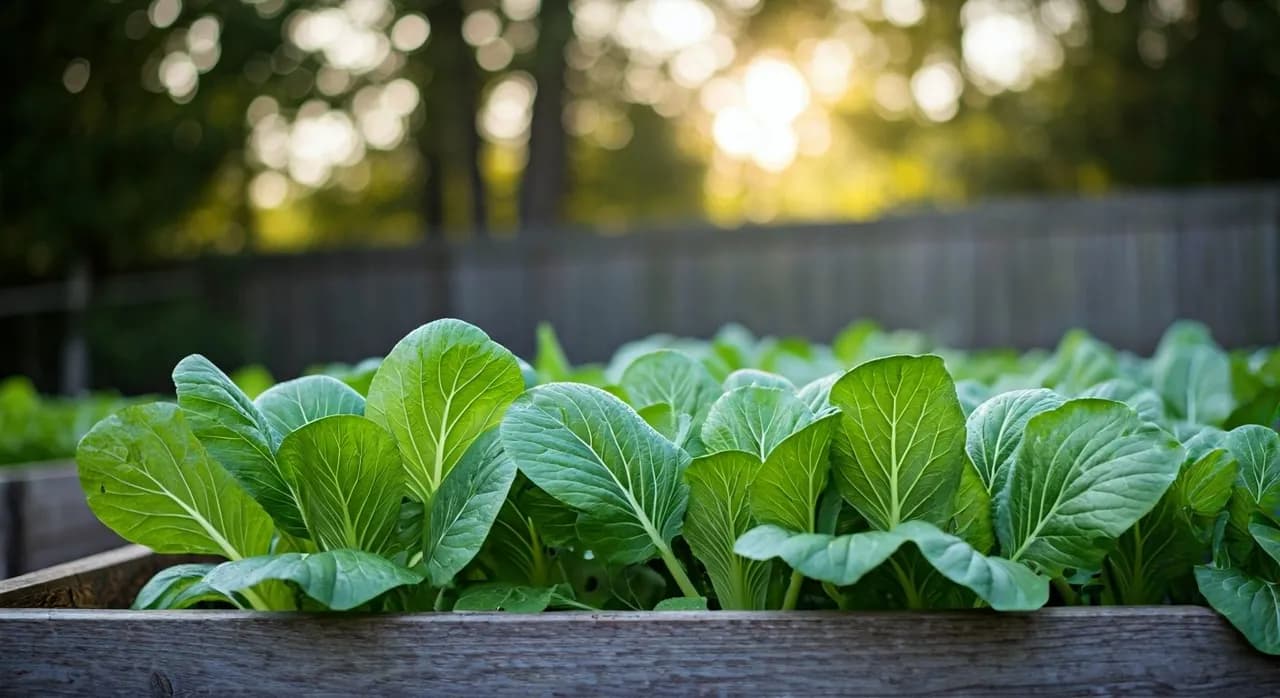
Key takeaways
- Many Asian greens, like bok choy and mustard greens, offer harvests in 30 to 45 days, making them ideal for quick turnaround.
- These crops thrive in cooler temperatures, typically between 50°F and 75°F, allowing for spring and fall plantings in most US zones.
- Consistent soil moisture and a pH between 6.0 and 7.0 are essential for vigorous growth and preventing common issues.
- Implement succession planting every two to three weeks to ensure a continuous supply of fresh greens through the growing season.
- Monitor for common pests such as aphids and thrips, especially on napa cabbage, to protect your yields.
- Hydropriming napa cabbage seeds can significantly improve germination rates, particularly for older seed stock.
Quick answer: Bok choy and napa cabbage thrive in cool temperatures (50-75°F) and well-draining soil with a pH of 6.0-7.0. Plant in spring and fall to ensure consistent moisture and thinning for optimal growth and quick harvests.
In many parts of the US, from USDA zone 5 to 9, gardeners are discovering the rapid rewards of growing Asian greens. Crops like bok choy, napa cabbage, and various mustard greens offer some of the quickest turnarounds in the garden, often ready for harvest in as little as 30 to 60 days. This speed makes them excellent choices for extending the growing season into cooler months or for filling gaps between slower-maturing vegetables.
These greens grow quickly and adapt to a range of US climates when their cool-season requirements are met. With proper planning and care, a home gardener in, say, central Ohio (USDA zone 6a) or coastal California (USDA zone 9b) can enjoy multiple harvests of fresh, tender leaves throughout the year. Meeting their basic requirements ensures steady harvests.
Choosing varieties and timing for your region
Selecting the right varieties of Asian greens is the first step toward a successful harvest. Bok choy (Brassica rapa subsp. chinensis) is a popular choice, with varieties like ‘Pak Choy White Stem’ maturing in 30 to 45 days for baby leaves or 45 to 60 days for full size. Napa cabbage (Brassica rapa subsp. pekinensis), known for its tightly packed heads, typically takes 50 to 70 days to mature, with ‘Bilko’ and ‘Blues’ being reliable options for many US regions. For even quicker yields, mustard greens (Brassica juncea) can be ready for harvest in as little as 20 days for baby leaves, or 35 to 45 days for mature plants, offering a spicy kick.
understanding cool-season preferences
Most Asian greens prefer cooler temperatures, generally thriving between 50°F and 75°F. Planting too early in spring or too late in fall, when temperatures consistently exceed 80°F, can lead to bolting — where plants prematurely flower and become bitter. In USDA zone 7, for instance, this means planting in early spring (March to April) and late summer (August to September) for fall harvests. Gardeners in warmer climates, like USDA zone 9 or 10, might find success with winter plantings, avoiding the intense summer heat. Consider these factors:
- Days to Maturity: Select varieties that fit your local growing window, often 30-70 days.
- Heat Tolerance: Some varieties, like ‘Tatsoi’, hold longer before bolting in warm weather.
- Cold Hardiness: Hardier types such as tatsoi and mustard take repeated frosts and shrug off nights in the mid-20s, extending fall harvests.
- Disease Resistance: Choose varieties carrying resistance to the brassica diseases that are common in your area.
Preparing your garden for success
Proper site selection and soil preparation are fundamental for growing healthy Asian greens. Most varieties prefer full sun, meaning at least six hours of direct sunlight daily, though they can tolerate partial shade (four to six hours) in hotter climates, which can delay bolting by a week or two. Asian greens need well-draining soil rich in organic matter. If your soil is heavy clay, incorporating 2 to 4 inches of compost or aged manure improves drainage and aeration for root development.
soil pH and nutrient needs
Asian greens thrive in a slightly acidic to neutral soil pH, ideally between 6.0 and 7.0. A soil test through your local extension office can provide precise pH readings and nutrient recommendations; fees vary by state, so check your extension's current price list. If your pH is too low, adding agricultural lime at a rate of 5 to 10 pounds per 100 square feet can raise it. For soils with a high pH, elemental sulfur at 1 to 2 pounds per 100 square feet can help lower it. These plants are moderate feeders, benefiting from a balanced fertilizer application at planting time. Consider these soil preparation steps:
- Test Soil pH: Aim for a range of 6.0 to 7.0 for optimal nutrient uptake.
- Amend with Organic Matter: Add 2-4 inches of compost to improve soil structure and fertility.
- Ensure Good Drainage: Prevent waterlogging, which suffocates roots and invites rot.
- Provide Adequate Nutrients: Incorporate a balanced fertilizer, like a 5-10-10 granular product, at 2 pounds per 100 square feet.
Planting seeds and starts
Asian greens can be grown from direct-sown seeds or purchased starts, depending on your preference and the length of your growing season. For direct sowing, plant seeds one-quarter to one-half inch deep, spacing them 1 inch apart in rows 12 to 18 inches apart. Once seedlings emerge and reach 2 to 3 inches tall, thin them to 6 to 12 inches apart for bok choy and mustard greens, and 12 to 18 inches for napa cabbage. This spacing gives each plant the air circulation and light it needs to size up rather than stretch.
hydropriming napa cabbage seeds
For napa cabbage, especially if using older seed stock, hydropriming can significantly improve germination rates. This process involves soaking seeds in water for 12 to 24 hours before planting [1]. After soaking, gently dry the seeds on a paper towel before sowing to prevent clumping. This technique can shorten the time to germination and lift emergence from aged seed. If starting indoors, plant seeds in cell trays four to six weeks before your last frost date, holding the mix at 60-70°F for quick, even germination. Consider these planting methods:
- Direct Sowing: Plant seeds 0.25-0.5 inches deep, 1 inch apart, in rows 12-18 inches apart.
- Starting Indoors: Sow seeds 4-6 weeks before the last frost, maintaining 60-70°F soil temperature.
- Thinning: Space plants 6-12 inches apart for bok choy, 12-18 inches for napa cabbage.
- Succession Planting: Sow new seeds every 2-3 weeks to ensure continuous harvests.
Essential care: water, nutrients, and temperature
Consistent moisture is important for tender, flavorful Asian greens. Aim for 1 to 1.5 inches of water per week, either from rainfall or irrigation, especially during dry spells. Uneven watering can lead to tough, bitter leaves or premature bolting. Drip irrigation or soaker hoses are effective methods, putting water at the root zone instead of losing it to evaporation and drift the way overhead sprinklers do. Monitor soil moisture by feeling the top 1 to 2 inches; if it’s dry, it’s time to water.
feeding and temperature management
While Asian greens are not heavy feeders, a boost of nitrogen can promote lush leaf growth. Apply a balanced organic fertilizer, such as a 5-5-5 granular product, at a rate of one-quarter cup per 10 square feet every three to four weeks after thinning. Alternatively, a liquid fish emulsion diluted to half strength can be applied every two weeks. Maintaining ideal temperatures, between 50°F and 75°F, is critical. In regions like the Mid-Atlantic (USDA zone 7), row covers in early spring and late fall buffer the crop against hard freezes. Watch the other end too: a run of nights below about 50°F can vernalize bok choy and napa cabbage and send them straight to seed once it warms. For indoor growing during winter, a reflective indoor grow tent can help maintain stable temperatures around 65°F.
- Watering: Provide 1-1.5 inches of water weekly to ensure consistent soil moisture.
- Fertilizing: Apply a balanced organic fertilizer (e.g., 5-5-5) at 0.25 cups per 10 square feet every 3-4 weeks.
- Temperature Range: Maintain ambient temperatures between 50°F and 75°F for optimal growth.
- Cold Protection: Use row covers or cold frames to shield plants from temperatures below 40°F.
Managing pests and diseases
Asian greens, like other brassicas, are susceptible to several common pests and diseases. Aphids are tiny, soft-bodied insects that cluster on new growth, sucking plant sap and potentially transmitting viruses. Thrips are another concern, causing silvery stippling on leaves and distorting growth. Aphids and thrips are well-documented pests of napa cabbage, and both are worth catching early [2]. Regularly inspect the undersides of leaves for signs of infestation, especially in areas with high humidity or dense planting.
preventive measures and control
Preventive measures are the most effective way to manage pests. Using floating row covers from planting until harvest excludes flying insects outright, as long as the edges stay sealed — and these are leaf crops, so nothing is lost by keeping pollinators out. Crop rotation, avoiding planting brassicas in the same spot for at least three years, helps break disease cycles and reduces soil-borne pest populations. If pests are present, a strong spray of water can dislodge aphids, and insecticidal soaps or neem oil can be applied for more severe infestations, following label directions carefully. For diseases like downy mildew or powdery mildew, spacing plants properly (6-18 inches apart) and watering at the base rather than over the leaves keeps foliage dry and slows their spread.
- Monitor Regularly: Inspect plants every 2-3 days for early signs of pests or disease.
- Use Row Covers: Deploy floating row covers to physically block insects from reaching plants.
- Practice Crop Rotation: Rotate brassica crops every 3 years to prevent soil-borne issues.
- Employ Organic Controls: Use insecticidal soap or neem oil for pest outbreaks, or remove by hand.
Harvesting for continuous yields
One of the greatest benefits of growing Asian greens is their potential for continuous harvesting. For bok choy and mustard greens, you can begin harvesting outer leaves when they are 4 to 6 inches long, typically 20 to 30 days after planting. This ‘cut-and-come-again’ method allows the central growing point to continue producing new leaves, extending your harvest period by several weeks. For a full head of bok choy, harvest the entire plant by cutting it at the base, about 1 inch above the soil line, when it reaches 8 to 12 inches tall, usually 45 to 60 days from planting.
harvesting napa cabbage and succession planting
Napa cabbage is typically harvested as a full head when it feels firm and dense, usually 50 to 70 days after planting. Cut the entire head at the base with a sharp knife. To ensure a steady supply of fresh greens throughout the season, implement succession planting. Sow a new batch of seeds every two to three weeks, especially during the spring and fall growing windows. This strategy is particularly effective in regions like the Pacific Northwest (USDA zone 8b), where mild temperatures allow for extended cool-season growing. Consider these harvesting tips:
- Baby Leaf Harvest: Begin picking outer leaves when 4-6 inches long, 20-30 days post-planting.
- Full Head Harvest: Cut bok choy at 1 inch above soil line when 8-12 inches tall (45-60 days).
- Napa Cabbage: Harvest firm, dense heads 50-70 days after planting.
- Succession Planting: Sow new seeds every 2-3 weeks for a continuous supply.
Extending the season: indoor and succession planting
While Asian greens prefer cooler outdoor temperatures, their rapid growth makes them excellent candidates for extending the season, both indoors and through careful succession planting. For gardeners in colder climates, such as USDA zone 4 or 5, starting seeds indoors four to six weeks before the last frost allows for an earlier outdoor harvest, often by 10 to 14 days. Similarly, bringing plants indoors or growing them in protected environments like cold frames or unheated greenhouses can extend the fall harvest well into winter, even when outdoor temperatures drop below 20°F.
indoor growing and protection strategies
For year-round production, especially in regions with harsh winters like Minnesota (USDA zone 4a), growing Asian greens indoors under grow lights is a viable option. A simple setup with LED grow lights can yield fresh greens every 30 to 45 days. Alternatively, a cold frame typically holds a few degrees above outside air on a cold night — considerably more on a sunny day — which is often enough to carry hardy greens through light freezes. In mild winter areas, such as parts of USDA zone 9 and 10, a light row cover can protect plants from occasional dips below 30°F, allowing for continuous outdoor growth. Remember that consistent watering and feeding are still necessary for indoor plants, often at 50% of the outdoor rate due to less evaporation.
- Indoor Seed Starting: Begin seeds 4-6 weeks before last frost for an earlier outdoor crop.
- Cold Frames/Greenhouses: Utilize these structures to extend the growing season by 1-2 months in spring and fall.
- Indoor Cultivation: Grow under LED grow lights for year-round harvests every 30-45 days.
- Winter Protection: Use row covers in mild climates to protect against temperatures below 30°F.
Comparison of popular Asian greens
Green type | Days to maturity (avg.) | Ideal Temp (°F) | Flavor profile |
|---|---|---|---|
Bok Choy | 30-60 days | 50-75 | Mild, slightly sweet, crunchy |
Napa Cabbage | 50-70 days | 50-75 | Sweet, tender, mild cabbage |
Mustard Greens | 20-45 days | 50-75 | Pungent, peppery, spicy |
Tatsoi | 20-45 days | 50-75 | Mild, slightly mustardy, creamy |
Quick Harvest: Many Asian greens, like mustard greens, can be harvested for baby leaves in as little as 20 days after planting.
Soil pH Ideal: Asian greens thrive in a soil pH range of 6.0 to 7.0, which is slightly acidic to neutral.
Water Needs: These plants require 1 to 1.5 inches of water per week for optimal growth and tender leaves.
Frequently asked questions
What is the fastest growing Asian green?
Mustard greens (Brassica juncea) are among the fastest, often ready for baby leaf harvest in as little as 20 days. Bok choy can also be harvested for baby leaves in about 30 days.
Can I grow Asian greens in hot climates?
Yes, but it’s best to plant them during the cooler parts of the year, such as fall, winter, or early spring. Temperatures consistently above 80°F can cause them to bolt prematurely, which turns the leaves bitter and ends the picking.
How often should I water my Asian greens?
Asian greens require consistent moisture, typically 1 to 1.5 inches of water per week. This can be from rainfall or irrigation, and it’s essential to keep the soil evenly moist to prevent bitterness.
What pests commonly affect bok choy and napa cabbage?
Common pests include aphids, thrips, flea beetles, and cabbage worms. Regular inspection every 2-3 days and using floating row covers can significantly reduce pest damage.
What is succession planting?
Succession planting involves sowing new batches of seeds every two to three weeks. This strategy spreads harvests across the growing season instead of producing a single flush that matures all at once.
Is hydropriming necessary for napa cabbage seeds?
Hydropriming, soaking seeds for 12 to 24 hours, is not strictly necessary but can improve germination rates, especially for older napa cabbage seeds.
References
- Hydropriming promotes germination of aged napa cabbage seeds (2015). Hydropriming promotes germination of aged napa cabbage seeds.
- Application of ultrathin-layer isoelectric focusing for genetic purity testing of F1 hybrid seeds in napa cabbage (2013). Application of ultrathin-layer isoelectric focusing for genetic purity testing of F1 hybrid seeds in napa cabbage.
- INSECTICIDE EFFICACY AGAINST APHIDS AND THRIPS IN NAPA CABBAGE, 2007 (2009). INSECTICIDE EFFICACY AGAINST APHIDS AND THRIPS IN NAPA CABBAGE, 2007.