Key takeaways
- Moringa (Moringa oleifera) thrives as a perennial in USDA zones 9-11, requiring winter protection or cut-back strategies.
- In USDA zones 6-8, moringa can be successfully grown as a warm-season annual, yielding fresh leaves within 60-90 days.
- Optimal growth requires full sun exposure for at least six hours daily and well-draining soil with a pH between 6.0 and 7.0.
- Regular harvesting of young leaves and tender shoots every 2-4 weeks encourages bushier growth and higher yields.
- Proper cutting techniques, such as coppicing at 2-3 ft, matter for perennial management and annual regrowth.
- Moringa offers significant nutritional value, providing vitamins, minerals, and protein for home consumption or livestock forage.
Quick answer: Moringa can be grown as a perennial in USDA zones 9-11 with winter protection, or as a warm-season annual in colder US regions like zones 6-8. Optimal growth requires full sun, well-draining soil, and regular harvesting.
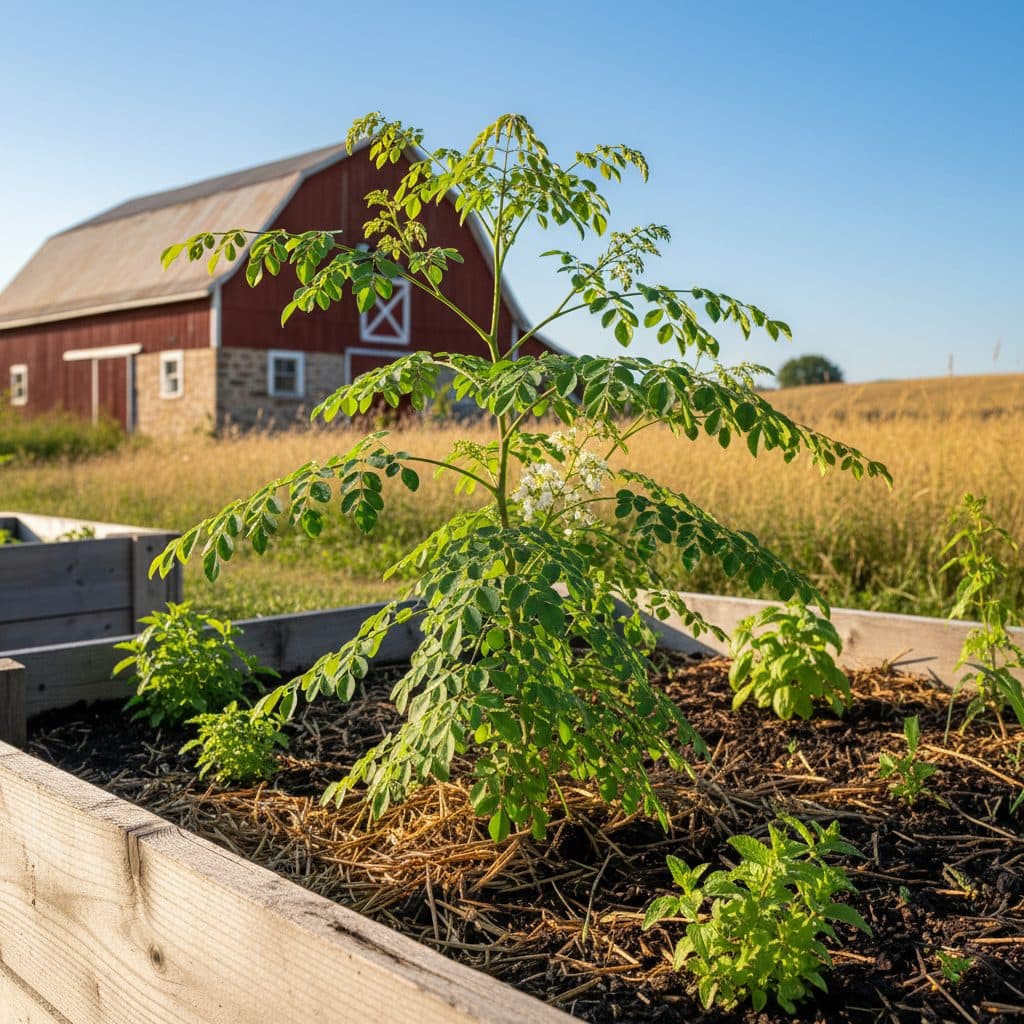
From the arid landscapes of West Texas to the humid climate of South Florida, moringa (Moringa oleifera) is gaining traction among US growers. This fast-growing tree, often called the ‘miracle tree,’ offers a bounty of nutritious leaves, pods, and seeds. While it’s native to tropical and subtropical regions, its adaptability allows it to be cultivated across a wider range of USDA zones, either as a resilient cut-back perennial or a productive warm-season annual.
Understanding how moringa performs in different climates matters for successful cultivation. In warmer areas like USDA zones 9-11, growers can manage moringa as a perennial, so it returns year after year with proper care. Further north, in zones as cold as USDA zone 6, it can still provide a substantial harvest within a single growing season, similar to other warm-season annuals. This guide will walk you through the practical steps for growing moringa, maximizing its potential in your specific US growing environment.
understanding moringa’s growth habits and climate needs
Moringa (Moringa oleifera) is a remarkably versatile plant, known for its rapid growth and nutritional density. In its native tropical habitats, it can grow into a tree reaching 30-40 ft tall within just a few years. However, for cultivation in the US, especially outside of tropical zones, we often manage it differently. The plant exhibits significant variability in its genotypes, influencing traits like yield and quality, which growers can select for over time [1].
For successful cultivation, moringa demands full sun exposure, ideally 6-8 hours per day, and well-draining soil. It tolerates a range of soil types but performs best in sandy loams with a pH between 6.0 and 7.0. While it is drought-tolerant once established, consistent moisture is essential for optimal leaf production, especially during dry spells in regions like the California Central Valley or the Southeastern US. In these areas, supplemental irrigation might be necessary to achieve maximum yields, particularly during the hot summer months when temperatures can exceed 90°F for extended periods.
selecting the right moringa variety for your region
While Moringa oleifera is the most common species, there are other moringa species, though less frequently cultivated in the US. For most home growers and small farms, standard Moringa oleifera seeds or seedlings will suffice. When sourcing, look for seeds from reputable suppliers that specify good germination rates, often above 80%. Some growers in South Florida or Southern California might find access to specific cultivars adapted for higher leaf production or cold tolerance, but these are less common for the general market. Consider starting with a few different seed batches to observe which performs best in your local microclimate, as even within a single zone, conditions can vary significantly.
- Choose high-quality seeds with a germination rate above 80%.
- Consider local nurseries in USDA zones 9-11 for established plants.
- Research specific cultivars if available for better performance.
- Start with a small batch to test suitability for your specific garden.
growing moringa as a cut-back perennial in warm us zones
In USDA zones 9-11, such as parts of Florida, South Texas, Arizona, and Southern California, moringa can be cultivated as a perennial. This means the plant will survive the winter and regrow from its rootstock or lower stems each spring. The key to perennial success is protecting the plant from freezing temperatures, which can damage or kill the above-ground growth. In zone 9, for instance, temperatures can drop to 20-30°F, necessitating more intensive winter protection than in zone 11, where frosts are rare or very mild.
To manage moringa as a perennial, a technique called coppicing or pollarding is often employed. This involves cutting the main stem back significantly, typically to a height of 2-3 ft, before the first hard frost. This practice encourages the plant to produce multiple new shoots from the base in the spring, leading to a bushier, more manageable plant with increased leaf production. Research indicates that varying cutting heights can significantly impact yield and quality as a perennial forage crop [5]. After cutting, a thick layer of mulch, 6-12 in deep, around the base of the plant can insulate the root system from cold. Some growers in colder parts of zone 9 might even cover the stump with a burlap sack or a frost blanket if temperatures are predicted to drop below 25°F for several days. This strategy is similar to managing other warm-season perennials, like certain types of hibiscus or canna lilies, in transitional zones.
winter protection and spring regrowth
Even in warm zones, an unexpected cold snap can be detrimental. For young plants or those in marginal zone 9 areas, consider planting them in large containers that can be moved indoors or into a sheltered location, like a garage, when temperatures dip below 40°F. For established plants in the ground, after coppicing, ensure the soil is not overly wet before a freeze, as wet soil can conduct cold more efficiently to the roots. In spring, once soil temperatures consistently reach 60°F or higher, new growth will emerge. Fertilize with a balanced organic fertilizer, such as a 5-5-5 blend, to support vigorous regrowth. You can find useful tools for indoor growing, like a reflective indoor grow tent, for starting seeds or overwintering smaller plants.
- Cut back perennial moringa to 2-3 ft before hard frosts.
- Apply 6-12 in of mulch around the plant base for insulation.
- Consider container growing for mobility in colder zone 9 areas.
- Protect young plants from temperatures below 40°F.
growing moringa as an annual in colder us zones
For growers in USDA zones 6-8, where winter temperatures consistently drop below freezing (e.g., 0-20°F), moringa is best treated as a warm-season annual. This approach allows you to harvest fresh leaves throughout the summer and fall, much like you would with zucchini or green beans. While the plant won’t survive the winter outdoors, its rapid growth rate means you can still achieve substantial yields in a single season.
Starting moringa seeds indoors 6-8 weeks before the last frost date gives it a head start. Use individual pots or seed-starting trays filled with a good quality seed-starting mix. Maintain soil temperatures around 70-80°F for optimal germination, which typically occurs within 7-14 days. Once seedlings are 4-6 in tall and all danger of frost has passed, transplant them outdoors into a sunny location. In areas like the Mid-Atlantic or Midwest, this usually means late May or early June, when night temperatures reliably stay above 50°F. Space plants 12-18 in apart in rows 3 ft apart to allow for good air circulation and easy harvesting. For those looking to optimize indoor starting, a reflective indoor grow tent can provide the consistent warmth and light needed.
maximizing annual yields
To encourage bushy growth and maximize leaf production, pinch back the growing tips when plants are about 18-24 in tall. This promotes lateral branching, leading to more harvestable leaves. Fertilize monthly with a balanced liquid feed, or side-dress with compost every 4-6 weeks. Consistent watering, especially during dry periods, is vital for tender leaf production. Moringa can grow 10-15 ft tall in a single season if left unpruned, but for leaf harvesting, keeping it shorter and bushier is more productive. Expect to begin harvesting young leaves within 60-90 days of transplanting. This rapid growth makes it a viable warm-season annual crop.
- Start seeds indoors 6-8 weeks before the last frost.
- Maintain soil temperatures of 70-80°F for germination.
- Transplant outdoors after all frost danger, when night temps exceed 50°F.
- Space plants 12-18 in apart for optimal growth.
planting and general care for both perennial and annual moringa
Whether you’re growing moringa as a perennial in USDA zone 10 or as an annual in zone 7, the initial planting and general care principles remain largely the same. Good soil preparation matters most. Amend heavy clay soils with organic matter like compost or aged manure to improve drainage, as moringa roots are susceptible to rot in waterlogged conditions. For sandy soils, adding compost will help retain moisture and nutrients. A soil test through your local extension office can provide specific recommendations for your garden’s needs.
Planting depth is important: sow seeds 0.5-1 in deep. If transplanting seedlings, plant them at the same depth they were in their nursery pots. Water thoroughly after planting to settle the soil around the roots. For optimal growth, moringa requires consistent moisture, especially during its establishment phase and during periods of active leaf production. Aim for 1 in of water per week, either from rainfall or irrigation. However, avoid overwatering, which can lead to fungal issues. The USDA Natural Resources Conservation Service provides excellent regional data on soil types and water availability.
fertilization and pest management
Moringa is not a heavy feeder, but it benefits from regular, balanced nutrition. For perennial plants, apply a slow-release organic fertilizer, such as a 5-5-5 or 10-10-10 granular blend, in early spring at a rate of 1 lb per 100 sq ft, and again mid-summer. Annual plants can be fertilized with a liquid feed every 3-4 weeks. Compost tea or a diluted fish emulsion (1 tbsp per gallon of water) can also provide a gentle boost. While moringa is generally pest-resistant, watch out for common garden pests like aphids, spider mites, or grasshoppers, especially on young plants. A strong spray of water can dislodge many pests, or use an insecticidal soap solution (2 tbsp per gallon of water) for more persistent infestations. Diseases are rare if good drainage and air circulation are maintained, but powdery mildew can occur in humid conditions; ensure plants are spaced adequately, around 18-24 in apart, to prevent this.
- Amend soil with compost to improve drainage and fertility.
- Sow seeds 0.5-1 in deep or transplant seedlings at existing depth.
- Provide 1 in of water per week, avoiding overwatering.
- Fertilize perennials in spring and mid-summer; annuals every 3-4 weeks.
harvesting and utilizing your moringa bounty
Harvesting moringa is straightforward and can begin once plants are 2-3 ft tall, typically 60-90 days after planting or spring regrowth. For continuous leaf production, focus on harvesting the young, tender leaves and the top 6-12 in of new shoots. This method, often called ‘cut-and-come-again,’ encourages the plant to branch out, producing more leaves. Avoid stripping all the leaves from a single branch; instead, take a few leaves from many branches or cut entire shoots. Research on moringa as a perennial forage crop suggests that cutting heights significantly impact yield [5].
You can harvest moringa leaves every 2-4 weeks during the growing season. The more frequently you harvest, the bushier your plant will become, yielding a greater volume of leaves. In warm zones, a perennial plant can provide harvests for 8-10 months out of the year, while annual plants in colder regions will offer 3-5 months of continuous harvesting before the first frost. A single well-maintained moringa plant can produce several pounds of fresh leaves over a season, providing a consistent supply for your household. This is similar to the continuous harvest you get from other fast-growing crops like spinach or kale.
processing and storage
Fresh moringa leaves are best used immediately in salads, smoothies, or cooked dishes. They have a slightly pungent, peppery taste, similar to arugula or watercress. For longer storage, moringa leaves can be dried. Spread them in a single layer on screens in a well-ventilated, shaded area, or use a food dehydrator set to 100-115°F. Drying typically takes 12-24 hours. Once completely dry and brittle, crush the leaves into a powder. Store moringa powder in airtight containers in a cool, dark place for up to 6-12 months. This powder keeps much of the leaf’s nutritional value. Stick to leaves, young pods and seeds — moringa root and root bark are not food — and anyone pregnant, nursing or on prescription medication should check with a clinician before taking concentrated leaf powder daily. Moringa pods, which resemble long green beans, can also be harvested when young and tender, usually 12-18 in long, and cooked like green beans. Seeds from mature pods can be roasted and eaten, or pressed for oil.
- Harvest young leaves and tender shoots every 2-4 weeks.
- Cut 6-12 in from the top of new growth to encourage branching.
- Use fresh leaves in salads, smoothies, or cooked meals.
- Dry leaves for powder storage in airtight containers for 6-12 months.
Moringa as a Perennial vs. Annual in US Climates
Feature | Perennial (USDA Zones 9-11) | Annual (USDA Zones 6-8) |
|---|---|---|
Climate Suitability | Mild winters, minimum temperatures rarely below 25°F | Cold winters, temperatures consistently below freezing (0-20°F) |
Planting Method | Direct sow seeds or transplant seedlings in spring | Start seeds indoors 6-8 weeks before last frost |
Winter Management | Cut back to 2-3 ft, mulch heavily, optional frost protection | Plant dies back with frost, restart from seed next spring |
Harvest Duration | 8-10 months per year from established plants | 3-5 months during the warm season |
Typical Height | Managed to 6-10 ft with regular pruning | Can reach 10-15 ft in one season if unpruned |
Root System | Develops a deep, established taproot over years | Fibrous root system, less developed in one season |
Nutrient Density: Moringa leaves are a genuinely useful source of vitamin C, vitamin A and potassium. Treat the multiples repeated all over the internet — seven times the vitamin C of oranges, four times the vitamin A of carrots — with caution: they compare dried leaf powder against fresh fruit and vegetables, not gram for gram of fresh leaf.
Rapid Growth: Moringa can grow 10-15 ft in a single growing season in optimal conditions, yielding fresh leaves within 60-90 days of planting.
Water Efficiency: Once established, moringa is drought-tolerant, requiring only about 1 inch of water per week, making it suitable for drier regions.
Frequently asked questions
What USDA zones can grow moringa as a perennial?
Moringa can be grown as a perennial in USDA zones 9-11, where winter temperatures rarely drop below 25°F. In these zones, it will typically regrow from its rootstock each spring after a cut-back.
How much sunlight does moringa need for optimal growth?
Moringa requires a minimum of six hours of direct sunlight daily for optimal growth and leaf production. Ideally, it should receive 8-10 hours of full sun, especially in cooler climates where growing seasons are shorter.
When should I plant moringa seeds outdoors in colder climates?
In colder climates (USDA zones 6-8), you should plant moringa seeds outdoors or transplant seedlings after all danger of frost has passed, typically when night temperatures consistently stay above 50°F, usually in late May or early June.
How often should I harvest moringa leaves?
For continuous leaf production and to encourage bushier growth, harvest moringa leaves and tender shoots every 2-4 weeks. Cut about 6-12 inches from the top of new growth during the active growing season.
Can moringa be grown in containers?
Yes, moringa can be successfully grown in large containers, at least 15-20 gallons in size, especially useful for growers in USDA zone 9 who wish to move plants indoors for winter protection or for those with limited garden space.
References
- Variability in perennial moringa (Moringa oleifera Lam.) genotypes for quantitative and qualitative traits (2026). Variability in perennial moringa (Moringa oleifera Lam.) genotypes for quantitative and qualitative traits.
- The Role of Perennial Biomass Crops in a Growing Bioeconomy (2016). The Role of Perennial Biomass Crops in a Growing Bioeconomy.
- PSXIV-41 Warm-season annual or perennial hay fed to growing beef steers with or without dried distillers grains supplementation: ruminal fermentation characteri (2019). PSXIV-41 Warm-season annual or perennial hay fed to growing beef steers with or without dried distillers grains supplementation: ruminal fermentation characteri.
- EVALUATION OF COOL-SEASON ANNUALS EFFECT ON SOIL HEALTH IN WARM-SEASON PERENNIAL PASTURES IN SOUTHESTERN US. (2023). EVALUATION OF COOL-SEASON ANNUALS EFFECT ON SOIL HEALTH IN WARM-SEASON PERENNIAL PASTURES IN SOUTHESTERN US..
- Assessment of yield and quality of moringa (Moringa oleifera) as a perennial forage crop under varying sowing patterns and cutting heights (2025). Assessment of yield and quality of moringa (Moringa oleifera) as a perennial forage crop under varying sowing patterns and cutting heights.