Key takeaways
- Fenugreek (methi) offers a dual harvest of quick greens (2-3 weeks) and mature seeds (3-5 months).
- It thrives in full sun and well-drained soil with a pH of 6.0-7.0, suitable for USDA zones 6-10.
- Direct sow seeds 0.5 inches deep, spacing 1-2 inches for greens or 4-6 inches for seeds.
- Harvest greens using a cut-and-come-again method, leaving 1 inch of growth for multiple cuts.
- Allow plants to fully mature for 120-150 days for seed harvest, drying pods until brittle.
- Store dried fenugreek seeds in airtight containers for up to 12 months for optimal freshness.
Quick answer: Fenugreek thrives in full sun and well-drained soil with a pH of 6.0-7.0 in USDA zones 6-10. Direct sow seeds 0.5 inches deep, spacing 1-2 inches for greens or 4-6 inches for seeds, harvesting greens in 2-3 weeks or seeds in 3-5 months.
In the diverse landscapes of the United States, from the mild winters of USDA zone 10 in southern Florida to the longer growing seasons of zone 6 in the Midwest, growers are constantly seeking versatile crops that offer both quick returns and substantial harvests. Fenugreek, known as methi, stands out as an annual legume that delivers on both fronts. This adaptable plant (Trigonella foenum-graecum) can provide a continuous supply of tender, aromatic greens in just two to three weeks, and later, a valuable harvest of seeds for the kitchen. Culinary amounts are the ordinary use here. Fenugreek in medicinal doses is a different matter: it is traditionally used to bring on labor and is not recommended in pregnancy, it can lower blood glucose enough to matter for anyone on diabetes medication, and it is a legume that can cross-react with peanut and chickpea allergy.
For US growers aiming to maximize their garden’s output, fenugreek offers a compelling option. Its relatively short growth cycle for greens makes it an excellent choice for succession planting, allowing for multiple harvests throughout a single season. The mature seeds, which develop over three to five months, provide a shelf-stable spice that can be used in a wide array of dishes, adding a distinctive, slightly bitter, and sweet flavor profile. This guide will walk you through cultivating fenugreek for a successful yield, whether you prioritize fresh greens or a seed crop.
Understanding fenugreek: a dual-purpose crop
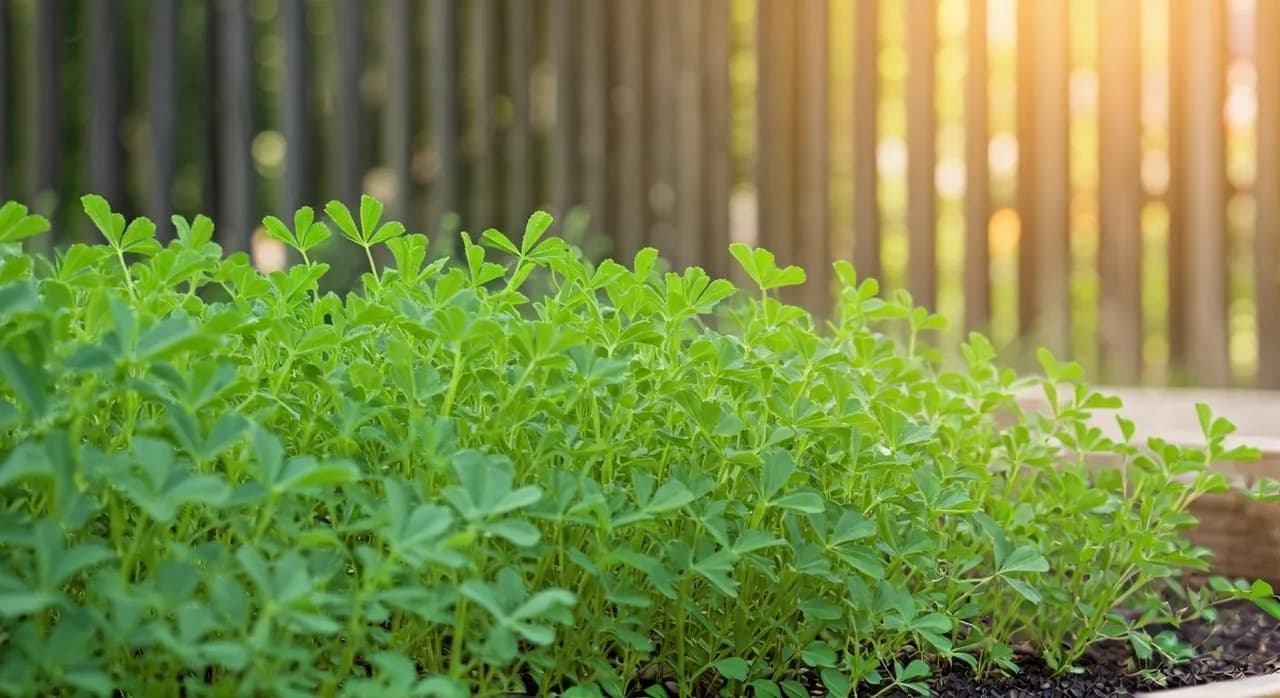
Fenugreek, or methi, is an annual plant in the pea family (Fabaceae) that has been cultivated for centuries across various cultures [1]. In the United States, it’s gaining recognition among home gardeners and small-scale farmers for its dual utility. The plant typically grows to a height of one to two feet, producing small, clover-like leaves and slender pods containing hard, yellowish-brown seeds. These seeds are a staple spice in many cuisines, often ground into a powder [5] or used whole [4]. Beyond its culinary appeal, fenugreek has also been studied for its practical applications, such as its potential in arsenic biosorption, demonstrating a 90% removal efficiency in some experimental conditions [2].
Dual benefits for the US grower
Fenugreek is also used as a forage and feed supplement in some livestock systems, though the published trials are on production dairy herds and do not translate into a feeding rate for a backyard flock or a couple of goats. For the home grower in USDA zones 6 to 10, this means a crop that enriches the kitchen and also offers potential as a cover crop or a nutrient-rich addition to livestock feed. Growers can choose to harvest the tender, aromatic greens within 21 days of planting or allow the plant to mature for a valuable harvest of seeds that takes approximately 120 to 150 days.
- Fresh greens for salads and cooking
- Dried leaves (kasoori methi) for flavor
- Whole seeds for tempering and spice blends
- Ground seeds for curries and rubs
- Cover crop for soil health
Site selection and soil preparation for fenugreek
Selecting the right site is essential for a successful fenugreek crop, especially for growers in diverse US climates. Fenugreek thrives in full sun, requiring at least six to eight hours of direct sunlight daily to produce robust plants and a good seed set. In hotter regions, like USDA zone 9 and 10, some afternoon shade can be beneficial to prevent scorching, particularly during peak summer temperatures exceeding 90°F. The ideal soil for fenugreek is well-drained, fertile soil, and has a pH between 6.0 and 7.0. Heavy clay soils that retain too much moisture can lead to root rot and stunted, unproductive plants.
Preparing the garden bed for optimal growth
Before planting, prepare the soil by incorporating two to four inches of well-rotted compost or aged manure into the top six to eight inches of soil. This improves soil structure, drainage, and nutrient availability. A soil test through your state's cooperative extension service — fees vary by state, so check their current price list — can provide precise recommendations for amendments, such as bone meal for phosphorus. If you use wood ash for potassium, apply it sparingly and only after a test, because it also raises pH and this crop wants 6.0-7.0. For growers considering an indoor setup, a reflective indoor grow tent can provide a controlled environment to ensure consistent light and temperature for optimal growth.
- Choose a site with 6-8 hours of direct sun.
- Ensure soil pH is between 6.0 and 7.0.
- Amend heavy soils with 2-4 inches of compost.
- Improve drainage to prevent root rot.
- Consider a reflective indoor grow tent for controlled conditions.
Planting fenugreek: from quick greens to mature seeds
These site selection points carry into this section, too.
Fenugreek is typically direct-sown, as it dislikes transplanting, which can set back growth by up to two weeks. For growers in USDA zones 7 to 10, planting can begin in early spring after the last frost date, usually in April or May, and continue through late summer for successive harvests. In warmer regions, a fall planting in September or October can provide greens through mild winters. Plant seeds about 0.5 inches deep and one to two inches apart for greens, or four to six inches apart if you intend to harvest seeds, allowing more space for mature plants to develop pods. Rows should be spaced 12 to 18 inches apart to allow for air circulation and easy access for weeding.
Timing and spacing for a dual harvest
To ensure a continuous supply of fresh greens, consider succession planting every two to three weeks. This strategy is similar to how many growers approach crops like radishes, providing a steady harvest rather than a single large flush. For seed production, a single, well-timed planting in spring is usually sufficient. Fenugreek seeds germinate quickly, often emerging within three to seven days if soil temperatures are consistently above 60°F. Ensure the soil remains consistently moist during this critical germination phase to achieve a high success rate, ideally above 85% of planted seeds.
- Direct sow seeds after the last frost.
- Plant 0.5 inches deep.
- Space 1-2 inches apart for greens.
- Space 4-6 inches apart for seeds.
- Maintain 12-18 inch row spacing.
Care and maintenance for a healthy fenugreek crop
That work on planting fenugreek sets up what follows here.
Once established, fenugreek is a relatively low-maintenance crop, but consistent care ensures optimal growth and yield. Regular watering is essential, especially during dry spells and as plants are establishing. Aim for about one inch of water per week, either from rainfall or irrigation, to keep the soil consistently moist but not waterlogged. In sandy soils, common in parts of the Southeast, you might need to water more frequently, perhaps every two to three days, while heavier clay soils in regions like the Great Plains might only need watering every five to seven days. Overwatering invites root and stem rots, and waterlogged fenugreek rarely recovers.
Managing water, weeds, and pests
Weed control is important, particularly in the early stages of growth, as weeds compete for water and nutrients. Hand-weeding is often the most effective method for small plots to ensure minimal disturbance to the shallow root system of young fenugreek plants. While fenugreek is generally resistant to most serious pests and diseases, aphids can sometimes become an issue, especially in dry, stressed conditions. A strong spray of water can dislodge these pests, or for larger infestations, an insecticidal soap solution mixed at a 1% concentration can be applied. Monitor plants weekly for any signs of trouble to address issues promptly.
- Provide 1 inch of water weekly.
- Hand-weed regularly, especially when plants are young.
- Monitor for aphids, particularly in dry conditions.
- Use insecticidal soap at 1% concentration if needed.
- Avoid overwatering to prevent fungal issues.
Harvesting fenugreek greens: multiple cuts
This builds directly on care and maintenance.
One of the most appealing aspects of growing fenugreek is the speed with which you can harvest its flavorful greens. For growers across USDA zones 6 to 10, the first cut can often be made as early as two to three weeks after planting, when the plants are four to six inches tall and have developed several sets of true leaves. Use sharp scissors or a knife to snip the leaves about one inch above the soil line. This cut-and-come-again method encourages the plant to produce new growth from the base, allowing for multiple harvests from a single planting.
Maximizing your fresh greens yield
Depending on growing conditions and plant vigor, you can typically expect to make three to five successive harvests from a single planting over a period of six to eight weeks. Each subsequent harvest might occur every two to three weeks, yielding tender leaves that are excellent in salads, stir-fries, or traditional Indian dishes. For example, a 10-foot row of fenugreek planted densely for greens can yield approximately one to two pounds of fresh leaves per harvest. To maintain plant health and encourage regrowth, ensure adequate moisture and consider a light feeding with a balanced liquid fertilizer (such as a 5-1-1 NPK ratio) after the second or third cut.
- Harvest greens when 4-6 inches tall.
- Cut 1 inch above the soil line.
- Expect 3-5 harvests from one planting.
- Harvest every 2-3 weeks for continuous supply.
- Consider liquid fertilizer after the second cut.
Harvesting and processing fenugreek seeds
Those harvesting fenugreek greens habits matter here as well.
If your goal is to harvest fenugreek seeds, allow the plants to mature fully, a process that typically takes three to five months (120 to 150 days) from planting. In most US growing regions, this means planting in spring for a late summer or early fall seed harvest. The pods will turn yellow and then light brown, and the leaves will begin to yellow and drop, signaling that the seeds are ready [4]. This is a critical window: harvest too early and the seeds are underdeveloped, wait too long and the pods shatter and drop their seed on the ground before you can cut them.
Drying, threshing, and storing your spice crop
Once the pods are dry and brittle, cut the entire plant at the base. Gather the plants into small bundles and hang them upside down in a warm, dry, well-ventilated area, such as a shed or garage, for one to two weeks to complete the drying process. Place a tarp or sheet underneath to catch any seeds that may fall. After drying, thresh the seeds by rubbing the pods between your hands or gently beating the bundles inside a large bag. Winnow the seeds to separate them from the chaff; a gentle breeze or a fan set on a low speed (around 5 mph) works well. Store the clean, dry seeds in an airtight container in a cool, dark place, where they can maintain their potency for up to 12 months [5]. This long-term storage is similar to how growers cure and store celery seeds or other spice crops.
- Allow plants to mature for 3-5 months.
- Harvest when pods are yellow-brown and brittle.
- Cut entire plants at the base.
- Hang plants to dry for 1-2 weeks.
- Thresh and winnow seeds, then store in airtight containers.
Fenugreek: Greens vs. Seeds
Attribute | Greens | Seeds |
|---|---|---|
Time to Harvest | 2-3 weeks | 3-5 months |
Harvest Method | Cut-and-come-again | Cut entire plant |
Primary Use | Fresh culinary herb | Dried spice |
Storage | Refrigerate for 5-7 days | Airtight container for up to 12 months |
Yield Example | 1-2 lbs per 10 ft row (per cut) | 1-2 oz per plant (total) |
Quick Greens Harvest: Fenugreek greens can be ready for their first harvest in as little as two weeks, providing a quick return on your planting efforts.
Seed Yield: A mature fenugreek plant can yield one to two ounces of dried seeds, enough for a year’s supply for many home cooks.
Frequently asked questions
Can I grow fenugreek in a container?
Yes, fenugreek grows well in containers. Choose a pot at least 6 inches deep and 8-10 inches wide for optimal root development and plant health. Ensure it has good drainage to prevent waterlogging.
What USDA zones is fenugreek suitable for?
Fenugreek is best suited for USDA zones 6 to 10. In cooler zones, it can be grown as an annual during the warm season, while in warmer zones, it can often be planted in fall for a winter harvest of greens.
How long does it take for fenugreek seeds to mature?
Fenugreek seeds typically take three to five months (120 to 150 days) to mature from planting. This extended period allows the pods to fully develop and dry on the plant before harvest.
What pests commonly affect fenugreek plants?
Fenugreek is generally quite resistant to most serious pests. However, aphids can occasionally become an issue, especially in dry conditions. A strong spray of water can dislodge them, or a 1% insecticidal soap solution can be used.
How often can I harvest fenugreek greens?
Using the cut-and-come-again method, you can typically harvest fenugreek greens every two to three weeks. A single planting can provide three to five successive harvests over a six to eight-week period.
What’s the best way to store fenugreek seeds?
After drying and cleaning, store fenugreek seeds in a cool, dark, and airtight container. When stored properly, they can maintain their potency and flavor for up to 12 months.
References
- METHI (2022). METHI.
- Arsenic (III) Biosorption with Fenugreek (Methi) Seed Powder as a Low-cost Biosorbent (2021). Arsenic (III) Biosorption with Fenugreek (Methi) Seed Powder as a Low-cost Biosorbent.
- Performance of Lactating Murrah Buffaloes Supplemented with Fenugreek (Methi) Seed (2018). Performance of Lactating Murrah Buffaloes Supplemented with Fenugreek (Methi) Seed.
- Fenugreek Seed (2023). Fenugreek Seed.
- Fenugreek Seed Powder (2023). Fenugreek Seed Powder.