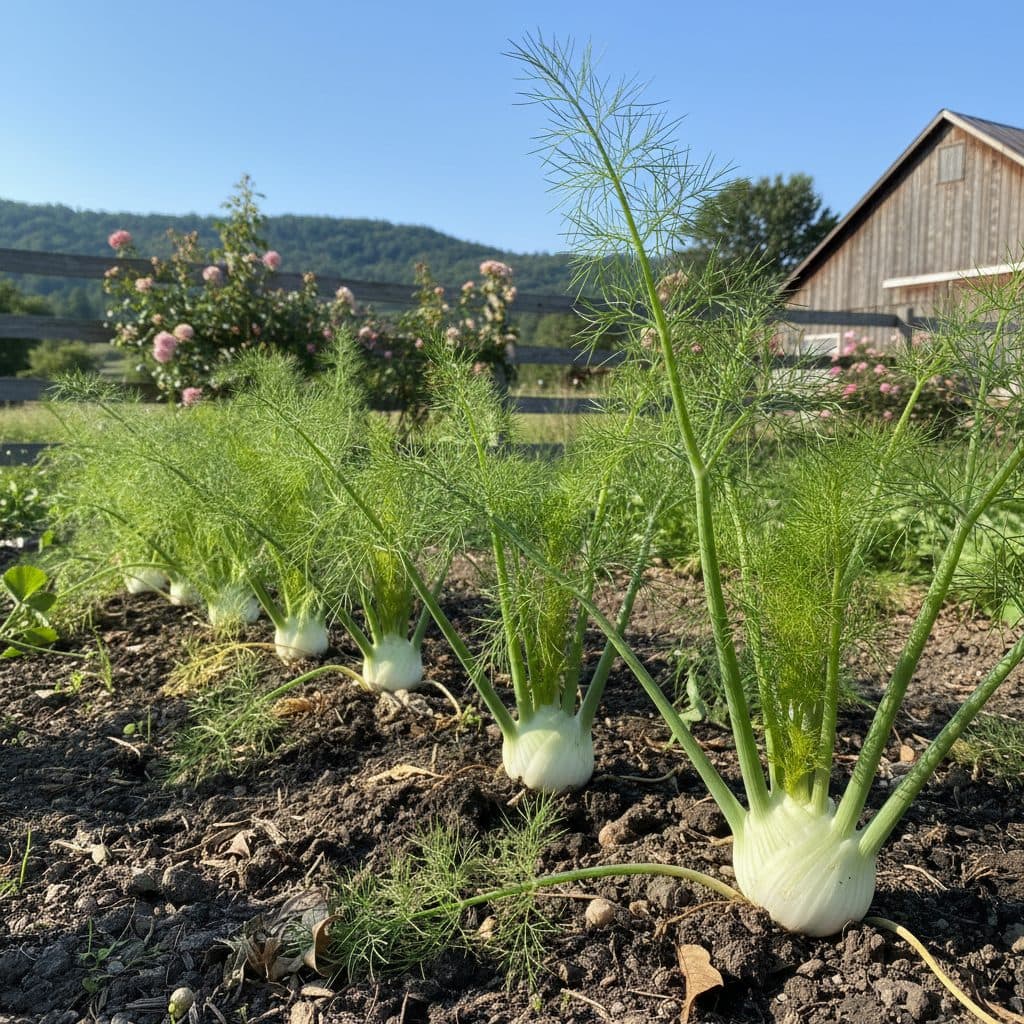
Key takeaways
- Differentiate between bulb fennel (Foeniculum vulgare var. azoricum) for its edible bulb and herb fennel (Foeniculum vulgare) for fronds and seeds.
- Plant bulb fennel in spring or late summer to avoid midsummer heat, which triggers bolting in temperatures above 75°F.
- Ensure consistent soil moisture of 1 inch per week and use mulch to regulate soil temperature and conserve water.
- Select a site with 6-8 hours of direct sunlight daily and well-draining soil with a pH between 6.0 and 7.0.
- Implement succession planting every 2-3 weeks for a continuous harvest and to mitigate bolting risks.
- Harvest bulb fennel when bulbs reach 2-4 inches in diameter, and herb fennel fronds as needed for culinary use.
Quick answer: To grow fennel successfully, differentiate between bulb and herb varieties, plant in spring or late summer to avoid midsummer heat, and ensure consistent soil moisture and 6-8 hours of direct sunlight. Prevent bolting by maintaining temperatures between 60-75°F and providing well-draining soil with a pH of 6.0-7.0.
Fennel, a versatile plant with a distinctive anise flavor, thrives across much of the United States, particularly in regions with mild climates like USDA zones 4-9. While it’s a staple in Mediterranean cooking, many US growers find its dual nature rewarding, since it offers both a crisp, edible bulb and delicate, flavorful fronds and seeds. In states like California and Arizona, where temperatures can fluctuate, understanding the specific needs of each fennel type matters for a successful harvest.
This guide walks through the distinct cultivation practices for bulb fennel and herb fennel, including practical strategies to prevent premature bolting, a common frustration for many gardeners. By following these steps, you can expect to grow robust plants and enjoy fresh fennel in your kitchen, whether you’re aiming for a 3-inch bulb or abundant feathery fronds.
Understanding the two fennels: bulb vs. herb
Before you put a single seed in the ground, it’s important to understand that not all fennel is grown for the same purpose. We’re generally talking about two main types: bulb fennel, scientifically known as Foeniculum vulgare var. azoricum, and common or herb fennel, Foeniculum vulgare. Bulb fennel is cultivated for its swollen, edible base, which forms just above the soil line and can reach 2-4 inches in diameter. This variety is often called Florence fennel or finocchio, and it’s harvested as a cool-season annual.
distinct growth and culinary uses
Herb fennel, on the other hand, is grown primarily for its feathery fronds, which are used as a culinary herb, and its aromatic seeds. Unlike its bulb-forming cousin, herb fennel does not produce a significant bulb; instead, it develops a more fibrous stem and can grow up to 5 feet tall in warmer climates, such as USDA zone 7 and higher, where it often behaves as a short-lived perennial. The fronds are typically harvested when the plant is 12-18 inches tall, offering a milder anise flavor than the bulb. Knowing your desired end product, whether a crisp bulb for salads or tender fronds for garnishes, will guide your planting and care decisions from day one.
- Bulb fennel: Grown for its crisp, swollen base, typically 2-4 inches wide.
- Herb fennel: Cultivated for feathery fronds and aromatic seeds.
- Growth habit: Bulb fennel is an annual; herb fennel can be a perennial in zones 7+.
- Flavor profile: Bulb has a mild anise flavor; fronds are milder, seeds are strongest.
Site selection and soil preparation
Fennel, both bulb and herb varieties, demands a specific environment to flourish without bolting prematurely. The first step is selecting a site that receives at least 6-8 hours of direct sunlight each day. In hotter regions, like the desert Southwest (USDA zones 8-10), some afternoon shade can be beneficial to prevent the soil from overheating, which is a major trigger for bolting. Good air circulation is also important to deter fungal diseases, especially in humid areas of the Southeast.
optimizing soil for fennel growth
Soil quality is paramount. Fennel prefers well-draining, fertile soil rich in organic matter. A sandy loam is ideal, but any heavy clay soil should be amended with 2-4 inches of compost or other organic materials to improve drainage and aeration. The optimal soil pH for fennel ranges from 6.0 to 7.0, a slightly acidic to neutral range that supports nutrient availability. Before planting, conduct a soil test; if your pH is outside this range, amend with lime to raise it or elemental sulfur to lower it. For instance, gardeners on the limestone soils of the Great Plains and Mountain West often sit above pH 7.5 and may need elemental sulfur, while much of the eastern Corn Belt runs neutral to acidic and needs the opposite treatment. A healthy soil structure will help maintain consistent moisture, which is critical for bulb development and preventing stress-induced bolting.
- Sunlight: Require 6-8 hours of direct sun daily.
- Soil type: Well-draining, fertile, sandy loam is preferred.
- pH range: Optimal soil pH is 6.0-7.0.
- Amendments: Incorporate 2-4 inches of compost into heavy soils.
Planting bulb fennel for a robust harvest
Timing is everything when planting bulb fennel. As a cool-season crop, it performs best when temperatures are consistently between 60°F and 75°F. Planting too early in spring, when late frosts are still a risk, or too late, exposing young plants to intense summer heat, can trigger bolting. In northern regions (USDA zones 4-6), a spring planting after the last frost date, usually mid-May, works well. For a fall harvest, sow seeds in late summer, around 8-10 weeks before the first anticipated frost, which might be August in New England or September in the Pacific Northwest.
direct sowing vs. transplants and spacing
Bulb fennel can be direct-sown or started indoors. Direct sowing is often preferred because fennel dislikes root disturbance, which can also lead to bolting. Sow seeds 0.25-0.5 inches deep and 4-6 inches apart in rows 18-24 inches apart. Once seedlings emerge, thin them to 6-12 inches apart to allow ample space for bulb development. If using transplants, handle them with extreme care to ensure the root ball remains intact. Plant them at the same depth they were in their nursery pots, maintaining the 6-12 inch spacing. For a continuous supply, consider succession planting every 2-3 weeks during the optimal growing window. This strategy helps ensure you have a harvest even if some plantings bolt. You can find more tips on starting seeds indoors at Starting a herb garden: the easiest herbs to grow.
- Planting depth: Sow seeds 0.25-0.5 inches deep.
- Spacing: Thin seedlings to 6-12 inches apart.
- Row spacing: Keep rows 18-24 inches apart.
- Succession planting: Plant every 2-3 weeks for continuous harvest.
Cultivating herb fennel for abundant fronds and seeds
Herb fennel is generally more forgiving than bulb fennel regarding temperature fluctuations, but it still benefits from thoughtful planting. It can be sown directly in the garden in spring after the last frost, or in late summer for a fall harvest of fronds. In warmer climates, like USDA zones 7-9, it can often be grown as a short-lived perennial, returning for 2-3 years. Before you let it do that, check your state: common fennel is rated High by the California Invasive Plant Council and is listed as a noxious weed in Washington, where escaped plants have taken over coastal grassland and roadsides. Where it is regulated, grow it as an annual, cut the umbels before they shed seed, and do not let it self-sow. Plant seeds 0.25 inches deep, spacing them 8-12 inches apart in rows that are 24-36 inches apart. Unlike bulb fennel, which you thin aggressively for bulb development, herb fennel can tolerate slightly closer spacing if you’re primarily harvesting fronds.
harvesting fronds and seeds
For fronds, begin harvesting once the plants are 10-12 inches tall. Snip the outer fronds as needed, leaving the inner growth to continue producing. This cut-and-come-again method allows for multiple harvests throughout the growing season. If you’re aiming for seeds, allow the plant to bolt and produce yellow flower umbels, which will then form seeds. The seeds are ready to harvest when the flower heads turn brown and dry, typically in late summer or early fall. Cut the entire seed head and hang it upside down in a paper bag to catch the falling seeds. A single plant can yield several ounces of seeds, providing a flavorful spice for your pantry. For more on growing herbs, check out Starting a herb garden: the easiest herbs to grow.
- Planting depth: Sow seeds 0.25 inches deep.
- Spacing: Space plants 8-12 inches apart.
- Harvest fronds: Begin when plants are 10-12 inches tall.
- Harvest seeds: Collect when flower heads turn brown and dry.
Preventing bolting: the core challenge
Bolting, the premature production of a flower stalk and seeds, is the primary challenge when growing bulb fennel. Once a plant bolts, its energy shifts from bulb development to reproduction, resulting in a tough, bitter, and unusable bulb. The main triggers for bolting are lengthening days, a cold spell early in the plant's life, and moisture or heat stress. Florence fennel is a long-day plant, so spring sowings run into rising day length just as the bulb should be swelling, and young plants held for a week or more below about 50°F can vernalize and run straight to flower regardless of how well you water them. When temperatures rise above 75°F for extended periods, or drop suddenly, fennel perceives these conditions as unfavorable for bulb growth and initiates flowering. This is why timing your planting is so critical, especially in transition zones like USDA zone 7, where spring can quickly turn to summer.
strategies for consistent growth
To prevent bolting, consistent soil moisture matters most; aim for 1 inch of water per week, either from rainfall or irrigation. Mulching with 2-3 inches of straw or shredded leaves helps regulate soil temperature, keeping roots cool during warm spells and conserving moisture. This is particularly effective in regions like the Mid-Atlantic, where summer heat can be intense. Selecting bolt-resistant varieties, such as ‘Zefa Fino’ or ‘Orion’, can also improve your success rate. Also, avoid transplanting if possible, as root disturbance can stress plants and trigger bolting. If you must transplant, do so on a cloudy day and water immediately. For more insights into preventing bolting in other crops, consider reading about How to grow cilantro without it bolting.
- Consistent moisture: Provide 1 inch of water per week.
- Mulching: Apply 2-3 inches of organic mulch to regulate soil temperature.
- Variety selection: Choose bolt-resistant cultivars like ‘Zefa Fino’.
- Avoid root disturbance: Direct sow whenever possible.
Watering and feeding for optimal development
Fennel, especially bulb fennel, is a thirsty plant that requires consistent moisture to develop its crisp, sweet bulbs. Irregular watering, particularly allowing the soil to dry out between watering sessions, is a significant stressor that can lead to bolting. Aim to provide approximately 1 inch of water per week, either through rainfall or irrigation. In sandy soils or during hot, dry periods common in states like Texas or Oklahoma, you may need to water more frequently, perhaps every 2-3 days, to maintain consistent soil moisture. Check the soil moisture 2-3 inches deep; if it feels dry, it’s time to water.
nutrient requirements and fertilization
While fennel benefits from fertile soil, it doesn’t require heavy feeding. Over-fertilization, particularly with high-nitrogen fertilizers, can promote lush leafy growth at the expense of bulb development and may even encourage bolting. Before planting, incorporate a balanced organic fertilizer into the soil, such as a 5-10-5 or 4-4-4 NPK ratio, at a rate of 1-2 pounds per 100 square feet. A side-dressing of compost tea or a liquid organic fertilizer every 3-4 weeks can provide a gentle boost during the growing season. For herb fennel, a slightly higher nitrogen content is acceptable if you are prioritizing frond production, but still avoid excessive amounts. Healthy soil, rich in organic matter, often provides sufficient nutrients for fennel without much additional intervention.
- Watering amount: Provide 1 inch of water per week.
- Frequency: Water every 2-3 days in hot, dry conditions.
- Fertilizer ratio: Use a balanced 5-10-5 or 4-4-4 NPK.
- Application rate: 1-2 pounds per 100 square feet pre-planting.
Pest and disease management
Fennel is generally a robust plant, but it can occasionally encounter pest and disease issues. Common pests include aphids, which are tiny, pear-shaped insects that cluster on new growth and can stunt plants if left unchecked. Slugs and snails can also be problematic, especially in damp conditions, chewing holes in fronds and bulbs. In some regions, particularly the Southeast, parsleyworms (the larvae of the black swallowtail butterfly) may feed on fennel foliage, though they are often tolerated by gardeners due to their beauty and role in the ecosystem. Inspect your plants regularly, perhaps every 3-5 days, to catch problems early.
organic control methods
For aphids, a strong spray of water can dislodge them, or you can use insecticidal soap, following label directions. For slugs and snails, hand-picking them in the early morning or evening is effective, as is setting beer traps. Diatomaceous earth sprinkled around the base of plants can also deter crawling pests. Diseases are less common but can include powdery mildew in humid conditions, appearing as white, powdery spots on leaves. Ensure good air circulation by proper plant spacing (6-12 inches apart) and avoid overhead watering in the evening. If powdery mildew becomes an issue, a homemade baking soda spray (1 teaspoon per quart of water) can help. Maintaining healthy soil and reducing plant stress through consistent care will make your fennel less susceptible to most problems.
- Aphids: Use insecticidal soap or strong water spray.
- Slugs/snails: Hand-pick or use beer traps.
- Parsleyworms: Generally tolerated, but hand-remove if population is high.
- Powdery mildew: Ensure good air circulation, avoid overhead watering.
Harvesting and storage
Knowing when to harvest your fennel is key to enjoying its best flavor and texture. For bulb fennel, the bulbs are ready when they reach 2-4 inches in diameter and feel firm to the touch, typically 60-90 days after planting, depending on the variety and growing conditions. To harvest, use a sharp knife to cut the bulb at the soil line, leaving the root system intact. In some cases, if you leave the root, it may produce smaller secondary shoots that can be harvested as tender fronds or small bulbs. This practice can extend your harvest by several weeks.
preserving your fennel bounty
Herb fennel fronds can be harvested as a cut-and-come-again crop once the plant is 10-12 inches tall. Snip off the outer fronds as needed, leaving the central growth to continue producing. For seeds, allow the plant to flower and the seed heads to turn dry and brown. Cut the entire seed head and hang it upside down in a paper bag to collect the seeds. Fresh bulb fennel can be stored in the refrigerator for up to 5-7 days, wrapped loosely in a damp paper towel or plastic bag. Fronds are best used fresh but can be chopped and frozen in ice cube trays with water or oil for longer storage, lasting up to 3-4 months. Dried fennel seeds will keep for 1-2 years in an airtight container in a cool, dark place.
- Bulb harvest: When 2-4 inches in diameter, 60-90 days after planting.
- Frond harvest: When plants are 10-12 inches tall, as needed.
- Seed harvest: When flower heads are dry and brown.
- Bulb storage: Refrigerate 5-7 days.
Bulb Fennel vs. Herb Fennel: Key Differences
Feature | Bulb Fennel (Florence Fennel) | Herb Fennel (Common Fennel) |
|---|---|---|
Scientific Name | Foeniculum vulgare var. azoricum | Foeniculum vulgare |
Primary Edible Part | Swollen bulb (stem base) | Feathery fronds and seeds |
Growth Habit | Annual, forms a distinct bulb 2-4 inches wide | Annual/Short-lived perennial, grows up to 5 feet tall, no significant bulb |
Culinary Use | Raw in salads, roasted, grilled | Garnish, seasoning, tea, spice (seeds) |
Bolting Tendency | Highly susceptible to bolting from heat/stress | Less susceptible, bolting is desired for seed harvest |
Typical Harvest Time | 60-90 days from planting | Fronds: 40-50 days; Seeds: 120+ days |
Optimal Growing Temp: Fennel thrives in air temperatures between 60°F and 75°F, with bolting often triggered above 75°F.
Soil pH Range: The ideal soil pH for both types of fennel is slightly acidic to neutral, ranging from 6.0 to 7.0.
Water Requirement: Fennel needs consistent moisture, approximately 1 inch of water per week, for healthy growth and bulb development.
Frequently asked questions
What is the main difference between bulb fennel and herb fennel?
Bulb fennel (Foeniculum vulgare var. azoricum) is grown for its swollen, edible base that can reach 2-4 inches in diameter, while herb fennel (Foeniculum vulgare) is cultivated for its feathery fronds and aromatic seeds. Herb fennel does not produce a significant bulb.
How can I prevent my bulb fennel from bolting?
To prevent bolting, ensure consistent soil moisture of 1 inch per week, avoid extreme temperature fluctuations (especially above 75°F), and use mulch to keep soil cool. Planting at the right time in your USDA zone also matters, typically in spring or late summer.
Can I grow fennel in a container?
Yes, you can grow both bulb and herb fennel in containers, provided they are large enough—at least 10-12 inches in diameter and depth for bulb fennel. Ensure the container has good drainage and use a high-quality potting mix.
When is the best time to plant fennel in the US?
The best time to plant fennel depends on your USDA zone. In cooler regions (zones 4-6), plant in spring after the last frost. In warmer regions (zones 7-9), plant in early spring for a spring harvest or late summer for a fall harvest, avoiding the hottest summer months when temperatures exceed 75°F.
What kind of soil does fennel prefer?
Fennel prefers well-draining, fertile soil rich in organic matter, with a pH between 6.0 and 7.0. Amending heavy clay soils with 2-4 inches of compost before planting significantly improves drainage and aeration.
How long does it take for bulb fennel to mature?
Bulb fennel typically matures in 60-90 days from planting, depending on the variety and local growing conditions. Harvest when the bulbs are firm and 2-4 inches in diameter for the best flavor and texture.