Key takeaways
- Sow pumpkin seeds in spring across temperate zones once soil temperatures exceed 18°C.
- Provide at least 2 square metres of space per vine or train smaller varieties upward.
- Incorporate well-rotted manure and compost into planting mounds before direct sowing.
- Hand-pollinate female blossoms in early morning if bee activity is low in the patch.
- Space vines generously and thin crowded leaves — powdery mildew builds in dense, humid canopies, not on wet leaves.
- Harvest in autumn when the stem turns woody and corky before the first winter frost.
Quick answer: For successful results when growing pumpkin in Australia, sow seeds in spring once the soil warms to 18°C in temperate regions, or sow throughout autumn and winter in tropical and subtropical zones. Plant in rich, well-draining mounds enriched with compost, water deeply at the base, and allow 15 to 20 weeks of warm weather before harvesting in autumn.
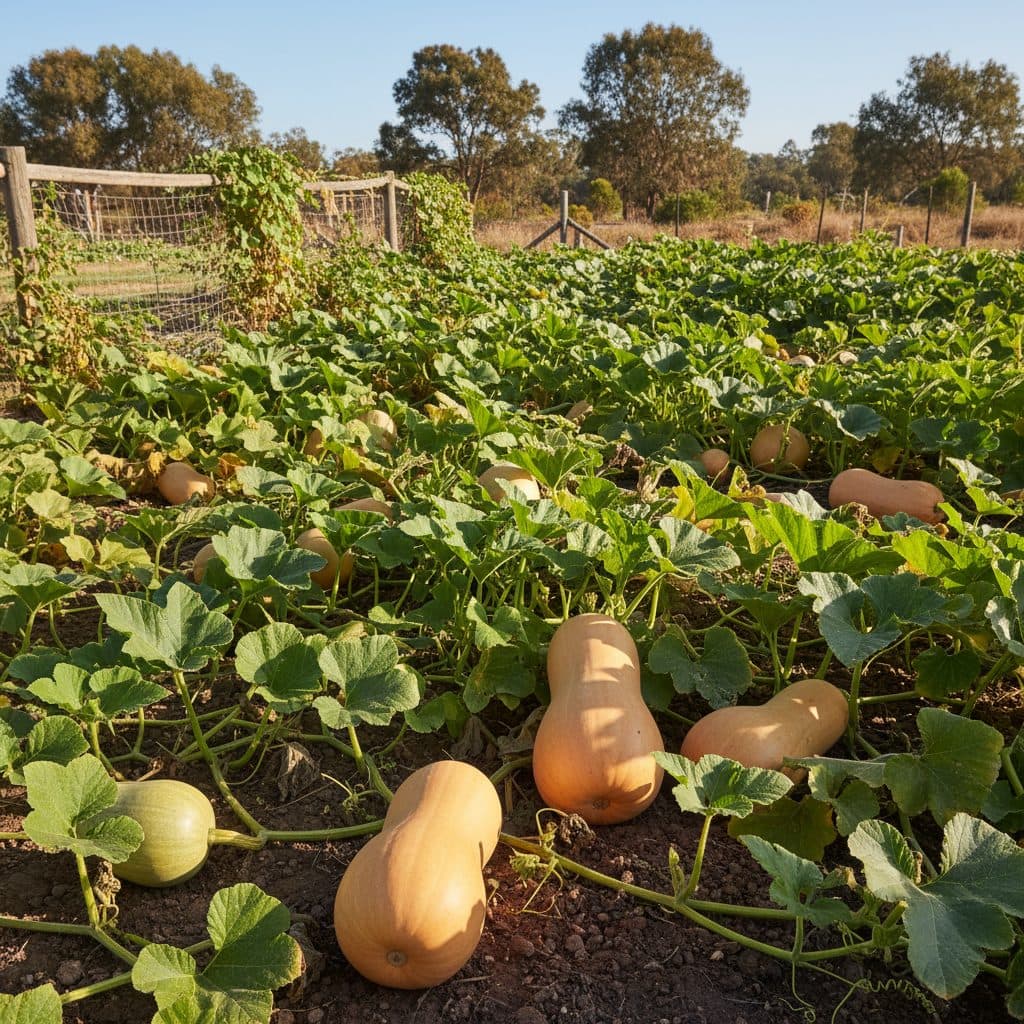
Growing pumpkins is one of the most rewarding projects you can undertake in an Australian veggie patch. These vigorous, trailing annuals produce dense, sweet flesh that stores for months through the cooler winter period. Whether you have acres of space for classic Queensland Blue varieties or a compact raised bed for butternut pumpkins, understanding local climate rhythms ensures a heavy crop.
Success with growing pumpkin Australia wide depends on working with your specific climate zone rather than following generic calendar guides. Pumpkins require a long, frost-free growing season ranging from 15 to 22 weeks depending on the cultivar. They demand warmth, ample organic nutrients, and steady moisture during early vine growth and fruit expansion.
Managing vigorous vines takes some layout planning and pest management. Nutrient-rich mounds, good pollination, and mildew monitoring all help produce a heavy, long-keeping crop.
+--------------------------------------------------------------------------+
|                 AUSTRALIAN PUMPKIN GROWING CALENDAR                      |
+-------------------+----------------------------------+-------------------+
| Climate Zone      | Sowing Window                    | Typical Harvest   |
+-------------------+----------------------------------+-------------------+
| Tropical          | March to August (into dry season)| July to November  |
| Subtropical       | August to February (Spring-Sum)  | December to May   |
| Temperate         | October to December (Mid Spring) | March to May      |
| Cool / Cold       | Late October to November (Spring)| April to May      |
| Arid / Inland     | September to November (Spring)   | February to April |
+-------------------+----------------------------------+-------------------+
When to plant pumpkins across Australian climate zones
Planting times for pumpkins in Australia vary significantly between the tropical north and the cold southern regions. Because pumpkins are highly frost-sensitive and require soil temperatures of at least 18°C for reliable germination, timing your sowing to match your regional climate is essential.
In temperate regions such as Sydney, Perth, Adelaide, and inland New South Wales, the ideal sowing window opens in October and runs through December. Sowing in mid-spring allows the soil to warm thoroughly, so seedlings emerge quickly and vines establish steadily before peak summer heat arrives.
In cool and cold zones, including Melbourne, parts of regional Victoria, Tasmania, and the southern tablelands, wait until late October or November after all danger of frost has passed. You can start seeds indoors in biodegradable pots in early October to gain a three-week head start, transplanting them out once daytime temperatures consistently exceed 20°C.
In subtropical zones like Brisbane and the northern rivers of New South Wales, you can sow pumpkins from August through to February. In tropical regions such as Darwin, Cairns, and Broome, plant during the dry season between March and August. Sowing during the tropical dry season prevents excessive fungal problems caused by monsoonal rain and high humidity.
Choosing pumpkin varieties for Australian conditions
Selecting the right cultivar makes a substantial difference to your harvest volume, pest resilience, and storage longevity. Australian gardeners have access to exceptional heritage and modern varieties suited to varied patch sizes.
- Queensland Blue: A legendary Australian heirloom producing 3 kg to 7 kg ribbed fruits with deep blue-grey skin and dry, sweet orange flesh. It requires a long season of 18 to 20 weeks and extensive room to sprawl, but stores for six months or more.
- Jap (Kent): Highly popular across Australian markets, Jap pumpkins feature mottled green and gold skin with sweet, nutty flesh. They mature in roughly 16 to 18 weeks and perform well in warm temperate and subtropical gardens.
- Butternut: A reliable Cucurbita moschata variety known for its smooth tan skin, dense seedless neck, and better powdery-mildew tolerance than C. maxima types such as Queensland Blue, though it is not immune. Maturing in 14 to 16 weeks, its compact fruit size makes it ideal for smaller gardens.
- Jarrahdale: Another classic grey-skinned Australian pumpkin with deep ribs and dense salmon flesh. It offers excellent drought resilience once established and keeps exceptionally well in a cool pantry.
- Golden Nugget: A compact bush variety that produces small, single-portion orange fruits in 12 to 14 weeks. This is the top choice if your veggie patch lacks room for running vines.
Soil preparation and planting mound technique
Pumpkins are gross feeders that thrive in loose, fertile soil packed with organic matter. They prefer a soil pH between 6.0 and 6.8 with excellent drainage to prevent root rot during wet weather.
Prepare the site at least two weeks before planting by incorporating two generous buckets of well-rotted compost or aged cow manure per planting station. Building raised mounds about 20 cm to 30 cm high and 1 metre wide provides several distinct advantages:
- Soil warming: Raised mounds warm up faster in early spring sunshine, speeding seed germination.
- Drainage: Mounds allow excess water to drain away from the sensitive crown of the plant during heavy downpours.
- Root development: Loose, mound-built soil allows the vigorous taproot and lateral roots to expand without compaction.
Sow four to six seeds per mound at a depth of 2 cm to 3 cm, positioning seeds on their edge to prevent water pooling on flat seed faces. Once seedlings develop two sets of true leaves, thin to the strongest two or three plants per mound. Space individual mounds at least 2 metres to 2.5 metres apart to accommodate running vines. If you are also growing other vegetables, you can link this setup to our guide on how to grow pumpkins for foundational bed preparation principles.
Pumpkin vine care, watering, and feeding
Once pumpkin vines establish, they enter a rapid vegetative growth phase. Guiding the vines, maintaining soil moisture, and providing balanced nutrition will determine how many flowers convert into mature pumpkins.
Water deeply at the base of the plant using drip lines or a handheld hose directed at the soil. Watering at the base saves water and keeps downy mildew and bacterial leaf spots down. Powdery mildew is the exception: it needs no leaf wetness at all, so manage it with spacing, canopy thinning and by not over-feeding nitrogen. During warm weather, pumpkins require 25 mm to 40 mm of water per week. A thick 5 cm layer of pea straw, sugarcane mulch, or lucerne conserves soil moisture and keeps expanding fruits off bare dirt.
Feeding should shift according to the plant's growth stage:
- Early growth: Apply a diluted seaweed solution and fish emulsion every two weeks to support strong root and leaf production.
- Flowering and fruiting: Switch to a potassium-rich organic fertiliser, such as sulphate of potash or comfrey tea, when yellow blossoms appear. Avoid excessive nitrogen at this stage, which encourages runaway leaf growth at the expense of fruit set.
To keep vines within bounds in smaller gardens, gently turn runners back toward the centre of the patch or pinch out the growing tips once four or five fruits have set on the main vines.
Pollination and troubleshooting fruit set
Pumpkins produce separate male and female flowers on the same vine. Male flowers appear first on long, slender stems. Female flowers follow, identified by a distinct miniature pumpkin swelling at the base of the petals.
Poor fruit set occurs when female flowers drop off without swelling into pumpkins. This is usually caused by a lack of pollinating insects or extreme temperatures above 35°C, which can make pollen sterile.
To hand-pollinate:
- Identify a freshly opened male flower early in the morning.
- Carefully strip away the yellow petals to expose the pollen-covered anther.
- Gently rub the anther against the sticky stigma inside an open female flower.
Encourage natural pollinators by interplanting companion flowers such as cosmos, borage, and marigolds around the patch. You can learn more about strategic plant pairings in our guide on companion planting.
Managing pests and fungal diseases in Australian gardens
The two most common challenges when growing pumpkins in Australia are powdery mildew and sap-sucking pests like aphids and mites.
Powdery mildew appears as white, powdery spots on older leaves during late summer and autumn when nights become cooler and more humid. While it rarely destroys the crop late in the season, severe infections reduce the plant's ability to ripen remaining fruit. Remove heavily infected lower leaves to improve airflow through the vine canopy. Spraying with a homemade potassium bicarbonate solution or milk spray (one part full-cream milk to nine parts water) helps suppress fungal spores on sunny mornings. For soft-bodied pests, consult our guide on white oil recipe for a gentle home remedy.
Cucumber fly (Zeugodacus cucumis) and Queensland fruit fly (Bactrocera tryoni) sting young cucurbit fruit in warm northern and coastal districts. Bag small fruit or use an approved bait, and bin or solarise any stung fruit — never compost it. Separately, resting maturing fruit on a board or tile keeps the skin dry and clean where it sits. Watch also for pumpkin beetle chewing round holes in young leaves and flowers. For broader autumn patch planning after pumpkins finish, see our guide on what to plant in april australia.
Harvesting, curing, and long-term storage
Knowing when to harvest pumpkins ensures maximum flavour and the longest possible shelf life. Leaving fruit on the vine as long as possible allows sugars to concentrate fully.
Harvest signs to look for:
- The stem connecting the pumpkin to the vine becomes dry, woody, and corky.
- The skin hardens so that it resists puncture from your thumbnail.
- The foliage naturally dies back, exposing the ripe fruit to the sun.
- The fruit emits a hollow sound when tapped gently.
Always harvest before the first heavy winter frost. Use clean secateurs to cut the fruit from the vine, leaving at least 5 cm to 10 cm of stem attached. Never carry a pumpkin by its stem, as a broken stem creates an entry point for rot fungi.
Cure harvested pumpkins by placing them in a warm, dry, sunny spot (such as a veranda or sunny shed bench) at 20°C to 25°C for 10 to 14 days. Curing hardens the outer rind and heals small scratches. Store cured pumpkins in a single layer in a well-ventilated, cool, dark pantry at 10°C to 15°C, checking them periodically. Under proper storage conditions, varieties like Queensland Blue and Butternut will easily keep for four to six months. To prepare your soil for the next planting cycle once pumpkins are cleared, consider sowing cover crops detailed in our guide on green manure crops australia.