Key takeaways
- Plant garlic cloves across southern Australia in April while soil remains workable before deep winter cold.
- Sow cool-season crops including broad beans, brassicas, peas, and root vegetables in temperate zones.
- Begin planting warm-season crops like tomatoes and capsicums in tropical and subtropical regions as humidity drops.
- Direct sow root vegetables into loose soil rather than transplanting to prevent crooked or stunted roots.
- Enrich beds with compost and well-rotted manure after clearing spent summer tomato and pumpkin vines.
- Sow legume-based green manure crops in empty beds to build nitrogen and organic matter over winter.
Quick answer: In April, Australian gardeners should plant cool-season staples like garlic, broad beans, broccoli, kale, spinach, silverbeet, onions, carrots, and peas across temperate and cool regions. In the subtropics, April opens the best growing stretch of the year as humidity falls; in the tropical north it marks the start of the dry season, making it the premier window to plant tomatoes, capsicums, zucchini, and leafy greens.
April marks a turning point in the Australian gardening year. As the fierce heat of summer fades into crisp mornings and mild sunny afternoons, the veggie patch undergoes a major seasonal shift. In the southern half of the continent, April is the definitive month for establishing winter crops, while in the north, it marks the opening of the peak growing season.
Understanding what to plant in April Australia wide requires matching your crop selection to your specific regional climate. Because Australia spans diverse climatic bands—from the tropical north to the frost-prone southern tablelands—soil temperatures and moisture levels vary dramatically during mid-autumn.
Whether you are tucking garlic cloves into cool southern soils or setting out tender seedlings in a warm northern patch, April offers ideal conditions to build soil health, sow productive vegetables, and establish crops that will feed your household right through until spring.
+----------------------------------------------------------------------------------------------------+
|                              APRIL PLANTING CALENDAR ACROSS AUSTRALIA                              |
+-------------------+--------------------------------------------------------------------------------+
| Climate Zone      | Top Crops to Plant in April                                                    |
+-------------------+--------------------------------------------------------------------------------+
| Tropical (Far Nth)| Tomatoes, capsicum, cucumber, zucchini, sweet corn                             |
| Subtropical       | Broccoli, beetroot, lettuce, silverbeet, beans, tomatoes, zucchini             |
| Temperate         | Garlic, broad beans, broccoli, kale, spinach, peas                             |
| Cool / Cold       | Garlic, broad beans, winter cabbage, spring onions                             |
| Arid / Inland     | Onions, garlic, beetroot, spinach, carrots                                     |
+-------------------+--------------------------------------------------------------------------------+
Temperate regions: Sydney, Perth, Adelaide, and Coastal NSW
Temperate Australian gardens experience mild autumn temperatures with soil still retaining residual summer warmth. April is the prime month to establish cool-tolerant vegetables that will grow steadily through winter.
Key crops to plant in temperate zones during April:
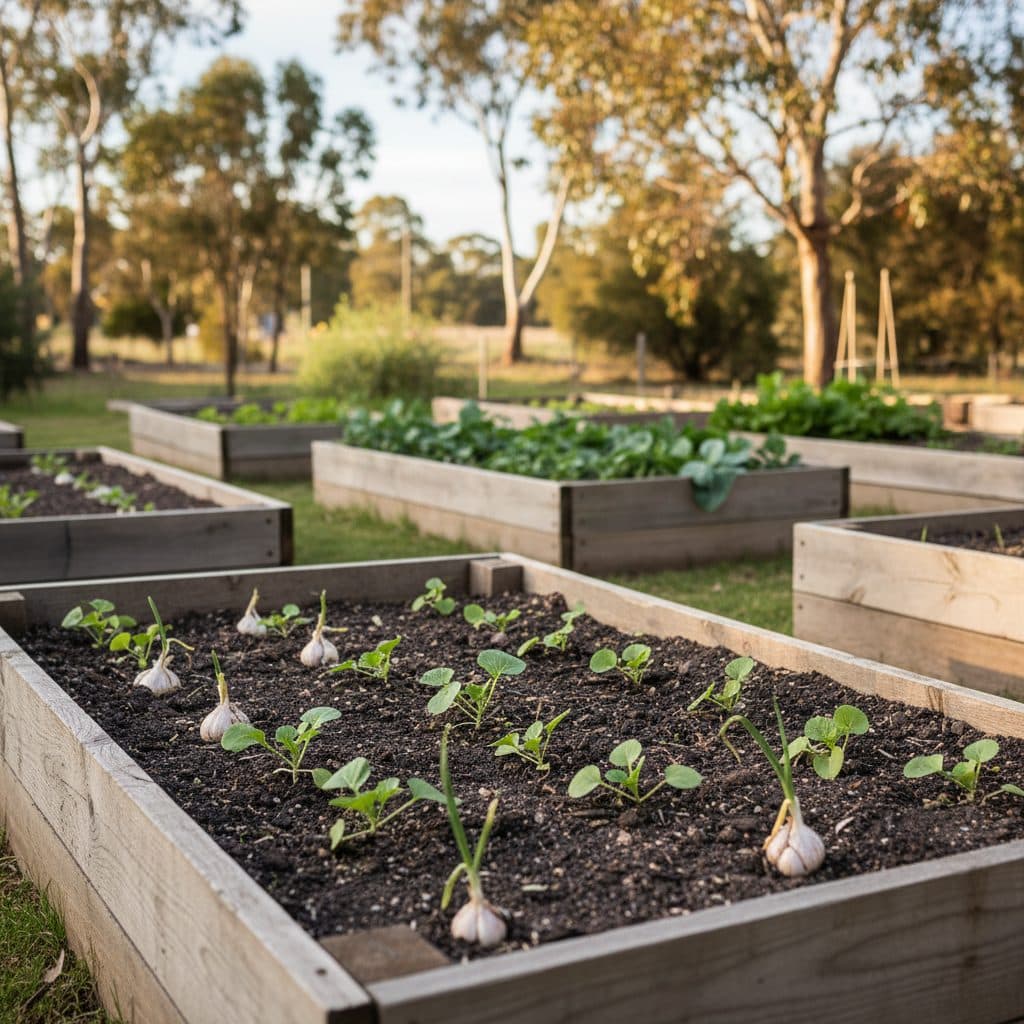
- Garlic: April is the classic planting window. Separate bulbs into individual cloves and plant them pointy-end up, 5 cm deep and 15 cm apart in rich, well-draining soil.
- Broad beans: Direct sow seeds 5 cm deep. These hardy legumes thrive through winter cold, producing tender pods in late winter and fixing nitrogen into the soil.
- Brassicas: Transplant seedlings of broccoli, cauliflower, cabbage, and kale. Planting in April gives brassicas time to establish strong frames before winter slows growth rates.
- Leafy greens: Sow English spinach, silverbeet, rocket, mizuna, and winter lettuce varieties.
- Root crops: Direct sow beetroot, carrots, parsnips, and turnips into deeply raked, friable beds.
- Peas: Direct sow snow peas and sugar snap peas beside climbing trellises.
To protect developing brassicas from lingering caterpillars in early autumn, see our organic remedy guide for white oil recipe.
Cool and cold regions: Melbourne, Tasmania, Canberra, and Highlands
In cool and cold zones, frost arrives early in autumn and winter days are short. April planting must focus on exceptionally cold-hardy species that can withstand freezing temperatures and heavy frosts.
Top choices for cold climate autumn planting:
- Garlic: Aim to get garlic in from April onward so cloves root out before soil temperatures drop; in the coldest districts, planting can run through to the winter solstice.
- Broad beans: Choose cold-tolerant varieties such as Aquadulce, which will comfortably survive sub-zero nights.
- Asian greens: Pak choi, tatsoi, and mustard greens grow rapidly and tolerate light frosts.
- Onions and leeks: Plant seedlings of long-keeping storage onions and winter leeks.
- Winter greens: Choose hardy cos types such as Winter Density, loose-leaf lettuces such as Australian Yellowleaf, and corn salad (mache, Valerianella locusta) — not a lettuce, but one of the hardiest winter salad greens.
Cover delicate seedlings with horticultural fleece or cloches on nights when heavy frost is forecast to maintain steady growth rates.
Subtropical regions: Brisbane, Northern NSW, and Sunshine Coast
For subtropical gardeners, April brings relief from summer humidity, storm rain, and heat. Pests like fruit fly diminish, and the soil remains warm, creating ideal conditions for a vast range of vegetables.
Subtropical April planting options:
- Brassicas: Broccoli, cabbage, Asian greens, and kohlrabi flourish without the heat stress and fungal rot of summer.
- Fruiting vegetables: Plant bush beans, zucchini, and sweet corn.
- Salad crops: Sow crisphead lettuces, rocket, coriander, and radishes, which bolt rapidly to seed in summer but thrive in mild autumn sunshine.
- Root vegetables: Direct sow beetroot, carrots, turnips, and swedes.
Ensure beds are mulched with sugarcane mulch or lucerne to retain soil moisture during the dry subtropical winter months.
Tropical regions: Darwin, Cairns, Townsville, and Broome
In the tropical north, April marks the end of the wet season and the transition into the dry season. For tropical growers, this is the start of the primary vegetable-growing season of the entire year.
What to plant in the tropics during April:
- Tomatoes: Plant determinate and indeterminate tomato seedlings into heavily composted soil.
- Capsicums and chillies: Set out robust seedlings in full sun.
- Cucurbits: Sow zucchini, cucumbers, and small pumpkin varieties. If you are planning vine crops, refer to our guide on growing pumpkin australia.
- Leafy greens: Sow heat-tolerant lettuces, Asian greens, and sweet potato for edible greens.
- Herbs: Plant basil, coriander, and lemongrass.
Take advantage of decreasing humidity by installing drip irrigation to deliver consistent moisture directly to root zones.
+--------------------------------------------------------------------------+
|                     APRIL SOIL PREPARATION SEQUENCE                      |
+--------------------------------------------------------------------------+
|  Step 1: Clear spent summer crops (tomatoes, sweet corn, melons)         |
|  Step 2: Fork beds lightly to relieve compaction without turning subsoil |
|  Step 3: Spread 5-7 cm of aged compost and pelletised chicken manure     |
|  Step 4: Water beds deeply 48 hours prior to planting or seed sowing     |
|  Step 5: Apply organic mulch around newly established seedlings          |
+--------------------------------------------------------------------------+
Essential April veggie patch jobs
Aside from sowing and planting, April is a critical maintenance month in the Australian gardening calendar. Taking care of seasonal tasks sets your garden up for high productivity through the colder months.
- Clearing spent summer crops: Remove finished tomato vines, sweet corn stalks, and cucurbits. If free from fungal blights, chop them up and add them to your compost heap.
- Feeding and soil conditioning: Top-dress active beds with well-rotted cow manure, blood and bone, and a handful of garden lime where brassicas will be grown.
- Mulching: Refresh mulches around newly established seedlings to moderate soil temperature and suppress emerging autumn weeds.
- Dividing perennial herbs: Lift and divide congested clumps of chives, oregano, thyme, and mint.
- Planting companion flowers: Sow calendula, marigolds, and alyssum around bed edges to attract beneficial hoverflies and bees. For strategic grouping ideas, read our guide on companion planting.
Sowing green manures on resting beds
If you have garden beds that will remain empty through the winter months, do not leave the soil bare. Rain and wind will leach mobile nutrients and erode topsoil structure.
Sowing an autumn green manure crop in April is the most effective way to protect and regenerate resting soil:
- Legume and grain mixes: Sow a blend of field peas, oats, and vetch. The oats build massive fibrous root systems that break up tight soil, while the peas and vetch capture atmospheric nitrogen.
- Slashing schedule: Allow the crop to grow through autumn and winter, slashing it down in late winter before it sets seed.
To choose the best seasonal cover crops for your region, explore our dedicated guide on green manure crops australia.
Looking ahead to late winter seed starting, you can also plan your upcoming spring sowings with our guide on what to plant in august australia.