Key takeaways
- Identify stinging nettle by its serrated, heart-shaped leaves, roundish stem, and stinging hairs, growing 2 to 7 feet tall in USDA zones 3-10.
- Harvest nettle in early spring, typically March to May, using thick gloves and long sleeves to avoid stings.
- Neutralize nettle’s sting by blanching in boiling water for 1 to 2 minutes or by thoroughly drying the leaves.
- Store dried nettle in airtight containers for up to 12 months, retaining its nutritional value and flavor.
- Incorporate neutralized nettle into soups, teas, pestos, or as a cooked green, providing about 37 calories per cup.
- Practice responsible foraging by harvesting only about 1/3 of a plant and leaving plenty for wildlife and future growth.
Quick answer: To harvest stinging nettle, wear thick gloves and long sleeves, then snip the top 4-6 inches of young plants in early spring. Neutralize its sting by blanching in boiling water for 1-2 minutes or thoroughly drying the leaves.
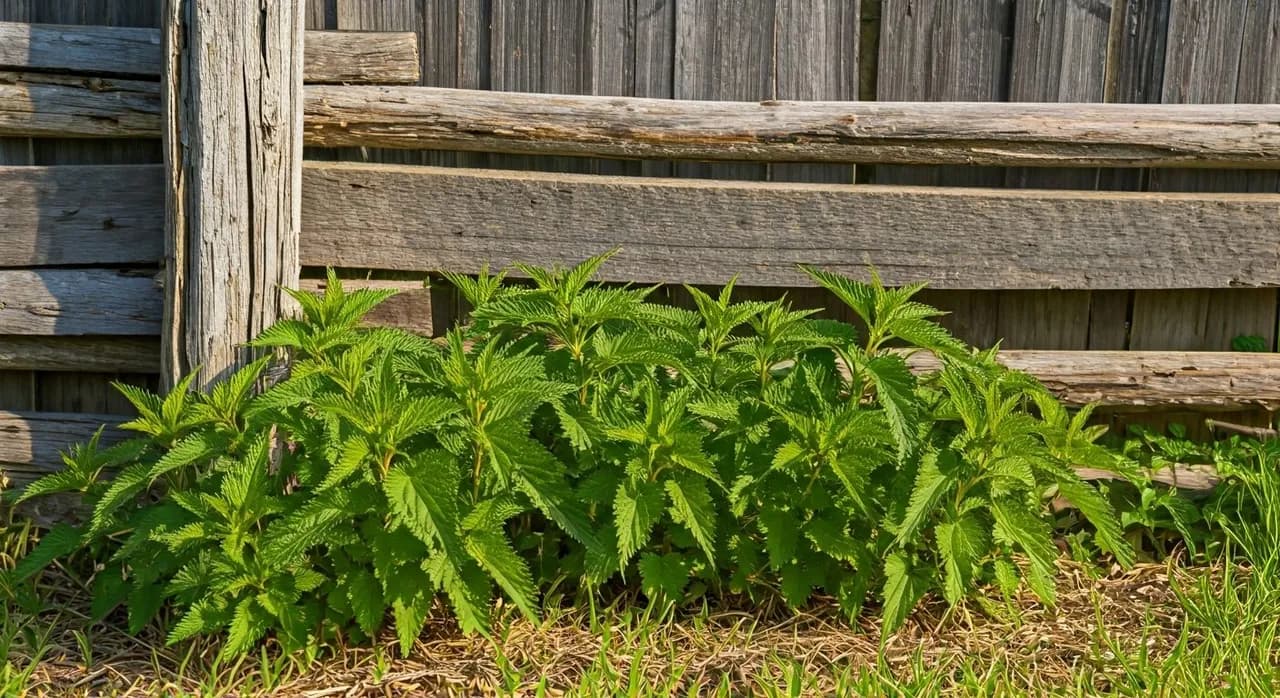
Out here in the Pacific Northwest, where spring rains are plentiful, stinging nettle (Urtica dioica) pops up with a vigor that can surprise you. It’s a plant many folks try to avoid, and for good reason: those tiny hairs deliver a temporary but memorable sting. But for those of us who know its value, this common wild edible, found across USDA zones 3 through 10, is a treasure worth seeking out. It’s a perennial that can reach 2 to 7 feet tall, and its early spring growth gives a nutrient-dense green that rivals any cultivated spinach.
Safely harvesting and neutralizing stinging nettle provides a versatile ingredient for kitchen and garden use. From the rich soils of the Midwest to the damp woodlands of the Northeast, nettle thrives across varied habitats. Proper preparation neutralizes the stinging compounds, turning the young leaves into a nutritious cooked green.
Identifying stinging nettle and where it thrives
Before you can harvest stinging nettle, you need to be absolutely sure you’ve got the right plant. Accurate identification is essential because eating a look-alike plant can cause illness. Stinging nettle, scientifically known as Urtica dioica, is a perennial herb that typically grows 2 to 7 feet tall, often in dense patches [1]. You’ll find it across a wide range of climates in the United States, from the cool, moist environments of the Pacific Northwest and Northeast to the more temperate regions of the Midwest and even parts of California, thriving in USDA zones 3 through 10 [0, 5]. It prefers nitrogen-rich, moist soil, so look for it along stream banks, forest edges, and disturbed areas like old farmsteads.
The most distinctive features of stinging nettle are its leaves and stem. The leaves are generally 1 to 6 inches long, heart-shaped or lance-shaped, and have deeply serrated leaf edges, often appearing opposite one another on the stem [1]. The stem is typically roundish in cross-section and covered, along with the undersides of the leaves, with tiny, hollow stinging hairs, or trichomes. These hairs contain a cocktail of chemicals, including formic acid, histamine, and acetylcholine, which are injected upon contact, causing the characteristic burning sensation and temporary rash that can last up to 24 hours [1]. Always consult a reliable field guide or an experienced forager if you are unsure about plant identification. For more general advice on identifying wild edibles, consider reviewing our Foraging for beginners: identifying common wild edibles safely guide.
Key identification features
- Leaves: Heart-shaped to lance-shaped, 1 to 6 inches long, with deeply serrated edges.
- Stem: Square in cross-section, often covered in fine hairs.
- Hairs: Tiny, hollow stinging hairs on leaves and stem, causing irritation upon contact.
- Growth Habit: Grows in dense patches, 2 to 7 feet tall, especially in moist, nitrogen-rich soils.
- Location: Common in USDA zones 3-10, found in woodlands, stream banks, and disturbed areas.
Safe harvesting techniques and timing
The best time to harvest stinging nettle is in early spring, typically from March to May, before the plants begin to flower and set seed [1]. At this stage, the leaves are tender, flavorful, and packed with nutrients. Once the plant flowers, it can develop compounds that act as a laxative and may become less palatable. Look for plants that are 6 to 8 inches tall, showing bright green growth. In warmer climates, like parts of the Southeast or California, you might get an earlier start, sometimes in late February, while in colder northern states, it can be closer to late April or early Can. Aim to harvest on a dry day, as wet leaves are harder to handle and dry.
Safety is essential when harvesting nettle. Always wear thick gloves (heavy-duty gardening gloves or leather gloves work well) and long sleeves to protect your skin from the stinging hairs. Some foragers even wear eye protection, especially when working in dense patches where branches might spring back. Use sharp scissors or a knife to snip the top 4 to 6 inches of the plant, focusing on the tender, younger leaves. Never pull the plant up by its roots, as this can damage the patch and prevent future growth. A general rule for sustainable harvesting is to take only a portion of the plant from any single patch so the plant can regenerate and provide future harvests, often allowing for multiple harvests in a single season in favorable conditions.
Essential harvesting tools
- Thick Gloves: Heavy-duty, puncture-resistant gloves are critical for hand protection.
- Long Sleeves and Pants: Provide full arm and leg coverage to prevent skin contact.
- Sharp Scissors or Knife: For clean cuts, minimizing damage to the plant and promoting regrowth.
- Basket or Cloth Bag: For collecting your harvest, avoiding plastic bags that can cause leaves to sweat.
- Eye Protection: Recommended when working in dense patches to prevent accidental contact with the face.
Neutralizing the sting: blanching and drying
After harvesting stinging nettle, heat effectively breaks down the chemicals (like formic acid and histamine) responsible for the sting [1]. The simplest and quickest method is blanching. Bring a large pot of water to a rolling boil, then carefully submerge the nettle leaves for 1 to 2 minutes [1]. You’ll notice the leaves turn a darker green. Immediately transfer them to an ice bath to stop the cooking process and preserve their bright green color and nutrients. After blanching, the nettle is completely safe to handle and ready for culinary use, much like spinach or kale. This method is excellent for fresh preparations or if you plan to freeze the nettle for later use, which can extend its usability for several months.
Another effective method for neutralizing nettle, especially for long-term storage, is drying. Drying removes the sting and concentrates the flavor and nutrients for teas, powders, or seasoning [1]. You can air dry nettle by hanging small bundles in a well-ventilated, dry area, though this can take several days to a week depending on humidity. For a faster and more consistent result, use a food dehydrator set to a low temperature, typically between 100°F and 120°F, until the leaves are brittle and crumble easily. This usually takes several hours. When drying, stinging nettle loses about 80% to 90% of its fresh weight, resulting in a highly concentrated product [2]. Once thoroughly dry, store the leaves whole or crumbled in airtight containers away from direct sunlight, where they will keep for up to 12 months [1].
Benefits of blanching and drying
- Neutralizes Sting: Both methods effectively break down the irritating compounds in the stinging hairs.
- Preserves Nutrients: Quick blanching locks in vitamins, while drying retains minerals over time.
- Extends Shelf Life: Blanching allows for freezing, and drying enables storage for up to 12 months.
- Improves Flavor: Drying concentrates the nettle’s earthy, slightly grassy flavor.
- Versatility: Prepared nettle can be used in a wide range of culinary applications, from fresh greens to powdered supplements.
Using your nettle harvest
Once neutralized, stinging nettle becomes a nutritious cooked green. Freshly blanched nettle can be used just like spinach or kale. A 1-cup serving of fresh stinging nettle contains approximately 37 calories and is rich in vitamins A and C, as well as iron and calcium [1]. You can sauté it with a bit of garlic and olive oil, add it to scrambled eggs, or incorporate it into pasta dishes. It makes an excellent addition to soups and stews, lending a deep, earthy flavor. For a simple and satisfying side dish, steam blanched nettle for 5 to 7 minutes and season with salt and pepper. It’s a versatile green that can elevate many everyday meals.
Dried nettle opens up even more possibilities, especially for long-term enjoyment. The most common use is for nettle tea, which is made by steeping 1 tablespoon of dried leaves in 8 ounces of hot water for 5 to 10 minutes. This tea is often consumed for its purported health benefits. Dried nettle can also be ground into a fine powder and used as a seasoning, added to smoothies, or incorporated into baked goods. Some commercial preparations offer a powdered extract, which can be highly concentrated, with ratios like 30:1, meaning 30 parts of raw material are used to produce 1 part of extract [3]. This concentrated form is often used in supplements. For another wild green that can be used similarly, check out our guide on Lamb’s quarters: how to identify, harvest, and cook wild spinach safely.
Culinary uses for neutralized nettle
- Cooked Greens: Sautéed, steamed, or boiled as a side dish, similar to spinach.
- Soups and Stews: Adds a rich, earthy flavor and nutritional boost to broths and hearty meals.
- Pesto: An alternative to basil pesto, often combined with garlic, nuts, and olive oil.
- Teas and Infusions: Dried leaves steeped in hot water for a nutritious beverage.
- Smoothies: Fresh blanched or dried powdered nettle can be blended into fruit and vegetable smoothies.
Regional considerations and responsible foraging
While stinging nettle thrives across a broad spectrum of USDA zones, from 3 to 10, its growth patterns and optimal harvesting times can vary significantly by region [0, 5]. In the warmer southern states, like those in the Southeast, nettle might emerge as early as February and offer a longer harvesting window, allowing for 2 to 3 harvests if cut back. Conversely, in the colder climates of the upper Midwest or New England, the season might be shorter, starting in late April or early Can. Always observe local conditions and the plant’s growth stage rather than relying solely on calendar dates. Understanding these regional growth patterns helps ensure you harvest nettle when it’s at its peak tenderness and nutritional value.
Practicing ethical foraging protects the long-term health of nettle patches and the surrounding area. When harvesting, always leave plenty of plants behind for wildlife and for the patch to regenerate. A good rule of thumb is to never take more than a small portion from a single plant and to harvest from less than a quarter of a patch. Avoid harvesting from areas near roadsides or industrial sites, as plants can absorb pollutants. Consider planting your own nettle patch if you have space; it can be easily established from seed or root cuttings, growing well in a wide range of soils. For those interested in other wild edibles, exploring resources like the Small-Leaved Wild Grape can broaden your foraging knowledge. Maintaining healthy wild populations ensures these useful resources remain available for future generations and for the local wildlife that relies on them.
Ethical foraging principles
- Positive Identification: Be 100% certain of the plant’s identity before harvesting.
- Sustainable Harvest: Take only a small portion (e.g., 1/3 of a plant, 25% of a patch) to allow for regeneration.
- Respect Private Property: Always obtain permission before foraging on private land.
- Avoid Contaminated Areas: Do not harvest near roads, industrial sites, or areas sprayed with pesticides.
- Leave No Trace: Minimize disturbance to the surrounding environment and leave the area as you found it.
Comparison of fresh vs. dried stinging nettle
Feature | Fresh nettle (blanched) | Dried nettle |
|---|---|---|
Stinging hairs | Neutralized by heat | Neutralized by dehydration |
Texture | Tender, leafy | Brittle, crumbly |
Flavor intensity | Mild, earthy | Concentrated, earthy |
Storage duration | 1-2 weeks (refrigerated), 6-8 months (frozen) | Up to 12 months (airtight, dry) |
Typical uses | Sautéed greens, soups, pesto | Teas, powders, seasoning, extracts |
Nutrient density | High (approx. 37 calories/cup) | Higher (due to water loss, 80-90% weight reduction) |
Nettle Height: Stinging nettle (Urtica dioica) can grow impressively tall, reaching heights of 2 to 7 feet in favorable conditions [1].
Blanching Time: Just 1 to 2 minutes in boiling water is enough to neutralize the stinging compounds in fresh nettle leaves [1].
Drying Weight Loss: When dried, stinging nettle leaves typically lose about 80% to 90% of their fresh weight, concentrating their flavor and nutrients [2].
Nutritional Value: A single 1-cup serving of fresh stinging nettle contains approximately 37 calories and is a good source of vitamins A and C [1].
References
- Stinging Nettle (2023).
- Powdered Stinging Nettle (2023).
- Powdered Stinging Nettle Extract (2023).
- stinging nettle (2021).
- Nettle (Stinging Nettle) (2013).
- USDA Natural Resources Conservation Service (2024).