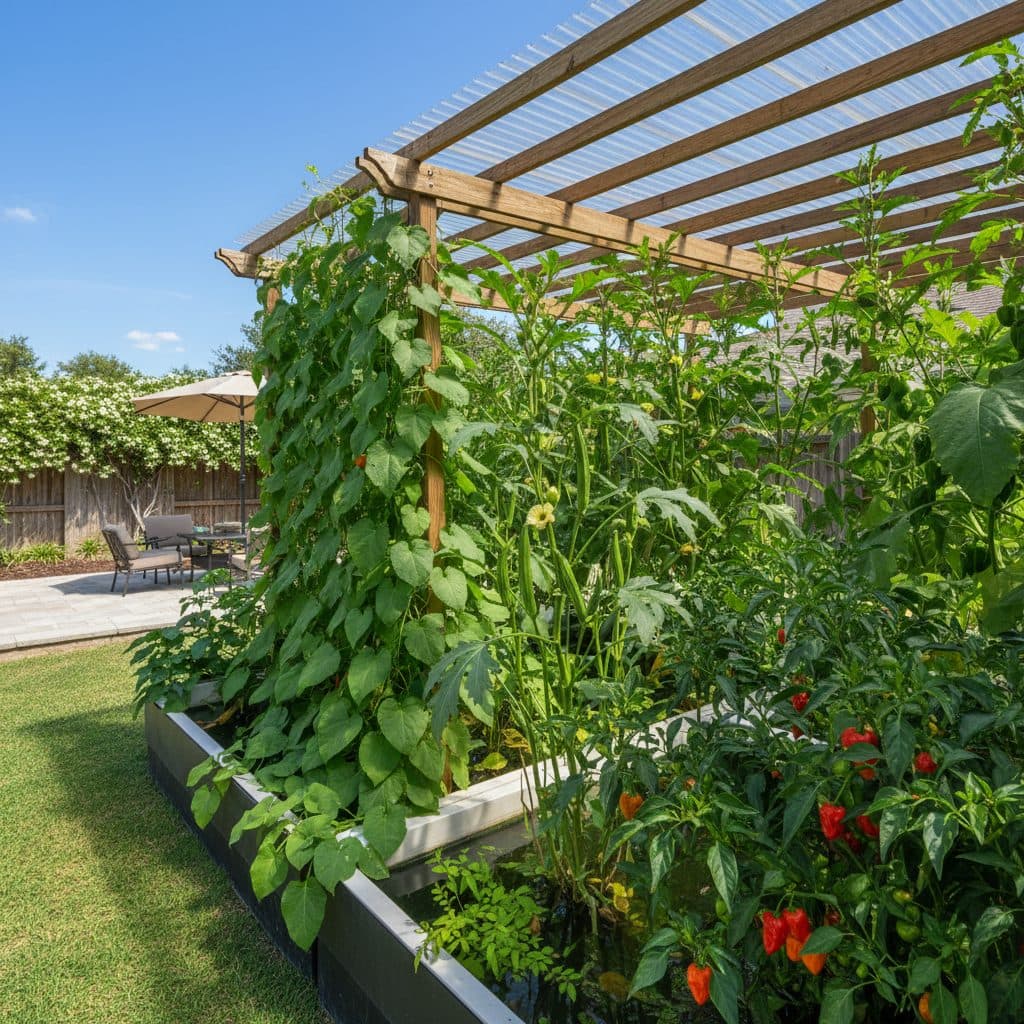
Key takeaways
- Malabar spinach thrives in temperatures up to 95°F, making it an excellent choice for hot climates and offering a substantial yield per plant.
- Okra varieties like ‘Clemson Spineless’ perform well hydroponically, tolerating heat above 90°F and producing pods within a typical timeframe.
- Heat-tolerant pepper varieties, such as ‘Habanero’ or ‘Scotch Bonnet’, can produce fruit in temperatures up to 95°F, though yield may decrease above 90°F.
- Maintaining nutrient solution temperatures below 75°F is crucial for root health and preventing disease in hot hydroponic systems.
- Deep Water Culture (DWC) and Nutrient Film Technique (NFT) are effective hydroponic methods for these crops, with DWC offering better thermal stability.
- Providing adequate airflow, shading with 30-50% shade cloth, and using reflective materials can significantly reduce plant stress in extreme heat.
Quick answer: To grow heat-tolerant hydroponic crops in the US Sunbelt, select varieties like Malabar spinach, okra, and specific peppers, while actively managing nutrient solution temperatures below 75°F using methods like chillers, insulation, and increased reservoir volume. Implement shading and good airflow to mitigate high ambient temperatures and ensure consistent yields.
For growers across the US Sunbelt, from southern California to Florida, where summer temperatures routinely climb above 90°F and can often exceed 100°F for weeks, traditional gardening can be a battle against the elements. The intense heat stresses plants, evaporates water rapidly, and can make outdoor cultivation difficult, especially in USDA zones 8 through 11. However, hydroponic systems offer a controlled environment that can mitigate many of these challenges, allowing for productive harvests even when the mercury soars.
This article explores three specific crops — Malabar spinach, okra, and certain pepper varieties — that demonstrate remarkable heat tolerance and are well-suited for hydroponic cultivation in these challenging conditions. By understanding their needs and implementing specific environmental controls, growers can achieve consistent yields, even when ambient temperatures reach 95°F or higher, extending the growing season far beyond what soil-based methods typically allow.
Managing high temperatures in hydroponic systems
High ambient temperatures pose a significant challenge to hydroponic systems, primarily by increasing the temperature of the nutrient solution. When the nutrient solution consistently rises above 75°F, dissolved oxygen levels drop sharply, which can lead to root damage, slow growth, and increased susceptibility to root rot pathogens. In regions like central Texas, where summer daytime temperatures average 95°F, maintaining optimal root zone conditions requires active management. Growers in these areas often observe a significant reduction in yield if solution temperatures are not controlled effectively, impacting nutrient uptake and overall plant vigor.
Cooling strategies for the root zone
Several strategies can help maintain cooler nutrient solution temperatures. Using a dedicated water chiller is the most effective method, capable of keeping solution temperatures consistently below 70°F even in hot environments. For smaller systems, placing the reservoir underground or insulating it heavily can help. Additionally, increasing the volume of the nutrient solution can provide greater thermal mass, slowing down temperature fluctuations. For example, a 50-gallon reservoir will heat up much slower than a 5-gallon one, offering more stability over a 24-hour period. Proper air circulation around the system also helps dissipate heat, preventing localized hot spots that can stress plants.
- Use a water chiller to maintain solution temperatures below 70°F.
- Insulate reservoirs with reflective materials to reduce heat absorption.
- Increase nutrient solution volume for greater thermal stability.
- Place reservoirs in shaded areas or partially bury them.
- Ensure good air circulation around the hydroponic setup.
Malabar spinach: a resilient leafy green for hot climates
Malabar spinach (Basella alba) is not a true spinach but a vine-like leafy green that thrives in the very conditions that cause traditional spinach (Spinacia oleracea) to bolt and become bitter. This tropical perennial excels in temperatures ranging from 80°F to 95°F, making it an ideal candidate for hydroponic cultivation in the Sunbelt. Unlike its temperate counterpart, Malabar spinach continues to produce abundant, succulent leaves throughout the hottest summer months, often yielding a substantial amount of edible greens per plant over a season. Its rapid growth rate, sometimes reaching 6-10 feet in length, requires vertical support in a hydroponic setup.
Cultivating Malabar spinach hydroponically
For hydroponic Malabar spinach, Deep Water Culture (DWC) or Nutrient Film Technique (NFT) systems work well, provided adequate support for its vining habit. Plants can be started from seed or cuttings, with germination typically occurring within 7-14 days at 75-85°F. Maintain a nutrient solution pH between 6.0 and 7.0 and an Electrical Conductivity (EC) of 1.5-2.5 mS/cm for optimal growth. Regular harvesting of the young leaves and tender stems encourages bushier growth and extends the harvest period, often from late spring through early fall in USDA zone 9a. Malabar spinach is a robust choice for those seeking a productive green when other leafy crops struggle with heat. More information on this specific plant can be found at agripure.org/plants/basella-alba.
- Start seeds in rockwool cubes at 75-85°F for best germination.
- Provide sturdy trellising or support for its vigorous vining growth.
- Maintain nutrient solution pH between 6.0 and 7.0.
- Keep EC levels between 1.5 and 2.5 mS/cm for robust growth.
- Harvest regularly to promote continuous production and prevent flowering.
Okra: a productive choice for warm hydroponic setups
Okra (Abelmoschus esculentus) is a quintessential warm-season crop that truly shines in hot climates, thriving when temperatures are consistently above 80°F, and tolerating peaks well over 90°F. It’s a staple in many southern US kitchens, and its ability to produce prolifically in heat makes it an excellent candidate for hydroponic systems in regions like southern Florida or Arizona. Varieties such as ‘Clemson Spineless’ or ‘Burgundy’ are known for their vigor and high yields, often producing pods within 50-60 days of planting. A single healthy okra plant can yield numerous pods per week during its peak production cycle, which can last for several months.
Hydroponic considerations for okra
Okra plants can grow quite large, reaching 4-6 feet in height, so adequate vertical space and support are essential in a hydroponic environment. Deep Water Culture (DWC) or Dutch Bucket systems are often preferred due to their ability to support larger, heavier plants and provide a stable root environment. Maintain a nutrient solution pH between 6.0 and 6.8 and an EC of 2.0-3.0 mS/cm. Regular harvesting of young, tender pods, typically 2-4 inches long, every one to two days is crucial to encourage continuous flowering and fruit set. For more details on this heat-loving crop, visit agripure.org/plants/abelmoschus-esculentus.
- Choose robust hydroponic systems like DWC or Dutch Buckets for support.
- Provide ample vertical space, at least 4-6 feet, for mature plants.
- Maintain nutrient solution pH between 6.0 and 6.8.
- Ensure EC levels are between 2.0 and 3.0 mS/cm.
- Harvest pods frequently, every 1-2 days, when they are 2-4 inches long.
Peppers: selecting heat-tolerant varieties
While many common bell peppers struggle in temperatures above 85°F, leading to blossom drop and poor fruit set, several heat-tolerant pepper varieties can thrive and produce fruit even when ambient temperatures reach 90-95°F. These often include varieties from the Capsicum chinense species, such as Habaneros, Scotch Bonnets, and some Thai peppers, which are native to tropical regions. These peppers can maintain fruit production in USDA zones 9-11, though extreme heat above 95°F can still reduce overall yields and may cause some temporary blossom drop.
Top heat-tolerant pepper choices
When selecting peppers for hot hydroponic conditions, look for varieties specifically bred for heat. ‘Tabasco’ peppers, for instance, are known for their resilience in hot, humid climates like Louisiana. ‘Carolina Reaper’ and other super-hots also tend to tolerate heat well, though their extreme pungency is not for everyone. Providing some afternoon shade with 30-50% shade cloth can significantly improve fruit set and reduce sunscald on the peppers during the hottest parts of the day, helping to maintain a consistent harvest. Optimal nutrient solution parameters typically include a pH of 5.5-6.5 and an EC of 1.8-2.5 mS/cm.
- Habanero: known for tropical origin and heat tolerance.
- Scotch Bonnet: similar to Habanero, thrives in warm conditions.
- Tabasco: resilient in hot, humid environments.
- Thai Chili: many varieties are well-adapted to heat.
- Datil Pepper: a hot pepper that performs well in Florida’s heat.
System selection for high-temperature hydroponics
Choosing the right hydroponic system is critical for success in hot climates. Deep Water Culture (DWC) systems, where plant roots are submerged directly into a well-aerated nutrient solution, are often a good choice because the large volume of water in the reservoir provides greater thermal stability. This means the solution temperature changes more slowly, offering a buffer against rapid ambient temperature swings. A 20-gallon DWC bucket, for example, will maintain a more stable temperature than a smaller 5-gallon system, reducing stress on the roots.
Optimizing system design for heat
Nutrient Film Technique (NFT) systems can also be used, but they require more active cooling of the nutrient solution because the shallow film of water heats up quickly. Ebb and flow (flood and drain) systems can work but need careful timing to ensure roots don’t dry out in the heat. For any system, using light-colored or reflective materials for reservoirs and grow beds can significantly reduce heat absorption. A reflective indoor grow tent, like those found at agripure.org/shop/beylsion-grow-tent-growbox-plant-tent-indoor-hydroponics-grow-room-tent-growing-tent-for-indoor-greenhouse-growing-plants-mylar, can help manage ambient temperatures for indoor setups, reducing the load on cooling systems. Placing reservoirs partially underground or in a shaded area can also reduce solution temperatures.
- Deep Water Culture (DWC) offers thermal stability due to large water volume.
- Dutch Buckets are suitable for larger, fruiting plants like okra and peppers.
- NFT requires careful monitoring and active cooling due to shallow water film.
- Use light-colored or reflective materials for all system components.
- Consider placing reservoirs in shaded or partially buried locations.
Nutrient management and environmental controls
In hot hydroponic environments, nutrient management becomes even more critical. High temperatures can accelerate nutrient uptake or cause deficiencies if not properly monitored. It’s essential to regularly check and adjust the pH and Electrical Conductivity (EC) of the nutrient solution, ideally every 24-48 hours. For most heat-tolerant crops, a pH range of 5.5-7.0 is suitable, with EC levels generally between 1.5 and 3.0 mS/cm, depending on the crop stage. Dissolved oxygen (DO) levels are paramount; aim for at least 5-6 mg/L, which often requires strong air pumps and air stones, especially when solution temperatures are above 75°F.
Optimizing the growing environment
Beyond the nutrient solution, managing the ambient growing environment is key. Good air circulation, provided by oscillating fans, helps prevent heat buildup around plants and reduces humidity, which can deter fungal issues. For outdoor or greenhouse setups in USDA zones 9-11, using 30-50% shade cloth can significantly reduce the temperature reaching the plants, often lowering leaf surface temperatures. This reduction in direct sun exposure can prevent wilting, sunscald, and blossom drop. That gives more consistent yields. Reflective ground covers can also help deflect heat away from the root zone and lower ambient temperatures by a few degrees.
- Monitor pH and EC daily, adjusting as needed for optimal nutrient uptake.
- Ensure high dissolved oxygen levels (5-6 mg/L) with strong air pumps.
- Use oscillating fans for consistent air circulation around plants.
- Deploy 30-50% shade cloth during peak heat hours.
- Consider reflective ground covers to deflect heat from the root zone.
Troubleshooting common heat-related issues
Even with the best planning, heat can cause problems in hydroponic systems. One of the most common issues is root rot, often indicated by brown, slimy roots and wilting plants, primarily caused by low dissolved oxygen in warm nutrient solutions. Nutrient deficiencies can also appear, as high temperatures can impair a plant’s ability to absorb specific elements, even if they are present in the solution. For instance, iron deficiency, characterized by yellowing between leaf veins, can be exacerbated by high root zone temperatures above 80°F, affecting some plants in uncontrolled systems.
Identifying and resolving heat stress
Blossom drop in peppers and okra is another frequent complaint when temperatures consistently exceed 90°F, as the plants abort flowers to conserve energy. To address root rot, immediately cool the nutrient solution to below 75°F, increase aeration significantly, and consider adding beneficial microbes. For nutrient deficiencies, verify pH and EC are within optimal ranges; sometimes a temporary slight increase in EC can help, but always re-evaluate after a few days. For blossom drop, ensure adequate shade and airflow, and consider supplementing with calcium and magnesium, as these can be less available in hot conditions. Regular monitoring of plants and system parameters, ideally twice daily, helps catch issues early.
- Inspect roots weekly for browning or sliminess, signs of root rot.
- Check leaves for yellowing or spotting, indicating nutrient deficiencies.
- Observe flower and fruit set for blossom drop, especially on peppers.
- Monitor plant growth rate for any sudden slowdowns or stunting.
- Look for wilting or leaf curl during peak heat hours.
Year-round harvests in challenging climates
Successfully growing heat-tolerant crops like Malabar spinach, okra, and specific pepper varieties in hydroponic systems allows growers in the US Sunbelt to achieve impressive yields even during the hottest months. By actively managing nutrient solution temperatures, optimizing environmental controls, and selecting the right plant varieties, it is possible to extend the growing season significantly. For instance, a well-managed hydroponic setup in Phoenix, Arizona (USDA zone 9b), could produce fresh greens and vegetables for much of the year, compared to the shorter season of traditional soil gardening.
The future of Sunbelt hydroponics
Root zone health, strategic shading, and system design are what make growing in high heat possible. With careful planning and consistent monitoring, a hydroponic system can produce consistent harvests of fresh, high-quality produce in a hot climate, while using significantly less water than conventional farming.
- Extend growing seasons to 9-10 months in hot climates.
- Reduce water usage by up to 90% compared to soil gardening.
- Achieve consistent yields of fresh, high-quality produce.
- Overcome challenges of extreme heat and water scarcity.
- Contribute to local food security in the US Sunbelt.
Comparison of Heat-Tolerant Hydroponic Crops for the Sunbelt
Crop | Heat Tolerance (Optimal/Max) | Growth Rate | Hydroponic Suitability | Typical Yield |
|---|---|---|---|---|
Malabar Spinach | 80-95°F / 100°F | Fast (vining) | Excellent (DWC, NFT) | Substantial yield per season |
Okra | 80-90°F / 95°F | Medium-Fast | Good (DWC, Dutch Bucket) | Numerous pods per plant per week |
Peppers (Heat-Tolerant) | 70-85°F / 95°F | Medium | Good (DWC, Dutch Bucket) | Varies by variety and conditions |
Solution Temperature: Maintaining hydroponic nutrient solution temperatures below 75°F is critical for preventing root diseases and ensuring optimal nutrient uptake, especially when ambient temperatures exceed 90°F.
Shade Cloth Benefit: Using 30-50% shade cloth can reduce ambient temperatures around plants, significantly improving fruit set and reducing heat stress on crops like peppers and okra.
Frequently asked questions
What is the most important factor for hydroponics in hot climates?
The most critical factor is maintaining the nutrient solution temperature below 75°F. High solution temperatures drastically reduce dissolved oxygen, leading to root problems and significantly impacting plant health and yields.
Can I grow bell peppers hydroponically in the Sunbelt?
While some bell pepper varieties struggle above 85°F, you can grow them with significant heat management. Consider using 30-50% shade cloth, cooling the nutrient solution, and selecting heat-tolerant varieties to improve success and yield.
How often should I check my nutrient solution in hot weather?
In hot climates, it is advisable to check your nutrient solution’s pH and EC levels daily, or at least every 24-48 hours. High temperatures can cause rapid changes, requiring frequent adjustments to maintain optimal conditions for plant growth.
What type of hydroponic system is best for large, heat-tolerant plants?
For larger, heat-tolerant plants like okra and peppers, Deep Water Culture (DWC) or Dutch Bucket systems are generally recommended. These systems provide ample root space and better thermal stability for the nutrient solution, supporting plants that can grow 4-6 feet tall.
Will Malabar spinach taste like regular spinach?
Malabar spinach has a milder, slightly peppery flavor and a succulent texture, distinct from common spinach (Spinacia oleracea). It retains its flavor and texture in heat, unlike regular spinach which often bolts and becomes bitter above 75°F.
References
- Tuber Crops (2006). Tuber Crops.
- Fruit Crops (2006). Fruit Crops.
- Malabar Gourd (2017). Malabar Gourd.
- Malabar Spinach (2017). Malabar Spinach.
- USDA Natural Resources Conservation Service (2024). USDA Natural Resources Conservation Service.