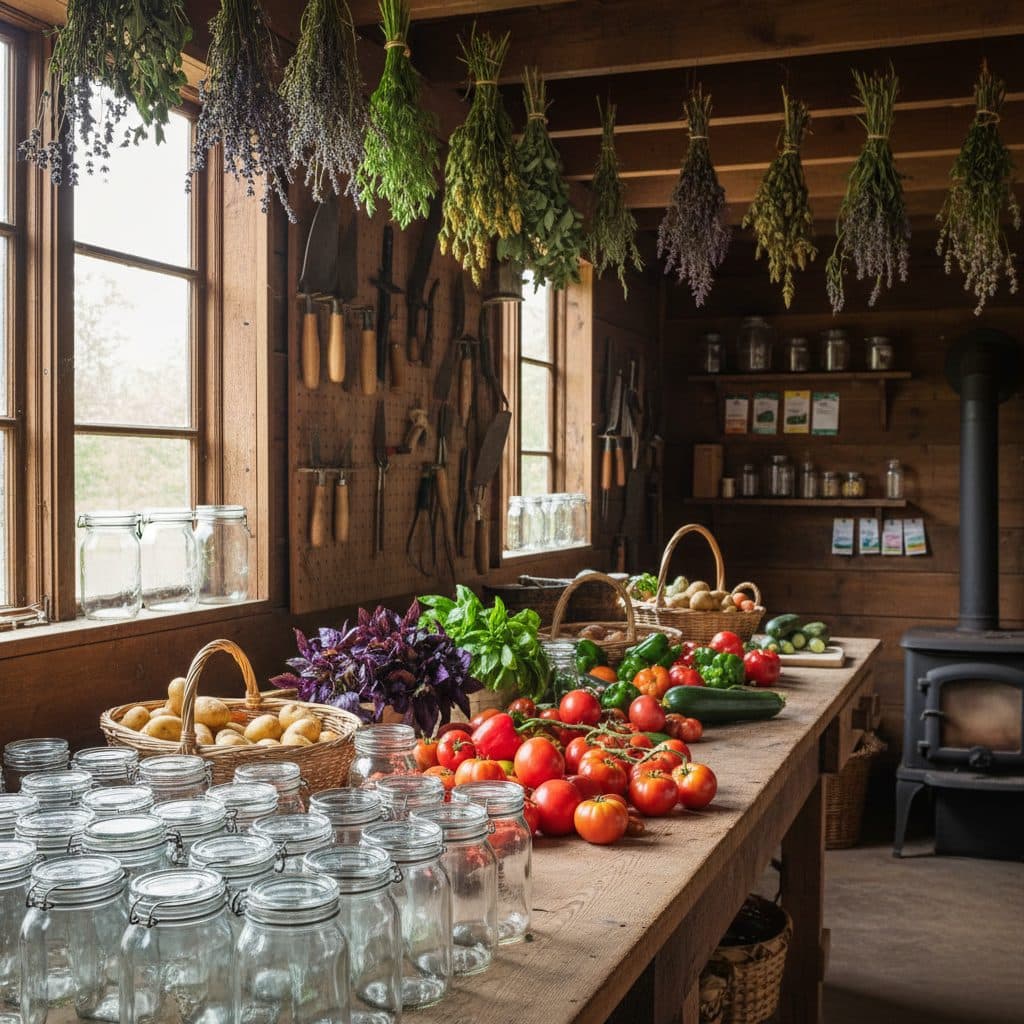
Key takeaways
- Developing practical homesteading skills is far more important than buying expensive acreage, modern machinery, or remote land.
- Begin with high-impact household skills: scratch sourdough baking, water bath and pressure canning, lacto-fermentation, and basic seed saving.
- Master biological soil fertility through hot thermophilic composting, vermiculture, cover cropping, and no-till bed preparation.
- Learn poultry and livestock fundamentals: brooder temperature weaning, mobile pastured chicken tractors, daily health checks, and predator-proof fencing.
- Build essential mechanical and trade abilities: basic rough carpentry framing, PEX and PVC plumbing, small engine maintenance, and off-grid solar electrical basics.
- Prioritize learning one core skill per season rather than attempting to overhaul your entire domestic lifestyle overnight.
Quick answer: Essential homesteading skills fall into four core categories: food production (seed starting, organic gardening, composting, pruning), food preservation (water bath and pressure canning, dehydrating, fermenting, root cellaring), animal husbandry (poultry care, basic veterinary triage, fencing), and homestead infrastructure (rough carpentry, plumbing, small engine maintenance).
The modern resurgence of interest in independent living, family food security, and rural self-reliance has inspired thousands of households to pursue a homestead lifestyle. However, the single most common mistake made by beginners is believing that self-sufficiency begins with purchasing a large piece of rural real estate.
Successful rural living requires practical, everyday homesteading skills. Without the ability to preserve a bumper harvest of summer vegetables, diagnose an ailing laying hen, plumb a gravity-fed water line, or repair a wind-damaged garden gate, owning rural acreage quickly becomes overwhelming and financially exhausting.
Whether you currently live in a suburban apartment or on a working five-acre smallholding, this structured guide categorizes the foundational skills every aspiring homesteader should learn, step by step.
+-------------------------------------------------------------+
|              THE FOUR HOMESTEADING SKILL PILLARS            |
|                                                             |
| 1. Food Production & Soil     Seed starting, compost, no-dig|
|  2. Food Preservation          Canning, curing, fermenting  |
| 3. Animal Husbandry           Poultry, small ruminants, care|
|  4. Infrastructure & DIY       Carpentry, plumbing, off-grid|
+-------------------------------------------------------------+
Which food preservation skills should you learn first?
Growing a productive garden yields heavy seasonal gluts that will spoil within days if you lack food preservation abilities. Processing your own harvests turns a glut you would otherwise compost into food you are still eating in February.
+-------------------------------------------------------------+
|              FOOD PRESERVATION METHOD HIERARCHY             |
|                                                             |
|   METHOD               DIFFICULTY   BEST FOR CROPS          |
|   ------               ----------   --------------          |
|   Lacto-Fermentation   Beginner     Cabbage, Cucumbers, Roots|
|   Dehydration          Beginner     Herbs, Fruits, Tomatoes |
|   Water Bath Canning   Intermediate High-Acid Fruits, Pickles|
|   Pressure Canning     Advanced     Low-Acid Veggies, Meats |
|   Root Cellaring       Intermediate Potatoes, Squash, Alliums|
+-------------------------------------------------------------+
1. Water bath canning vs pressure canning
- Water bath canning: Safe exclusively for high-acid foods with a pH of 4.6 or lower, including fruit jams, jellies, apple sauce, whole tomatoes with added lemon juice, pickles, and chutneys. Jars are submerged in boiling water (212°F / 100°C) to destroy molds, yeasts, and active bacteria.
- Pressure canning: Mandatory for all low-acid vegetables, legumes, broths, and meats. Pressure canners reach 240°F (116°C) at 10 to 11 psi at sea level, the only temperature that reliably destroys Clostridium botulinum spores. Above 1,000 feet the required pressure increases (a weighted-gauge canner steps up to 15 psi), so always process at the pressure your tested recipe specifies for YOUR altitude. See step-by-step processing rules in our guide to canning green beans.
2. Lacto-fermentation and scratch cooking
- An ancient biological preservation method using natural lactic acid bacteria present on fresh produce.
- Submerging chopped vegetables in a 2% to 3% sea salt brine creates an anaerobic environment where beneficial microbes convert the vegetables' natural sugars into lactic acid. This produces sauerkraut, kimchi, and sour pickles rich in live cultures without applied heat. Finished ferments are not shelf-stable: store them cold (refrigerator or a cellar near 38°F), where they keep for several months. If you want jars in the pantry instead, water-bath can them and accept that the heat kills the live cultures.
- Complement fermentation with scratch kitchen fundamentals: maintaining a wild sourdough starter, baking dense artisan loaves, churning fresh butter, and making soft cheeses like paneer and chèvre.
3. Dehydrating and root cellaring
- Dehydrating removes water content at low temperatures (95°F to 135°F), preserving herbs, sliced tomatoes, dried fruit leather, and soup vegetables in airtight glass jars.
- Pack carrots, beets, turnips, and parsnips in damp sand in a cool, humid cellar. Cure potatoes for about two weeks, then store them dry, dark, and loose in ventilated crates at 45 to 50°F, away from apples and onions.
What biological soil and garden skills are essential?
A homestead cannot sustain itself on store-bought synthetic fertilizers or single-use inputs. Building closed-loop biological fertility is an essential discipline.
+-------------------------------------------------------------+
|              BIOLOGICAL SOIL CYCLING ON THE HOMESTEAD       |
|                                                             |
|   Kitchen & Barn Waste ===> [ Hot Compost Pile (140°F) ]   |
|                                         |                   |
|                                         v                   |
|   Rich Humus Applied To ===> [ No-Dig Vegetable Beds ]      |
|                                         |                   |
|                                         v                   |
|   Cover Crops Sown In ====> [ Nitrogen Nodules & Carbon ]   |
+-------------------------------------------------------------+- Hot thermophilic composting: Learn to balance carbon-rich brown materials (straw, dry fall leaves, wood shavings) with nitrogen-rich green materials (animal manure, kitchen scraps, fresh weeds) in an ideal 30:1 ratio. Turning the pile to maintain internal temperatures of 135°F to 150°F (57°C to 65°C) kills pathogens and weed seeds while creating rich humus.
- Seed starting and seed saving: Learn to germinate seeds under adjustable grow lights, manage bottom heat, prevent damping-off, and select open-pollinated (heirloom) plants to harvest and save seed stock for subsequent seasons.
- No-till bed management: Preserve delicate mycorrhizal fungi and earthworm channels by topping garden beds with compost mulches instead of running mechanical tillers that invert soil horizons and destroy soil structure.
For foundational definitions and smallholding philosophy, see what is homesteading and evaluating land for homesteading.
What livestock husbandry abilities must you develop?
Keeping homestead animals requires daily observational discipline, preventive health care, humane handling, and livestock housing design.
+-------------------------------------------------------------+
|              ANIMAL HUSBANDRY CORE COMPETENCIES             |
|                                                             |
|   1. Daily Health Checks:     Eyes, vent, gait, droppings   |
|   2. Biosecurity & Housing:   Predator proofing, deep litter|
|   3. Feed Calculation:        Protein % matching life stage |
|   4. Basic Veterinary Triage: Wound spray, mite dust, isolate
+-------------------------------------------------------------+- Poultry brooding and pastured rotations: Raising day-old chicks into productive laying hens requires precise temperature weaning (lowering brooder heat 5°F per week from 95°F down to ambient room temperature), clean water hygiene, and managing mobile pasture coops. Learn pastured flock care in raising pastured chickens.
- Physical predator defense: Learn to install 1/2-inch welded hardware cloth, outward-facing anti-dig ground aprons, and secure predator-proof two-step carabiner latches on all animal housing. Chicken wire stops chickens from wandering, but only heavy welded wire stops raccoons, weasels, and foxes.
- Parasite and herd management: Regularly inspect livestock for external mites, lice, and internal parasites. Practice rotational grazing between paddocks to break nematode parasite cycles naturally without over-relying on chemical dewormers.
What practical DIY and mechanical skills are necessary?
When living on a rural property, calling professional contractors for every minor repair is cost-prohibitive. Developing core mechanical competence keeps systems running smoothly.
+-------------------------------------------------------------+
|              PRACTICAL HOMESTEAD TRADES MATRIX              |
|                                                             |
|   TRADE             ESSENTIAL COMPETENCIES                  |
|   -----             ----------------------                  |
|   Rough Carpentry   Framing coops, hanging gates, sheds     |
|   Plumbing          PEX crimping, PVC lines, yard hydrants  |
|   Small Engines     Carburetor cleaning, spark plugs, oil   |
|   Electrical        12V/24V solar wiring, battery care, fuses|
|   Tool Sharpening   Axes, chainsaws, hoes, pruning shears   |
+-------------------------------------------------------------+
1. Rough carpentry and timber framing
- Learn standard 2x4 and 2x6 framing techniques, roof pitching, installing diagonal cross-braces on heavy pasture gates to prevent sagging, and hanging level exterior doors.
2. Basic rural plumbing and water systems
- Learn to cut, glue, and assemble Schedule 40 PVC pipe for garden irrigation and crimp flexible PEX lines for household water distribution.
- Understand gravity-fed water head pressure: every 2.31 feet of vertical elevation drop produces exactly 1 PSI of water pressure.
3. Small engine maintenance and tool care
- Homestead equipment (chainsaws, tillers, generators, lawn tractors) runs on small two-stroke and four-stroke gasoline engines.
- Learn to drain seasonal fuel, clean gummed carburetor jets, replace fouled spark plugs, change engine oil, and sharpen chainsaw chains, axes, and garden hoes with mill bastard files and whetstones.
How should a beginner prioritize learning these skills?
Attempting to master every homestead skill simultaneously leads to quick burnout. Follow a structured four-season learning progression:
+-------------------------------------------------------------+
|              FOUR-SEASON SKILL PROGRESSION TIMELINE         |
|                                                             |
|   SEASON         PRIMARY SKILL FOCUS                        |
|   ------         -------------------                        |
|   Spring         Seed starting, composting, chick brooding  |
|   Summer         Water bath canning, dehydrating, weeding   |
|   Fall           Pressure canning, garlic planting, butchery|
|   Winter         Tool sharpening, carpentry, baking, sewing |
+-------------------------------------------------------------+- Spring focus: Practice seed propagation, soil bed preparation, and raising day-old chicks in a clean brooder.
- Summer focus: Practice water bath canning of jams and pickles, sun dehydrating, pest scouting, and rotational watering.
- Fall focus: Process low-acid vegetables with a pressure canner, cure garlic and winter squash, plant cover crops, and learn humane poultry harvesting.
- Winter focus: Sharpen hand tools, build wooden cold frames and nesting boxes, learn sourdough baking, mend fences, and plan next season's crop layout.
To determine the land footprint needed to put these practical abilities into action, review our detailed guide on how much land do you need to homestead.
Learning practical abilities season after season builds the skills needed to run a self-sufficient homestead.