Key takeaways
- Rely on cultural, physical, and biological methods following the UK regulatory withdrawal and ban on metaldehyde slug pellets.
- Apply microscopic parasitic nematodes (Phasmarhabditis hermaphrodita) in spring and autumn when soil temperatures exceed 5°C.
- Water allotment beds in the early morning instead of the evening so surface soil dries out before nocturnal slug activity begins.
- Protect tender seedlings with physical cloches, copper tape, wool pellet barriers, and beer traps sunk level with the ground.
- Encourage native garden predators, including song thrushes, ground beetles, frogs, toads, and hedgehogs, by creating natural habitat features.
Quick answer: To get rid of slugs in UK gardens without chemicals, apply biological nematodes (Phasmarhabditis hermaphrodita) to moist spring soil, water beds early in the morning, protect young seedlings with cloches or wool barriers, and conduct torchlight hand-picking patrols after dark.
Discovering how to get rid of slugs is a rite of passage for every gardener and allotment holder in the United Kingdom. With mild, damp maritime weather, regular rainfall, and abundant organic matter, British gardens provide the ideal habitat for terrestrial molluscs. From common garden slugs (Deroceras reticulatum) to large black arion slugs (Arion ater), these voracious feeders can devour newly sprouted seedlings, decapitate tender courgettes, and riddle potato tubers with tunnels overnight.
For decades, many growers relied heavily on blue chemical bait pellets. However, following environmental reviews and scientific evidence regarding poisoning risks to wild birds, hedgehogs, and aquatic life, metaldehyde slug pellets were banned and withdrawn from sale across the UK. Furthermore, commercial chemical approvals change frequently, making sustainable non-chemical methods the safest, most dependable long-term strategy for domestic plots.
By adopting a disciplined multi-layered organic control system, you can protect vulnerable crops, break the mollusc reproductive cycle, and maintain a thriving, predator-rich allotment.
Understanding slug behaviour and UK regulations
Slugs are nocturnal gastropods that require constant moisture to produce the protective mucus sheath essential for locomotion and respiration:
- Daytime shelter: During daylight hours and dry weather, slugs retreat deep into soil cracks, under wooden scaffold boards, beneath thick compost heaps, and into damp groundcover.
- Feeding habits: As dusk falls and ambient humidity rises, they emerge to feed on fresh, nitrogen-rich plant tissues. Soft young seedlings, developing salad greens, brassicas, and ripe strawberries are primary targets.
- Egg laying: A single adult slug can lay hundreds of round, translucent eggs in moist underground pockets throughout spring and autumn.
The metaldehyde ban and changing approvals
UK pesticide regulations strictly prohibit the sale, distribution, and use of metaldehyde-based slug pellets to protect non-target garden wildlife. While some iron phosphate-based pellets remain available for amateur use, chemical approvals are subject to ongoing regulatory review. agripure emphasizes cultural, physical, and biological pest management that permanently eliminates reliance on manufactured chemical baits.
For comprehensive pest management frameworks, review our foundational guide to integrated pest management for home gardens.
Biological control: applying parasitic nematodes
Biological slug control using microscopic beneficial nematodes (Phasmarhabditis hermaphrodita, commonly marketed under brand formulations such as Nemaslug) is the most effective targeted method available to UK gardeners:
How parasitic nematodes work
Nematodes are naturally occurring microscopic roundworms that seek out soil-dwelling slugs:
- They enter the slug's body through natural openings, releasing a specific bacterium that halts slug feeding within 3 days.
- The slug dies underground within 7 to 10 days, where the nematodes reproduce inside the decaying carcass before releasing millions of new nematodes into the surrounding soil.
- Because nematodes operate entirely beneath the soil surface, they target subterranean pest species that surface barriers cannot reach, without harming earthworms, birds, pets, or beneficial insects.
Rules for successful nematode application
- Soil temperature: Apply only when soil temperatures consistently exceed 5°C (typically from March through October across England, Wales, and lowland Scotland).
- Moisture: Water the plot thoroughly before application, apply the nematode solution on an overcast day or at dusk using a watering can with a coarse rose, and keep the soil consistently moist for at least two weeks afterward.
- Timing: Early spring application prevents overwintered juvenile slugs from devastating your first wave of spring transplants. Learn about early crop timings in what to plant in March in the UK.
Physical barriers and slug pellets alternatives
Deploying effective slug pellets alternatives provides immediate physical defense during vulnerable growth stages:
1. Protective cloches for young transplants
The critical period for mollusc damage is the first two weeks after transplanting:
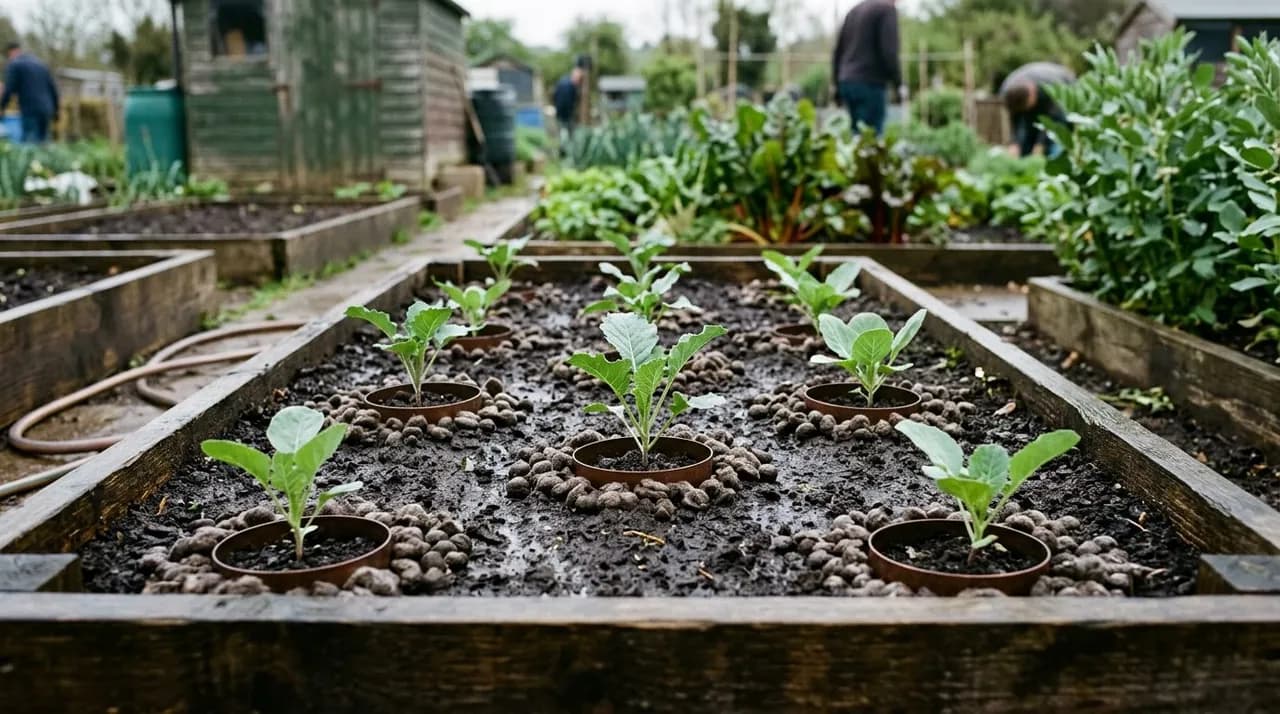
- Upcycled bottle cloches: Cut the bottom off clear 2-litre plastic water bottles, press them 3 cm into the soil around individual courgettes, beans, or brassicas, and leave the screw top open for air exchange.
- Mesh hoops and fleece: Cover entire raised beds with fine horticultural fleece or insect mesh anchored tightly along all edges.
2. Copper tape and rings
Slugs experience a mild natural electrolytic reaction when their moist slime coat contacts copper:
- Wrap adhesive copper tape around the rims of pots, staging benches, and raised timber bed frames.
- Ensure no overhanging foliage touches the surrounding soil, as leaves create a bypass bridge.
3. Abrasive and wool pellet barriers
- Horticultural sheep wool pellets: When watered, compressed wool pellets expand into a dense, fibrous mat that irritates the foot of the slug and absorbs its moisture.
- Crushed eggshells, coarse grit, and sharp sand: Spread a 5 cm wide band around the base of vulnerable plants. While less effective when wet, abrasive textures deter casual crawling.
+---------------------------------------------------------+
|                [Upcycled Bottle Cloche]                 |
|                     /            \                      |
|                    |  Open Top    |                     |
|                    |  Ventilation |                     |
|                    |              |                     |
|         ...........|  (Seedling)  |...........          |
|         : Wool     \              /   Wool   :          |
|         : Pellets   _**__**_/   Pellets :          |
|         :============= Soil Bed =============:          |
+---------------------------------------------------------+
Sunk beer traps and nighttime hand-picking patrols
Active trapping and manual collection quickly suppress severe localized infestations:
1. Setting beer traps correctly
Beer traps for slugs use fermented yeast aromas to lure slugs away from plants:
- Sink a plastic cup or commercial trap into the soil so the rim sits 1 cm to 2 cm above the soil surface. Leaving the rim slightly elevated prevents beneficial ground beetles from falling in and drowning.
- Fill the container halfway with inexpensive beer, ale, or a simple mixture of warm water, sugar, and baker's yeast.
- Cover with a loose lid or curved tile to prevent rain from diluting the liquid, and empty drowned slugs into your compost heap every 2 to 3 days.
2. Torchlight nighttime collection
Conducting a 15-minute hand-picking session with a torch 1 to 2 hours after sunset or following evening rain is effective:
- Search along path borders, bed edges, and lower foliage.
- Drop collected slugs into a bucket of hot, soapy water.
- For structured methods on nocturnal pest management, consult our guide to nighttime low-tech pest patrol.
Cultural practices and choosing slug resistant plants
Modifying your plot management deprives molluscs of daytime shelter and reduces crop losses:
1. Cultural prevention in allotments
- Morning watering: Shift your watering schedule to early morning. Evening watering keeps the soil surface saturated all night, creating an ideal slipway for feeding molluscs.
- Weed and debris hygiene: Clear rotting plant debris, old damp cardboard, and unused wooden boards away from active vegetable beds.
- Regular shallow hoeing: Hoeing the top 2 cm of soil on dry, sunny mornings exposes hidden slug eggs to the sun and predatory birds.
- When designing your overall plot zoning, review our preventive strategies in prevention-first pest management and early companion trap tactics in trap cropping with nasturtiums and mustard.
2. Selecting slug-resistant plants
Where slug pressure is severe, choose vegetable varieties and garden plants that exhibit natural resistance:
- Resistant edibles: Woody herbs (rosemary, thyme, sage, oregano), onions, leeks, garlic, red oak-leaf lettuces (anthocyanin-rich red leaves are less palatable than soft green butterheads), and mature kale.
- Vulnerable edibles needing protection: Young slugs eating seedlings of runner beans, French beans, courgettes, winter squash, spinach, and young brassicas require physical shielding until they develop tough, mature foliage.
3. Encouraging natural biological predators
A balanced garden ecosystem naturally regulates slug populations:
- Build small log and rock piles in quiet corners to house predatory ground beetles (Carabidae) and rove beetles.
- Dig a small, shallow wildlife pond to support native frogs and toads.
- Provide ground-level gaps in boundary fences to allow foraging hedgehogs access between neighbouring gardens.