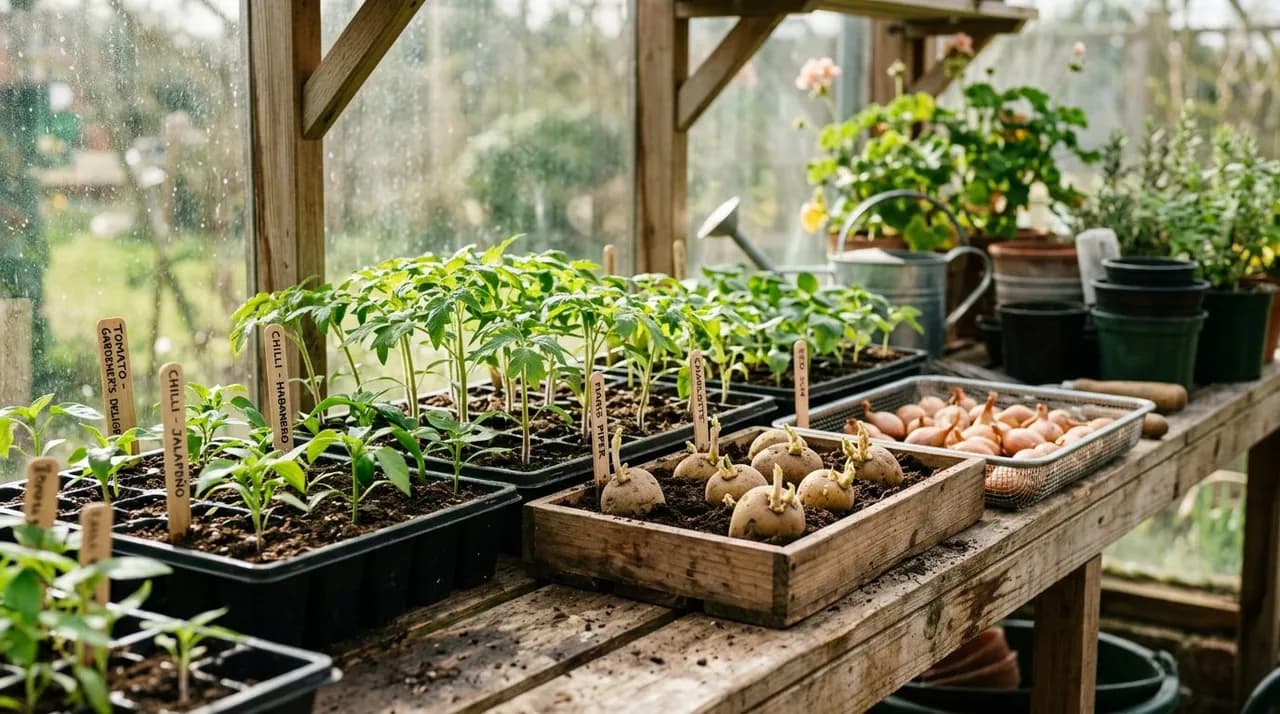
Key takeaways
- March marks the beginning of the British gardening season, balancing indoor warmth with outdoor soil preparation.
- Sow tender summer crops (tomatoes, chillies, aubergines, and sweet peppers) indoors on warm windowsills or heated propagators.
- Direct-sow hardy root vegetables (parsnips, early carrots, radishes) and broad beans outdoors once soil is workable.
- Plant out dormant onion sets, shallot sets, and chitted first-early seed potatoes in late March.
- Warm cold, saturated outdoor beds two to three weeks prior to direct sowing using clear polythene, cloches, or horticultural fleece.
Quick answer: In the UK, knowing what to plant in March involves indoor and outdoor sowing. Start heat-loving tomatoes, chillies, and brassicas indoors under cover. Outdoors, plant onion and shallot sets, chitted first-early potatoes, and direct-sow parsnips, broad beans, spinach, and early carrots beneath protective fleece or cloches.
March begins the main outdoor season in the British gardening calendar. As day lengths noticeably increase and the spring equinox approaches, allotment holders and home gardeners across the UK prepare for the growing year after months of winter dormancy.
However, March weather in Britain is notoriously capricious. While sunny spring afternoons can feel deceptively mild, outdoor soils remain cold, saturated with winter rain, and prone to sharp overnight frosts. Sowing seeds directly into cold, waterlogged mud invariably leads to seed rot, poor germination, and damping-off disease.
By dividing your seeds to sow in march between protected indoor staging, cold frames, and fleece-covered outdoor beds, you can establish strong, resilient seedlings that hit the ground running as true spring warmth arrives.
Sowing indoors and in heated propagators
Tender warm-season vegetables require a long growing season to flower and ripen in the UK climate. Sowing indoors during early to mid-March provides the head start these heat-loving crops require:
1. Tomatoes, chillies, peppers, and aubergines
- Warmth requirements: These solanaceous crops require constant germination temperatures between 20°C and 25°C. Place seed trays on a thermostatically controlled electric heat mat or a warm south-facing windowsill directly above a radiator.
- Light levels: As soon as green shoots emerge, move seed trays into the brightest possible natural light, or provide supplemental LED grow lights. Low March light levels combined with high room temperatures cause weak, spindly, leggy stems.
- Pricking out: When seedlings produce their first pair of "true" leaves, prick them out individually into 7.5 cm (3 in) pots filled with peat-free potting compost. To protect delicate root systems, consult our guide to preventing seedling damping-off failure.
2. Celeriac, celery, and globe artichokes
These slow-growing crops need early sowing to develop substantial root bases and thick stalks before autumn. Surface-sow the fine celery and celeriac seed onto moist compost, as it needs light to germinate. Sow the much larger globe artichoke seed separately, covering it with about 1 cm of compost.
3. Early brassicas and summer leeks
Start modules of summer cabbages, calabrese (broccoli), cauliflowers, and leeks in an unheated greenhouse, polytunnel, or bright porch. Raising brassicas in multi-cell modular trays prevents root disturbance and allows you to plant sturdy transplants into the plot in late April.
For comprehensive beginner tray setups, review our fundamentals in seed starting for beginners.
Sowing under unheated glass, cold frames, and polytunnels
Unheated structures provide a protected microclimate that buffers seedlings against biting March winds and heavy downpours:
+---------------------------------------------------------+
|                  [March Sowing Channels]                |
|                                                         |
|  [Indoor Heat (20°C+)]     [Cold Frame / Glasshouse]    |
|  Tomatoes, Chillies,       Broad Beans, Peas, Leeks,    |
|  Aubergines, Sweet Peppers Summer Cabbage, Spinach      |
|                                                         |
|  [Outdoor Direct Sowing]   [Outdoor Sets & Tubers]      |
|  Parsnips, Early Carrots,  Shallot Sets, Onion Sets,    |
|  Radishes, Beetroot        Chitted Early Seed Potatoes  |
+---------------------------------------------------------+- Broad Beans and Peas: Sow seeds 5 cm deep into root trainers, cardboard toilet roll tubes, or modular trays. Deep modules accommodate their long taproots, producing sturdy root systems ready for planting out into the allotment in 4 weeks.
- Spinach and Salad Greens: Sow winter-hardy varieties of spinach, corn salad (lamb's lettuce), land cress, and oriental greens in seed trays for early spring salads.
- Early Carrots in Containers: Sow round or early Nantes varieties directly into deep pots or greenhouse border beds for a June harvest, lifting the crop before second-generation carrot root fly damage builds in late summer.
Direct sowing outdoors: vegetables to plant in March
Direct outdoor sowing in March depends on soil temperature instead of the calendar. Sowing should only begin when topsoil temperatures consistently reach 7°C to 10°C and soil is dry enough to rake into a fine, crumbly tilth without sticking to your boots:
1. Parsnips (Pastinaca sativa)
Parsnip seeds have a long, slow germination period (often taking 3 to 4 weeks). Sowing in late March gives them the lengthy 7 to 8 month growing season needed to develop sweet, substantial winter roots. Sow fresh seed (parsnip seed loses viability after one year) 1.5 cm deep in rows spaced 30 cm apart.
2. Early carrots, beetroot, and radishes
- Carrots: Sow early cultivars (such as 'Early Nantes' or 'Amsterdam Forcing') in shallow drills 1 cm deep.
- Beetroot: Sow multigerm seed clusters in late March once soil is warming, thinning seedlings to 10 cm apart for tender summer roots.
- Radishes: The fastest crop in the garden, ready to harvest in 25 to 30 days. Sow short rows every fortnight to maintain continuous fresh harvests.
3. Planting shallot and onion sets
Planting immature, dormant bulbs (sets) is far more reliable for UK gardeners than raising alliums from seed:
- Shallot sets: Press sets gently into loose, weed-free soil so the pointed tip just peeks above the surface, spacing sets 15 cm to 20 cm apart. Learn complete cultivation, spacing, and harvesting details in our dedicated guide on how to grow shallots.
- Onion sets: Plant heat-treated onion sets in late March. Firm soil around the bulbs and drape temporary netting overhead to prevent curious blackbirds from pulling up newly planted sets.
4. Planting first-early seed potatoes
First-early seed potatoes that have been "chitted" (placed in egg cartons in a cool, bright, frost-free room for 4 to 6 weeks to sprout thick green shoots) can be planted outdoors in late March:
- Plant tubers 10 cm to 15 cm deep in trenches, spaced 30 cm apart with 60 cm between rows.
- Draw loose earth over emerging green shoots to protect them from late frosts. For complete trenching and container advice, consult how to grow potatoes.
Essential March gardening jobs for UK allotments
Beyond seed sowing, completing fundamental plot maintenance in March establishes a clean, productive foundation:
1. Warming the soil with cloches and fleece
Outdoor soil temperatures lag behind air temperatures. Two to three weeks before direct sowing, lay clear polythene sheets, plastic cloches, or black weed-suppressing membranes over your intended seedbeds. Trapping solar radiation raises soil temperatures by 2°C to 4°C and dries excess moisture, dramatically improving seed germination.
2. Weeding and soil amending
- Hoe off winter annual weeds on dry mornings using a sharp Dutch hoe.
- Top-dress perennial beds, fruit cages, and asparagus trenches with a 5 cm layer of mature, well-rotted garden compost or farmyard manure.
- If your plot has empty beds waiting for late spring squash or sweetcorn, consider sowing quick-growing spring green cover crops as detailed in our guide on green manure.
3. Setting up slug defences early
Overwintered juvenile slugs become active in March as soon as soil temperatures rise above 5°C, targeting emerging broad bean shoots and brassica transplants:
- Apply biological parasitic nematodes (Phasmarhabditis hermaphrodita) to moist garden beds in late March.
- Install upcycled plastic bottle cloches over vulnerable young transplants.
- Review our complete non-chemical pest strategy in how to get rid of slugs in UK gardens.