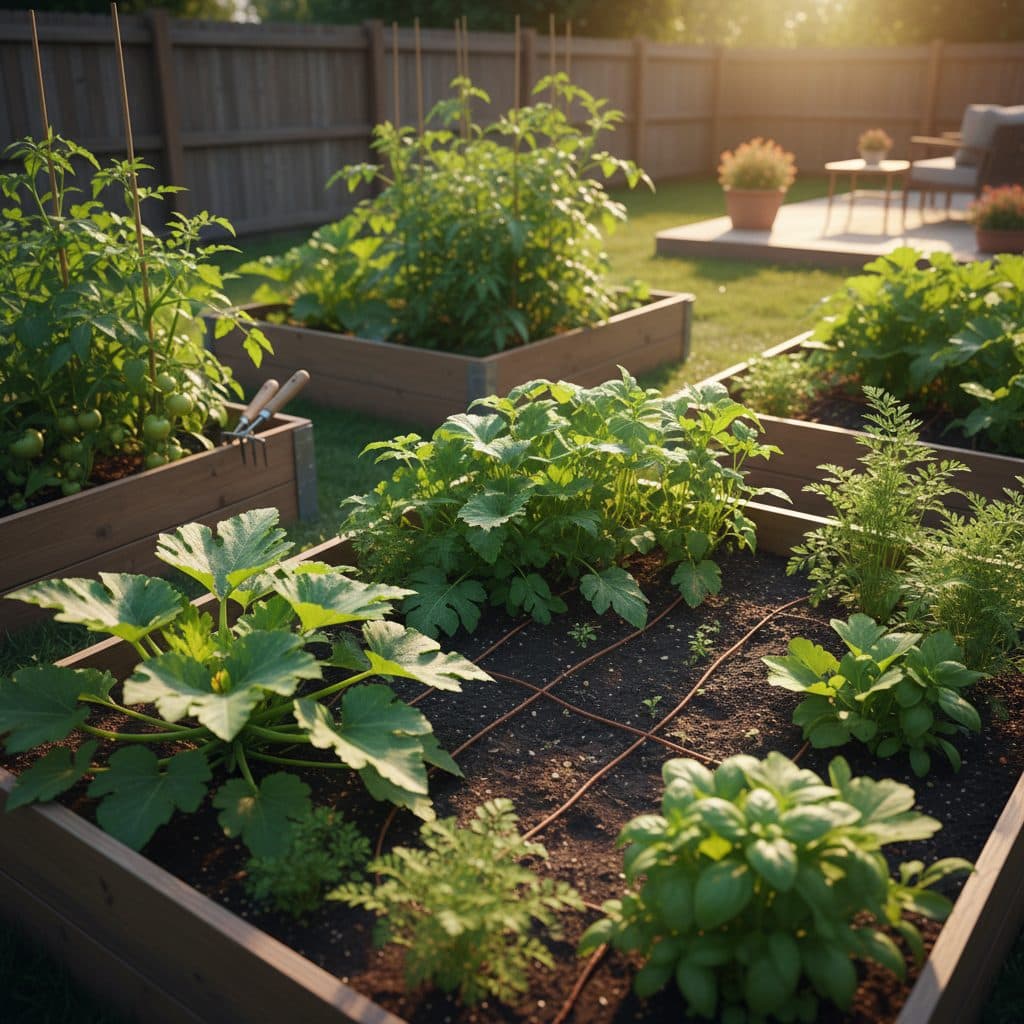
Key takeaways
- Implement a three-to-five-year crop rotation plan to break pest and disease cycles, especially for common families like brassicas and solanaceae.
- Maintain strict garden sanitation by removing plant debris, sterilizing tools, and controlling weeds to eliminate pest habitats and disease vectors.
- Select disease-resistant and pest-tolerant plant varieties suited to your local USDA zone, reducing the need for reactive treatments.
- Monitor your garden regularly for early signs of trouble, addressing small issues before they escalate into significant problems.
- Build healthy soil with organic matter, which supports robust plant growth and a diverse microbial community that suppresses pathogens.
- Optimize water management to prevent conditions favorable for fungal diseases, ensuring plants receive about 1 inch of water per week.
Quick answer: Preventing garden pests and diseases in USDA Zone 5 involves strategic planning, including implementing a 3-5 year crop rotation, maintaining strict garden sanitation, selecting disease-resistant plant varieties, and building healthy soil. These practices can significantly reduce pest pressure and disease incidence, often by 50% or more.
In the humid summers of the Southeast, from northern Georgia to coastal North Carolina, gardeners often battle fungal diseases like early blight on tomatoes and powdery mildew on squash. These issues can reduce yields by 30% or more if left unchecked. But what if we could avoid most of these problems before they even start? That’s the core idea behind prevention-first gardening: using strategic planning to stop pests and diseases from taking hold in the first place.
This approach does not aim to eliminate every bug or microbe. It builds a resilient garden ecosystem where plants thrive and problems stay rare. By focusing on practices like intelligent crop rotation, rigorous sanitation, and selecting the right plant varieties, you can significantly reduce pest pressure and disease incidence, often by 50% or more, leading to a more productive and less stressful growing season.
Crop rotation: the foundation of a healthy garden
Crop rotation is one of the most effective strategies for breaking pest and disease cycles in your garden. If you plant the same crop in the same spot year after year, soil-borne pathogens and insect pests specific to that crop will build up, potentially reducing yields by 20% to 50% over time. For example, planting tomatoes in the same bed annually can lead to a severe accumulation of Verticillium wilt spores, which can persist in the soil for up to seven years [4].
planning your rotation cycle
A good rotation plan involves moving plant families to different beds each season for at least three to five years. For instance, after growing a heavy feeder like corn (a grass), you might follow with a legume like beans or peas, which fix nitrogen in the soil, potentially adding 50 to 100 pounds of nitrogen per acre [3]. Then, you could plant a root crop like carrots, followed by a leafy green. This cycle deprives pests and diseases of their preferred hosts, effectively starving them out. Consider dividing your garden into three or four distinct zones, rotating your plant families through these zones over several years.
- Group plants by family: Solanaceae (tomatoes, peppers, potatoes), Brassicas (cabbage, broccoli, kale), Legumes (beans, peas), Cucurbits (squash, cucumbers).
- Avoid planting the same family in the same spot for at least three years; five years is better for persistent issues.
- Incorporate cover crops like clover or vetch during off-seasons to improve soil structure and add organic matter, which can be 1% to 2% annually [1].
- Map your garden layout each year, noting where each plant family was grown.
Sanitation: keeping things clean and clear
Garden sanitation is often overlooked, but it’s a critical component of prevention-first gardening. Pests and diseases frequently overwinter in plant debris, weeds, and even on garden tools. For instance, squash bugs (Anasa tristis) can hide in garden litter and emerge in spring to devastate young squash and pumpkin plants, sometimes causing 50% yield loss in susceptible varieties. Removing this debris in the fall can significantly reduce their populations for the following season [3].
clean tools, clean garden
Regularly cleaning and sterilizing your gardening tools is also important. Pathogens like tobacco mosaic virus can spread easily from an infected plant to a healthy one via pruning shears. A simple wipe-down with a 10% bleach solution (one part bleach to nine parts water) or 70% isopropyl alcohol after each use, especially when moving between different plants, can prevent this spread. Keep your garden paths clear of weeds, as they can host pests and diseases, providing a bridge to your cultivated crops. A 2-inch layer of mulch can suppress up to 90% of annual weeds. You can find useful tools for this at Wooden-Handle Garden Fork & Lawn Rake.
- Remove crop residue promptly after harvest; diseased plants should be bagged and discarded, not composted, to avoid spreading pathogens.
- Control weeds within and around the garden beds, as they can harbor pests like aphids and whiteflies, reducing their numbers by up to 70%.
- Clean and sanitize tools regularly, especially after working with diseased plants, using a 1:9 bleach solution or rubbing alcohol.
- Store tools properly in a dry, clean area to prevent rust and extend their lifespan by several years.
Resistant varieties: smart plant selection
Choosing disease-resistant and pest-tolerant plant varieties is one of the easiest and most effective prevention strategies. Many seed catalogs clearly label varieties with resistance to common diseases like Fusarium wilt, Verticillium wilt, or powdery mildew, often denoted with codes like ‘F’, ‘V’, or ‘PM’. For example, in USDA Zone 7, a tomato variety like ‘Celebrity’ is often chosen for its resistance to Fusarium wilt (F), Verticillium wilt (V), and nematodes (N), which can drastically reduce yield losses from these issues by 70% or more [3].
understanding local challenges
Before selecting seeds, research common pest and disease problems in your specific region. In the Midwest, for instance, cucurbit downy mildew can wipe out squash and cucumber crops, but resistant varieties like ‘Marketmore 76’ cucumber offer significant protection. While no plant is immune to all problems, selecting varieties with known resistance can significantly reduce your workload and the need for interventions. This proactive choice can save you hours of pest management and potentially increase your harvest by 25% to 50% compared to susceptible varieties. Consider varieties that thrive in your specific climate and soil conditions, which can be assessed using a Soil Moisture Meter.
- Research local challenges: Identify common diseases and pests prevalent in your USDA zone or specific region.
- Check seed catalogs for resistance codes: Look for ‘V’, ‘F’, ‘N’, ‘T’, ‘A’, ‘PM’, ‘DM’ which indicate resistance to Verticillium, Fusarium, Nematodes, Tobacco Mosaic Virus, Alternaria, Powdery Mildew, and Downy Mildew, respectively.
- Choose varieties adapted to your climate: Plants that are naturally suited to your growing conditions (e.g., heat-tolerant for Southern states) are inherently more resilient.
- Experiment with new resistant types: Try one or two new resistant varieties each year to see how they perform in your garden, potentially boosting yields by 10% to 15%.
Thoughtful planning: beyond the basics
Prevention-first gardening extends beyond just rotation and sanitation; it involves a holistic approach to garden design and management. This includes proper site selection, ensuring adequate sunlight (at least six to eight hours daily for most vegetables), and good air circulation, which can reduce fungal disease pressure by 30%. Overcrowded plants create humid microclimates, perfect for pathogens like powdery mildew to flourish. Aim for recommended spacing, such as 24 to 36 inches between tomato plants, to allow for air movement.
building healthy soil
Healthy soil is the bedrock of healthy plants. Soil rich in organic matter (aim for 3% to 5% organic matter) supports a diverse microbiome that can suppress disease-causing organisms and provide essential nutrients to plants [1]. Incorporating compost or aged manure annually, about 1 inch thick, can drastically improve soil structure and fertility. Consider using organic gardening fertilizer to feed the soil, not just the plant. Strong, well-nourished plants are inherently more resistant to pests and diseases. They often shrug off minor attacks that would devastate weaker plants, which cuts overall pest damage by 20% to 40%.
- Optimize plant spacing: Follow recommended spacing guidelines for each crop to ensure good air circulation and light penetration, reducing disease by up to 30%.
- Improve soil health: Regularly amend soil with compost or other organic matter to build a healthy soil food web and increase water retention by 15-20% [1].
- Consider companion planting: Strategically place plants that deter pests or attract beneficial insects, such as marigolds near tomatoes to repel nematodes.
- Monitor regularly: Spend at least 15 minutes a day inspecting your plants for early signs of stress, pests, or disease so you can respond quickly.
Water management: a hidden pest fighter
Effective water management is a powerful, yet often underestimated, tool in prevention-first gardening. Overwatering or inconsistent watering can stress plants, making them more susceptible to pests and diseases. For example, consistently wet foliage creates an ideal environment for fungal diseases like powdery mildew and downy mildew, which can reduce yields by up to 60% in cucurbits. Aim to provide about 1 inch of water per week for most vegetables, either from rain or irrigation, especially during dry spells in places like arid regions of California or Texas.
smart watering techniques
Water deeply and less frequently to encourage deep root growth, which makes plants more resilient to drought and nutrient deficiencies. Drip irrigation or soaker hoses are excellent choices, as they deliver water directly to the root zone, minimizing water loss to evaporation by 30% and keeping foliage dry. Watering in the morning allows any moisture on leaves to dry quickly in the sun, reducing the risk of fungal infections. Mulching with 2 to 4 inches of straw, wood chips, or shredded leaves around plants can also significantly conserve soil moisture, reducing watering frequency by 25% to 50% and suppressing weeds [2]. Learn more about this at Mulch for organic gardening.
- Water deeply and infrequently: Aim for 1 inch of water per week, delivered slowly to penetrate 6 to 12 inches into the soil.
- Water at the base of plants: Use drip irrigation or soaker hoses to keep foliage dry, reducing fungal disease risk by 40%.
- Mulch garden beds: Apply 2-4 inches of organic mulch to conserve soil moisture by 25-50% and suppress weeds, which can harbor pests.
- Monitor soil moisture: Use your finger or a soil moisture meter to check soil moisture levels before watering, ensuring plants aren’t over or under-watered.
Pest & Disease Prevention Strategies
Strategy | Primary Benefit | Estimated Reduction in Problems |
|---|---|---|
Crop Rotation | Breaks pest/disease cycles, balances soil nutrients | 30-50% |
Sanitation | Eliminates overwintering sites, prevents spread | 40-70% |
Resistant Varieties | Innate plant defense against specific issues | 50-80% |
Healthy Soil | Stronger plants, beneficial microbes | 20-40% |
Proper Watering | Reduces fungal diseases, plant stress | 25-60% |
Disease Reduction: Implementing a three-year crop rotation plan can reduce the incidence of soil-borne diseases by 30% to 50% in common vegetable crops [3].
Water Savings: Applying a 3-inch layer of organic mulch can reduce garden watering needs by 25% to 50% during the growing season [2].
Frequently asked questions
How long should I rotate my crops for maximum benefit?
A minimum three-year rotation cycle is generally recommended for most common garden vegetables, but a five-year cycle is even better for persistent issues like certain soil-borne diseases, reducing their impact by up to 60%.
What is the best way to clean my gardening tools?
After each use, especially when working with different plants, clean your tools by removing soil and debris, then sterilize them with a 10% bleach solution (one part bleach to nine parts water) or 70% isopropyl alcohol, which kills 99.9% of common pathogens.
Can resistant varieties truly eliminate pest problems?
While no variety is completely immune, resistant varieties significantly reduce the severity and incidence of specific pest and disease problems, often by 50% to 80%, making them a crucial first line of defense.
How much organic matter should my garden soil have?
For optimal plant health and soil fertility, aim for your garden soil to have 3% to 5% organic matter. This improves soil structure, water retention by 20%, and nutrient availability.
Is watering in the morning really better than at night?
Yes, watering in the morning is generally preferred because it allows plant foliage to dry quickly in the sun, reducing the risk of fungal diseases like powdery mildew by 30% to 40% compared to evening watering.
How does mulch help with pest prevention?
Mulch helps prevent pests by suppressing weeds that can harbor insects, maintaining consistent soil moisture to reduce plant stress, and creating a less favorable environment for soil-borne pests, potentially reducing weed growth by 90%.
References
- USDA Natural Resources Conservation Service (2024). USDA Natural Resources Conservation Service.
- EPA — Soak Up the Rain (2024). EPA — Soak Up the Rain.
- SARE — Sustainable Agriculture Research & Education (2023). SARE — Sustainable Agriculture Research & Education.
- ATTRA / NCAT Sustainable Agriculture (2023). ATTRA / NCAT Sustainable Agriculture.
- USDA National Agroforestry Center (2023). USDA National Agroforestry Center.