Key takeaways
- Understand the critical temperature threshold: cover tender crops whenever overnight lows are forecast to reach 2°C (36°F) or below.
- Spun-bond polypropylene frost cloth captures radiating ground heat, raising plant temperatures by roughly 2°C to 3°C (4°F to 5°F) for lightweight fabric and up to 5°C to 6°C (9°F to 11°F) for heavyweight blankets.
- Drape protective covers all the way to the soil surface and seal the edges with stones or earth to trap rising ground warmth.
- Water the soil deeply the morning before a freeze — moist soil stores roughly twice the heat of the same soil when dry and gives it back overnight.
- Never allow thin clear plastic sheeting to touch plant foliage directly, as cold conducts through plastic and freeze-burns the leaves at every contact point.
Quick answer: To protect plants from frost, drape breathable frost cloth, blankets, or cloches over support hoops, anchoring the edges firmly to the ground before dusk to trap radiating soil warmth. Deeply water the soil ahead of the freeze and position thermal water jugs around vulnerable crops.
Knowing how to protect plants from frost helps prevent sudden cold snaps from ending a growing season early. Whether an unseasonal late freeze threatens tender spring seedlings or an early autumn frost risks ending the summer tomato harvest weeks ahead of schedule, sudden freezing temperatures can destroy months of careful gardening effort overnight.
Frost forms when plant and soil surfaces cool to 0°C (32°F) or below. On a clear, still night those surfaces run two to four degrees colder than the air temperature your forecast reports — which is why a forecast low of 2°C (36°F) can still leave ice on your leaves. While cold-hardy brassicas and root vegetables produce natural plant sugars that act as internal antifreeze, tender warm-season crops (such as tomatoes, peppers, squashes, basil, and citrus blossoms) possess delicate cell walls. Ice forms first in the spaces between the cells and pulls water out of them; the cells collapse and their membranes tear, which is why the leaves look blackened and water-soaked once the sun hits them the next morning.
Protecting your crops requires understanding the physics of frost formation, knowing exactly when emergency intervention is necessary, and utilizing effective physical barriers, thermal mass reservoirs, and soil hydration techniques to keep plants safe through the coldest nights.
Radiation frost vs advection freeze: knowing the difference
Not all freezing weather behaves the same way. Understanding the type of cold event allows you to deploy the correct protective strategy:
1. Radiation frost
Radiation frost occurs on clear, calm, cloudless nights with light or nonexistent winds.
- The Mechanics: During daylight hours, the soil absorbs solar thermal radiation. At night, in the absence of cloud cover, this stored heat radiates rapidly upward into space. Cold, dense air settles downward, pooling in low-lying garden depressions (frost pockets).
- Thermal Inversion: A warm layer of air remains suspended several metres above the garden while the ground-level air chills below 0°C (32°F).
- Protection Potential: Radiation frost is relatively easy to defend against. Any lightweight physical cover draped over plants traps rising ground warmth, maintaining a safe microclimate beneath the fabric.
2. Advection freeze (wind freeze)
An advection freeze occurs when an arctic or polar air mass blows into a region accompanied by sustained, gusty winds.
- The Mechanics: Wind mixes the atmosphere continuously, destroying any warm air inversion layer. Temperatures plunge well below -2°C (28°F) regardless of cloud cover.
- Protection Potential: Advection freezes are far more difficult to manage because wind strips away radiated heat and blows cold air beneath loose covers. Heavyweight insulated fabrics and structural windbreaks are necessary.
For regional scheduling and planting calendar calculations, compare seasonal frost windows in our guide to Ontario planting zones and hardiness and Canadian indoor scheduling in when to start seeds indoors.
Critical temperatures: when do plants need protection?
Monitor local weather forecasts closely during seasonal transition months:
- 4°C to 2°C (39°F to 36°F): High risk of radiation frost on clear nights. Prepare protective covers before dusk.
- 0°C to -2°C (32°F to 28°F) (light frost): Kills tender warm-season crops (tomatoes, peppers, eggplants, cucumbers, beans, basil, dahlias). Hardy greens (kale, spinach, collards, Brussels sprouts) and root crops usually come through unharmed once they have hardened off.
- -2°C to -6°C (28°F to 21°F) (hard freeze): Destroys semi-hardy vegetables (lettuces, Swiss chard, celery, young brassica seedlings) and freezes exposed citrus fruit and container root balls.
- Below -6°C (below 21°F) (severe freeze): Causes extensive damage to unmulched perennial crowns and woody stems.
Proven methods for protecting plants from freezing cold
Deploying the right combination of physical barriers, thermal storage, and soil moisture ensures maximum survival across different garden spaces.
1. Breathable frost cloth and row covers
Commercial frost cloth (spun-bond non-woven polypropylene) is the most reliable material for plant protection:
- Lightweight Fabric (17 to 30 gsm): Provides 2°C to 3°C (4°F to 5°F) of thermal protection while transmitting 70% to 85% of available sunlight.
- Heavyweight Blanket Fabric (50 to 70 gsm): Provides 4°C to 6°C (7°F to 10°F) of freeze protection for severe cold snaps.
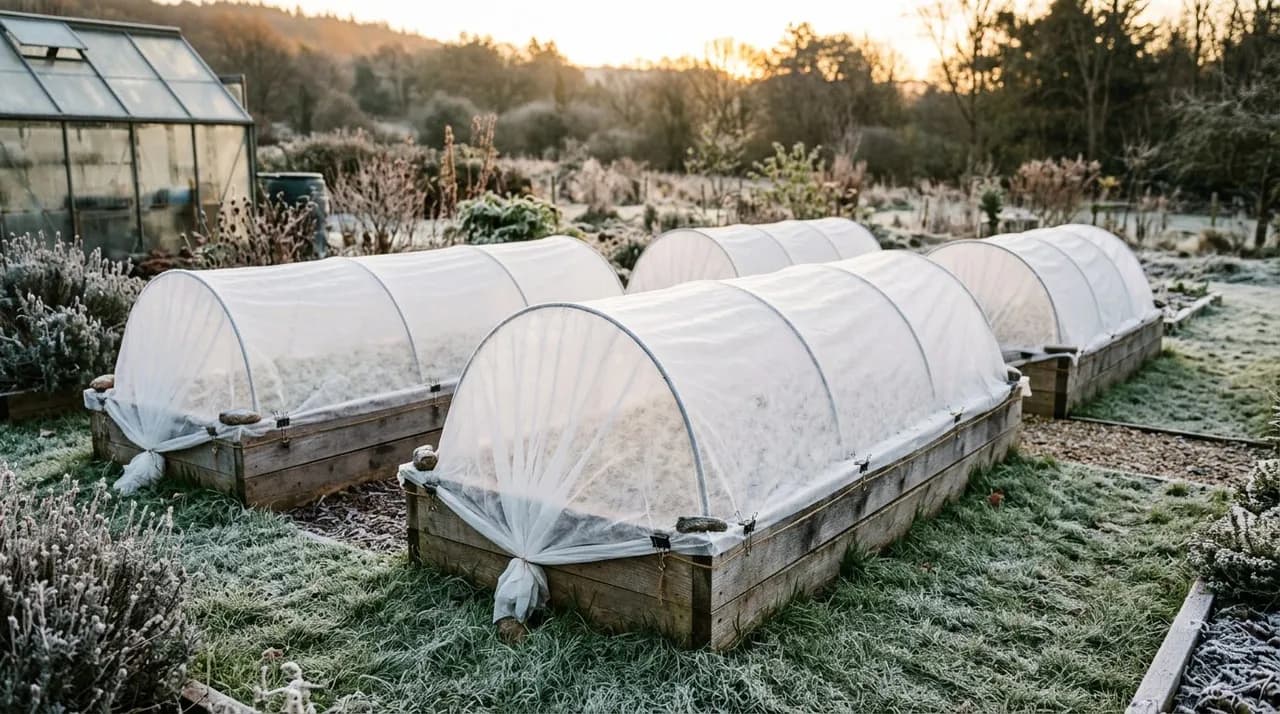
- Installation Technique: Hoops are worth the effort: they add an insulating air gap and stop the fabric abrading foliage in wind. Where the cloth presses flat against a leaf you may get a little contact damage. Erect arched wire or flexible PVC hoops over the bed, drape the cloth over the framework, and ensure the fabric extends completely down to ground level.
- Sealing the Edges: Anchor the perimeter of the cloth with soil, bricks, or metal landscape pins. Trapping rising heat from the bare ground is what keeps the air inside warm.
2. The soil watering technique
Moist soil has a much higher thermal capacity than dry, airy soil:
- Pre-Freeze Irrigation: Water your garden beds deeply during the morning or early afternoon prior to an expected nighttime freeze.
- How it Works: Wet soil absorbs solar radiation during the sunny daylight hours and releases that heat slowly through the night. Dry, airy soil gives up its heat faster and has less to give, exposing root systems to chilling injury.
- Avoid Wetting Leaves: Water only the soil at the base of plants; never wet foliage late in the afternoon, as standing water droplets on leaves increase ice formation.
3. Thermal mass and water jug heaters
Water acts as a natural thermal battery:
- Fill dark 4 to 5 litre plastic bottles or jugs with water and place them directly between plants beneath your frost cloth.
- The water absorbs solar warmth during the day and radiates heat continuously through the night as ambient temperatures plummet.
4. Emergency household covers
If an unexpected freeze strikes before you purchase specialized cloth:
- Cardboard Boxes and Buckets: Invert large corrugated boxes, 20-litre plastic buckets, or empty nursery containers over individual plants, weighting the tops with bricks.
- Bed Sheets and Burlap: Layer cotton bed sheets, heavy blankets, or burlap sacks over support stakes.
- The Plastic Rule: If using clear plastic tarps, never let the plastic touch green leaves directly, as it freeze-burns the leaves at every contact point. Always place a cloth sheet beneath the plastic, or suspend the plastic entirely on timber stakes.
To protect buried terracotta irrigation reservoirs from cracking during deep freezes, follow our maintenance steps in winterizing and storing ollas in freezing zones.
Regional frost management by climate zone
Adjust your frost protection tactics according to your broader geographic climate:
In cool temperate climates: Where ground freezes solid for months, focus on heavyweight mulching (10 cm / 4 in of clean straw over root crowns), permanent cold frames, and low poly-tunnels to extend harvests of winter brassicas and root vegetables through freezing periods.
In subtropical and tropical climates: Sudden, brief radiation frosts can devastate tender citrus, avocado, and passionfruit trees that have not developed cold hardiness. Wrap the main trunks of young fruit trees in insulating foam or burlap, and string old-style incandescent fairy lights (LEDs give off almost no heat and will not help) through the branches under a canopy cover. Use outdoor-rated lights on an RCD-protected outdoor circuit, and keep the bulbs off the foliage and off the covering fabric. Incandescent strings are getting hard to buy in some countries, so check availability before relying on them.
Protecting container plants and raised beds
Potted plants and elevated containers are far more vulnerable to frost than in-ground beds because cold air surrounds the entire root ball from all sides:
- Move Pots to Sheltered Microclimates: Move portable containers against a sun-facing masonry wall (south-facing in the Northern Hemisphere, north-facing in the Southern) where the bricks give back stored heat overnight, or place them beneath covered porch eaves or inside an unheated garage.
- Group Containers Together: Cluster pots together tightly so the collective mass of moist potting soil insulates neighboring root balls.
- Insulate Pot Walls: Wrap large outdoor terracotta or ceramic containers in bubble wrap or thick burlap to prevent the root ball from freezing solid and cracking the pot.
Post-frost care: what to do after the freeze
How you treat plants the morning after a freeze dictates whether they pull through:
- Remove Covers Gradually: When temperatures rise safely above 2°C (36°F) and the sun shines, remove heavy opaque blankets so plants receive light. On days that remain cold and overcast, leave breathable white frost cloth in place.
- Do Not Prune Damage Immediately: Blackened, limp leaves look unsightly, but you must resist the urge to prune them off immediately. Dead outer foliage acts as an insulating shield, protecting inner dormant buds from subsequent frosts over the following weeks.
- Wait for Spring Bud Burst: Delay pruning dead stems until active green growth resumes in spring, clearly revealing the boundary between live wood and frozen tissue.
- Water Gently: If the morning sun triggers rapid leaf transpiration while the root ball remains partially frozen, plants experience physiological drought. Provide a gentle watering with cool water once the topsoil thaws to rehydrate vascular tissues.
By monitoring evening temperatures, anchoring breathable frost covers to the ground, watering soil ahead of freezing fronts, and waiting patiently before pruning damaged tissue, you can protect your garden from freezing temperatures and preserve healthy harvests across every season.