Key takeaways
- In-ground gardens offer the lowest initial cost and can use passive irrigation like ollas to reduce water use by 50% or more.
- Raised beds provide better soil control and drainage, often leading to 20% higher yields for crops like lettuce in compacted areas.
- Hugelkultur beds excel in water retention, potentially reducing irrigation needs by 30-40% after establishment, especially in arid regions like Arizona.
- Wicking beds can cut water consumption by up to 70% compared to overhead irrigation, making them ideal for drought-prone areas.
- Longevity varies significantly: in-ground beds last indefinitely, raised beds 10-20 years, and Hugelkultur beds 15-25 years.
- Integrating water harvesting and passive irrigation techniques, such as swales or rainwater catchment, can reduce external water inputs by 40-60% for any garden type.
Quick answer: In-ground gardens offer low cost and can use passive irrigation like ollas to reduce water use by 50-70%. Raised beds provide better soil control and 20-30% higher yields, while Hugelkultur excels in water retention, potentially reducing irrigation by 30-40%.
In the arid regions of the American Southwest, like Arizona, where annual rainfall might only reach 8-12 inches, efficient water use in gardening is not just a preference—it is a necessity. Even in wetter climates, such as the Pacific Northwest with 30-40 inches of rain annually, optimizing water consumption can significantly reduce utility bills and promote soil health. Growers across the United States are constantly evaluating different garden systems to balance productivity with resource management.
This article examines three primary gardening methods (traditional in-ground beds, structured raised beds, and the unique Hugelkultur approach) through the lens of yields, longevity, and water usage. We will ground our discussion in practical numbers and real-world examples, providing a clear comparison for growers considering their next garden project, whether in a small backyard in USDA zone 7 or a larger market garden in USDA zone 5.
In-ground gardening – the traditional approach
For generations, in-ground gardening has been the standard practice for growing food across the United States, from the fertile soils of Iowa to the sandy loams of Florida. This method involves cultivating directly in the native soil, often with amendments to improve its structure and nutrient content. A significant advantage is the minimal initial investment; establishing a 100 square foot in-ground bed might cost only $50-$100 for basic soil amendments and seeds, compared to hundreds for other systems.
soil health and water use in traditional beds
Maintaining soil health in in-ground beds often involves regular additions of compost, cover cropping, and minimal tillage to preserve soil structure and microbial life. In USDA zone 6, a well-managed in-ground bed can produce 1-2 pounds of tomatoes per square foot, given adequate water and nutrients. Water use, however, can be a challenge; overhead sprinklers can lose 30-50% of water to evaporation, especially during hot summer days with temperatures reaching 90°F. To combat this, many growers employ passive irrigation techniques. For instance, burying unglazed clay pots, known as ollas, can reduce water consumption by 50-70% for individual plants, delivering water directly to the root zone over several days from a 1-gallon olla.
- Initial cost is typically $0.50-$1.00 per square foot for amendments.
- Yields can reach 1.5 pounds of produce per square foot in good soil.
- Evaporation can account for 30-50% of water loss with surface irrigation.
- Ollas reduce water use by 50-70% for targeted plant watering.
- Soil structure improves over years with consistent organic matter additions.
Raised beds – control and accessibility
Raised garden beds have gained immense popularity, particularly in urban settings or areas with poor native soil, from the dense clay of parts of Texas to the rocky terrain of New England. These structures, typically 6-24 inches high, are built above ground and filled with imported soil mixes. A standard 4 ft x 8 ft raised bed, 12 inches deep, requires about 32 cubic feet of soil, which can cost $150-$300 depending on the mix. While the initial material cost for a metal raised garden bed might be $100-$250, the benefits often outweigh this investment over time.
soil management and water retention in raised beds
The primary advantage of raised beds is the ability to create an ideal growing medium, free from compaction and with excellent drainage. This controlled environment can lead to higher yields; studies show that raised beds can produce 20-30% more leafy greens like lettuce per square foot compared to compacted in-ground plots in areas like California’s Central Valley. However, raised beds can dry out more quickly than in-ground beds, especially those built with permeable materials like untreated wood. A 12-inch deep raised bed in USDA zone 8 might require watering 2-3 times per week during peak summer, potentially using 10-15 gallons per watering cycle for a 32 square foot bed.
- Initial setup costs range from $200-$500 for materials and soil.
- Yields can be 20-30% higher for some crops due to better soil.
- Soil volume for a 4 ft x 8 ft x 1 ft bed is 32 cubic feet.
- Watering frequency can be 2-3 times per week in hot climates.
- Longevity of metal beds can exceed 20 years, while untreated wood lasts 5-10 years.
Hugelkultur – the wood core advantage
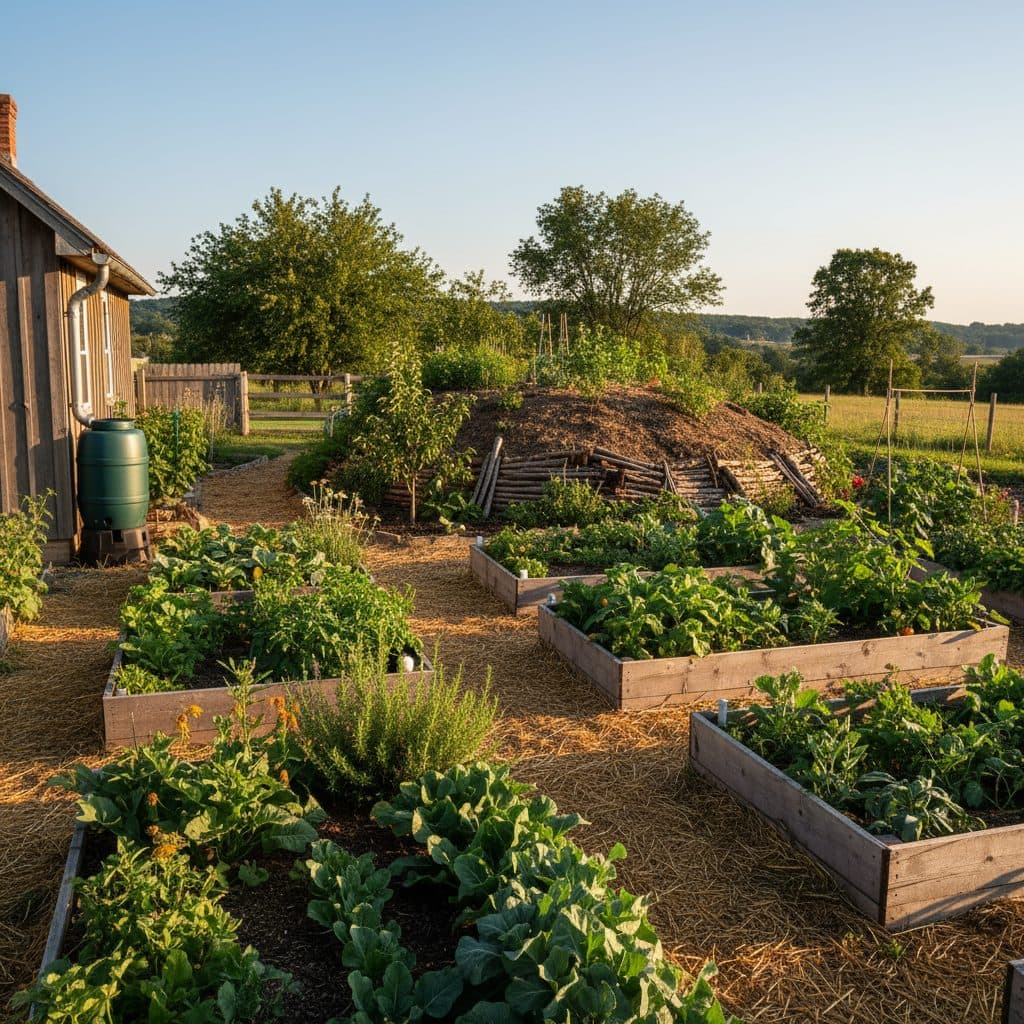
Hugelkultur, a German term meaning “hill culture” or “mound culture,” involves building raised garden beds with a core of decaying wood, branches, and other organic matter, then covering it with soil. This method is particularly well-suited for regions with variable rainfall or those prone to drought, such as the high desert areas of New Mexico, where water conservation is critical. The decomposing wood acts like a sponge, soaking up rainfall and slowly releasing it to plants over time. A typical Hugelkultur mound might be 3-6 feet wide and 2-4 feet high, spanning 10-20 feet in length, providing a substantial growing area.
water retention and soil building in hugelkultur
The primary benefit of Hugelkultur is its exceptional water retention capacity. After the first year of establishment, these beds can reduce irrigation needs by 30-40% compared to conventional in-ground beds, especially in USDA zones 5-9. The decaying wood also slowly releases nutrients, building rich, fertile soil over 15-25 years without significant external inputs. For example, a 10-foot long Hugelkultur bed might absorb 50-100 gallons of water from a single heavy rain event, gradually making it available to plants over several weeks. This self-sustaining aspect makes it a compelling choice for growers aiming for long-term productivity with minimal external resources, as outlined by SARE research [3].
- Decaying wood acts as a sponge, holding significant amounts of water.
- Reduces irrigation needs by 30-40% after the first year.
- Slowly releases nutrients, enriching soil for 15-25 years.
- Mounds are typically 2-4 feet high and 3-6 feet wide.
- Initial setup requires access to substantial organic materials like logs and branches.
Water harvesting and passive irrigation earthworks
Regardless of your chosen garden system, integrating water harvesting and passive irrigation techniques can dramatically improve water efficiency. In regions like the Pacific Northwest, where annual rainfall can exceed 50 inches, capturing rainwater from rooftops can provide hundreds of gallons of free water for garden use. A 1,000 square foot roof can collect approximately 620 gallons of water for every inch of rain, making rainwater harvesting a practical strategy for many growers. This collected water can then be stored in tanks and distributed to gardens as needed, reducing reliance on municipal or well water by 30-50%.
ollas, wicking beds, and swales for water efficiency
Ollas, as mentioned, are effective for targeted watering, reducing water use by 50-70% for individual plants in a 10 square foot area. Wicking beds, often constructed as a type of raised bed, feature a water reservoir at the bottom that supplies moisture to the soil above through capillary action. These systems can reduce water consumption by up to 70% compared to overhead irrigation, especially beneficial in hot climates like USDA zone 9, where evaporation is high. For larger garden areas, earthworks like swales, shallow ditches dug along contours, can capture and slowly infiltrate rainwater into the soil, benefiting plants across a 10-20 foot wide area downslope. This approach can increase soil moisture by 20-40% in dryland farming systems, as documented by the USDA Natural Resources Conservation Service [1].
- A 1,000 sq ft roof can collect 620 gallons per inch of rain.
- Ollas reduce individual plant water use by 50-70%.
- Wicking beds can cut overall water consumption by up to 70%.
- Swales increase soil moisture by 20-40% in dry regions.
- Rainwater harvesting can reduce reliance on external water by 30-50%.
Comparing water efficiency and yields
When evaluating the three garden systems (in-ground, raised, and Hugelkultur), water efficiency and potential yields are often top considerations for growers. In a typical growing season in USDA zone 6, an in-ground garden might require 1-1.5 inches of water per week, totaling 20-30 gallons per 100 square feet. Raised beds, due to better drainage and aeration, might need slightly more, perhaps 1.5-2 inches per week, or 30-40 gallons per 100 square feet, especially if they are shallow or made of porous materials. Hugelkultur beds, once established (after the first year), can significantly reduce this need, potentially requiring only 0.5-1 inch of water per week, or 10-20 gallons per 100 square feet, due to their internal water reservoir.
yield potential across different systems
Yields are highly dependent on soil quality, plant selection, and grower skill, but general trends emerge. In-ground beds, with good soil and consistent moisture, can produce 1-2 pounds of vegetables per square foot. Raised beds, with their custom soil mixes and improved drainage, often see a 20-30% increase in yields for many crops, potentially reaching 1.5-2.5 pounds per square foot for high-value items like leafy greens or root vegetables. Hugelkultur beds, while initially focusing on soil building, can match or even exceed raised bed yields after 2-3 years, especially for crops that appreciate consistent moisture and deep root systems, such as squash or tomatoes, yielding 1.5-3 pounds per square foot. The ATTRA / NCAT Sustainable Agriculture program documents the long-term productivity of such systems [4].
- In-ground beds: 20-30 gallons per 100 sq ft per week.
- Raised beds: 30-40 gallons per 100 sq ft per week.
- Hugelkultur beds: 10-20 gallons per 100 sq ft per week (established).
- In-ground yields: 1-2 pounds per square foot.
- Raised bed yields: 1.5-2.5 pounds per square foot.
- Hugelkultur yields: 1.5-3 pounds per square foot (established).
Longevity and maintenance considerations
The long-term viability and maintenance requirements vary considerably among these gardening systems. In-ground gardens, fundamentally, can last indefinitely, provided the soil is continuously amended and protected from erosion. Their primary maintenance involves annual soil conditioning with 1-2 inches of compost, weeding, and managing pests. The initial investment is minimal, but ongoing labor for soil improvement is consistent. For larger operations, the use of solar water pumps for wells and irrigation can significantly reduce long-term operational costs for water delivery, especially in remote areas of states like Montana or Texas.
material durability and long-term care
Raised beds have a finite lifespan determined by their construction materials. Untreated lumber might last 5-10 years, while cedar or redwood can extend to 10-15 years. Metal or stone raised beds offer the longest durability, often exceeding 20 years with minimal structural maintenance. The soil in raised beds may settle over time, requiring replenishment of 1-2 cubic feet of fresh compost every 2-3 years. Hugelkultur beds, on the other hand, are designed for long-term decomposition. The woody core can provide nutrients and moisture for 15-25 years, gradually breaking down and enriching the soil. Initial setup is labor-intensive, requiring 8-16 hours for a 10-foot bed, but subsequent maintenance is relatively low, focusing on surface mulching and occasional soil top-ups. The USDA National Agroforestry Center emphasizes the long-term benefits of such integrated systems [5].
- In-ground beds last indefinitely with continuous soil care.
- Untreated lumber raised beds last 5-10 years.
- Metal or stone raised beds can last over 20 years.
- Hugelkultur beds provide benefits for 15-25 years.
- Raised bed soil may require 1-2 cubic feet of top-up every 2-3 years.
Comparative Analysis of Gardening Systems
Feature | In-Ground Garden | Raised Bed | Hugelkultur |
|---|---|---|---|
Initial Cost (100 sq ft) | $50-$100 | $200-$500 | $100-$300 (materials) |
Water Use (per 100 sq ft/week, avg) | 20-30 gallons | 30-40 gallons | 10-20 gallons (established) |
Yield Potential (lbs/sq ft) | 1-2 lbs | 1.5-2.5 lbs | 1.5-3 lbs (established) |
Longevity | Indefinite | 5-20+ years | 15-25 years |
Soil Control | Low | High | High |
Water Retention | Moderate | Low to Moderate | High |
Accessibility | Low | High | Moderate (mound height) |
Water Savings: Passive irrigation techniques like ollas can reduce water consumption for individual plants by 50-70%, saving hundreds of gallons over a growing season in USDA zone 7.
Yield Boost: Raised beds, with optimized soil, can increase yields of crops like lettuce by 20-30% compared to compacted in-ground plots, leading to an extra 0.5 pounds per square foot.
Frequently asked questions
How much water can Hugelkultur beds truly save?
After the first year of establishment, Hugelkultur beds can reduce irrigation needs by 30-40% compared to traditional in-ground beds. This is due to the decaying wood core acting as a sponge, holding 50-100 gallons of water from a single heavy rain event in a 10-foot bed.
Are raised beds always better for yields than in-ground gardens?
Not always, but often. Raised beds, with their custom soil mixes and improved drainage, can increase yields by 20-30% for many crops, potentially producing 1.5-2.5 pounds per square foot compared to 1-2 pounds in average in-ground beds. This is particularly true in areas with poor native soil or compaction.
What is the average lifespan of a raised garden bed?
The lifespan of a raised garden bed varies significantly by material. Untreated lumber beds typically last 5-10 years, while cedar or redwood might last 10-15 years. Durable materials like galvanized metal or stone can ensure a bed lasts for over 20 years.
How effective are ollas for water conservation?
Ollas are highly effective, reducing water consumption for individual plants by 50-70% compared to surface watering. A single 1-gallon olla can provide consistent moisture to a plant for several days, delivering water directly to the root zone with minimal evaporation loss in a 10 square foot area.
Can I combine these gardening methods for better results?
Absolutely. Many growers combine methods, for example, using Hugelkultur mounds within a larger in-ground garden or integrating wicking bed technology into raised bed designs. This can optimize water use, soil health, and yields across a diverse garden space, potentially reducing overall water needs by 40% or more.
What is the cost difference for setting up these systems?
Initial costs vary: a 100 square foot in-ground bed might cost $50-$100 for amendments, a similar size raised bed (materials + soil) could be $200-$500, and a Hugelkultur bed might range $100-$300 for purchased organic materials if not sourced freely.
References
- USDA Natural Resources Conservation Service (2024). USDA Natural Resources Conservation Service.
- EPA — Soak Up the Rain (2024). EPA — Soak Up the Rain.
- SARE — Sustainable Agriculture Research & Education (2023). SARE — Sustainable Agriculture Research & Education.
- ATTRA / NCAT Sustainable Agriculture (2023). ATTRA / NCAT Sustainable Agriculture.
- USDA National Agroforestry Center (2023). USDA National Agroforestry Center.