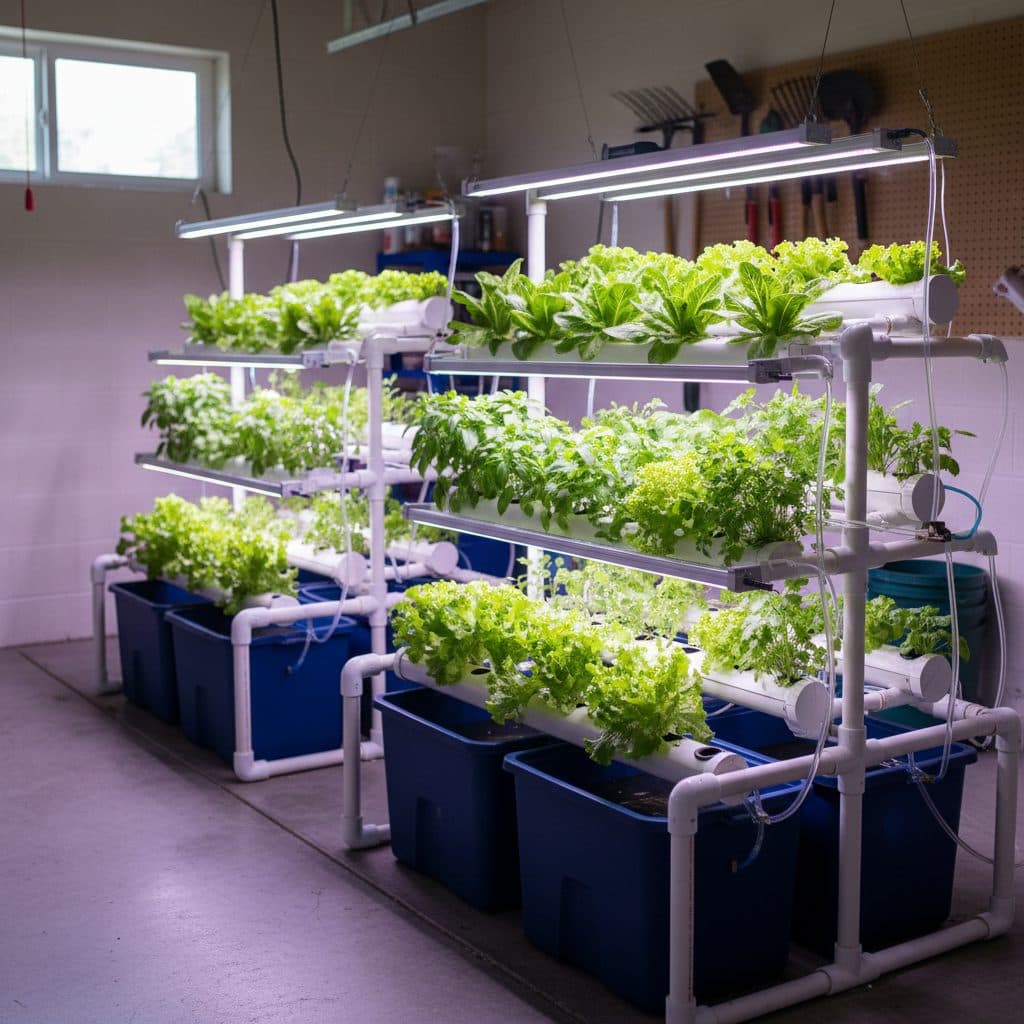
Key takeaways
- Hydroponic systems require precise nutrient delivery, unlike soil which acts as a buffer.
- Macronutrients (N, P, K), along with carbon, hydrogen, and oxygen, are needed in large quantities and make up the vast majority of a plant's dry weight.
- Micronutrients (Fe, Mn, Zn, B, Cu, Mo, Cl) are vital in smaller doses for specific metabolic functions.
- Calcium and Magnesium (Cal-Mag) are secondary macronutrients often supplemented to prevent common deficiencies.
- Monitoring pH (5.5-6.5) and Electrical Conductivity (EC) maintains nutrient availability and uptake.
- Adjusting nutrient formulations based on plant growth stage and species can increase yields.
Quick answer: Hydroponic nutrients boost yields by delivering a precisely controlled, readily available solution of essential macro and micronutrients directly to plant roots. This optimizes growth conditions, leading to higher plant density and faster development.
Down here in the Central Valley of California, where we’ve got a growing season that can stretch to 300 days or more, folks are always looking for ways to get more out of less. Hydroponics has been a big part of that, allowing us to produce significantly higher yields per square foot compared to traditional field farming. The success of any hydroponic system (whether in a home grow tent in Ohio or a commercial facility in Arizona) hinges on getting nutrient concentrations right.
Unlike soil, which acts as a natural buffer and reservoir for minerals, hydroponic systems deliver nutrients directly to plant roots in a water solution. This direct approach means you have complete control, but it also demands precision. A slight imbalance can quickly lead to problems, reducing your harvest. Understanding the roles of macro and micronutrients, and knowing when to add specialized supplements like Cal-Mag, is fundamental to cultivating healthy, productive plants without soil.
The basics of hydroponic nutrition
In traditional agriculture, plants draw nutrients from the soil, a complex medium that releases minerals over time. But in a hydroponic setup, your plants rely entirely on the nutrient solution you provide. This solution is a carefully balanced cocktail of essential elements dissolved in water, delivered directly to the root zone. Getting this right can mean the difference between a sparse harvest of 2 pounds of tomatoes per plant and a full harvest in controlled greenhouse environments.
why hydroponics demands precision
The primary reason for this precision is the lack of a soil buffer. Soil contains organic matter and clay particles that can hold onto nutrients, releasing them slowly and buffering against pH fluctuations. Without soil, any nutrient imbalance or pH swing in your reservoir can immediately impact plant health. For example, a pH outside the optimal range of 5.5 to 6.5 can cause nutrient lockout, where elements are present but unavailable to the plant. Research from 2023 demonstrates the role of precise nutrient delivery in nitrate uptake for hydroponic systems [1]. Maintaining a stable pH within a 0.5 point range is often the first step to success. Many commercial growers in places like California’s Salinas Valley monitor their nutrient solutions daily, sometimes even hourly, to ensure optimal conditions for lettuce production, targeting a consistent yield.
This level of control also allows for significantly higher plant density, with some vertical farms growing significantly more plants in the same footprint compared to field farming. The ability to fine-tune nutrient delivery means you can push plants to their genetic potential, often seeing an increased growth rate. This efficiency extends to water use, where recirculating hydroponic systems can use significantly less water than traditional agriculture, a critical advantage in drought-prone regions like the American Southwest, where water conservation is paramount. This also means less waste and a more predictable harvest cycle, allowing for year-round production in controlled environments.
- Complete control: You dictate exactly what nutrients your plants receive.
- Faster growth: Nutrients are immediately available, promoting quicker development.
- Water efficiency: Recirculating systems can use 90% less water than field farming.
- Disease reduction: Soilless environments reduce soil-borne pathogen risks.
- Higher yields: Optimized nutrient delivery can increase yields compared to soil.
Macronutrients: the big three and more
Macronutrients are the heavy hitters, the elements plants need in relatively large quantities for fundamental growth processes. These include Nitrogen (N), Phosphorus (P), and Potassium (K), commonly referred to as NPK. A plant’s dry weight is composed of about 90% macronutrients, primarily carbon, hydrogen, and oxygen, but nitrogen, phosphorus, and potassium are critical for structural and metabolic functions. For instance, a tomato plant in a hydroponic system might consume a notable amount of nitrogen per week during its vegetative growth phase.
nitrogen, phosphorus, and potassium
Nitrogen is essential for leafy growth and chlorophyll production, giving plants their rich green color. A deficiency can lead to yellowing leaves and stunted growth, reducing potential yields. Phosphorus plays a vital role in energy transfer, root development, and flowering. Without enough phosphorus, flowering can be delayed by several weeks, and fruit set can be poor. Potassium is crucial for water regulation, disease resistance, and overall plant vigor, impacting everything from fruit size to flavor. Research from 2018 emphasizes potassium’s role and its interactions with other nutrients in hydroponic cultures [3]. Beyond NPK, plants also require secondary macronutrients like Calcium (Ca), Magnesium (Mg), and Sulfur (S). These are needed in smaller amounts than NPK but still in larger quantities than micronutrients. For example, many leafy greens grown in hydroponics require specific Calcium and sulfur concentrations for optimal growth and to prevent tip burn.
Understanding these macro-nutrient demands is key to formulating an effective feeding schedule. For a typical vegetative growth phase in a hydroponic lettuce operation in the Pacific Northwest, a nutrient solution might target 150-200 ppm Nitrogen, 40-60 ppm Phosphorus, and 200-250 ppm Potassium. As plants mature, these ratios shift, often reducing nitrogen and increasing phosphorus and potassium to support flowering and fruiting. Consistent monitoring of your nutrient solution’s EC helps ensure these levels are maintained, preventing deficiencies or excesses that could reduce harvest quality by 10%.
- Nitrogen (N): Promotes vigorous vegetative growth and green foliage.
- Phosphorus (P): Supports root development, flowering, and fruit production.
- Potassium (K): Aids in water regulation, disease resistance, and overall plant strength.
- Calcium (Ca): Required for cell wall structure and preventing blossom end rot.
- Magnesium (Mg): Central component of chlorophyll, essential for photosynthesis.
Micronutrients: small doses and trace elements
While macronutrients are needed in bulk, micronutrients are just as important, even though plants require them in much smaller quantities (often measured in parts per million, or ppm). Think of them as the trace elements that enable all the major biological processes to function smoothly. A deficiency in even one micronutrient can severely stunt growth or prevent flowering, potentially reducing harvest in sensitive crops like strawberries grown hydroponically.
essential trace elements
Iron (Fe) is vital for chlorophyll formation and respiration; without it, leaves turn yellow between the veins, a condition known as chlorosis. Manganese (Mn) is involved in photosynthesis and enzyme activation. Zinc (Zn) is crucial for enzyme activity and hormone production, affecting stem elongation. Boron (B) plays a role in cell wall formation and nutrient transport, particularly calcium. Copper (Cu) is necessary for enzyme activity and lignin formation, while Molybdenum (Mo) is essential for nitrogen metabolism. Chlorine (Cl) assists in osmosis and ionic balance. Many commercial hydroponic nutrient solutions formulated for crops like leafy greens in Arizona include these micronutrients at concentrations typically below 10 ppm for most elements. For example, a standard solution might contain specific concentrations of Iron, Manganese, and Molybdenum. These precise ratios are often monitored by automated systems to ensure consistent delivery, as described in research from 2015 [2].
Even though these elements are needed in small amounts, their absence can have cascading effects on plant health and productivity. For instance, a lack of boron can lead to hollow stems and poor fruit development, reducing marketable yield in crops like cucumbers. Similarly, copper deficiency can result in wilting and stunted growth, especially in new shoots. Ensuring a complete and balanced micronutrient profile in your hydroponic solution is a straightforward way to prevent these issues and maintain steady plant health, supporting consistent harvests throughout the growing cycle, which for many indoor operations in USDA zone 6 can be year-round.
- Iron (Fe): Essential for chlorophyll synthesis and electron transport.
- Manganese (Mn): Involved in photosynthesis and enzyme systems.
- Zinc (Zn): Essential for enzyme function and growth hormone synthesis.
- Boron (B): Supports cell division, flowering, and fruit development.
- Copper (Cu): Aids in respiration and carbohydrate metabolism.
The role of Cal-Mag and nutrient ratios
Calcium and Magnesium are often grouped together as “Cal-Mag” supplements because they are secondary macronutrients frequently needed in addition to standard NPK formulations. While many base nutrients contain some Ca and Mg, certain plants, especially fast-growing fruiting varieties like tomatoes or peppers, can quickly deplete these elements. A common issue like blossom end rot in tomatoes, which can reduce a harvest, is often a direct result of calcium deficiency. In regions with soft water, like parts of the Pacific Northwest, supplemental Cal-Mag is almost always necessary because the tap water provides very little of these minerals, often with low total hardness.
balancing your nutrient solution
The ideal nutrient ratio isn’t static; it changes based on the plant species, growth stage, and even environmental conditions. For instance, a young lettuce plant in its vegetative stage might thrive on an NPK ratio of 3:1:2, while a fruiting tomato plant in Texas might need a 1:2:3 ratio during its reproductive phase to support fruit development. Many nutrient lines offer “grow” and “bloom” formulas to address these shifting needs. Monitoring your nutrient solution’s Electrical Conductivity (EC) gauges overall nutrient concentration. An EC meter measures the dissolved salts in your water, giving you a reading in millisiemens per centimeter (mS/cm) or parts per million (ppm). Most leafy greens prefer an EC between 1.2 and 1.8 mS/cm, while fruiting plants might need 2.0 to 2.5 mS/cm. An embedded system for controlling hydroponic nutrients can automate much of this monitoring and adjustment, as demonstrated by systems developed in 2015 [2]. For more on optimizing your setup, consider exploring options for turning a fish tank into an aquaponics garden, where fish waste provides a natural nutrient source.
Ultimately, successful hydroponic growing comes down to consistent observation and adjustment. Your plants will tell you what they need through their growth patterns and leaf appearance. Keeping detailed records of your nutrient solution’s pH, EC, and the specific formulas you use can help you replicate success and troubleshoot problems. With careful management, you can achieve impressive yields, perhaps significantly higher than traditional methods, and enjoy fresh produce year-round. When you have surplus produce, preserving it helps extend your supply; see our home canning guide for methods to store the harvest.
- Calcium (Ca): Prevents blossom end rot and strengthens cell walls.
- Magnesium (Mg): Essential for photosynthesis and enzyme activation.
- Ratio adjustment: Tailor NPK ratios to vegetative or flowering stages.
- EC monitoring: Ensures correct overall nutrient concentration for plant needs.
- Water quality: Soft water areas often require higher Cal-Mag supplementation.
Hydroponic Nutrient Comparison: Soil vs. Soilless
Feature | Soil Growing | Hydroponic Growing |
|---|---|---|
Nutrient Source | Organic matter, minerals, fertilizers | Water-soluble salts |
Nutrient Delivery | Slow release, microbial activity | Direct to roots via solution |
pH Buffer | Soil acts as a natural buffer | No buffer, requires precise monitoring |
Water Usage | Higher, significant runoff/evaporation | Up to 90% less in recirculating systems |
Growth Speed | Moderate, dependent on soil health | Faster, up to 25% quicker vegetative growth |
Yield Potential | Good, but limited by soil quality | Higher, can increase by 20-30% |
Disease Risk | Higher risk of soil-borne pathogens | Lower risk of soil-borne diseases |
pH Range: Maintaining your nutrient solution’s pH between 5.5 and 6.5 ensures optimal nutrient availability, preventing potential nutrient lockout issues.
EC Target: For most hydroponic leafy greens, an Electrical Conductivity (EC) between 1.2 and 1.8 mS/cm promotes vigorous growth and can increase harvest weight.
Water Savings: Recirculating hydroponic systems can significantly reduce water consumption compared to traditional field farming, saving water for commercial operations in arid regions like Arizona.
Frequently asked questions
How often should I change my hydroponic nutrient solution?
Most growers replace their nutrient reservoir every 7 to 14 days to prevent nutrient imbalances and pathogen buildup. Even with daily top-offs, the solution’s composition changes, so a full refresh every two weeks helps maintain optimal conditions for plant growth, potentially boosting yields.
What is the ideal pH for most hydroponic plants?
The sweet spot for most hydroponic plants is a pH range of 5.5 to 6.5. This slightly acidic range ensures that all essential macro and micronutrients are readily available for plant uptake, preventing deficiencies that could reduce growth.
Can I use tap water for hydroponics?
Yes, you can use tap water, but test its Electrical Conductivity (EC) and pH first. Tap water in some regions, like parts of the Midwest, can be very hard, containing high levels of calcium and magnesium, which might require adjusting your nutrient formula. Chlorine should also be off-gassed by letting the water sit for 24 hours.
What happens if my EC is too high or too low?
If your EC is too high, plants can suffer from nutrient burn, leading to brown leaf tips and stunted growth, potentially cutting yields. If it’s too low, plants will be underfed, showing signs of deficiency and slow growth, reducing harvest.
Are organic nutrients suitable for hydroponics?
Using organic nutrients in hydroponics can be challenging because they often require microbial breakdown, which is difficult to manage in soilless systems without clogging pumps or encouraging unwanted bacteria. While some specialized organic hydroponic lines exist, most successful systems rely on synthetic, mineral-based nutrients for consistent delivery and control, offering predictable results with high nutrient uptake efficiency.
How do nutrient requirements change from vegetative to flowering stages?
During the vegetative stage, plants need higher nitrogen to support leafy growth, often with an NPK ratio like 3:1:2. As they transition to flowering and fruiting, the demand shifts to higher phosphorus and potassium, with ratios like 1:2:3, to support flower development and fruit production, which can increase fruit weight.
References
- Light, roots, and nutrients : Understanding nitrate uptake regulation in hydroponic systems (2023). Light, roots, and nutrients : Understanding nitrate uptake regulation in hydroponic systems.
- An Embedded System for Control of Hydroponic Nutrients (2015). An Embedded System for Control of Hydroponic Nutrients.
- Potassium Nutrition in Plants and Its Interactions with Other Nutrients in Hydroponic Culture (2018). Potassium Nutrition in Plants and Its Interactions with Other Nutrients in Hydroponic Culture.
- Nutrients for Hydroponic Systems in Fruit Crops (2020). Nutrients for Hydroponic Systems in Fruit Crops.
- Mother Earth: source of nutrients.
- USDA Natural Resources Conservation Service (2024). USDA Natural Resources Conservation Service.