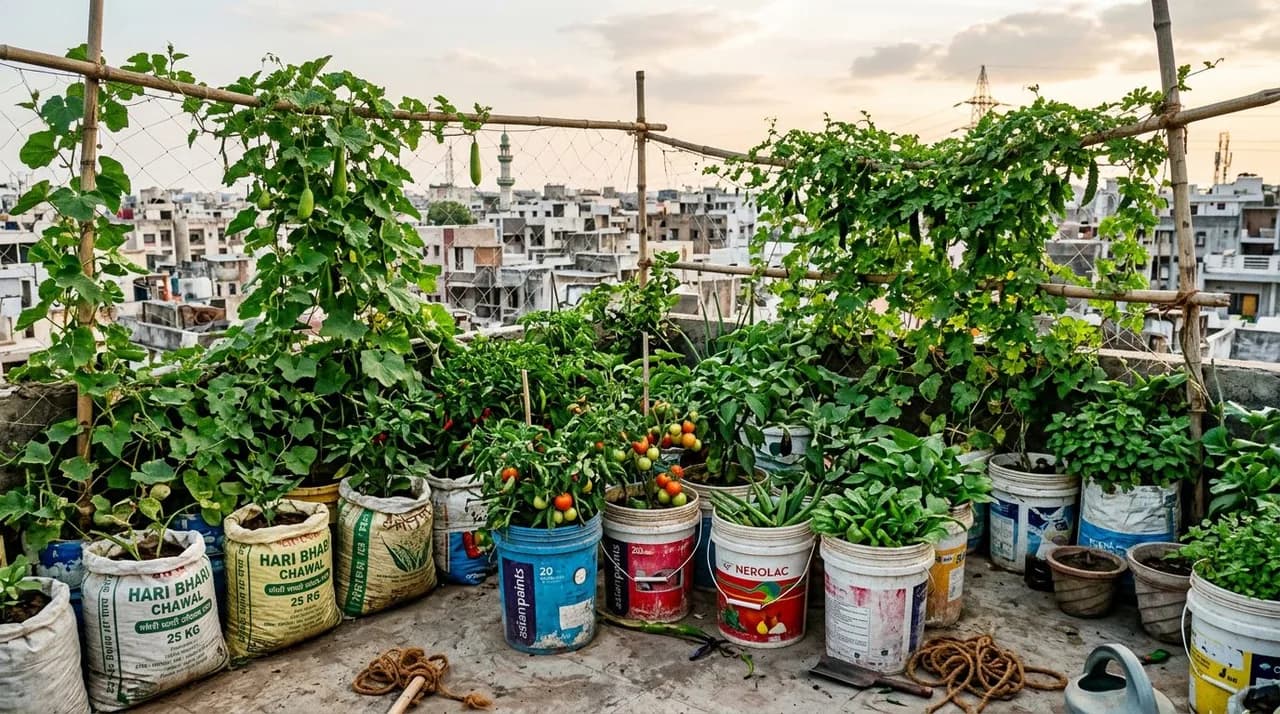
Key takeaways
- Upcycle discarded 20-litre paint buckets, oil tins, and woven plastic rice sacks as free, durable container planters.
- Rehydrate compressed coco peat blocks and mix with homemade compost, which is far cheaper per pot than buying bagged potting soil.
- Build a free DIY kitchen waste composting system using an aerated terracotta pot (matka) or drilled plastic bucket.
- Construct sturdy climbing trellises using affordable native bamboo poles (baans) tied with jute twine.
- Propagate everyday kitchen spices directly: coriander (dhaniya), fenugreek (methi), mustard (sarson), garlic, and fresh market mint cuttings.
Quick answer: To start a low-budget terrace garden in India, use upcycled 20-litre paint buckets, woven grain sacks, and vegetable crates instead of expensive pots. Make your own potting mix with bulk coco peat and kitchen waste compost, build bamboo trellises, and sprout seeds directly from kitchen spices.
Creating a lush, food-producing rooftop garden in an Indian city does not require investing large sums of money in commercial decorative planters, imported potting soils, and designer irrigation kits. In fact, some of the most productive terrace garden setups across India are built using simple, resourceful, and upcycled materials.
By embracing the traditional Indian ethos of jugaad (innovative, low-cost problem-solving) and working with natural biological cycles, home gardeners can create an abundant vegetable garden on a modest budget.
From repurposing household paint buckets to building an odorless earthen compost pot and propagating pantry spices, frugal gardening techniques allow anyone with an open roof to grow fresh vegetables affordably.
Upcycled containers: paint buckets, grain sacks, and fruit crates
Commercial pots and designer ceramic planters are one of the largest upfront expenses in rooftop gardening. Repurposing clean discarded household and commercial containers provides free, durable alternatives:
+-----------------------------------------------------------------------+
|                   LOW-COST UPCYCLED CONTAINER OPTIONS                 |
+-------------------+-------------------+-------------------------------+
| CONTAINER TYPE    | COST / SOURCE     | BEST CROPS TO GROW            |
+-------------------+-------------------+-------------------------------+
| 20L Paint Buckets | Free to nominal   | Tomatoes, Brinjal, Chillies   |
| Woven Rice Sacks  | Free from kitchen | Potatoes, Ginger, Turmeric    |
| Mandi Veg Crates  | Free or cheap — ask at the sabzi mandi | Palak, Methi, Coriander |
| 2L Water Bottles  | Free recycling    | Mint, Herbs, Vertical Salads  |
+-------------------+-------------------+-------------------------------+
1. Repurposed 20-litre paint and oil buckets
Paint and oil buckets are thick enough to hold a plant well, but they are not UV-stabilised. Expect the plastic to go brittle and crack after a few seasons in full sun, and plan to replace them. Only reuse buckets that held water-based emulsion paint or food-grade oil; never grow food in containers that held solvents, thinners, pesticides or other chemicals.
- Preparation: Wash the bucket thoroughly with soap and warm water to remove paint or oil residues.
- Drainage: Use a drill or heat a metal screwdriver to melt 5 to 6 drainage holes (1 cm diameter) in the base and lower side walls.
- Ideal Crops: Deep-rooted fruiting plants like tomatoes, brinjals, capsicums, and dwarf citrus trees thrive in a 20-litre bucket.
2. Woven plastic grain and rice sacks (bori)
Heavy-duty woven polypropylene grain, flour (atta), and rice sacks make outstanding, breathable grow containers:
- Preparation: Roll down the top edges of the sack until it forms a sturdy cylinder 25 to 30 cm deep.
- Benefits: The woven plastic weave allows natural air circulation around the root zone, naturally air-pruning roots and preventing root circling.
- Ideal Crops: Root vegetables (carrots, radishes, sweet potatoes), ginger, and climbing gourds.
3. Discarded vegetable crates (mandi crates)
Plastic and wooden fruit and vegetable crates obtained from your local wholesale market (sabzi mandi) provide generous shallow growing space:
- Preparation: Line the inside of the perforated crate with old jute burlap sacks, shade cloth scraps, or porous rice bags to keep the potting soil inside while allowing excess water to drain freely.
- Ideal Crops: Perfect for dense sowings of leafy greens like palak, methi, and red amaranth.
Budget soil building: coco peat and DIY matka composting
Store-bought bagged potting soils are expensive and often contain heavy, unamended clay. You can blend an ultra-lightweight, high-fertility mix for a fraction of the cost:
[ Compressed 5kg Coco Peat Block ] + [ DIY Matka Compost ] + [ Coarse River Sand ]
--> Expands to 60-70 Litres        --> Zero-cost nutrients   --> Free/cheap drainage
1. Bulk coco peat hydration
Purchase compressed 5 kg coco peat blocks from local agricultural suppliers instead of small retail bags. A single 5 kg block rehydrates into roughly 60 to 70 litres of fluffy growing medium when soaked in water.
2. The zero-cost terracotta pot (matka) compost system
Turn everyday kitchen scraps into premium organic fertilizer without bad odors:
- Obtain an unglazed earthenware clay pot (matka or gamla) with a lid.
- Drill 4 to 6 small ventilation holes near the top rim for air exchange.
- Place a 5 cm layer of dry brown leaves or shredded unprinted cardboard at the bottom.
- Add daily kitchen vegetable and fruit peelings, covering every layer of wet scraps with an equal layer of dry leaves or coco peat powder.
- In warm weather, beneficial microbes decompose the organic matter within 30 to 45 days, producing dark, sweet-smelling compost for your containers.
Learn more about home composting techniques in our guide to vermicomposting at home.
Free mulching with dry street leaves and coconut husks
Mulching is essential on sunny rooftops to prevent rapid soil evaporation and keep root zones cool:
+-----------------------------------------------------------------------+
|                       FREE LOCAL MULCH MATERIALS                      |
+-------------------+---------------------------------------------------+
| Dry Fallen Leaves | Sweep under street trees (neem, peepal, mango)    |
| Coconut Husks     | Tear fibrous husks from tender green coconuts     |
| Cardboard Scraps  | Layer unprinted brown shipping boxes              |
+-------------------+---------------------------------------------------+- Fallen Tree Leaves: Collect dry, fallen leaves from neighborhood trees in autumn and spring. Crush them lightly by hand and spread a 5 cm layer across the surface of every pot. Leaf mulch conserves moisture, keeps the soil surface cool, and gradually breaks down into rich leaf mold.
- Tender Coconut Fibres: After drinking green tender coconut (nariyal pani), ask the vendor for the fibrous outer husk. Tear the fibrous coir into strips to line pots or use as a durable, long-lasting surface mulch.
Low-cost bamboo trellises and plant elevation
Providing vertical support and protecting your building slab can be done affordably:
[ 3 Bamboo Poles (*Baans*) ] + [ Jute Twine / Coir Rope ] ----> Sturdy Teepee Trellis
[ 2 Red Bricks per Pot ]     + [ Open Drain Air Gap ]     ----> Protects Roof Slab
1. Bamboo (baans) teepees and A-frames
Skip expensive metal plant cages. Purchase slender, native bamboo poles (baans) from local building supply yards:
- Push three or four 2-metre bamboo poles into the corners of a grow bag or container.
- Tie the poles together at the top using biodegradable jute twine (sutli) or coir rope to form a sturdy tripod or teepee.
- Train climbing bottle gourds (lauki), ridge gourds (torai), and runner beans up the bamboo framework.
2. Sourcing scrap bricks for elevation
Always elevate every container 5 to 7 cm off the concrete roof slab. Collect leftover red construction bricks from local renovation sites. Placing two bricks beneath each pot creates an open air gap that prevents standing water from pooling beneath containers, keeping your roof waterproof and dry.
For complete rooftop layout and structural load rules, see our foundation tutorial on terrace garden setup.
Propagating seeds and herbs directly from your kitchen
You do not need to purchase expensive hybrid seed packets to start a productive kitchen garden. Your spice rack and vegetable crisper contain viable planting stock:
+-----------------------------------------------------------------------+
|                   FREE KITCHEN SPICE SEED STARTS                      |
+-------------------+-------------------+-------------------------------+
| SPICE / SCRAP     | PREPARATION       | RESULTING HARVEST             |
+-------------------+-------------------+-------------------------------+
| Fenugreek (Methi) | Direct sow whole  | Fresh tender methi leaves     |
| Coriander (Dhaniya)| Split & soak seed | Fresh aromatic coriander      |
| Mustard (Sarson)  | Direct sow whole  | Tangy sarson greens / saag    |
| Garlic Cloves     | Plant point up    | Fresh green garlic leaves and shoots |
| Mint Stems (Pudina)| Root in water    | Perennial fresh mint pots     |
+-------------------+-------------------+-------------------------------+- Methi (Fenugreek): Scatter whole culinary methi seeds across a shallow crate of moist mix. Seeds germinate in 48 hours and produce tender leafy greens in 20 to 25 days.
- Pudina (Mint) Cuttings: Take fresh, thick stems of mint (pudina) bought from the local vegetable vendor. Strip the lower leaves and place the stems in a glass of clean water for 5 to 7 days until white roots sprout from the nodes, then transplant into a dedicated wide pot.
- Desi Seed Saving: Extract seeds from ripe, healthy kitchen vegetables like deshi tomatoes, green chillies, and pumpkins. Wash and dry seeds on paper towels before planting.
- Expanding Seasonally: Explore seasonal crop selections in our guides on kitchen garden plants and vegetables to grow in monsoon.