Key takeaways
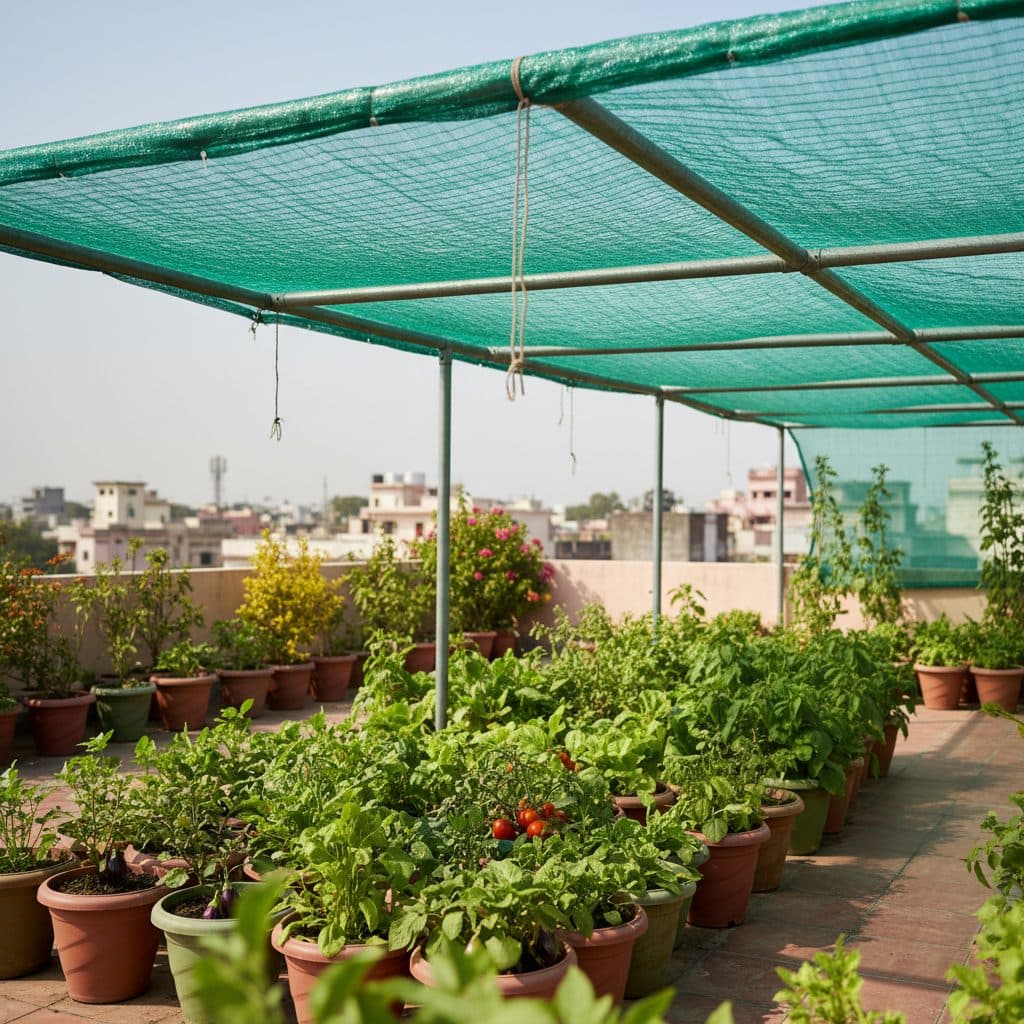
- Install a 50 percent green shade net for rooftop vegetables to filter intense solar radiation while providing adequate light for photosynthesis.
- Use a 75 percent shade net for delicate leafy greens like coriander and spinach during peak summer months across the northern and central plains.
- Anchor frame uprights securely using heavy concrete footings or wall clamps rather than drilling directly into rooftop waterproofing membranes.
- Maintain a minimum clearance of 2 to 2.5 metres between the rooftop floor and the net to facilitate ventilation and prevent heat entrapment.
- Install quick-release bungee cords or zip ties along the perimeter so the net can be rolled back during monsoon windstorms.
Quick answer: A 50 percent green shade net is the standard choice for an Indian terrace garden growing fruiting vegetables such as tomatoes, brinjals, and chillies during hot summer months. For tender leafy greens like coriander and mint, or ornamental foliage plants, a 75 percent shade cloth provides necessary thermal relief. Frame structures should be built from galvanised iron pipes or mild steel rods, elevated at least 2 metres above the floor to maintain airflow, and designed with retractable fixings to withstand monsoon gales.
Rooftop gardening across Indian cities presents severe thermal challenges during zaid (summer) months from March to June. Concrete terrace slabs absorb solar heat and radiate temperatures exceeding 45°C directly into grow bags and container root zones.
Installing a properly sized shade net for terrace garden setups buffers this extreme heat, reduces daily water evaporation, and prevents flower drop in fruiting crops. High midday UV indexes scorch tender leaves and stall plant metabolic processes unless diffused through high-density polyethylene netting.
Understanding shade cloth percentages, frame engineering, orientation, and seasonal maintenance enables terrace growers to maintain productive kitchen gardens through peak summer and monsoon transitions.
Selecting the right shade net percentage for Indian rooftops
Shade nets are classified by the percentage of sunlight they block. Selecting the correct density ensures plants receive sufficient photosynthetically active radiation without suffering thermal stress.
+----------------+----------------+-------------------------------------------------+
| Net Density    | Primary Colour | Recommended Crops & Plants                      |
+----------------+----------------+-------------------------------------------------+
| 35% Shade      | Green / White  | Fruit trees (guava, pomegranate), cucurbits     |
| 50% Shade      | Green          | Tomatoes, brinjals, chillies, bhindi, beans     |
| 75% Shade      | Green / Dark   | Coriander, spinach, methi, mint, ferns, orchids |
| 90% Shade      | Dark Green     | Human seating areas, temporary nursery shelter  |
+----------------+----------------+-------------------------------------------------+
50 percent shade net for vegetables
A 50 percent shade net for vegetables balances light transmission with heat reduction. Fruiting solanaceous crops (tomatoes, chillies, and brinjals) require bright light to set blossoms but drop flowers when ambient temperatures surpass 38°C. A 50 percent green or white shade net lowers ambient canopy temperatures by 4°C to 7°C while allowing sufficient photosynthetically active radiation (PAR) for vigorous vegetative growth and heavy fruit set. White shade cloth offers superior infrared reflection and light diffusion compared to dark green net.
75 percent shade net for herbs and seedlings
Leafy greens such as methi (fenugreek), palak (spinach), and coriander bolt to seed prematurely under harsh summer sun. A 75 percent shade mesh diffuses intense light, keeping the microclimate cool enough to produce tender, harvestable leaves. This density is also well suited for nursery trays, germinating microgreens, and propagating cuttings before potting on.
Caution: Never install 75% or 90% shade netting over fruiting vegetables like tomatoes or gourds; the excessive light reduction causes severe etiolation (weak, spindly, leggy stems), poor flower bud initiation, and widespread blossom drop.
+-------------------------------------------------------------------+
|               TERRACE MICROCLIMATE TEMPERATURE PROFILE            |
+-------------------------------------------------------------------+
| Open Concrete Slab:        46°C to 50°C (radiant surface heat)    |
| Under 50% Shade Net:       36°C to 39°C (diffused light canopy)   |
| Container Root Zone:       Buffered 5°C cooler with mulch + net   |
+-------------------------------------------------------------------+
Shade net materials and quality specifications
The durability of rooftop netting depends on yarn construction, polymer density, and ultraviolet stabilisers. Poor quality agricultural nets degrade within six months of intense Indian summer sun.
+------------------------+---------------------------------------------------------+
| Specification Feature  | Ideal Terrace Benchmark                                 |
+------------------------+---------------------------------------------------------+
| Polymer Material       | 100% Virgin High-Density Polyethylene (HDPE)            |
| Weave Construction     | Knitted lock-stitch (does not fray when cut)            |
| Fabric Weight          | 120 to 160 GSM (grams per square metre)                  |
| UV Stabilisation       | Minimum 3% UV stabiliser masterbatch treated            |
| Expected Lifespan      | 3 to 5 years under continuous outdoor exposure          |
+------------------------+---------------------------------------------------------+
Woven nets tend to unravel if punctured, whereas knitted lock-stitch nets hold their structure even if pierced by windblown debris. When purchasing netting, assess the shade net price against the fabric weight and UV warranty to ensure multiple seasons of reliable use.
Designing and anchoring the frame structure
Rooftop winds during summer squalls and monsoon depressions exert significant aerodynamic lift on horizontal shade nets. Building a rigid frame without compromising rooftop waterproofing is critical.
+-------------------------------------------------------------------+
|                 ROOFTOP FRAME ELEVATION PROFILE                   |
|                                                                   |
|         =====[ 50% Knitted Shade Net with Slope ]=====            |
|        /                                              \           |
|       /                                                \          |
|   |=======| 2.4 m High                         2.1 m High |=======|
|   |  GI   |                                               |  GI   |
|   | Pipe  |   [Grow Bags / Plants on Drainage Tiles]      | Pipe  |
|   +-------+                                               +-------+
|  [Concrete Footing Block]                   [Concrete Footing Block]
|  ==================== Concrete Roof Slab ======================== |
+-------------------------------------------------------------------+
Frame materials
- Galvanised Iron (GI) Pipes: 25 mm to 32 mm class B pipes offer excellent structural rigidity and rust resistance.
- Mild Steel (MS) Square Tubes: Cost-effective but require a coat of red oxide primer and anti-corrosive enamel paint every two seasons.
- PVC or CPVC Conduits: Suitable only for small, low-height DIY shade tunnels over single raised beds; they bow and crack under high terrace wind loads.
Waterproofing safety and anchoring
Never drill anchor fasteners directly into the structural terrace slab, as puncturing waterproofing layers causes moisture seepage into living spaces below. Instead, secure vertical posts using:
- Concrete Ballast Blocks: Cast concrete blocks (30 cm x 30 cm x 30 cm) around pipe bases to serve as moveable, heavy counterweights.
- Parapet Wall Clamps: Fasten vertical uprights to masonry parapet walls using heavy-duty GI saddle clamps and stainless steel anchor bolts.
- Cross-Braced Framework: Tie opposing corner posts together with overhead diagonal bracing to distribute lateral wind force evenly across the entire structure.
Coordinate structural spacing with diy shade structures raised beds and integrate cooling methods from desert sun management shade cloth.
Installation and tensioning best practices
Proper installation prevents sagging, water pooling, and wind tear during harsh seasonal storms.
+-------------------------------------------------------------------+
|                 SHADE NET INSTALLATION CHECKLIST                  |
+-------------------------------------------------------------------+
|  1. Create a 10-15 degree slope to shed rainwater and dust        |
| 2. Hem edges with heavy webbing tape and brass/aluminium eyelets  |
| 3. Fasten to perimeter wire with UV-rated nylon cable ties or cord|
| 4. Keep 45 cm clearance between net and tallest plant leaves      |
| 5. Establish a 2-point quick release for rapid monsoon retraction |
+-------------------------------------------------------------------+
Preventing heat traps
A shade net mounted too low traps rising hot air around container plants. Maintain at least 2 to 2.4 metres of vertical clearance from the floor to the net canopy. Leave open side curtains around the perimeter to encourage continuous cross-ventilation.
Managing rainwater runoff and wind loads
Always install the net with a minimum 10-degree incline. Flat horizontal nets sag under heavy monsoon rain, collecting hundreds of litres of stagnant water that buckle metal supports.
When positioning containers beneath the shade canopy, pair your setup with balcony container vegetable garden guide and automated watering from drip irrigation system design to maintain stable root hydration.
Seasonal maintenance and storage
Terrace conditions shift dramatically between summer heat, monsoon humidity, and mild rabi winters. Adjusting your shade net configuration throughout the year maximizes plant health.
+----------------+--------------------+---------------------------------------------+
| Season         | Net Position       | Garden Management Action                    |
+----------------+--------------------+---------------------------------------------+
| Zaid (Mar-Jun) | Fully Deployed     | Daily morning irrigation; inspect ties      |
| Kharif (Jul-Sep)| Retracted / Tilted | Roll back during gales; prevent fungal rot  |
| Rabi (Oct-Feb) | Removed / Stored   | Allow full winter sun for fruiting & greens |
+----------------+--------------------+---------------------------------------------+
During the rabi winter season (October to February), sunlight intensity drops significantly. Remove or roll back the shade net completely to provide vegetables with direct, full sunlight. Wash the netting with fresh water to remove accumulated dust, dry thoroughly, and store in a vermin-proof container until the following spring.
For additional structural configurations and shade cloth percentage calculations, reference our detailed tutorial on shade cloth vegetables percentage install.