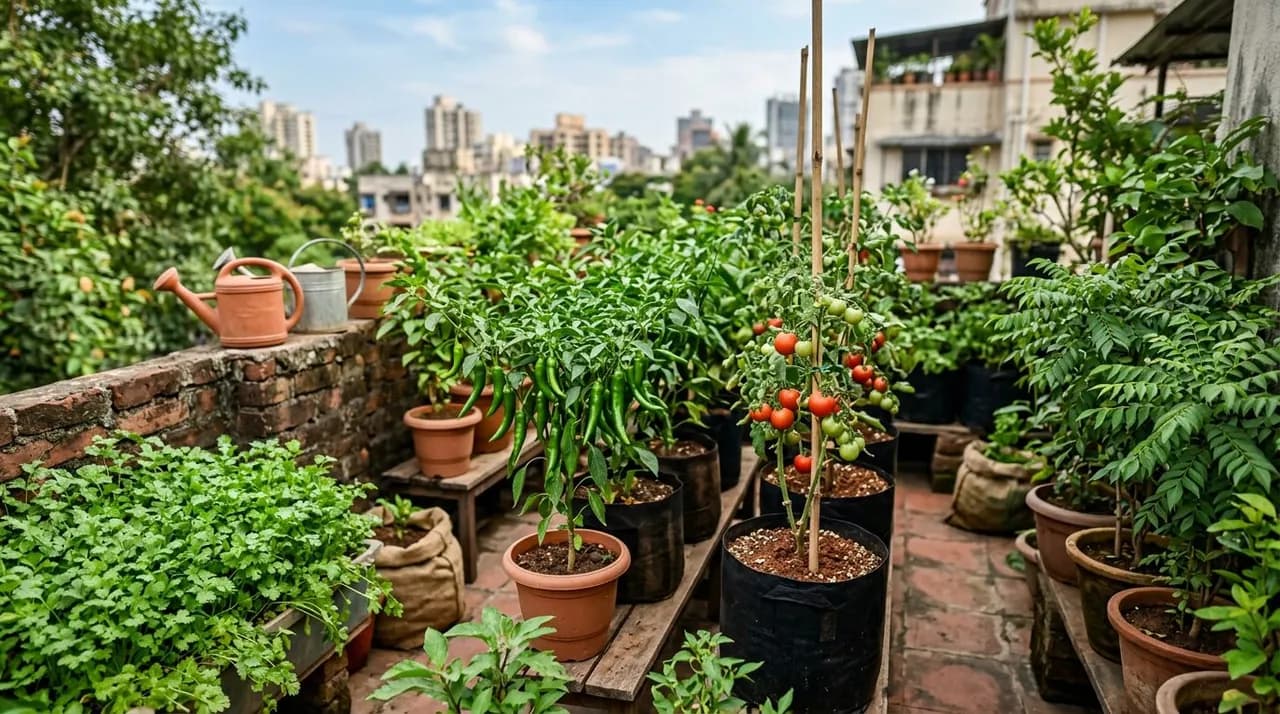
Key takeaways
- Start with high-yielding, resilient crops: green chillies (hari mirch), tomatoes, brinjal, bhindi, and fast-growing leafy greens like palak and methi.
- Grow essential Indian culinary herbs in dedicated pots: kadi patta (curry leaf), pudina (mint), and seasonal dhaniya (coriander).
- Use a lightweight, porous potting mix: 50% washed coco peat, 30% aged vermicompost or well-rotted cow manure, and 20% coarse river sand or perlite.
- Match container depth to root architecture: 25 to 30 cm deep grow bags for fruiting crops; shallow 15 to 20 cm wide trays for leafy greens.
- Provide at least 5 to 6 hours of direct sunlight, and protect container root zones from extreme summer concrete terrace heat.
Quick answer: The best kitchen garden plants for Indian homes include green chillies, tomatoes, brinjal, bhindi, palak, methi, and perennial herbs like curry leaf (kadi patta) and mint (pudina). Grow in lightweight coco peat and vermicompost mixes in 25 to 30 cm pots on sunny balconies or terrace spaces.
Establishing a home kitchen garden in India allows city dwellers and suburban families to harvest fresh, flavourful, and chemical-free produce directly outside their door. Whether cultivating in plastic grow bags on an urban terrace, arranging terracotta pots along a sunny apartment balcony, or planting open backyard ground, growing your own culinary staples is both practical and deeply rewarding.
In Indian culinary traditions, daily cooking relies on a regular supply of fresh aromatic herbs, piquant chillies, tender leafy greens, and versatile fruiting vegetables. However, container growing under Indian climate realities (intense summer heatwaves, torrential monsoon rains, and shifting seasonal daylight) requires choosing varieties proven to thrive in restricted soil volumes.
Selecting productive plant varieties, preparing an aerated growing medium, and following seasonal cycles produces fresh ingredients for daily meals throughout the year.
Top high-yielding vegetables for Indian kitchen gardens
Selecting dependable, heat-tolerant vegetable varieties ensures continuous harvests throughout their respective cropping cycles:
+-----------------------------------------------------------------------+
|                 ESSENTIAL INDIAN KITCHEN GARDEN CROPS                 |
+-------------------+-------------------+-------------------------------+
| VEGETABLE (DESI)  | CONTAINER DEPTH   | CROPPING WINDOW & HABIT       |
+-------------------+-------------------+-------------------------------+
| Green Chilli      | 25 to 30 cm bag   | Year-round in frost-free zones|
| Tomato (*Tamatar*)| 30 to 35 cm bag   | Rabi winter & mild summer     |
| Brinjal (Baingan) | 30 cm bag         | Heavy producer, warm months   |
| Bhindi (Okra)     | 25 to 30 cm bag   | Summer & monsoon (Zaid/Kharif)|
| Palak & Methi     | 15 to 20 cm tray  | Fast 30-day harvest, cool rabi|
+-------------------+-------------------+-------------------------------+
1. Green chillies (Hari Mirch - Capsicum annuum)
A single healthy, mature green chilli plant in a 25 to 30 cm pot provides a steady supply of fresh, pungent chillies for everyday cooking:
- Growing Needs: Full sun (at least 6 hours daily) and freely draining potting soil.
- Harvest Tip: Harvest green chillies regularly using kitchen scissors to stimulate continuous bud and flower set.
2. Tomatoes (Tamatar - Solanum lycopersicum)
Tomatoes thrive in deep 30 to 35 cm HDPE grow bags or large pots. Desi heirloom varieties produce tangy, juicy fruit perfect for Indian curries and dals. Stake the main stem firmly with a bamboo pole (baans) and prune lower foliage to prevent fungal soil splash. For comprehensive tomato cultivation advice, see our guide on how to grow tomatoes.
3. Brinjal / aubergine (Baingan - Solanum melongena)
Brinjal is one of the most productive, trouble-free vegetables for Indian container gardens:
- Resilience: Thrives in warm, sunny weather and tolerates moderate terrace heat.
- Varieties: Choose compact round purple, long green, or variegated cluster types. A well-fed brinjal plant continues producing for 8 to 12 months.
4. Bhindi / ladies finger (Abelmoschus esculentus)
Bhindi is a heat-loving summer and monsoon staple. Direct sow two seeds per 25 cm grow bag during February to March (zaid summer) or June to July (kharif monsoon). Harvest tender green pods when they are 8 to 10 cm long and snap easily at the tip.
5. Fast leafy greens (Palak, Methi, and Chaulai)
Leafy greens provide rapid dietary value and thrive in shallow, broad containers:
- Palak (Spinach) and Methi (Fenugreek): Sow seeds across shallow 15 to 20 cm deep trays during the cool rabi months (October to February in the plains). Harvest on a cut-and-come-again basis every 10 to 14 days.
- Chaulai (Amaranth): Red and green amaranth thrive during warm summer and monsoon months, supplying mineral-rich greens when spinach struggles in the heat.
Essential culinary herbs: kadi patta, pudina, and dhaniya
Fresh aromatic herbs elevate everyday home cooking and occupy minimal space:
[ Kadi Patta (Curry Leaf) ] ----> Perennial shrub, 35 cm pot, rich mix, monthly buttermilk
[ Pudina (Mint) ]           ----> Dedicated wide shallow pan, moist mix, spreads via runners
[ Dhaniya (Coriander) ]     ----> Cool season pan, split & soaked seeds, light harvesting
1. Kadi Patta (curry leaf plant - Murraya koenigii)
No South Asian kitchen garden is complete without a potted curry leaf shrub:
- Pot Sizing: Plant in a 30 to 40 cm terracotta pot or heavy grow bag.
- Care: Provide full morning sunlight and well-draining soil. Feed monthly during warm weather with aged vermicompost and a traditional diluted buttermilk drench (1 part sour curd to 10 parts water) to encourage dark green aromatic foliage.
2. Pudina (spearmint - Mentha spicata)
Mint spreads aggressively via underground rhizomes and creeping surface stolons:
- Container Strategy: Always grow pudina in its own dedicated, wide rectangular trough (15 to 20 cm deep) to prevent its vigorous root network from invading neighboring vegetables.
- Harvesting: Snip the top 5 to 7 cm of leafy stems regularly. If flower buds form, pinch them off to keep leaves tender and fragrant.
3. Dhaniya (coriander - Coriandrum sativum)
Coriander is a cool-season annual that performs best from October through February across the plains:
- Sowing Technique: Gently crush whole coriander seeds with a rolling pin to split them into two halves (mericarps). Soak in water for 8 to 12 hours before surface sowing into a shallow tray. Keep in partial shade during warm spells to prevent early bolting.
Potting mix formulation and container selection
Using heavy field garden soil in rooftop or balcony containers creates dense, waterlogged conditions that suffocate plant roots:
+-----------------------------------------------------------------------+
|                 BALANCED CONTAINER POTTING MIX FORMULA                |
+-------------------+-------------------+-------------------------------+
| INGREDIENT        | PROPORTION        | BENEFIT                       |
+-------------------+-------------------+-------------------------------+
| Washed Coco Peat  | 50% by volume     | Moisture retention, light wt  |
| Aged Vermicompost | 30% by volume     | Plant-available nutrients     |
| Coarse Sand/Grit  | 20% by volume     | Drainage & root aeration      |
| Neem Cake Powder  | 1 handful per pot | Soil pest & nematode defense  |
+-------------------+-------------------+-------------------------------+
1. The light rooftop potting formula
A balanced, porous container blend consists of 50% washed, rehydrated coco peat, 30% aged vermicompost or well-rotted cow manure, and 20% coarse river sand or perlite. Mix in a handful of organic neem cake powder and bone meal (or rock phosphate) to support root development and deter soil pests.
2. Container materials
- UV-Treated HDPE Grow Bags (240+ GSM): Lightweight, economical, tear-resistant, and ideal for terraces because they add minimal structural dead load.
- Terracotta Pots: Breathable clay walls allow evaporative cooling of root zones during hot weather, though they require more frequent watering.
- Recycled Buckets and Crates: Repurposed 20-litre paint buckets and vegetable crates work well when drilled with generous drainage holes at the base. Explore cost-saving ideas in our guide on low budget terrace garden ideas.
Seasonal management: kharif, rabi, and zaid seasons
Gardening success in India requires aligning your planting calendar with the three primary agricultural seasons:
- Zaid Season (Summer - March to June): Characterized by high heat (often 40°C+). Grow heat-tolerant gourds, bhindi, cowpeas (lobia), and amaranth. Erect a 50% green agro-shade net to prevent blossom drop and leaf scorch. Learn more about container survival in container gardens summer survival.
- Kharif Season (Monsoon - June to September): High humidity and rainfall. Ensure all pots are elevated on bricks or pot stands so drainage holes remain unobstructed. Grow climbing gourds, brinjals, chillies, and ginger. For full monsoon advice, see our dedicated guide on vegetables to grow in monsoon.
- Rabi Season (Winter - October to March): The golden growing season for the plains. Grow tomatoes, carrots, radishes, cauliflower, cabbage, peas, methi, palak, and coriander under bright, mild winter sunshine.
Organic feeding, pest control, and daily care
Maintain productive kitchen garden plants using safe, natural amendments:
- Liquid Organic Feeds: Apply diluted vermicompost tea or fermented mustard cake liquid (sarson khali) every two weeks during active vegetative and flowering phases.
- Preventative Neem Oil Sprays: Spray cold-pressed neem oil (5 ml neem oil emulsified with 2 ml liquid dish soap per litre of water) once every 10 to 14 days in the evening. Neem oil deters aphids, mealybugs, whiteflies, and spider mites naturally.
- Structural Planning: For complete rooftop layout and weight distribution advice, read our comprehensive tutorial on terrace garden setup and our guide on balcony container vegetable gardening.