Key takeaways
- Kharif runs with the monsoon — roughly June to September nationally, but sow to your local onset: the rains reach Kerala in early June and the north-west only by late June or early July, while Tamil Nadu's main rains are the north-east monsoon from October to December.
- Top monsoon crops include climbing cucurbits (bottle gourd, ridge gourd, bitter gourd, sponge gourd), bhindi, brinjal, and cowpeas (lobia).
- Cultivate fast monsoon greens like chaulai (amaranth), poi saag (Malabar spinach), and arbi (colocasia) that thrive in high humidity.
- Ensure good drainage in grow bags and containers; raise pots on bricks to prevent drain holes from clogging and rotting root crowns.
- Prevent fungal diseases like downy mildew and damping off using Trichoderma soil drenches and regular organic neem oil sprays.
Quick answer: The best vegetables to grow in the monsoon season in India are climbing gourds (lauki, torai, karela), bhindi (okra), brinjal, cowpeas (lobia), and tropical greens like Malabar spinach (poi saag) and amaranth (chaulai). Ensure excellent container drainage and support vines on vertical trellises.
The arrival of the southwest monsoon transforms growing conditions across India, breaking the oppressive summer heat and bringing steady rains and high atmospheric humidity. For kitchen gardeners and terrace growers across India, the monsoon season (the traditional kharif cropping window) is a period of rapid vegetative growth.
Warm temperatures combined with humid air create ideal conditions for tropical climbing vegetables, resilient fruiting crops, and leafy greens. However, the rainy season also introduces distinct horticultural challenges: waterlogging in heavy soil, fungal blights such as downy mildew and damping off, soil compaction, and nutrient leaching from frequent downpours.
By selecting the right monsoon vegetable varieties, constructing sturdy vertical trellises, and managing container drainage proactively, you can maintain an abundant, healthy harvest throughout the rainy months.
Top climbing gourds and cucurbits for the rainy season
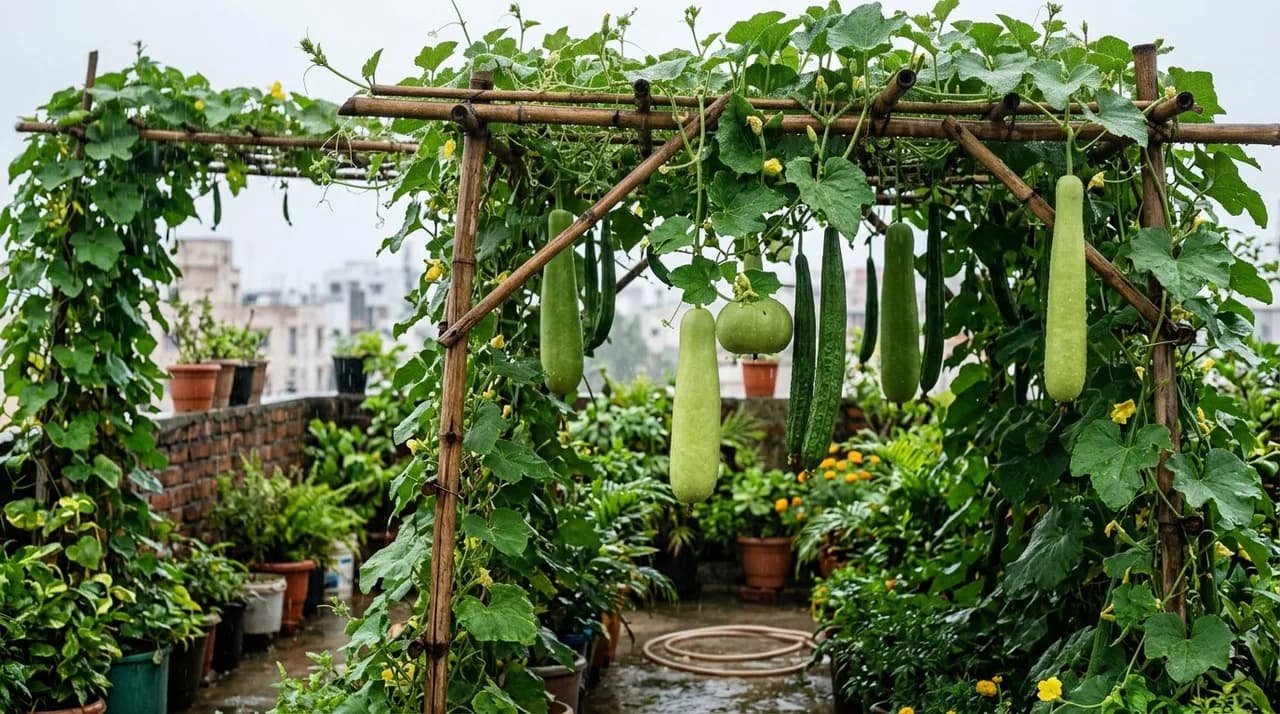
The cucurbit family (gourds and melons) is the backbone of the Indian monsoon vegetable garden. Their vigorous climbing habit keeps leaves and fruit off soggy ground:
+-----------------------------------------------------------------------+
|                    TOP MONSOON GOURDS AND CLIMBERS                    |
+-------------------+-------------------+-------------------------------+
| CROP (DESI NAME)  | BOTANICAL NAME    | GROWING CHARACTERISTICS       |
+-------------------+-------------------+-------------------------------+
| Bottle Gourd (*Lauki*) | *Lagenaria siceraria* | Heavy producer, needs strong trellis |
| Ridge Gourd (*Torai*)  | *Luffa acutangula*    | Fast growing, disease resistant      |
| Sponge Gourd (*Ghilki*)| *Luffa aegyptiaca*    | Tender sweet flesh, high rain hardy  |
| Bitter Gourd (*Karela*)| *Momordica charantia* | Pest resilient, bags protect fruit   |
| Ivy Gourd (*Kundru*)   | *Coccinia grandis*    | Perennial climber, continuous crop   |
+-------------------+-------------------+-------------------------------+
1. Bottle gourd (lauki / ghiya)
Bottle gourd is vigorous, producing heavy cylindrical or round fruit throughout the rainy months:
- Container Sizing: Sow two seeds in a deep 35 to 45 cm grow bag filled with rich, porous potting mix.
- Trellising: Guide the main vine up a vertical bamboo trellis or along a rooftop parapet frame. Pinch the main shoot when it reaches 2 metres to stimulate lateral female-flowering branches.
2. Ridge gourd (torai) and sponge gourd (ghilki / nenua)
Both Luffa species thrive in humid monsoon warmth, producing slender, tender gourds every few days:
- Flowering Dynamics: Ridge gourd flowers open in the late afternoon and evening, attracting night-flying pollinating moths. Sponge gourd blooms during bright morning hours.
- Disease Tolerance: Highly tolerant of continuous rain, though good air circulation along the trellis is essential to prevent powdery mildew.
3. Bitter gourd (karela)
Bitter gourd flourishes in rainy heat. However, the tender young fruit is vulnerable to the melon fruit fly (Zeugodacus cucurbitae). Protect developing fruit by slipping breathable paper bags or fine organza sleeves over baby gourds right after flower petals drop, and hang pheromone traps nearby.
Productive monsoon bush crops: bhindi, brinjal, and legumes
In addition to vigorous climbers, several compact bush vegetables thrive during the rainy season:
[ Bhindi (Okra) ]     ----> Direct sow June-July, 25-30 cm pot, picks every 2 days
[ Brinjal (Baingan) ] ----> Transplant sturdy seedlings, heavy continuous cropper
[ Lobia (Cowpeas) ]   ----> Nitrogen-fixing bush/climber, highly rain-tolerant pods
1. Bhindi / ladies finger (Abelmoschus esculentus)
Bhindi is perfectly adapted to the monsoon season. Sowing in June and July (sow as the rains arrive in your district) produces strong, upright plants with yellow hibiscus-like flowers:
- Care: Space plants 25 cm apart in well-drained grow bags.
- Harvest: Pick tender pods every two days to prevent them from becoming fibrous and to stimulate continuous flowering.
2. Brinjal / aubergine (baingan - Solanum melongena)
Monsoon rains stimulate heavy vegetative branching in established brinjal plants:
- Varieties: Purple round, long green, or small cluster varieties (kanta baingan) perform well.
- Support: Stake the central stem with a bamboo stick to prevent top-heavy branches from toppling during monsoon wind gusts.
3. Cowpeas (lobia / chawli) and cluster beans (gwar)
- Lobia: Both bush and climbing varieties produce long, tender green pods that handle heavy rainfall without rotting. As legumes, they fix atmospheric nitrogen into the soil.
- Gwar (Cluster Beans): Resilient, heat-and-humidity-tolerant legumes that yield clusters of slender pods used in traditional curries.
To discover complementary kitchen crops, explore our overview of kitchen garden plants in India.
Resilient monsoon leafy greens: amaranth, poi saag, and colocasia
Standard winter greens like English spinach and coriander bolt or rot during hot, wet monsoon weather. Replace them with tropical perennials and warm-season greens:
+-----------------------------------------------------------------------+
|                    MONSOON GREENS VS WINTER GREENS                    |
+-----------------------------------+-----------------------------------+
|     MONSOON RESILIENT GREENS      |     UNSUITABLE MONSOON GREENS     |
+-----------------------------------+-----------------------------------+
| - Red & Green Amaranth (*Chaulai*)| - English Spinach (rots in wet)   |
| - Malabar Spinach (*Poi Saag*)    | - Coriander (bolts in heat/rain)  |
| - Colocasia Leaves (*Arbi Patta*) | - Methi / Fenugreek (damps off)   |
|- Water spinach / *Kalmi saag* (*Ipomoea aquatica*) | - Lettuce (collapses in humidity) |
+-----------------------------------+-----------------------------------+
1. Amaranth (chaulai - Amaranthus tricolor)
Red and green amaranth thrive in humid warmth, germinating within 3 to 5 days and reaching harvestable size in 25 to 30 days. Cut the top shoots 5 cm above the soil; plants branch vigorously and yield multiple flushes.
2. Malabar spinach (poi saag - Basella alba)
A perennial climbing vine with thick, succulent heart-shaped leaves that thrives in torrential rain. Guide the thick red or green stems along a low fence or trellis and harvest individual leaves throughout the season.
3. Colocasia (arbi / taro)
Plant colocasia corms in 30 cm deep containers in early monsoon. Harvest the young leaves for traditional steamed dishes such as patra or patrode. Colocasia leaves and corms contain calcium oxalate and are sharply irritant raw — they must be cooked through, and are traditionally prepared with a souring agent such as tamarind or lemon. Plant a known edible cultivar; ornamental elephant ears are not for eating.
Container drainage and soil health in heavy rain
Waterlogged soil suffocates root systems and invites destructive root rot pathogens:
[ Step 1: Open Drain Holes ] --> [ Step 2: Elevate on Bricks ] --> [ Step 3: Aerate Soil Mix ]
Punch side & base holes           Keep off flat concrete slab       Add 20% coarse sand/grit
1. Container elevation and drainage
- The Brick Technique: Always elevate pots and grow bags on bricks or plastic pot stands. Placing containers flat on concrete slabs blocks bottom drainage holes, causing stagnant water to pool inside the container.
- Side Drainage Holes: Punch additional drainage holes 2 to 3 cm up from the base along the side walls of plastic grow bags to allow emergency drainage during torrential cloudbursts.
2. Porous soil blend
Never use heavy, unamended clay garden soil in containers. Ensure your mix contains at least 20% coarse river sand or perlite and 50% washed coco peat to maintain air pores during continuous rains. For complete soil care, review our guide on organic gardening soil.
Disease management, fungal protection, and daily maintenance
Warm, humid weather creates peak conditions for fungal blights and insect pests:
- Biological Fungicide Inoculation: Drench container soil with Trichoderma viride or Pseudomonas fluorescens (5 grams per litre of water) at planting time. These beneficial bio-fungicides colonize root surfaces and protect against soil-borne damping off and collar rot.
- Neem Oil Routine: Spray cold-pressed neem oil (5 ml per litre of water mixed with liquid soap) across the undersides of leaves every 7 to 10 days during rain pauses to deter aphids, whiteflies, and caterpillars.
- Structural and Budget Ideas: For complete terrace layouts, see our step-by-step terrace garden setup guide and our tips on low budget terrace garden ideas.