Key takeaways
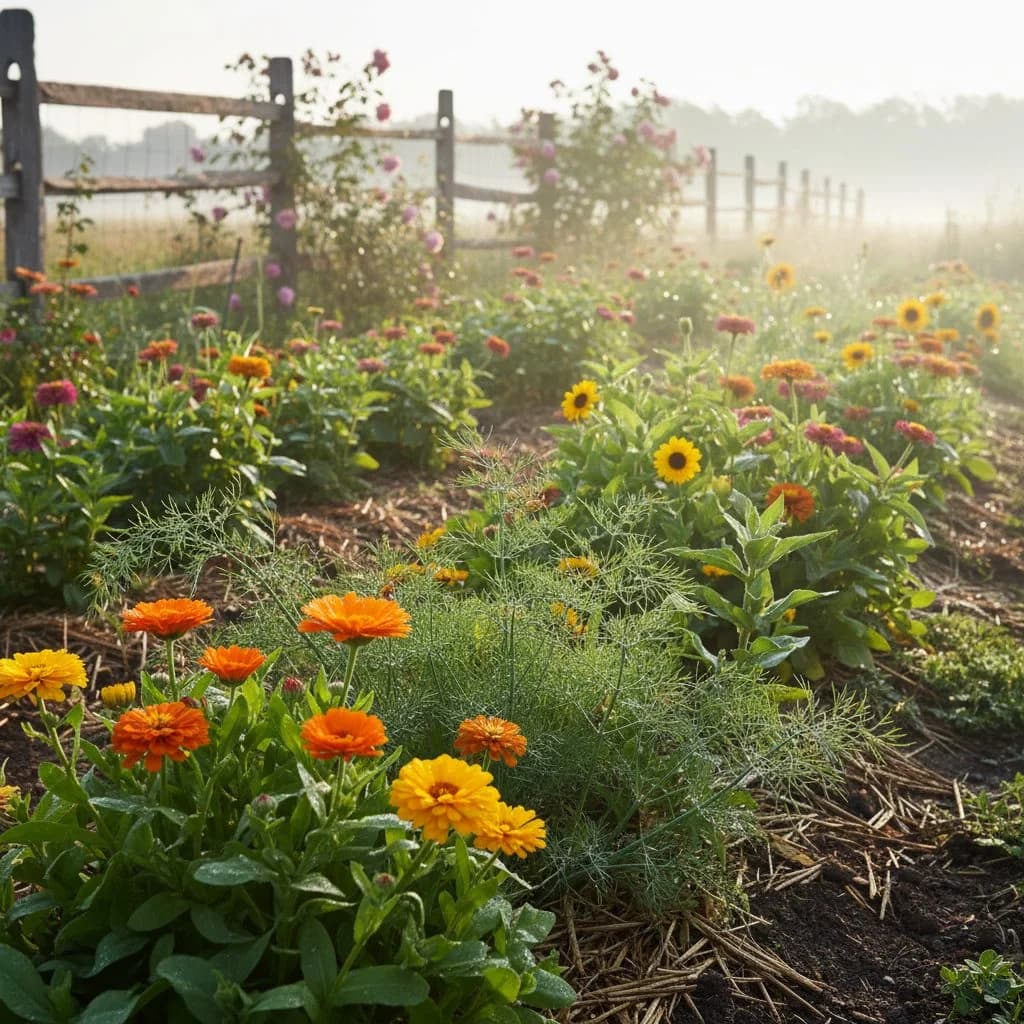
- Identify beneficial self-seeders like calendula or dill, which can reduce pest pressure in vegetable beds.
- Implement strategic deadheading, removing spent flowers before seeds mature, to significantly reduce unwanted volunteers.
- Apply a 2-4 inch layer of mulch to suppress seed germination, effectively blocking most light for many species.
- Practice selective weeding, removing unwanted seedlings when they are 1-2 inches tall to prevent root establishment.
- Consider the plant’s natural dispersal range; some species, like Verbena bonariensis, can spread 5-10 feet easily.
- Choose native self-seeders adapted to your USDA zone, reducing maintenance needs once established.
Quick answer: To manage volunteer plants and self-seeders, identify beneficial species, implement strategic deadheading, apply a 2-4 inch layer of mulch, and practice selective weeding. These methods help control unwanted spread while encouraging desirable plants.
In many parts of the United States, from the humid summers of USDA zone 7 in North Carolina to the drier climates of zone 5 in Colorado, gardeners often find themselves in a delicate dance with self-seeding plants. These volunteers can be a blessing, filling bare spots with unexpected beauty or providing a continuous harvest of herbs. However, without careful management, a handful of delightful cosmos can quickly become a dense thicket, overwhelming other plantings or colonizing an entire 100 square foot bed within a single growing season.
The goal is to encourage the self-seeders you want and control the ones you don’t. This approach can save you significant time and effort, potentially reducing weeding hours each year, while also building a more resilient and biodiverse garden ecosystem. Understanding the life cycle and dispersal habits of common self-seeders is the first step in harnessing their natural vigor for your garden’s benefit, rather than battling their enthusiastic spread.
Understanding the self-seeding cycle
Self-seeding plants, often called volunteers, complete their life cycle and drop seeds that germinate in subsequent seasons. This natural process is highly dependent on environmental cues, such as soil temperature and moisture levels. For example, many annuals like calendula (Calendula officinalis) or bachelor’s buttons (Centaurea cyanus) will readily reseed in USDA zones 3 through 9, producing hundreds of seeds per plant that can remain viable in the soil for 3 to 5 years. Understanding this cycle helps with effective management.
Identifying beneficial volunteers
Not all self-seeders are problematic; some, like dill (Anethum graveolens) or cilantro (Coriandrum sativum), can provide a continuous harvest of fresh herbs, reducing the need for repeated planting over a growing season. Others, such as borage (Borago officinalis), attract pollinators like bees, increasing fruit set on nearby plants. It’s important to differentiate between desirable volunteers and those that will become invasive. Careful observation of seedling characteristics and their growth patterns can help you make informed decisions about which to keep and which to remove. For instance, a single dill plant can produce thousands of seeds, but its taproot makes it easy to pull if unwanted. Consistent monitoring of plant health indicators, such as leaf color and stem rigidity, can signal nutrient deficiencies before visible decline.
- Identify seedlings by cotyledon shape and first true leaves.
- Observe growth rate; fast growers might outcompete slower plants.
- Note the plant’s mature size and potential for shading.
- Consider its benefit to local wildlife, such as pollinators.
- Evaluate its potential to host beneficial insects, like ladybugs.
Strategic deadheading and pruning
Deadheading spent flowers before seed pods mature is one of the fastest ways to curb self-seeders. On annuals and perennials such as cosmos (Cosmos bipinnatus) and purple coneflower (Echinacea purpurea), snipping faded blooms cuts seed drop in a single season. That routine stops unwanted seedlings and pushes plants to send out fresh flowers for several extra weeks across USDA zones 4 through 9.
Timing is everything
The key to successful deadheading is timing. For plants like California poppies (Eschscholzia californica), which can produce hundreds of seeds from a single flower, removing the faded bloom as soon as it wilts is critical. If you wait until the seed pods are visibly swelling, it may be too late, as some seeds can already be mature enough to germinate. Active participation in garden management, including timely deadheading, can reduce unwanted self-seeders over a single season. For species like Verbena bonariensis, which can grow 3-5 feet tall and produce dozens of flower clusters, a single pruning session in mid-summer can prevent thousands of seeds from dropping. Regular garden walks, taking 15-30 minutes every few days, allow you to catch spent blooms before they become seed factories.
- Remove faded flowers promptly, before seed heads develop.
- Use clean pruners to prevent disease spread between plants.
- For large plants, prune back entire sections of spent flowers.
- Consider leaving a few seed heads for desired self-seeding or wildlife.
- Aim to deadhead at least once a week during peak flowering season.
Mulching and soil management
Mulching is a gardener’s best friend when it comes to controlling unwanted self-seeders. A 2 to 4 inch layer of organic mulch, such as shredded bark, straw, or compost, can effectively block sunlight from reaching fallen seeds, preventing up to 90% of germination. This is particularly effective for light-dependent germinators like many annual wildflowers. In a 100 square foot garden bed, applying mulch can reduce weeding time over a single growing season, saving you useful hours.
Types of mulch and application
Different mulches offer varying benefits. A fine-textured mulch like compost or leaf mold can improve soil structure over time, adding organic matter annually. Coarser mulches, such as wood chips, are excellent for long-term suppression and can last for 2-3 years before needing replenishment. When applying mulch, ensure it’s not piled directly against plant stems, as this can lead to rot; leave a 1-2 inch gap around the base of each plant. Preventive measures, like applying a 3-inch layer of mulch, are highly effective in suppressing unwanted self-seeding and can reduce weeding time. For vegetable gardens, a straw mulch can also help retain soil moisture, reducing the need for frequent watering, especially in dry regions like USDA zone 4 in Montana. You can monitor soil moisture levels with a soil moisture meter to ensure optimal conditions.
- Apply mulch after the ground has warmed in spring, typically when soil temperature reaches 50°F.
- Maintain a consistent mulch layer of 2-4 inches for best suppression.
- Replenish organic mulches annually or bi-annually as they decompose.
- Avoid using weed barriers under mulch, as they can hinder soil health.
- Consider using compost as a mulch to also feed the soil slowly.
Selective weeding and plant choices
Even with the best deadheading and mulching strategies, some self-seeders will inevitably pop up. This is where selective weeding comes into play. The goal is to manage their numbers and locations, not eradicate every volunteer. When seedlings are small, typically 1-2 inches tall, they are easiest to remove without disturbing nearby plants or established root systems. Pulling them at this stage prevents them from setting deep roots and competing for nutrients and water, which can reduce the vigor of desired plants.
Choosing the right plants
One of the most proactive steps you can take is to choose plants that self-seed in a manageable way for your specific garden in USDA zones 3 through 9. For instance, Johnny-jump-ups (Viola tricolor) are charming self-seeders that typically stay compact, growing to 6-8 inches tall, and are easy to pull if they appear in unwanted spots. In contrast, plants like evening primrose (Oenothera biennis) can become aggressive, producing deep taproots that are difficult to remove once established, and can grow 3-5 feet tall. The USDA recommends selecting native plant species adapted to local conditions, which often require less water and fertilizer after establishment [6]. Understanding a plant’s natural life cycle and allowing some self-expression, such as limited seed dispersal, can lead to more resilient garden populations. Consider deer resistant plants if you have wildlife pressure, as some self-seeders are also favored by deer.
- Weed when the soil is moist to make pulling easier.
- Remove unwanted seedlings when they are small, 1-2 inches in height.
- Leave a few desirable volunteers in strategic locations.
- Consider sterile or less aggressive cultivars if available.
- Choose native plants that are less likely to become invasive in your region.
Advanced strategies and long-term planning
For gardeners in regions like the Pacific Northwest (USDA zone 8) or the Mid-Atlantic (USDA zone 7), where conditions are often ideal for vigorous self-seeding, advanced strategies can make a significant difference. One such strategy involves creating designated ‘wild’ areas where self-seeders are allowed to flourish, providing habitat for beneficial insects and pollinators. This can be a 50-100 square foot patch dedicated to plants like cosmos, zinnias, or native wildflowers. Outside these areas, strict control measures are maintained, creating a balance between ecological benefit and garden order.
Crop rotation and cover cropping
In vegetable gardens, crop rotation can help manage self-seeders by altering soil conditions and breaking up weed cycles. For example, following a heavy self-seeder like arugula with a cover crop like clover can suppress unwanted germination and improve soil nitrogen levels. Strategic planning in garden design can encourage desired plant behaviors, . Also, using organic fertilizers can support healthy soil, which in turn helps plants resist pest pressure and outcompete weeds. Encouraging specific plant behaviors, like controlled self-seeding, requires a strategic, long-term approach, often spanning multiple growing seasons.
- Designate specific areas for controlled self-seeding.
- Utilize cover crops in vegetable beds to suppress volunteers.
- Implement crop rotation to interrupt weed cycles.
- Consider planting in containers to limit spread of aggressive self-seeders.
- Regularly amend soil with compost to support healthy plant competition.
Common self-seeders: pros and cons for US gardens
Plant species | USDA Zones | Pros of self-seeding | Cons of self-seeding | Ease of control |
|---|---|---|---|---|
Calendula (Calendula officinalis) | 3-9 | Bright flowers, attracts pollinators, edible petals | Can become very dense, requires thinning | Easy (shallow roots, easy to pull) |
Dill (Anethum graveolens) | 3-10 | Continuous herb supply, attracts beneficial insects | Can pop up everywhere, strong scent | Easy (taproot, distinct seedlings) |
Cosmos (Cosmos bipinnatus) | 2-11 | Abundant flowers, good for cutting, pollinator magnet | Can overwhelm smaller plants, needs thinning | Moderate (easy to identify, but many seeds) |
Verbena bonariensis | 7-11 | Tall, airy texture, attracts butterflies | Spreads widely, can be aggressive, grows 3-5 ft tall | Moderate (many seeds, but easy to pull when young) |
Poppies (Papaver spp.) | 3-8 | Showy flowers, unique seed pods | Thousands of seeds, can be hard to eradicate | Difficult (tiny seeds, deep taproot once established) |
Mulch savings: Applying a 3-inch layer of organic mulch can reduce weeding time by 40% and conserve 25% more soil moisture in your garden.
Deadheading impact: Strategic deadheading can decrease unwanted self-seeders significantly and extend flowering periods by 3-4 weeks for many plants.
References
- Please, just take two more bites! How to monitor nutrition and encourage self-feeding in rehabilitation animals (2021).
- United States should encourage India to take a greater role in Afghanistan / RAND. (2012).
- Are there voices in the Christian tradition that encourage one to take one’s own side (2023).
- AHRQ and Ad Council encourage men to take preventive steps in their health care (2010).
- USDA Natural Resources Conservation Service (2024).