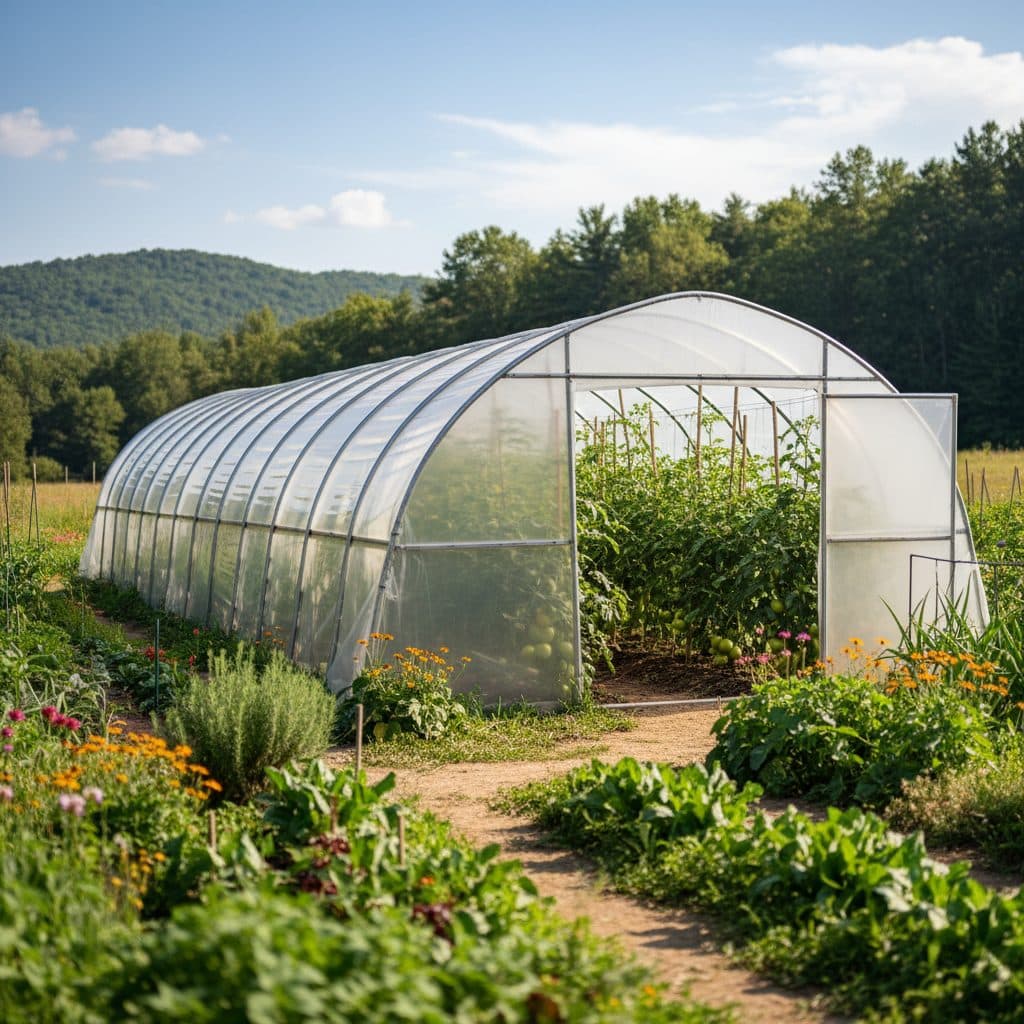
Key takeaways
- Greenhouse and high-tunnel tomatoes require active pollination due to lack of wind and natural insects.
- Manual pollination with tools like electric toothbrushes can achieve 90-95% fruit set for smaller operations.
- Maintaining optimal temperatures (70-85°F) and humidity (60-70%) matters for pollen viability and fruit development.
- Bumblebee colonies are highly effective for large-scale pollination, covering 5,000-10,000 square feet per colony.
- Water stress can significantly reduce fruit set by 20-40%, making consistent irrigation vital.
- Consider plant breeding efforts for varieties more attractive to pollinators, a future direction for easier fruit set.
Quick answer: To ensure fruit set in greenhouse tomatoes, active pollination is necessary because of the lack of natural wind and insects. This involves maintaining optimal temperatures (70-85°F) and humidity (60-70%), consistent irrigation, and employing manual pollination techniques or bumblebee colonies.
In the fertile valleys of California’s Central Valley, or across the expansive high tunnels of the Midwest, growing tomatoes under cover offers many advantages, like extending the season by several weeks or even months. For growers in USDA zone 6, this can mean planting as early as March and harvesting into November, significantly increasing yield potential. This extension can add 60 to 90 days to the growing season, boosting overall production by 20% to 30% compared to field-grown crops.
However, these protected environments (whether a small backyard greenhouse or a large commercial high tunnel spanning 300 feet) also present unique challenges, especially when it comes to pollination. Without the natural activity of wind or insects, making sure each tomato flower develops into a marketable fruit takes deliberate strategies. Understanding these methods is key to maximizing the 20 to 30 pounds of fruit a healthy plant can produce.
the pollination puzzle in protected environments
These takeaways points carry into this section, too.
Tomato plants (Solanum lycopersicum) are largely self-pollinating, meaning each flower has both male and female parts. In open fields, a gentle breeze or the vibration from a visiting bee is usually enough to release pollen from the anthers onto the stigma, leading to successful fertilization. However, inside a greenhouse or a high tunnel, these natural mechanisms are significantly reduced. Growers in regions like the Pacific Northwest, where early spring winds can be inconsistent, often see a dramatic drop in fruit set without intervention. Studies indicate that while open-field tomatoes might achieve a 90% fruit set, protected environments without assistance can see rates fall to 30% or even 20%, representing a substantial loss in potential yield. The enclosed nature of these structures, often designed to extend the growing season by 60 to 90 days, inadvertently creates a challenge for the plant’s reproductive cycle.
understanding tomato flower mechanics
Each tomato flower contains around six to eight anthers that form a cone around the pistil. For pollen release, a vibration of 100 Hz or more is typically required. Optimal conditions for pollen viability include temperatures between 70°F and 85°F, with relative humidity in the range of 60% to 70%. When humidity climbs above 80%, pollen can become sticky, hindering its release and transfer. Conversely, humidity below 40% can cause pollen to dry out and lose viability rapidly. This delicate balance means that simply growing tomatoes under cover, such as in a 30-foot by 96-foot high tunnel, does not guarantee a harvest; active management of pollination factors is essential for maximizing the 20 to 30 pounds of fruit a healthy plant can produce. More information on tomato plants is available.
- Reduced air movement: Greenhouses and high tunnels block natural wind.
- Lack of insect visitors: Walls and screens prevent bees from entering.
- Specific temperature needs: Pollen is most viable between 70°F and 85°F.
- Humidity control: Too high (over 80%) or too low (under 40%) humidity harms pollen.
- Vibration requirement: Flowers need physical agitation for pollen release.
hand pollination techniques for consistent yields
That work on pollination puzzle sets up what follows here.
For smaller operations, or when dealing with high-value heirloom varieties, manual pollination is a reliable method to ensure fruit set. The simplest technique involves gently tapping the main stem or individual flower clusters with your hand. This vibration, when performed daily or every two to three days, particularly during the mid-morning hours between 10 AM and 2 PM when pollen is driest, can be highly effective. For a home grower with 10 to 20 plants, this might take only five to ten minutes per day. Commercial growers with hundreds or thousands of plants, however, need more efficient tools. An electric toothbrush or a dedicated battery-operated pollinator tool, which vibrates at a high frequency, can significantly speed up the process, allowing one person to pollinate 500 to 1,000 plants in a few hours. The goal is to see a small cloud of pollen released from the flower, indicating successful agitation.
optimizing your hand pollination routine
Consistency is key; missing even a few days during peak flowering can result in a noticeable drop in yield, potentially reducing the harvest by 15% to 25%. Focus on flowers that have just opened, as their pollen viability is at its peak. Some growers in USDA zone 7, aiming for an early spring crop, start hand-pollinating as soon as the first true flowers appear, often around 40 to 50 days after transplanting. While labor-intensive, particularly for operations with over 1,000 plants, hand pollination offers precise control and can be a cost-effective solution compared to purchasing and managing bee colonies, especially if the greenhouse is small, like a 10-foot by 12-foot structure. This method ensures that each potential fruit has the best chance of developing, leading to a more uniform crop and higher market value, often fetching $3.00 to $5.00 per pound for premium greenhouse tomatoes.
- Tap stems: Gently shake the plant or flower clusters daily.
- Electric toothbrush: Use the vibrating head to touch individual flower stems.
- Optimal timing: Mid-morning (10 AM to 2 PM) when pollen is dry.
- Observe pollen release: Look for a visible cloud of pollen.
- Frequency: Every one to three days during flowering periods.
environmental controls and mechanical aids
This builds directly on hand pollination techniques.
Beyond direct flower agitation, managing the greenhouse environment plays a big role in pollen viability and release. Maintaining optimal temperature and humidity is paramount. Research suggests that temperatures consistently above 90°F or below 55°F can significantly reduce pollen viability and fruit set, sometimes by as much as 50% [1]. Similarly, relative humidity extremes are detrimental. Above 80%, pollen grains can become too sticky to release effectively, leading to poor fertilization. Below 40%, pollen can desiccate quickly, losing its ability to germinate. Growers in arid regions like Arizona or parts of Texas must pay close attention to humidity, often employing misting systems to maintain a 60% to 70% range, while those in humid climates like Florida might need dehumidifiers and increased ventilation.
using technology for better fruit set
Air circulation is also critical. Installing oscillating fans within the greenhouse or high tunnel, spaced every 15 to 20 feet, helps mimic natural wind patterns, aiding in pollen distribution and preventing pockets of high humidity. For larger operations, mechanical vibrators can be attached to support wires, delivering a consistent shake to hundreds of plants simultaneously. These systems, often programmed to activate for 15 to 30 seconds every few hours during the day, can cover a 100-foot row of tomatoes quickly. Monitoring tools, such as a soil moisture meter, are also vital, as water stress can severely impact flower development and fruit set, reducing yields by 20% to 40% [1]. Ensuring consistent moisture levels, typically 60% to 70% of field capacity, supports overall plant health and reproductive success.
- Temperature management: Keep temperatures between 70°F and 85°F.
- Humidity control: Aim for 60% to 70% relative humidity.
- Air circulation: Use fans to distribute air and pollen.
- Mechanical vibrators: Automate plant shaking for large setups.
- Monitor soil moisture: Prevent water stress, which reduces fruit set by up to 40%.
bumblebees and breeding for better fruit set
Those environmental controls and habits matter here as well.
For many commercial greenhouse operations, especially those exceeding 5,000 square feet, introducing bumblebee colonies is the most efficient and cost-effective pollination strategy. Bumblebees are particularly effective for tomatoes because they perform “buzz pollination” (sonication), where they vibrate their flight muscles at a specific frequency to release pollen, a task honeybees cannot do as efficiently. In the Eastern US, Bombus impatiens is commonly used, while Bombus occidentalis is preferred in the Western US. A single colony, typically costing $100 to $200, can effectively pollinate 5,000 to 10,000 square feet of greenhouse space for six to eight weeks. Introduce colonies when 10% to 20% of the plants are flowering to ensure the bees establish their foraging routine effectively.
integrating natural pollinators and plant selection
When using bumblebees, it is imperative to avoid pesticides that are harmful to them. Many common insecticides can kill bees, leading to colony collapse within days. Growers should research bee-safe pest control options or rely on biological controls. Beyond introducing pollinators, plant breeding efforts have focused on developing tomato varieties that are more attractive to pollinating insects or have improved self-pollinating characteristics [2]. While these varieties are not yet widespread, breeding work on them continues. For growers utilizing high tunnels, leaving the sides open during warm, calm periods can allow some natural wind and insect ingress, but this must be balanced against potential pest issues and temperature fluctuations. For fully enclosed systems, like a reflective indoor grow tent, bumblebees or manual methods remain the primary options for achieving a high fruit set, often targeting 95% or more for premium yields.
- Bumblebee introduction: Use Bombus impatiens or Bombus occidentalis for buzz pollination.
- Colony size: One colony can cover 5,000 to 10,000 square feet for 6-8 weeks.
- Pesticide avoidance: Only use bee-safe pest control methods.
- Breeding for attraction: Some varieties are being developed to attract pollinators more effectively.
- Ventilation: Open high tunnel sides when feasible to allow natural ingress.
Comparison of Tomato Pollination Methods in Protected Environments
Method | Labor Intensity | Upfront Cost | Efficacy for Tomatoes | Best for Scale |
|---|---|---|---|---|
Hand Pollination | High | Low ($10-50 for tools) | High (90-95% fruit set) | Small (1-100 plants) |
Mechanical Vibration | Medium | Medium ($50-500+) | High (85-95% fruit set) | Medium (100-1,000 plants) |
Bumblebee Colonies | Low | Medium ($100-200/colony) | Very High (95%+ fruit set) | Large (5,000+ sq ft) |
Optimal Pollination: Tomato pollen is most viable between 70°F and 85°F, with 60% to 70% relative humidity, which helps maximize fruit set by 20% to 30%.
Bumblebee Coverage: One bumblebee colony can effectively pollinate 5,000 to 10,000 square feet of greenhouse space for up to eight weeks, achieving over 95% fruit set.
Frequently asked questions
How often should I hand-pollinate tomatoes?
You should hand-pollinate tomato flowers every one to three days, preferably during mid-morning hours (10 AM to 2 PM) when pollen is driest. Consistent pollination can increase fruit set by 20% to 30%.
What temperature is best for tomato pollination?
Optimal temperatures for tomato pollen viability and fruit set are between 70°F and 85°F. Temperatures outside this range, especially above 90°F, can reduce fruit set by 50%.
Can honeybees pollinate tomatoes in a greenhouse?
While honeybees can visit tomato flowers, they are not as effective as bumblebees for “buzz pollination.” Bumblebees vibrate their bodies at specific frequencies, which is essential for releasing tomato pollen, leading to a much higher fruit set, often 90% or more.
How do I know if my tomatoes are pollinated?
A successfully pollinated tomato flower will typically swell at its base (the ovary) within a few days, beginning to form a small fruit. If the flower drops without swelling, it likely wasn’t pollinated, potentially reducing your yield by 10% to 15%.
What humidity level is ideal for tomato pollination?
Relative humidity between 60% and 70% is ideal for tomato pollination. Humidity above 80% can make pollen sticky, while below 40% can dry it out, both reducing fruit set by 15% to 25%.
References
- Evaluation of Crop Water Stress Index (CWSI) for High Tunnel Greenhouse Tomatoes under Different Irrigation Levels (2024). Evaluation of Crop Water Stress Index (CWSI) for High Tunnel Greenhouse Tomatoes under Different Irrigation Levels.
- Breeding Tomatoes for Attractiveness to Pollinating Insects (1995). Breeding Tomatoes for Attractiveness to Pollinating Insects.
- Early Planting of Tomatoes in a High Tunnel with Plant Coverings (2012). Early Planting of Tomatoes in a High Tunnel with Plant Coverings.
- Evaluation of Grafted and Non-Grafted Hybrid and Heirloom Tomatoes in a High Tunnel (2017). Evaluation of Grafted and Non-Grafted Hybrid and Heirloom Tomatoes in a High Tunnel.
- Intumescences (Edema) on Greenhouse Tomatoes (2024). Intumescences (Edema) on Greenhouse Tomatoes.
- USDA Natural Resources Conservation Service (2024). USDA Natural Resources Conservation Service.