Key takeaways
- Start with the white base of green onions, leaving 1-2 inches intact for optimal regrowth.
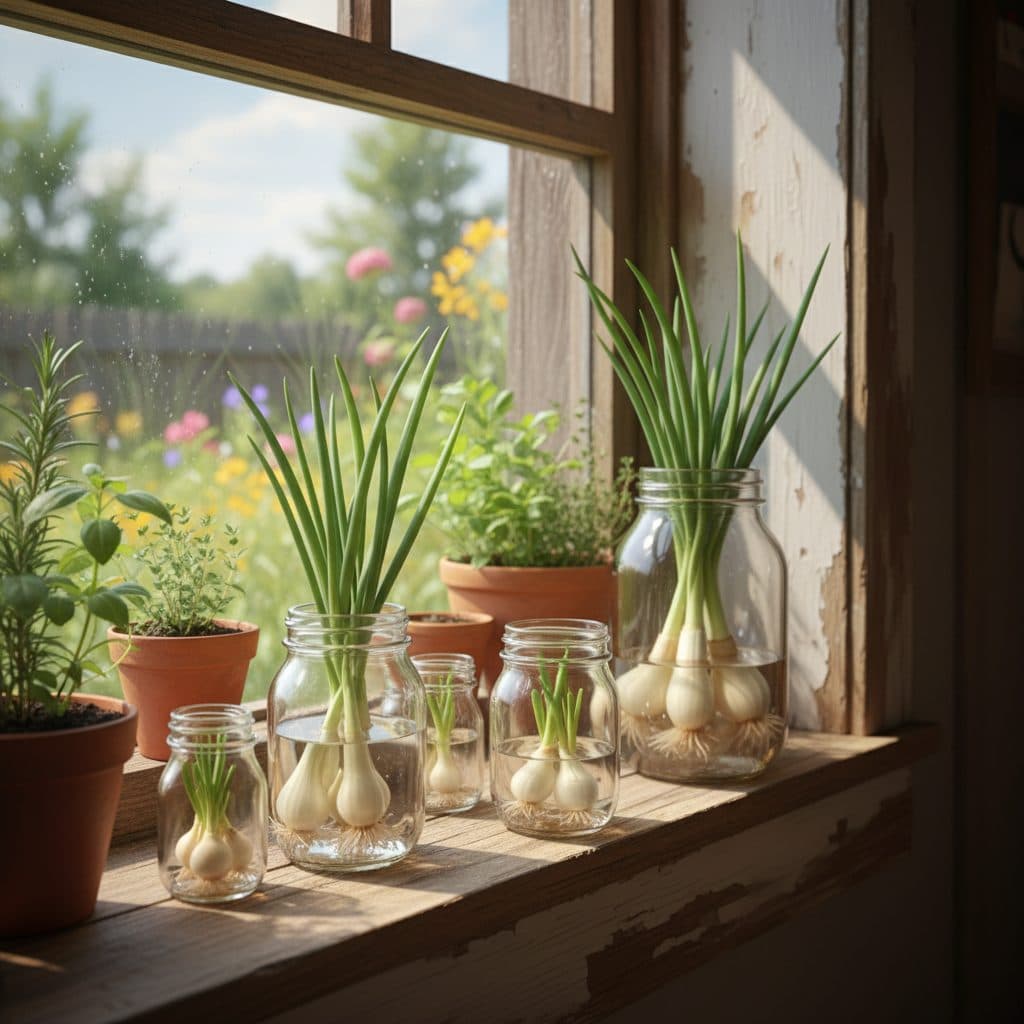
- Place bases in a shallow container with about half an inch of water - enough to cover the roots and the very bottom of the base, no more.
- Provide 6-8 hours of direct sunlight daily, ideally on a south-facing windowsill for best results.
- Change the water every 1-2 days to prevent bacterial growth and supply fresh oxygen to the roots.
- Harvest outer stalks as needed, leaving inner growth to continue for multiple yields from one base.
- Expect 3-5 successful regrowth cycles from a single base before its vigor diminishes and it needs replacing.
Quick answer: To regrow green onions, place the white base with 1-2 inches intact in a shallow container holding about half an inch of water, enough to cover the roots but not the whole base. Provide 6-8 hours of direct sunlight daily and change the water every 1-2 days for continuous harvests.
For many US households, especially those in colder climates like USDA zone 5, fresh green onions can be a seasonal luxury or an expensive grocery item. However, with a simple setup on a sunny windowsill, you can cultivate a continuous supply of these flavorful alliums. This method reduces trips to the store and extends the life of your produce scraps.
Regrowing green onions and scallions is a straightforward process that requires minimal space and effort. Whether you live in a small apartment in New York City or a sprawling home in rural Iowa, a 12-inch wide windowsill is often all you need to get started. This guide will walk you through the steps to establish and maintain a thriving patch of green onions to ensure you have fresh flavor available for cooking any day of the year, even when outdoor gardens are dormant for 6 months or more.
The botanical identity and why regrowing works
These takeaways points carry into this section, too.
Before diving into the how-to, it helps to understand what you are growing. Green onions and scallions are, for all practical purposes in the kitchen and garden, the same plant. In US stores, a bunch labelled green onions or scallions may be either common onion (Allium cepa) pulled before it bulbs or the non-bulbing Allium fistulosum, commonly known as the Welsh onion [3]. Research from 1992 confirmed they share volatile constituents and have similar flavor profiles [4]. This species is resilient and can regrow from its root base multiple times, which suits windowsill propagation. The plant stores sufficient energy in its white bulbous base to initiate new growth, often reaching 6-8 inches in height within one week under optimal conditions.
The benefits of a continuous harvest
Beyond the simple satisfaction of growing your own food, maintaining a continuous supply of green onions offers several tangible advantages for the home cook. Bunches of green onions are cheap on their own but add up over a year, and half a bunch usually wilts in the drawer before it gets used. Regrowing the bases turns one purchase into several weeks of snipping. Furthermore, having fresh ingredients readily available encourages more home cooking and less food waste, as you only snip what you need for a recipe. This method also provides a year-round connection to gardening, even if your outdoor growing season is limited to 4-6 months, offering a small green oasis indoors.
- Reduced grocery bills, potentially saving 20-50 dollars annually.
- Fresh ingredients always on hand for cooking, improving meal quality.
- Less food waste from unused portions going bad in the refrigerator.
- A simple, rewarding gardening project suitable for all ages and skill levels.
- Year-round access to fresh produce, regardless of local climate or season.
Setting up your windowsill garden
Getting started with your green onion propagation is remarkably simple, requiring just a few basic items you likely already have. First, select healthy green onion scraps from your recent grocery haul. You’ll want to use the white and light green parts, leaving about 1-2 inches of the base intact, along with any existing roots. These roots absorb water and start new growth, so avoid cutting them off or damaging them. For best results, choose bases that appear firm, plump, and free of blemishes or soft spots, as these will have the most energy stored for vigorous new growth. A single healthy base can produce several inches of new green tops in just a few days.
Choosing the right container and water
The container you choose is less critical than its size and material. A shallow glass jar, a plastic takeout container, or even a ceramic mug will work, provided it can hold 1-2 inches of water and has a wide enough opening for the onion bases to stand upright without crowding. Many growers in states like Florida, where high humidity can affect indoor plants, prefer clear glass for easy monitoring of water levels and root health. Fill your chosen container with about half an inch of plain tap water - just enough to cover the roots and the very bottom of the white base. Avoid submerging the entire base, as this can lead to rot and inhibit growth. Position your container on a windowsill that receives at least 6-8 hours of direct sunlight daily, such as a south-facing window in a home in USDA zone 7. As discussed in seed starting for beginners, adequate light is a primary factor for success.
- Glass jars (e.g., old jam jars) for clear visibility of roots and water.
- Plastic containers (e.g., yogurt cups or deli containers) for lightweight and disposable options.
- Ceramic mugs or small bowls for aesthetic appeal and stability.
- Terra cotta pots (glazed inside to prevent water loss) for a natural look.
- Any shallow vessel that holds half an inch of water securely. Site it out of reach of pets - onions, scallions and other alliums are toxic to cats and dogs.
Ongoing care and maintenance for healthy growth
This builds directly on setting up windowsill.
Once your green onion bases are set up, consistent care is paramount for continuous regrowth. The most critical aspect is water management. You must change the water every 1-2 days to prevent bacterial growth and ensure the roots receive fresh oxygen. Stagnant water can quickly lead to root rot, characterized by slimy, discolored roots and an unpleasant odor, especially in warmer indoor environments, such as a kitchen in Texas during summer, where temperatures might reach 80°F for extended periods. If you notice any signs of rot, it’s a clear indication the water needs changing more frequently. A good practice is to gently rinse the roots under cool running water during each change, removing any accumulated debris or slime.
Light, temperature, and transitioning to soil
Green onions regrow well in bright light and do not need a full day of direct sun; a bright sill with a few hours of direct light is plenty. In summer, keep the jar out of hard afternoon sun, which warms the water and makes the root rot described below more likely. A south-facing window is often ideal, particularly in northern states like Michigan during winter, where natural light is scarcer and days are shorter, sometimes offering only 4-5 hours of usable light. Optimal temperatures for growth range from 65°F to 75°F. If your indoor space is consistently cooler, growth might be slower, taking 10-14 days instead of 7 for a full harvest. While water propagation is excellent for initial regrowth, you can also transition your green onions to soil for more sustained growth and potentially larger yields. After three to five regrowth cycles, the bases begin to lose vigor. At this point, planting them in a small pot with well-draining potting mix, as described in starting a herb garden, can rejuvenate them. The USDA Natural Resources Conservation Service (2024) emphasizes the importance of good soil structure and organic matter for robust root development.
- Change water every 1-2 days to prevent root rot and bacterial buildup.
- Ensure 6-8 hours of direct sunlight daily for vigorous growth.
- Maintain indoor temperatures between 65°F and 75°F for optimal development.
- Consider transitioning to soil after three to five water regrowths to extend plant life.
- Monitor for signs of rot, such as sliminess or odor, and address promptly.
Harvesting and maximizing your yield
Those ongoing care and habits matter here as well.
The beauty of regrowing green onions is the continuous harvest, allowing you to snip fresh greens as needed without waiting for a new crop. Once your green shoots reach 6-8 inches in height, they are ready to be snipped. Use clean kitchen shears or a sharp knife to cut the green tops, leaving about 0.5 inches of green growth above the white base. This practice encourages further regrowth from the center of the plant to ensure a steady supply. You can typically get 3-5 harvests from a single base before its energy stores are depleted and it starts to produce thinner, weaker shoots. When this happens, it’s time to compost the old base and start fresh with new grocery store scraps, maintaining your continuous cycle with minimal effort.
Tips for bigger, healthier yields
To ensure robust growth and maximize your yield, consider a few additional practices. While not strictly necessary for initial regrowth, a weak feed can be added every 2-3 weeks if growth slows or the shoots go pale after a few harvests. Mix a liquid houseplant fertilizer at about a quarter of the strength printed on the label, then use that in place of plain water at the next change. This is particularly beneficial for plants kept in water long-term, as tap water lacks essential nutrients found in soil. Another tip is to rotate your containers periodically to ensure all sides of the plant receive adequate light, especially if your light source is directional, like a window in a home in Seattle where sunlight can be inconsistent. For larger yields, consider planting multiple bases in a wider, shallow container, spacing them about 1 inch apart. 24-Cell Seedling Propagation Trays, while designed for seedlings, can be adapted for multiple onion bases if you ensure proper drainage and maintain consistent water levels.
- Harvest outer stalks first, leaving inner ones to grow for continuous production.
- Cut 0.5 inches above the white base for optimal regrowth and plant health.
- Consider a quarter-strength liquid fertilizer every 2-3 weeks for sustained vigor.
- Rotate containers regularly for even light exposure and balanced growth.
- Plant multiple bases 1 inch apart in a wider container for a larger, more abundant harvest.
Common challenges and solutions
These harvesting and maximizing lessons apply to the steps below, too.
Even with a simple process like regrowing green onions, you might encounter a few common issues. One of the most frequent problems is root rot, characterized by slimy, discolored roots and an unpleasant smell. This almost always stems from insufficient water changes. To remedy this, immediately replace the water, rinse the roots thoroughly, and commit to changing the water every 1-2 days. If the rot is severe, and the base feels mushy, the plant might be beyond saving, and it’s best to start with a fresh scrap. Another issue is slow or stunted growth, which often indicates a lack of sufficient light. If your green onions are growing slowly and appear pale, try moving them to a brighter windowsill that receives at least 6 hours of direct sun, even if it means relocating them to a different room in your home.
Troubleshooting and maximizing success
Another challenge can be the eventual decline in vigor. After 3-5 harvests, the stored energy in the original base diminishes, and new growth becomes thinner and less robust. This is a natural part of the process, and it’s important not to expect endless harvests from a single base. Instead of trying to force more growth, consider transplanting these less vigorous bases into soil, where they can draw nutrients directly from the earth, or simply compost them and begin a new cycle with fresh grocery store scraps. For those in regions with very hard tap water, like parts of Arizona, consider using filtered water to avoid mineral buildup that can sometimes hinder root development, though this is less common. By proactively addressing these issues, you can maintain a thriving green onion patch for many months, producing hundreds of inches of fresh greens annually.
- Root Rot: Change water every 1-2 days, rinse roots, and ensure good air circulation.
- Slow Growth: Increase direct sunlight exposure to 6-8 hours daily and maintain optimal temperatures.
- Weak Shoots: Replace or transplant bases into soil after 3-5 harvests to restore vigor.
- Yellowing Tips: May indicate nutrient deficiency; consider adding a very dilute liquid fertilizer.
- Pests: Rare indoors, but if seen, wipe leaves with a damp cloth or use a mild insecticidal soap solution (e.g., 0.5% concentration).
Characteristic | Green Onion (Allium fistulosum) | Scallion (Allium fistulosum) |
|---|---|---|
Botanical Name | Allium fistulosum (Welsh onion) | Allium fistulosum (Welsh onion) |
Common Use | Often used fresh, raw or lightly cooked in many cuisines | Often used fresh, raw or lightly cooked in many cuisines |
Bulb Development | Minimal or no bulb development, remains slender | Minimal or no bulb development, remains slender |
Flavor Profile | Mild onion flavor, slightly pungent | Mild onion flavor, slightly pungent |
Regrowth Potential | Excellent from base in water or soil | Excellent from base in water or soil |
Water Change Frequency: Change the water for your green onion bases every 1-2 days to prevent bacterial growth and ensure fresh oxygen for roots, especially in warm indoor environments above 70°F.
Light Requirement: Green onions need at least 6-8 hours of direct sunlight daily for robust growth, making a south-facing windowsill in USDA zone 6 an ideal location for year-round cultivation.
Frequently asked questions
How long does it take for green onions to regrow?
New green shoots typically emerge within 2-3 days and can reach a harvestable height of 6-8 inches in about one week under optimal light and temperature conditions, providing a quick turnaround for fresh produce.
How many times can I regrow green onion bases?
You can generally expect 3-5 successful harvests from a single green onion base before its stored energy is depleted and new growth becomes significantly weaker or stops entirely, at which point it’s best to replace it.
Why are my regrowing green onions rotting?
Rotting is usually caused by stagnant water. Ensure you change the water every 1-2 days, especially if your indoor temperatures are consistently above 70°F, to provide fresh oxygen and prevent bacterial buildup that leads to rot.
Can I plant regrown green onions in soil?
Yes. After several water regrowths, transplanting the bases into a small pot of well-draining potting mix extends their life and encourages stronger growth, because the plant can draw nutrients from the soil instead of from its own dwindling reserves.
What’s the difference between green onions and scallions for regrowing?
For practical purposes there is no difference: the two names are used interchangeably in US stores, a bunch may be either Allium cepa or Allium fistulosum, and both regrow from the base using the same method.
What kind of container is best for regrowing green onions?
A shallow container that can hold 1-2 inches of water and has a wide opening, such as a glass jar or a plastic takeout container, is ideal. Many growers find clear glass jars helpful for easily monitoring root health and water levels.
References
- The denitrification-decomposition (DNDC) model (2025). The denitrification-decomposition (DNDC) model.
- The Green Home (2025). The Green Home.
- Volatile constituents of the distilled oils of Welsh onions (Allium fistulosum L. variety maichuon) and scallions (Allium fistulosum L. variety caespitosum) (1992). Volatile constituents of the distilled oils of Welsh onions (Allium fistulosum L. variety maichuon) and scallions (Allium fistulosum L. variety caespitosum).
- Volatile constituents of the solvent extracts of Welsh onions (Allium fistulosum L. variety maichuon) and scallions (A. fistulosum L. variety caespitosum) (1992). Volatile constituents of the solvent extracts of Welsh onions (Allium fistulosum L. variety maichuon) and scallions (A. fistulosum L. variety caespitosum).