Key takeaways
- Chamomile and lemon balm suit USDA zones 4-9; lavender is hardy in zones 5-9 and passionflower in zones 6-9.
- Optimal soil conditions include a pH between 6.0 and 7.5, along with good drainage and organic matter.
- Harvest herbs in the morning after dew dries to capture peak essential oil content for maximum potency.
- Proper drying at temperatures around 70°F and airtight storage can preserve herb quality for up to one year.
- These four herbs have a long history of use as a bedtime tea, and small studies have looked at their effect on relaxation and sleep.
- Cultivating your own herbs gives you fresher, purer material.
Quick answer: To grow a calming herb tea blend in USDA Zone 6, cultivate chamomile, lemon balm, lavender, and passionflower in well-drained soil with at least six hours of sun. Harvest herbs in the morning and dry them at 70°F for optimal potency.
In the high desert of Eastern Oregon, where summer nights cool quickly from 90°F days, a good night’s sleep can sometimes feel elusive. Many of us across the United States, from USDA zone 3 to 10, face daily stressors that make winding down a challenge. For generations, gardeners have turned to the earth for remedies, cultivating plants known for their soothing properties.
This article explores how to establish and maintain a home apothecary garden focused on four key herbs — chamomile, lemon balm, lavender, and passionflower — that, when blended, create a potent and pleasant tea for promoting sleep and calm. We will cover their specific growing needs, harvesting techniques, and how to prepare them for your own calming brew, ensuring you can enjoy the benefits of your labor year-round.
The foundation of your calming garden
Establishing a successful herb garden begins with thoughtful site selection and soil preparation. Most calming herbs, including the four in our blend, prefer a spot that receives at least six hours of direct sunlight daily. In regions like the humid Southeast, good air circulation is also critical to prevent fungal diseases, especially during periods of high humidity above 70%. These plants generally grow best in well-drained soil in the slightly acidic to slightly alkaline range, roughly pH 6.0 to 7.5.
Preparing your planting site
Before planting, conduct a soil test to determine its current pH and nutrient levels. If your soil is heavy clay, amend it with a generous amount of organic matter — at least 3 inches of compost or aged manure — to improve drainage and aeration. For sandy soils, organic matter helps retain moisture and nutrients. Raised beds, typically 8 to 12 inches high, are an excellent option for areas with poor native soil or limited space, providing ideal conditions for these herbs to flourish.
- Test soil pH: Aim for a range of 6.0 to 7.5.
- Improve drainage: Incorporate 3-4 inches of compost into heavy soils.
- Ensure sunlight: Select a location with a minimum of six hours of direct sun.
- Consider raised beds: Ideal for poor soil or limited space, often 10 inches deep.
Chamomile and lemon balm: gentle growers
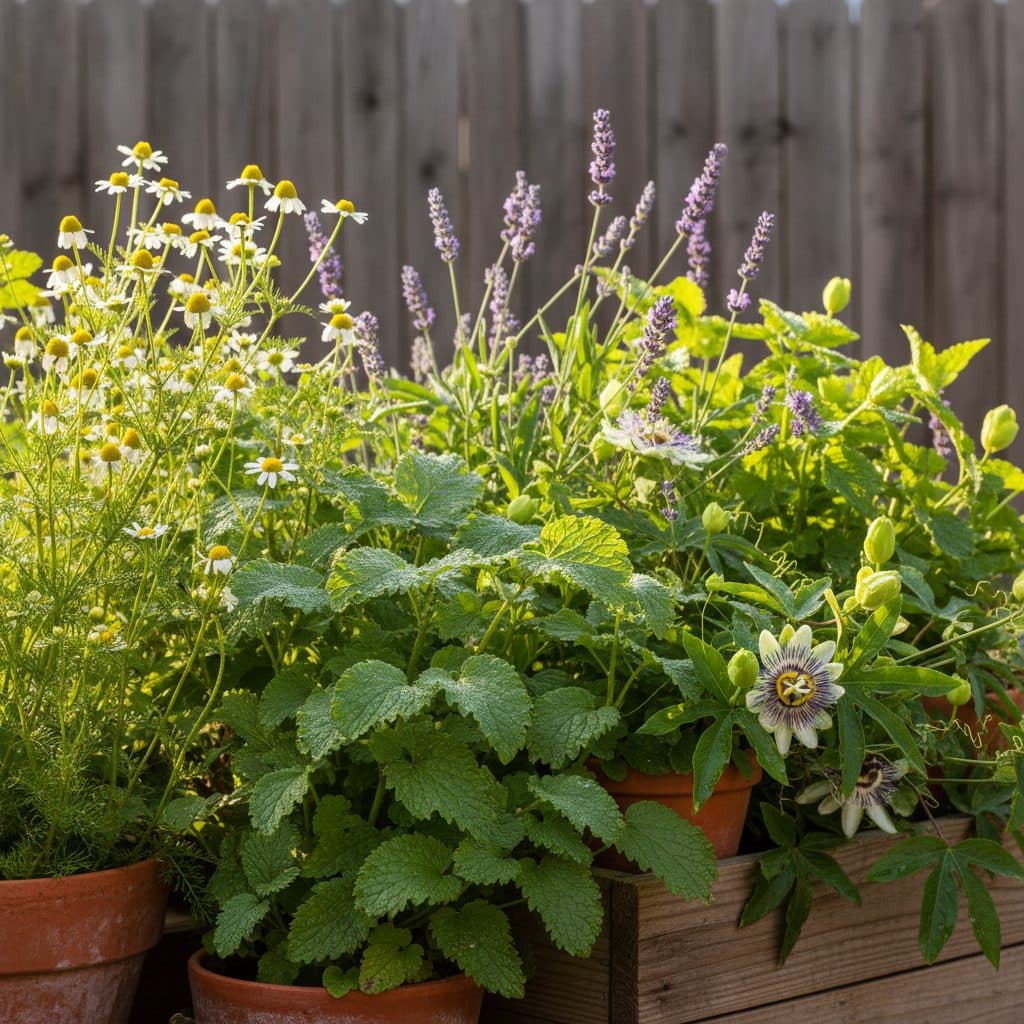
Chamomile (Matricaria chamomilla) and lemon balm (Melissa officinalis) are two cornerstones of any calming tea blend, known for their gentle, soothing properties. Chamomile is an annual herb that typically grows 18 to 24 inches tall, producing an abundance of small, daisy-like flowers. It prefers full sun and well-drained soil, and in USDA zones 3-9, it can often self-seed, returning year after year with minimal effort [1]. Lemon balm, on the other hand, is a vigorous perennial, hardy in USDA zones 4 through 9, reaching 24 to 36 inches in height and spreading readily [4].
Cultivating chamomile and lemon balm
For chamomile, sow seeds directly into the garden bed in early spring after the last frost, scattering them over the surface and pressing them in without covering, as they need light to germinate, then thinning seedlings to 6 inches apart. Lemon balm can be started from seed, cuttings, or divisions. If planting seeds, press them into the surface without covering, as lemon balm also needs light to germinate, and thin to 12 inches apart. Both plants benefit from consistent moisture, especially during dry spells, requiring about one inch of water per week. Research from 2025 indicates that lemon balm extract shows promise in promoting calm before stressful events [3].
- Chamomile planting: Surface-sow and press in without covering, then thin to 6 inches apart in spring.
- Lemon balm planting: Space plants 12-18 inches apart; surface-sow seed and press it in, as it needs light to germinate.
- Watering needs: Provide one inch of water weekly, especially in dry climates like Arizona.
- Sun exposure: Both require at least six hours of full sun daily for best flowering.
Lavender and passionflower: bold beauty
Lavender (Lavandula angustifolia) and passionflower (Passiflora incarnata) add depth and complexity to our calming tea blend, both in flavor and visual appeal. Lavender, a perennial shrub hardy in USDA zones 5 through 9, is famous for its fragrant purple spikes and can grow 24 to 36 inches tall and wide. It thrives in full sun and very well-drained, even rocky, soil, making it suitable for drier regions like California’s central valley. Passionflower, a striking perennial vine, is hardy in USDA zones 6 through 9, though some varieties can extend to zone 10. It can grow up to 20 feet in a single season, producing intricate flowers followed by edible fruits, and is documented by the USDA Natural Resources Conservation Service [6].
Care for lavender and passionflower
Lavender requires minimal water once established, preferring dry conditions. Overwatering can lead to root rot, especially in heavy soils. Prune lavender after its main bloom, cutting back about one-third of the current season's green growth to encourage bushier growth and more flowers the following year, but never cutting into the bare woody base, which rarely resprouts. Passionflower needs a sturdy trellis or support structure due to its vigorous vining habit. It also spreads by underground runners and can send up suckers well away from where you planted it, so site it where that is welcome or plant it inside a root barrier. It prefers consistently moist soil and benefits from a balanced fertilizer application every four to six weeks during its active growing season to support its rapid growth and flowering.
- Lavender hardiness: Thrives in USDA zones 5-9, tolerating temperatures down to -20°F.
- Passionflower growth: Can reach lengths of 15-20 feet in one growing season.
- Watering: Lavender needs minimal water; passionflower prefers consistent moisture, about 1.5 inches per week.
- Pruning: After flowering, cut back up to one-third of the green growth, never into the leafless old wood.
Harvesting for potency and preservation
The timing of your harvest significantly impacts the potency and flavor of your herbs for tea. For most of these calming herbs, the ideal time to harvest is in the morning, after the dew has dried but before the midday sun becomes too intense. This is when the essential oil content, which contributes to their aromatic and medicinal properties, is at its peak. Generally, harvest about one-third of the plant at a time to allow for continuous growth and multiple harvests throughout the season, especially for annuals like chamomile or vigorous perennials like lemon balm.
Drying and storing your herbs
Proper drying preserves the herbs’ quality and prevents mold. Air drying is a simple and effective method: gather small bunches of herbs, tie them with twine, and hang them upside down in a warm, dark, well-ventilated space. The ideal drying temperature is around 70°F, with humidity below 60%. This process can take one to three weeks, depending on the herb and environmental conditions. Once completely dry — leaves should crumble easily — strip them from the stems and store them in airtight glass jars away from direct light and heat. Properly stored, your dried herbs will retain significant potency for six to twelve months.
- Harvest time: Best in the morning, after dew, before 10 AM.
- Harvest amount: Take no more than one-third of the plant at once.
- Drying temperature: Maintain an ambient temperature of about 70°F.
- Storage: Use airtight jars, store in a dark, cool place for up to one year.
Crafting your calming tea blend
Once your herbs are dried and stored, the exciting part begins: blending your own calming tea. A balanced blend of chamomile, lemon balm, lavender, and passionflower offers a synergistic effect, combining their individual properties for enhanced relaxation. Research from 2017 describes the calming effects of compounds found in lavender, lemon balm, and chamomile [2]. A good starting ratio for a general calming tea is two parts chamomile, two parts lemon balm, one part lavender, and one part passionflower. Adjust these ratios to suit your personal taste and desired effect, perhaps increasing passionflower for deeper relaxation.
Brewing the perfect cup
To brew a single cup (8 fluid ounces) of your custom tea, use about one to two teaspoons of the dried herb blend. Place the blend in a tea infuser or directly into your mug. Heat fresh, filtered water to just off the boil, around 200°F to 205°F. Pour the hot water over the herbs and steep for five to ten minutes. Longer steeping times will result in a stronger, more potent brew. Strain out the herbs, and sweeten with a touch of local honey if desired. Enjoy this soothing beverage about 30 minutes before bedtime. A few cautions before it becomes a nightly habit: chamomile is in the Asteraceae family and can cause reactions in people sensitive to ragweed and daisies; passionflower is sedating and can add to the effect of sleep medication, antihistamines, alcohol and other sedatives; and passionflower and chamomile are both generally avoided in pregnancy. Talk to a healthcare provider before drinking this regularly, especially if you take prescription medication.
- Starting ratio: Two parts chamomile, two parts lemon balm, one part lavender, one part passionflower.
- Tea amount: Use 1-2 teaspoons of dried blend per 8 fluid ounces of water.
- Water temperature: Heat water to 200-205°F for optimal extraction.
- Steeping time: Steep for 5-10 minutes, adjusting for desired strength.
Troubleshooting common herb garden challenges
Even experienced growers encounter challenges, but many common herb garden issues can be managed with proactive measures. Pests like aphids, spider mites, and whiteflies can infest herbs, especially in warm, dry conditions. Inspect your plants regularly, perhaps once every three to four days, for early signs of trouble. Diseases, such as powdery mildew, often appear in humid environments with poor air circulation, especially when humidity levels exceed 70% for extended periods. Environmental stressors, like extreme temperatures or improper watering, can also weaken plants and make them more susceptible to problems.
Managing pests and diseases
For aphids, a strong spray of water can dislodge them from plants, or you can use an insecticidal soap solution applied every five to seven days until the infestation is under control. For powdery mildew, ensure adequate spacing between plants, typically 12 inches for most herbs, to improve air circulation. Prune affected leaves and consider an organic fungicide if the problem persists. Monitoring soil moisture with a 3-in-1 soil meter can prevent over or under-watering, a common cause of plant stress. Remember, a healthy plant with strong roots, often 6-8 inches deep, is your best defense against most garden problems.
- Aphid control: Use strong water spray or insecticidal soap every 5-7 days.
- Powdery mildew: Improve air circulation, prune affected areas, consider organic fungicides.
- Watering issues: Use a soil moisture meter to ensure consistent moisture levels, avoiding overwatering.
- Weed competition: Remove weeds regularly, as they compete with young herbs for water, light and nutrients.
Soil pH: Maintaining a soil pH between 6.0 and 7.5 is optimal for most herbs in this calming blend, supporting nutrient uptake.
Drying Herbs: Properly dried herbs retain their potency for up to one year when stored in airtight containers away from light and humidity below 60%.
Frequently asked questions
What USDA zones are suitable for growing these herbs?
These four herbs cover a range of zones: chamomile is grown as an annual almost anywhere, lemon balm is hardy in zones 4-9, lavender in zones 5-9, and passionflower in zones 6-9, extending to zone 10 in sheltered locations with winter protection.
How much sun do these calming herbs need daily?
For optimal growth and essential oil production, these herbs generally require at least six hours of direct sunlight each day, especially during their active growing season.
Can I grow these herbs in containers?
Yes, all four herbs can be successfully grown in containers, provided they have adequate drainage and pots are at least 10 inches in diameter for good root development and moisture retention.
When is the best time to harvest herbs for tea?
Harvest herbs in the morning after the dew has dried but before the midday sun, typically between 8 AM and 10 AM, when essential oil content is at its peak for maximum flavor and potency.
How long do dried herbs remain potent for tea?
When dried properly and stored in airtight containers away from light and heat, herbs can maintain significant potency for six to twelve months, though some may last up to 18 months.
What is the ideal water temperature for brewing herbal tea?
For most herbal teas, water heated to just off the boil, around 200°F to 205°F, is ideal to extract the beneficial compounds without scorching the delicate flavors.
References
- Basil, Chamomile, Lemon Balm, Rosella, Rosemary and Scented Geranium (2023). Basil, Chamomile, Lemon Balm, Rosella, Rosemary and Scented Geranium.
- Chapter 14. L-Theanine, Lavender, Lemon Balm, and Chamomile (2017). Chapter 14. L-Theanine, Lavender, Lemon Balm, and Chamomile.
- Melissa officinalis (Lemon balm) extract to promote calming effect before stressful events (2025). Melissa officinalis (Lemon balm) extract to promote calming effect before stressful events.
- Balm or Lemon Balm (2022). Balm or Lemon Balm.
- The Efficacy of Aromatherapy With Lemon Balm (Melissa Officinalis L.) on Sleep Quality in Cardiac Patients: A Randomized Controlled Trial (2020). The Efficacy of Aromatherapy With Lemon Balm (Melissa Officinalis L.) on Sleep Quality in Cardiac Patients: A Randomized Controlled Trial.
- USDA Natural Resources Conservation Service (2024). USDA Natural Resources Conservation Service.