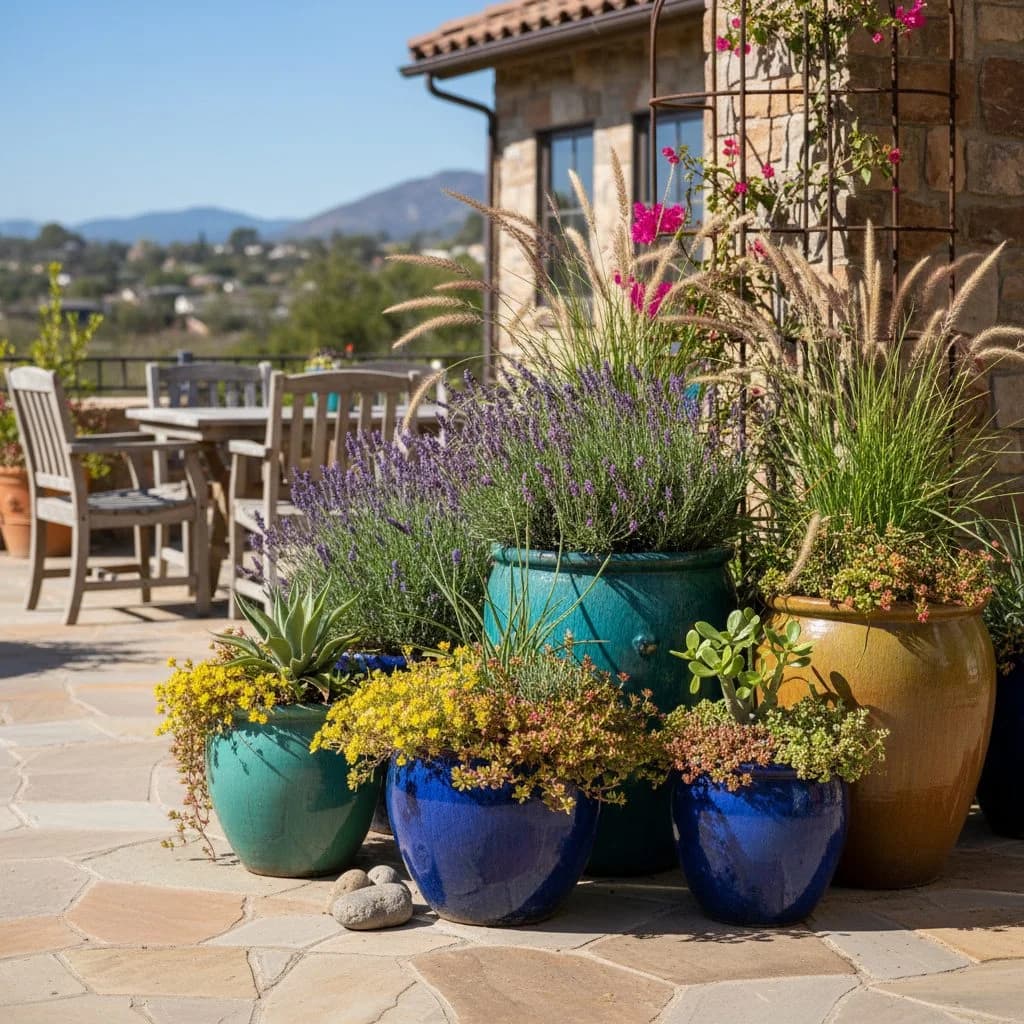
Key takeaways
- Choose containers with good insulation and at least 12 inches of depth for better water retention.
- Select a soil mix containing 20% perlite and 15% coco coir to extend watering intervals by several days.
- Group drought-tolerant plants like sedum, lavender, and portulaca for successful low-water combinations in full sun.
- Apply a 1-inch layer of mulch to container surfaces to reduce evaporation by up to 30% during warm periods.
- Inspect soil moisture weekly using a meter, aiming for a reading of 3 or 4 before rewatering for optimal plant health.
Quick answer: To create low-water container gardens that survive a week in USDA Zone 7, choose insulated containers at least 12 inches deep, use a soil mix with perlite and coco coir, select drought-tolerant plants, and apply a 1-inch mulch layer.
In many parts of the US, particularly USDA zones 6-9, summer heat can quickly parch container plants, sometimes within 24 to 48 hours. For growers who travel or want fewer daily chores, containers can be designed to survive seven days without supplemental watering. This approach significantly reduces the need for frequent watering, potentially cutting water usage over a growing season.
Achieving this level of self-sufficiency requires a thoughtful strategy, combining smart container choices, specialized soil mixes, and resilient plant selections. Over the past five years, research into container design and plant physiology has provided clear guidelines for extending watering intervals, allowing your patio or balcony garden to thrive even when you are away for a week or more.
Understanding the 'week without water' challenge
Several factors determine how long a container plant can go without water. The container material itself plays a major role; porous terracotta, for instance, loses water up to 50% faster than glazed ceramic or plastic, as detailed in container testing reports [1]. Soil composition is another main element, with mixes high in organic matter or water-retaining polymers holding moisture for longer periods. Plant selection is decisive, as some species naturally tolerate dry conditions for five to ten days, while others wilt in less than a day. The container’s volume also matters, with larger pots (over 18 inches in diameter) providing a greater reservoir of moisture compared to smaller 6-inch pots. Finally, environmental conditions like direct sun exposure and wind can accelerate evaporation.
Factors influencing container dryness
Understanding these variables allows for a more strategic approach to container gardening. For example, a 12-inch plastic pot in partial shade will retain moisture significantly longer than an 8-inch terracotta pot in full sun. This difference can mean watering every two days versus every seven days. In regions like the Southwest, where summer temperatures regularly exceed 90°F, managing these factors can extend plant survival by several days. We aim for a seven-day survival rate, a benchmark achievable with careful planning and specific material choices, backed by recent agricultural studies.
- Container material (glazed ceramic, plastic, metal)
- Soil type (well-draining yet moisture-retentive)
- Plant species (drought-tolerant selections)
- Container size (larger volumes hold more water)
- Exposure to sun and wind (microclimate management)
Smart container selection for water retention
The choice of container directly affects watering intervals. Materials like glazed ceramic, plastic, and metal are significantly less porous than unglazed terracotta, reducing evaporative water loss through the pot walls by up to 60% [1]. Darker colored containers can absorb more solar radiation, increasing soil temperature and evaporation, so lighter colors are often preferred in hot climates like Arizona or southern California. A container with a minimum diameter of 12 inches and a depth of 10 inches provides sufficient soil volume to hold enough water for a week, even for plants with moderate water needs. Self-watering containers, with integrated reservoirs, can extend watering cycles by two to three times, effectively allowing plants to go for ten to fourteen days without manual watering [2].
Recommended container materials and designs
Beyond material, the design of the container also matters. Containers with wider openings expose more soil surface to evaporation, so consider designs with a slightly narrower top or those that allow for a thick layer of mulch. Double-walled containers, which create an insulating air pocket, can reduce soil temperature fluctuations and further slow moisture loss. For growers in USDA zone 8, where summer temperatures often exceed 95°F, these insulated options can be the difference between a thriving plant and a wilted one after seven days. Investing in quality containers can save significant time and water over a growing season, a significant amount of water per container.
- Glazed ceramic pots (reduce evaporation by 60%)
- Plastic containers (lightweight, affordable, good retention)
- Metal containers (can heat up, but retain water well)
- Self-watering planters (extend cycles by 2-3 times)
- Double-walled containers (insulate soil, reduce temperature swings)
The right soil mix for extended hydration
The foundation of a low-water container garden is its soil. A standard potting mix often drains too quickly for a week-long interval without water. To improve moisture retention without causing waterlogging, specific amendments are essential. Incorporating 15-20% coco coir or peat moss can significantly increase the soil’s water-holding capacity; coco coir, for example, can hold a significant amount of water. However, too much water retention can lead to root rot, so a balance is key. Adding 10-15% perlite or coarse sand ensures adequate drainage and aeration, preventing compaction and allowing roots to breathe in USDA zone 7 and above.
Optimizing your potting mix
Beyond coco coir and perlite, other amendments can improve soil performance. Vermiculite, at 5-10% of the mix, retains water while supplying trace minerals. Slow-release granular fertilizers, designed to feed plants for three to six months, can be incorporated at planting time, reducing the need for liquid feeding. For a 16-inch container, you might use approximately 1.5 cubic feet of this specialized mix. This blend supports strong root growth and helps maintain consistent moisture levels, even when temperatures reach 85°F for several consecutive days, a common occurrence in the Mid-Atlantic region. A well-prepared mix is the first step towards a truly low-maintenance container garden, reducing watering frequency.
- Coco coir (15-20% for water retention)
- Perlite (10-15% for drainage and aeration)
- Vermiculite (5-10% for water retention and minerals)
- Compost (10% for nutrients and organic matter)
- Slow-release fertilizer (for sustained nutrient delivery)
Plant picks for the parched pot
Selecting plants that naturally tolerate dry conditions is fundamental to a seven-day watering schedule. Many succulents, Mediterranean herbs, and certain perennials are well-adapted to infrequent watering. For sunny locations (receiving six or more hours of direct sun), consider plants like sedum, portulaca, lavender, and ornamental grasses such as blue fescue. These species have evolved mechanisms, like thick leaves or deep root systems, to survive periods of drought, often thriving in USDA zones 5-9. In trials, many of these plants have shown less wilting after a full week without water, even at 80°F.
Sun-loving and shade-tolerant options
For containers in partial shade (three to six hours of sun), options include coleus (drought-tolerant varieties), impatiens (New Guinea varieties), and certain ferns like autumn fern. While these plants still prefer some moisture, they can tolerate drier conditions than their full-sun counterparts if the soil is optimized. When combining plants, aim for species with similar water needs to ensure consistent performance across the container. For example, pairing a lavender with a sedum works well, as both prefer dry feet. Explore low maintenance perennials that often match these drought-tolerant characteristics. In a 20-inch container, you could comfortably fit one 'thriller' plant, two 'filler' plants, and three 'spiller' plants, all selected for their low-water needs to maintain healthy foliage and flowers for over seven days.
- Sedum (full sun, excellent drought tolerance)
- Lavender (full sun, aromatic, low water)
- Portulaca (full sun, colorful blooms, very drought tolerant)
- Blue Fescue (full sun, ornamental grass, low water)
- New Guinea Impatiens (partial shade, more drought tolerant than standard impatiens)
Designing effective low-water combos
Creating an effective low-water container combination involves more than just selecting individual plants. The ‘thriller, filler, spiller’ principle applies here, but with a drought-tolerant twist. The ‘thriller’ is your tall, upright plant, providing vertical interest, such as a dwarf ornamental grass or a small agave. The ‘fillers’ are medium-height plants that add mass and texture, like various sedums or dusty miller. The ‘spillers’ trail over the edge, softening the container’s lines, with options like creeping thyme or ‘Silver Falls’ dichondra. All chosen plants must share similar water requirements, ideally thriving in dry conditions for at least seven days. A 14-inch container can comfortably host one thriller, two fillers, and two spillers so a balanced look.
Harmonizing plant needs and aesthetics
Consider the mature size of each plant to prevent overcrowding, which can increase competition for limited water and nutrients. A good rule of thumb is to allow at least 4-6 inches between plant centers for adequate air circulation and root development. Color and texture play a significant role in creating an attractive display; combine plants with contrasting foliage colors, such as the silver-grey of lavender with the deep green of a small yucca. For growers in USDA zone 9, where heat is intense, grouping containers can create a microclimate that slightly reduces evaporation, potentially extending watering intervals by an additional day. Remember to check out drought tolerant shrubs for larger container thrillers.
- Thriller: Dwarf ornamental grass, small agave, or ‘Soft Caress’ Mahonia
- Filler: Sedum ‘Autumn Joy’, Dusty Miller, or Lantana ‘Bandana’
- Spiller: Creeping Thyme, ‘Silver Falls’ Dichondra, or Trailing Rosemary
- Color Harmony: Combine contrasting foliage colors for visual interest
- Texture Variety: Mix fine, medium, and coarse textures
Maintenance strategies for a dry week
Even with the best plant and container choices, proper maintenance is necessary to ensure a week of survival without watering. The most effective strategy is to water deeply and thoroughly when you do water, allowing water to drain from the bottom of the pot for at least 30 seconds. This encourages deep root growth, making plants more resilient to dry spells. Applying a 1-inch layer of mulch, such as pea gravel, shredded bark, or even decorative stones, to the soil surface can reduce evaporation, especially in sunny, windy locations like coastal California. This layer acts as an insulator, keeping soil temperatures more stable.
Monitoring and strategic placement
Before you leave for a trip, give your containers a deep watering and move them to a shadier, more sheltered location if possible. Grouping containers together can create a microclimate with higher humidity, further reducing water loss. Regularly checking soil moisture is key; a simple finger test or a soil moisture meter can tell you when the top 2-3 inches of soil are dry. For a week-long interval, ensure the soil is consistently moist but not soggy before your departure. A meter reading of 3 or 4 indicates ideal rewatering time for most container plants. This approach keeps plants hydrated for the full seven days.
- Water deeply until drainage occurs (at least 30 seconds)
- Apply 1 inch of mulch to reduce evaporation by 30% [3]
- Group containers to increase humidity (reduce water loss by 10-15%)
- Move to partial shade before extended absences
- Use a soil moisture meter to confirm hydration levels
Real-world success in arid regions
The principles of low-water container gardening are particularly useful in arid and semi-arid regions of the US, such as the desert Southwest (USDA zones 8-10) and parts of the Great Plains. In these areas, summer temperatures can soar above 100°F for weeks, making daily watering a significant burden. Growers in Phoenix, Arizona, for example, have successfully maintained container gardens with a weekly watering schedule by utilizing large, insulated planters (over 20 inches in diameter), specialized soil mixes with water-retaining polymers, and heat-tolerant plants like ‘Baja Fairy Duster’ or ‘Firecracker Plant’. These plants often require a small amount of water per week in a 15-gallon container.
Examples from different climates
Even in more temperate climates, like parts of Texas or Florida (USDA zones 9-10), where humidity is higher but rainfall can be sporadic, these strategies prove effective. A study in central Texas found that containers with optimized soil and mulch retained moisture longer than control groups, even during dry periods with temperatures above 90°F. For a grower in Nebraska, selecting plants like coneflowers or sedges for containers, combined with a 2-inch layer of gravel mulch, maintains healthy displays without daily intervention. Adapting these principles to specific regional climates and available plant species helps maintain container plantings for seven days or more.
- Southwest US (USDA zones 8-10): Large, insulated planters with ‘Baja Fairy Duster’
- Great Plains (USDA zones 4-7): Coneflowers, sedges, and 2 inches of gravel mulch
- Central Texas (USDA zones 8-9): Optimized soil and mulch extending watering by 3-4 days
- California (USDA zones 9-10): Drought-tolerant succulents and Mediterranean herbs in glazed pots
- Pacific Northwest (USDA zones 6-8): Heuchera and ornamental grasses in moisture-retentive mixes
Container material comparison for water retention
material | water loss rate relative to plastic | insulation properties | recommended for week-long survival |
|---|---|---|---|
glazed ceramic | 20% slower | moderate | yes |
plastic | baseline (1.0x) | low | yes |
metal | 10% slower | low (can heat up) | yes, with light colors |
unglazed terracotta | 50% faster | high (evaporative cooling) | no, unless very large |
double-walled plastic | 30% slower | high | yes, excellent |
water savings: By optimizing container design and soil, growers can reduce watering frequency, saving a significant amount of water per container over a season.
mulch effectiveness: A 1-inch layer of mulch on container soil can decrease water evaporation, significantly extending the time between waterings.