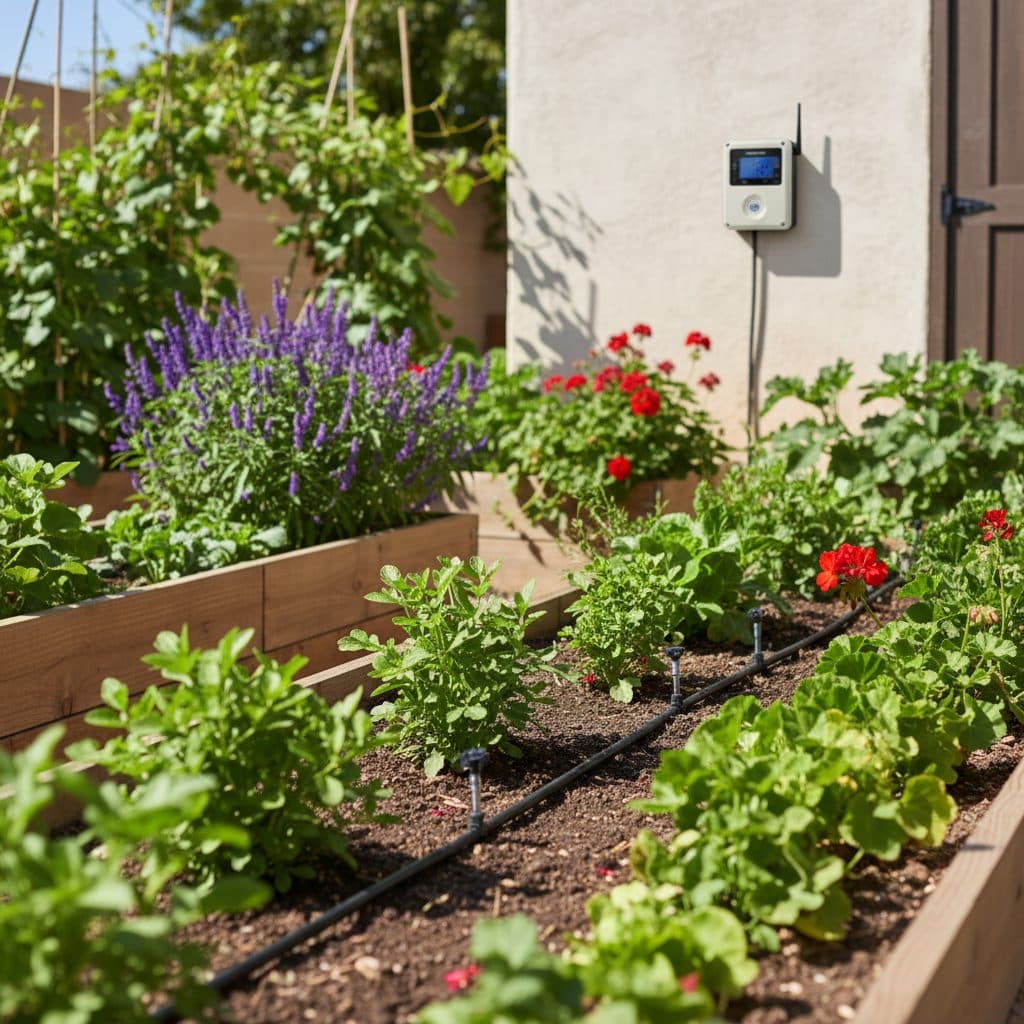
Key takeaways
- Smart irrigation controllers can reduce outdoor water use by up to 30% by adjusting schedules based on real-time weather data and plant needs.
- Rain sensors automatically pause irrigation systems when rainfall occurs, preventing wasteful watering and saving thousands of gallons annually.
- Graywater systems, particularly laundry-to-landscape setups, can reuse 30-50% of indoor household water for irrigation, significantly reducing potable water demand.
- Integrating these technologies provides a comprehensive approach to water management, especially in drought-prone regions like the American Southwest.
- Understanding local regulations for graywater reuse is essential, as rules vary by state and municipality across the US.
- Even simple, low-cost graywater systems can make a substantial difference in water conservation for home gardens and small homesteads.
Quick answer: Smart irrigation controllers, rain sensors, and graywater systems help US growers save 30% or more on outdoor water use by optimizing irrigation schedules, preventing wasteful watering, and reusing household water for landscape needs.
In many parts of the United States, water scarcity is an ongoing reality. States like California, Arizona, and Texas have faced prolonged drought conditions, pushing growers to rethink how they manage their outdoor water resources. A typical American household uses approximately 300 gallons of water per day, with about 30% of that (or 90 gallons) dedicated to outdoor irrigation. This figure can climb to 60% in arid regions during summer months, offering a major opportunity for conservation.
Fortunately, growers have access to powerful tools that can dramatically reduce this outdoor water footprint. By integrating smart irrigation controllers, employing rain sensors, and implementing graywater reuse systems, it’s possible to achieve substantial water savings, often 30% or more. These technologies work for home gardens and small homesteads as well as large farms, reducing utility bills and conserving water across USDA zones.
Smart irrigation controllers: optimizing water delivery
Smart irrigation controllers improve on traditional timers by providing more precise and responsive watering schedules. Unlike basic timers that operate on fixed schedules, smart controllers use a variety of data inputs (including local weather forecasts, historical weather data, soil moisture levels, and plant types) to automatically adjust watering schedules. This means your garden in USDA zone 7 will receive water only when and where it’s truly needed, preventing both under- and overwatering.
How smart controllers work
These devices often connect to the internet, pulling real-time weather data from local stations or even using on-site sensors to gauge conditions. For instance, a controller might delay watering if a 90% chance of rain is predicted for your area in central Florida, or increase irrigation during a heatwave in the high desert of New Mexico. Research indicates that smart controllers can reduce outdoor water use by up to 30% compared to conventional timers, making them a wise investment for water-conscious growers [2]. They are especially effective when paired with drought tolerant plants, which have lower water requirements to begin with.
- Weather-based scheduling: Adjusts based on local weather conditions.
- Soil moisture sensing: Monitors actual soil moisture content.
- Plant-specific programming: Tailors watering to different plant needs.
- Remote access: Allows control via smartphone apps.
- Water use reporting: Tracks consumption over time.
Rain sensors: preventing overwatering and wasted resources
While smart controllers are excellent at predicting weather, a dedicated rain sensor provides an immediate, on-site response to actual rainfall. These simple devices connect directly to your irrigation system, acting as an override mechanism. When a specific amount of rain (often as little as 1/8 inch) is detected, the sensor signals the controller to pause or skip scheduled watering cycles. This prevents the common sight of sprinklers running during or immediately after a downpour, a significant source of water waste.
Types and effectiveness of rain sensors
Rain sensors come in various forms, from basic hygroscopic disk sensors that swell when wet to more advanced tipping bucket or optical sensors. A study on irrigation efficiency in residential landscapes found that installing a rain sensor could save a typical homeowner in a humid subtropical climate, like Houston, Texas, thousands of gallons of water each year. For a 1/4 acre property, this could easily translate to 5,000 to 10,000 gallons saved annually, especially in regions with unpredictable summer storms. This is an important part of homesteading in Texas where water conservation is paramount.
- Hygroscopic disk sensors: Expand when wet, breaking an electrical connection.
- Tipping bucket sensors: Measure rainfall by counting bucket tips.
- Wireless sensors: Offer easier installation and placement flexibility.
- Freeze sensors: Often integrated to prevent irrigation in freezing temperatures.
- Wind sensors: Can prevent watering during high winds to reduce drift.
Graywater systems: a sustainable source for landscape irrigation
Beyond optimizing potable water use, graywater systems offer the opportunity to reclaim and reuse water that would otherwise go down the drain. Graywater is defined as wastewater from sinks, showers, bathtubs, and washing machines; essentially all domestic wastewater except that from toilets (which is called blackwater) [3]. While some states, like California, have relaxed regulations for graywater reuse, others have stricter rules, sometimes even excluding kitchen sink water due to potential grease and food particle content. Always check your local codes before installation.
Simple laundry-to-landscape systems
One of the simplest and most cost-effective graywater systems is the ‘laundry-to-landscape’ setup. This diverts water from your washing machine directly to your garden using a simple valve and gravity-fed distribution lines. A typical household can reuse 30-50% of its indoor water for irrigation through such systems, significantly reducing reliance on municipal water supplies [4]. For a family of four, this could mean diverting hundreds of gallons per week to thirsty plants. This approach is particularly appealing for those pursuing off-grid living or seeking greater water independence.
- Laundry water: Ideal for direct reuse in landscapes.
- Shower/bath water: Can be diverted with simple systems.
- Bathroom sink water: Generally safe for landscape irrigation.
- Kitchen sink water: Often excluded due to food particles and grease.
- Toilet water: Always considered blackwater and not for graywater systems.
Integrating technologies for comprehensive water management
The true power of these water-saving strategies emerges when they are combined into a cohesive system. Imagine a garden in USDA zone 8, perhaps in central Arizona, where water is a precious commodity. A smart irrigation controller manages the primary potable water supply, applying water based on local weather and plant needs. Integrated rain sensors provide an immediate override, preventing any irrigation if a sudden desert downpour occurs, even if the smart controller hadn’t yet updated its forecast.
A holistic approach to garden hydration
Supplementing this, a laundry-to-landscape graywater system diverts hundreds of gallons of gently used water each week to drought-tolerant shrubs and fruit trees, like those found in drought tolerant shrubs guides. This layered approach ensures that potable water is used only when absolutely necessary and that every available drop of water is put to productive use. By combining these technologies, a grower can realistically reduce their outdoor water consumption by 50% or more, creating a resilient landscape that thrives even under challenging conditions. This integrated system conserves water while reducing the energy required for water treatment and delivery.
- Smart controller as primary manager: Optimizes potable water schedules.
- Rain sensor as immediate override: Prevents watering during rainfall.
- Graywater as supplemental source: Provides non-potable water for specific plants.
- Drought-tolerant plant selection: Reduces overall water demand.
- Mulching: Retains soil moisture, further reducing irrigation needs.
Water Savings: Smart controllers can cut outdoor water use by up to 30%, saving hundreds of dollars annually on utility bills for an average 1/4 acre property.
Graywater Potential: A typical US household can reuse 30-50% of its indoor water for landscape irrigation through simple graywater systems, diverting thousands of gallons from sewers.
Frequently asked questions
What is the average cost of a smart irrigation controller?
Smart irrigation controllers typically range from $100 to $300, depending on features and brand. Many local water utilities offer rebates that can cover 50% or more of the purchase price, making them a very affordable upgrade.
Are rain sensors compatible with all irrigation systems?
Most modern irrigation systems are designed to be compatible with standard rain sensors, which usually connect via a simple low-voltage wire. Older systems might require a small wiring modification, but compatibility is generally high, covering over 95% of residential setups.
What plants are suitable for graywater irrigation?
Many plants thrive on graywater, especially established trees, shrubs, and ornamental plants. Fruiting plants and root vegetables are generally not recommended for direct graywater contact due to potential health concerns, but over 80% of common landscape plants tolerate it well.
Are graywater systems legal everywhere in the US?
Graywater legality varies significantly by state and local municipality. States like California and Arizona have relatively permissive codes, while others have stricter regulations or require permits. Always check your local building and health department codes before installing any graywater system to ensure compliance with 100% of local rules.
How much water can a graywater system save annually?
A well-designed graywater system can save a significant amount of water. For a typical family of four, diverting laundry and shower water can save over 24,000 gallons of potable water per year, reducing municipal water demand by 30-50% for outdoor irrigation.
Can smart controllers and rain sensors work together?
Yes, smart controllers and rain sensors are designed to work in conjunction. The rain sensor acts as an immediate override, pausing irrigation if rain is detected, even if the smart controller’s predictive weather model hadn’t yet adjusted its schedule. This integrated approach ensures maximum water efficiency, preventing over 99% of unnecessary watering during rain events.
References
- IoT Physical Layer: Sensors, Actuators, Controllers and Programming (2019). IoT Physical Layer: Sensors, Actuators, Controllers and Programming.
- Smart Controllers (2021). Smart Controllers.
- Guidance Manual for Separation of Graywater from Blackwater for Graywater Reuse (2011). Guidance Manual for Separation of Graywater from Blackwater for Graywater Reuse.
- Perception and use of graywater in Berkeley, California (2023). Perception and use of graywater in Berkeley, California.
- Aluminum Rain (2011). Aluminum Rain.
- USDA Natural Resources Conservation Service (2024). USDA Natural Resources Conservation Service.