Key takeaways
- Optimal night temperatures for tomato ripening are consistently between 60°F and 70°F.
- Temperatures consistently above 75°F at night can significantly stall lycopene production and fruit coloring.
- Implement cooling strategies like shade cloth or improved air circulation during prolonged heat waves.
- Harvest mature green tomatoes and ripen them indoors at 65°F to 70°F if outdoor night temperatures remain high.
- Ensure adequate soil moisture and balanced nutrition to support overall plant health and fruit development.
- Monitoring night temperatures is a critical practice for achieving a successful and flavorful tomato harvest, especially in warmer US regions.
Quick answer: Tomatoes often fail to ripen in USDA Zone 6 and warmer regions due to consistently high night temperatures, typically above 75°F, which inhibits lycopene production. Implementing cooling strategies like shade cloth or harvesting mature green tomatoes for indoor ripening can help.
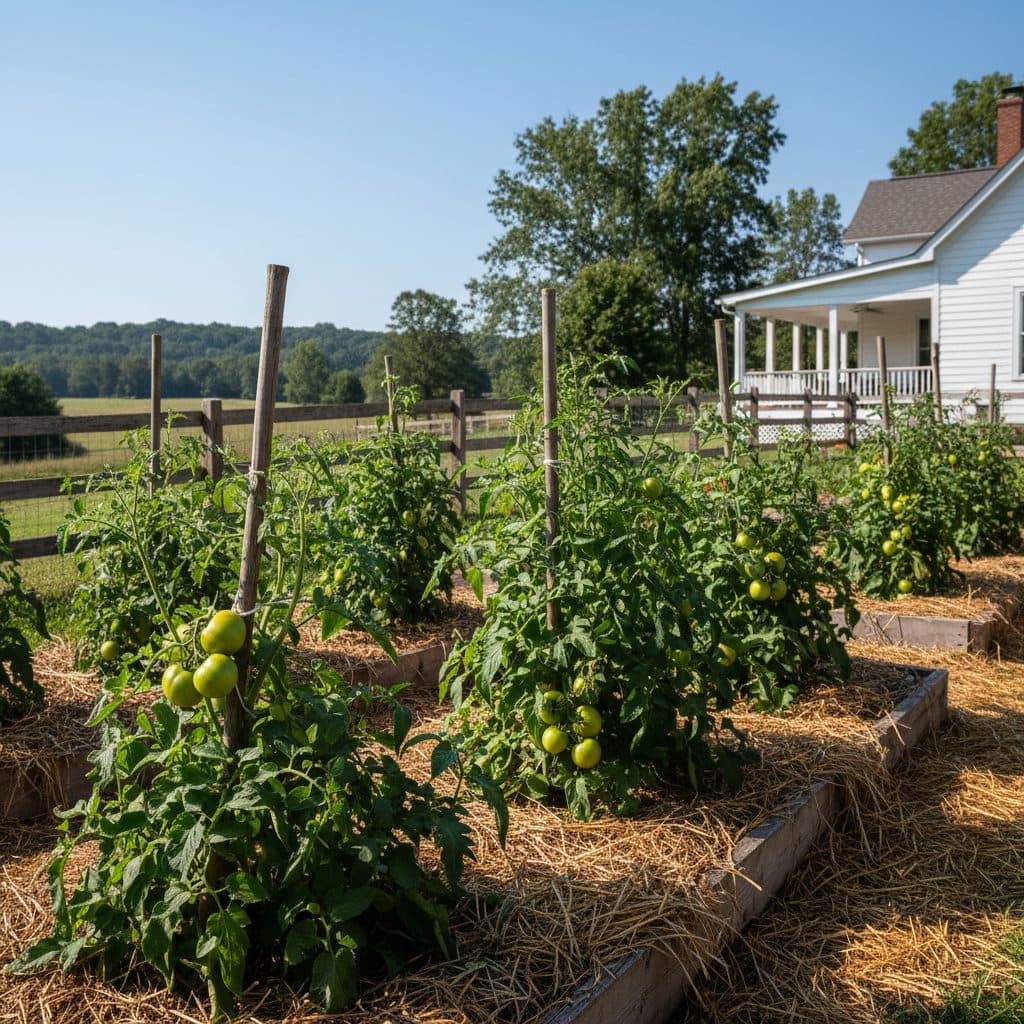
If you’ve ever walked into your garden in a place like central Oklahoma, where summer nights often stay above 75°F, only to find a vine full of green tomatoes that refuse to turn red, you’re not alone. It’s a common frustration for many US growers, especially as our summers seem to be getting warmer. You’ve done everything right: planted on time, fertilized, and watered consistently, yet your harvest is stuck in a perpetual state of green.
Disease and nutrient deficiency can play a role, but the primary factor preventing your tomatoes from ripening is often something you can’t easily see: the night temperature. Understanding this environmental variable, and how to mitigate its effects, can improve your tomato yield and flavor, turning those stubborn green fruits into juicy, ripe reds.
The mystery of the green tomato: more than just waiting
Many growers in regions like the Carolinas, where summer humidity and heat are common, encounter a frustrating phenomenon: seemingly healthy tomato plants laden with fruit that simply won’t color up. This isn’t always a sign of a problem with the plant itself, but rather an environmental signal. While waiting patiently is part of gardening, a prolonged lack of ripening, especially when fruits are full-sized, points to specific issues. For instance, some varieties might show green shoulders or blotchy ripening, indicating uneven development rather than a simple delay. Understanding the underlying causes is the first step toward a successful harvest, often involving more than just time.
Common culprits behind ripening stalls
Beyond night temperatures, several factors can contribute to tomatoes failing to ripen. These include temperature stress (both day and night), nutrient imbalances, and water fluctuations. For example, a sudden drought followed by heavy watering can cause fruits to crack and ripen unevenly. Also, companion planting choices can sometimes influence plant vigor; learning what not to plant with tomatoes can help avoid competitive growth issues. In many cases, a combination of these stressors prevents the fruit from completing its natural ripening cycle, leaving you with a bounty of green, hard tomatoes instead of the soft, red ones you anticipate.
- Excessive nitrogen fertilization leading to lush foliage but poor fruit set.
- Inconsistent watering causing blossom end rot or fruit cracking.
- Pest pressure or disease reducing plant vitality and energy for ripening.
- Lack of proper sunlight exposure for lower fruits on dense plants.
- Soil pH outside the optimal range of 6.0 to 6.8, affecting nutrient uptake.
Night temperatures: the silent saboteur of ripening
The most significant, yet often overlooked, factor in tomato ripening is the night temperature. While tomato plants, botanically known as Solanum lycopersicum, thrive in warm daytime conditions, consistently high night temperatures above 70°F can halt the ripening process. Research from 1988 on glasshouse tomatoes showed that optimal fruit development and yield occurred with night temperatures between 64°F and 68°F. When night temperatures consistently exceed 75°F, the plant’s metabolic processes shift. Instead of producing the red pigments we desire, the plant focuses on survival, often leading to a complete stall in color development.
How high temperatures affect fruit color
The vibrant red color of a ripe tomato comes primarily from lycopene production, a carotenoid pigment. This process is highly sensitive to temperature. When night temperatures climb above 75°F (24°C) for several consecutive days, the enzymes responsible for carotenoid synthesis become inactive. This means the fruit, even if mature green, simply cannot produce the red pigment. While some yellow and orange pigments might still develop, the characteristic red will be absent. The plant’s respiration rates also increase at higher temperatures, consuming more sugars that would otherwise contribute to fruit sweetness and flavor. This metabolic shift prioritizes energy expenditure for basic plant functions over fruit quality, impacting both color and taste significantly.
- Inhibits lycopene synthesis, preventing red color development.
- Increases respiration, reducing sugar accumulation in fruits.
- Can lead to firmer, less juicy fruit texture.
- May cause uneven ripening, such as green shoulders.
- Reduces overall fruit quality and market value in commercial settings.
Strategies for a cooler night: helping your tomatoes ripen
When summer nights consistently hover above 70°F, as they often do in USDA zone 7, growers need proactive strategies to encourage ripening. One effective method is using shade cloth. A 30% to 50% shade cloth draped over plants during the hottest parts of the day and night can reduce ambient temperatures around the fruit by several degrees. This small temperature drop can be enough to reactivate the enzymes needed for lycopene production. For example, a study from 1994 on greenhouse tomatoes showed that even slight reductions in night temperature could impact leaf area and dry weight accumulation, indicating overall plant health benefits.
Practical cooling methods for the home garden
Improving air circulation is another simple yet effective tactic. Pruning lower leaves and suckers can increase airflow, helping to dissipate heat trapped around the plants. For small plots, a simple oscillating fan can be run near plants during peak heat, especially in a contained space like a reflective indoor grow tent. Deep watering in the early morning can also help cool the soil as the water evaporates throughout the day, providing a slight evaporative cooling effect. Additionally, applying a thick layer of mulching around the base of plants helps insulate the soil, keeping root zones cooler during hot spells. Monitoring soil moisture with a soil moisture meter ensures plants are adequately hydrated, which is crucial for coping with heat stress.
- Install 30% to 50% shade cloth over plants during heat waves.
- Prune lower leaves and suckers to improve air circulation.
- Water deeply in the early morning to cool soil and provide hydration.
- Apply a 3 to 4 inch layer of organic mulch to insulate root zones.
- Consider temporary misting systems for evaporative cooling in dry climates.
Harvesting and ripening mature green fruit: a controlled approach
When outdoor night temperatures consistently remain above 75°F and cooling strategies aren’t enough, harvesting tomatoes at the mature green stage is a viable option. A mature green tomato will have a slight pale-green or whitish-green color break at the blossom end, indicating it’s ready to be picked and ripened indoors. This technique is particularly useful in regions like Florida, where late summer heat can be relentless. Research from 2002 showed that treatments like 1-methylcyclopropene (1-MCP) can extend the postharvest life of ripe tomatoes and delay ripening in green tomatoes, demonstrating the controlled nature of this process.
Best practices for indoor ripening
To ripen mature green tomatoes indoors, the key is a consistent environment. Place fruits in a single layer in a cardboard box or paper bag, away from direct sunlight, at a consistent temperature between 65°F and 70°F. Adding a ripe banana or apple to the container can accelerate ripening, as these fruits release ethylene gas, a natural plant hormone that triggers the ripening process. Avoid refrigerating green tomatoes, as temperatures below 50°F can permanently inhibit ripening and lead to mealy texture. Proper soil enrichment with products like fermented soybean meal organic fertilizer earlier in the season supports strong plants that produce robust, mature green fruits capable of ripening well off the vine, providing a consistent harvest even when the weather doesn’t cooperate.
- Select mature green tomatoes showing a slight color change at the blossom end.
- Place fruits in a single layer in a cardboard box or paper bag.
- Maintain an indoor temperature between 65°F and 70°F for optimal ripening.
- Add a ripe apple or banana to the container to release ethylene gas.
- Check fruits daily and remove any that show signs of spoilage.
Impact of Night Temperature on Tomato Ripening
Night Temperature Range | Effect on Ripening | Fruit Characteristics |
|---|---|---|
60°F – 70°F (16°C – 21°C) | Optimal ripening, efficient lycopene production. | Vibrant red color, rich flavor, soft texture. |
70°F – 75°F (21°C – 24°C) | Ripening slows, lycopene production reduced. | Palerr color, slightly firmer, less intense flavor. |
Above 75°F (24°C) | Ripening halted, lycopene synthesis inhibited. | Stays green or develops blotchy yellow/orange, firm, poor flavor. |
Lycopene Threshold: Lycopene production, crucial for red color, is significantly inhibited when night temperatures consistently exceed 75°F (24°C), as shown in 1988 research.
Optimal Night Range: For greenhouse tomatoes, optimal night temperatures for fruit development and yield are between 64°F and 68°F (18°C-20°C), according to a 1988 study.
Frequently asked questions
Why do my tomatoes stay green even after they’re full-sized?
The most common reason is consistently high night temperatures, especially above 75°F. These temperatures inhibit the enzymes responsible for producing lycopene, the red pigment. This can lead to a complete stall in ripening, leaving your tomatoes green for weeks.
What is the ideal night temperature for tomato ripening?
Tomatoes ripen best when night temperatures are consistently between 60°F and 70°F (16°C-21°C). This range allows for optimal lycopene synthesis and sugar accumulation, resulting in flavorful, red fruits. Temperatures outside this range can slow or halt the process.
Can I ripen green tomatoes indoors?
Yes, you can ripen mature green tomatoes indoors. Harvest them when they reach full size and show a slight color change at the blossom end. Place them in a paper bag or cardboard box at room temperature, ideally between 65°F and 70°F, for 1 to 2 weeks.
Does shade cloth help with tomato ripening?
Yes, using a 30% to 50% shade cloth during heat waves can help. It reduces the ambient temperature around the plants by several degrees, potentially bringing night temperatures back into the optimal range for ripening. This can be particularly effective in regions with intense summer sun.
What nutrients affect tomato ripening?
While night temperature is key, balanced nutrition is also important. Excessive nitrogen can promote leafy growth at the expense of fruit development, while deficiencies in potassium or phosphorus can hinder ripening. A balanced fertilizer, like a 5-10-10, is often recommended during fruit set.
How long does it take for a green tomato to ripen indoors?
A mature green tomato typically takes 1 to 2 weeks to ripen indoors when kept at a consistent temperature of 65°F to 70°F. Adding a ripe apple or banana, which releases ethylene gas, can sometimes accelerate this process by a few days.
References
- Use of 1-MCP to extend the time to ripen of green tomatoes and postharvest life of ripe tomatoes (2002). [Use of 1-MCP to extend the time to ripen of green tomatoes and postharvest life of ripe tomatoes](https://doi.org/10.1016/s0925-5214(01)00201-0).
- Allow the Word to Ripen (2025). Allow the Word to Ripen.
- The effect of different day/night temperature regimes on growth, development and yield of glasshouse tomatoes (1988). The effect of different day/night temperature regimes on growth, development and yield of glasshouse tomatoes.
- 484 PB 420 VARIANCE COMPONENTS FOR LEAF AREA AND DRY WEIGHT ACCUMULATION IN GREENHOUSE TOMATOES GROWN UNDER DIFFERENT LIGHT AND NIGHT TEMPERATURE CONDITIONS (1994). 484 PB 420 VARIANCE COMPONENTS FOR LEAF AREA AND DRY WEIGHT ACCUMULATION IN GREENHOUSE TOMATOES GROWN UNDER DIFFERENT LIGHT AND NIGHT TEMPERATURE CONDITIONS.
- Night Photography Equipment (2012). Night Photography Equipment.
- USDA Natural Resources Conservation Service (2024). USDA Natural Resources Conservation Service.