Key takeaways
- The United Kingdom corresponds broadly to USDA Plant Hardiness Zones 7 through 10, with the vast majority of lowland England and Wales situated in Zones 8b to 9a.
- The Royal Horticultural Society (RHS) uses a nine-tier hardiness scale (H1a to H7) that provides more practical guidance for British maritime growing conditions.
- Winter wetness in clay soil causes significantly more plant losses in the UK than absolute freezing air temperatures.
- Coastal fringes, urban heat islands (such as Greater London), and southwestern peninsulas support tender plants that perish in upland or eastern regions.
- North Atlantic maritime air buffers British winters, giving the UK much milder minimum winter temperatures than continental regions at identical latitudes.
Quick answer: The United Kingdom sits predominantly within USDA Hardiness Zones 8 and 9, with inland Scotland and northern uplands in Zone 7 and sheltered coastal areas of Cornwall in Zone 10. For practical gardening, the Royal Horticultural Society (RHS) H1a to H7 rating system is the standard UK benchmark for assessing cold hardiness.
When reading international gardening books, plant catalogues, or online seed databases, British gardeners frequently encounter USDA Hardiness Zone numbers. Understanding UK hardiness zones and how they correlate with domestic growing conditions prevents costly planting mistakes.
At 50°N to 58°N latitude, the British Isles sit as far north as Calgary, Canada, or southern Alaska. However, the Gulf Stream and North Atlantic Drift deliver warm oceanic currents that moderate British winters. As a result, UK gardens rarely experience the prolonged, deep continental freezes seen at similar latitudes in North America or Eastern Europe.
Instead, UK growers face unique challenges: damp maritime air, low winter light levels, waterlogged soils, and unpredictable late spring frosts. Translating international zone figures into practical British growing strategies requires looking at both temperature thresholds and soil drainage.
+-----------------------------------------------------------------+
|              UK CLIMATE PROFILE SUMMARY                         |
|                                                                 |
|   REGION               USDA EQUIVALENT   MIN RHS RATING NEEDED  |
|   ------               ---------------   ---------------------  |
|   Scottish Highlands   Zone 7a - 7b      H6 - H7                |
|   Northern England     Zone 8a - 8b      H5 - H6                |
|   Midlands & Lowlands  Zone 8b - 9a      H4 - H5                |
|   Greater London       Zone 9a           H3 - H4                |
|   Cornwall & Scilly    Zone 9b - 10a     H2 - H3                |
+-----------------------------------------------------------------+
What USDA zone is the UK?
The USDA Plant Hardiness Zone system categorises regions based strictly on the average annual minimum winter temperature. Under this single metric, the UK spans across four primary zones:
+-----------------------------------------------------------------+
|              USDA ZONES ACROSS THE BRITISH ISLES                |
|                                                                 |
|   ZONE    MIN TEMP RANGE (°C)     REPRESENTATIVE LOCATIONS      |
|   ----    -------------------     ------------------------      |
|   7a/7b   -17.8°C to -12.2°C      Cairngorms, Grampians         |
|   8a/8b   -12.2°C to -6.7°C       Yorkshire, East Anglia        |
|   9a/9b   -6.7°C to -1.1°C        London, Coastal Wales         |
|   10a     -1.1°C to +1.7°C        Penzance, Isles of Scilly     |
+-----------------------------------------------------------------+
While these temperature numbers match parts of the Pacific Northwest or southern United States, summer conditions are markedly different. A plant rated for USDA Zone 8 in the US might require hot summer sunshine to ripen its wood and set flower buds, which a cool, cloudy British summer cannot provide. To explore zone crop timings, see our USDA zone vegetable calendar.
How does the RHS hardiness rating system work?
To provide a more practical framework for British growing conditions, the Royal Horticultural Society established the nine-tier hardiness rating system (H1a, H1b, H1c, and H2 to H7), updated in 2013 to better capture the UK's frost and heated-glasshouse realities. Unlike the USDA system, which maps geographic regions, RHS ratings are assigned directly to individual plant varieties to describe their specific protection needs in the UK.
+-----------------------------------------------------------------+
|              RHS HARDINESS RATING SCALE                         |
|                                                                 |
|   RATING  TEMP RANGE      GARDENING APPLICATION                 |
|   ------  ----------      ---------------------                 |
|   H7      Below -20°C     Fully hardy; exposed uplands          |
|   H6      -20°C to -15°C  Hardy across UK in severe winter      |
|   H5      -15°C to -10°C  Hardy in most UK situations           |
|   H4      -10°C to -5°C   Hardy in normal UK winter             |
|   H3      -5°C to 1°C     Half-hardy; unheated glasshouse/wall  |
|   H2      1°C to 5°C      Tolerates cool frost-free indoors     |
|   H1c     5°C to 10°C     Cool greenhouse / heated porch        |
|   H1b     10°C to 15°C    Intermediate greenhouse / conservatory|
|   H1a     Above 15°C      Heated greenhouse / tropical indoors  |
+-----------------------------------------------------------------+- H7 and H6: Tough native trees, hardy fruit bushes, and cold-hardy brassicas that withstand severe upland freezes without shelter. For cold-resilient tree selections, explore cold hardy fruit and nut trees.
- H5 and H4: The backbone of standard British perennial gardens, including culinary apples, pears, soft fruits, rosemary, bay laurel, and common cottage garden perennials.
- H3: Borderline hardy species (such as Pelargonium, Osteospermum, and Dahlia tubers left in well-drained soil beneath thick winter mulch) that survive outdoors in southern or coastal gardens but need unheated glasshouse shelter or fleecing further north.
- H2 and H1 (H1a, H1b, H1c): Tender subtropicals (tomatoes, chillies, houseplants, citrus) that require indoor or heated greenhouse protection during winter.
Why does winter wet matter more than cold in the UK?
In continental climates, winter soil freezes solid and stays dry under snow cover. In Britain, winter weather consists of frequent rain, overcast skies, and soil temperatures hovering between 2°C and 8°C.
When perennial root systems sit in saturated, cold clay without oxygen, roots rot quickly. Many Mediterranean herbs (lavender, sage, thyme) and borderline perennials survive -10°C in dry gravel soil but perish at -2°C in soggy British garden clay.
+-------------------------------------------------------------+
|              WINTER WET DRAINAGE STRATEGIES                 |
|                                                             |
|   PROBLEM               GARDENING SOLUTION                  |
|   -------               ------------------                  |
|   Heavy clay soil       Incorporate coarse horticultural grit|
|   Standing surface waterConstruct raised planting beds      |
|   Crown rot on herbs    Topdress with 2-3 cm gravel mulch   |
|   Tender potted roots   Elevate pots on terracotta feet     |
+-------------------------------------------------------------+
Cold, saturated soils also lock up essential root nutrients in late winter and early spring. Learn more about biological root dynamics in our guide to cold wet soil nutrient deficiency.
What are the key regional microclimates across Britain?
Local geography, altitude, and proximity to the coastline create distinct microclimates across the UK:
The southwestern maritime fringe (Cornwall, Devon, West Wales)
Surrounded by the Atlantic Ocean, these areas rarely see sustained air frosts. Subtropical plants, palms, and tree ferns thrive outdoors year-round. However, persistent maritime gales require strong windbreak hedging.
The London urban heat island
The vast concentration of brick, concrete, and tarmac in Greater London stores solar heat during the day and radiates it at night. Central London gardens sit comfortably in USDA Zone 9a, allowing gardeners to grow figs, olives, and tender salvias with minimal winter protection.
Eastern and central England (East Anglia, Midlands)
Further from oceanic warming and closer to continental weather systems, eastern counties experience colder winter winds and lower annual rainfall. Soils warm up faster in spring, supporting high summer yields of sun-loving vegetables.
The Scottish Highlands and northern uplands
Higher elevation dramatically lowers winter temperatures and shortens the frost-free growing season. Gardeners in these regions rely on H6-H7 rated cultivars, raised beds to warm soil faster, and polytunnels to extend short summers.
How do you protect borderline plants through a British winter?
Managing borderline hardy plants (RHS rating H3 to H4) on a UK allotment or home garden involves manipulating microclimates and applying physical protection:
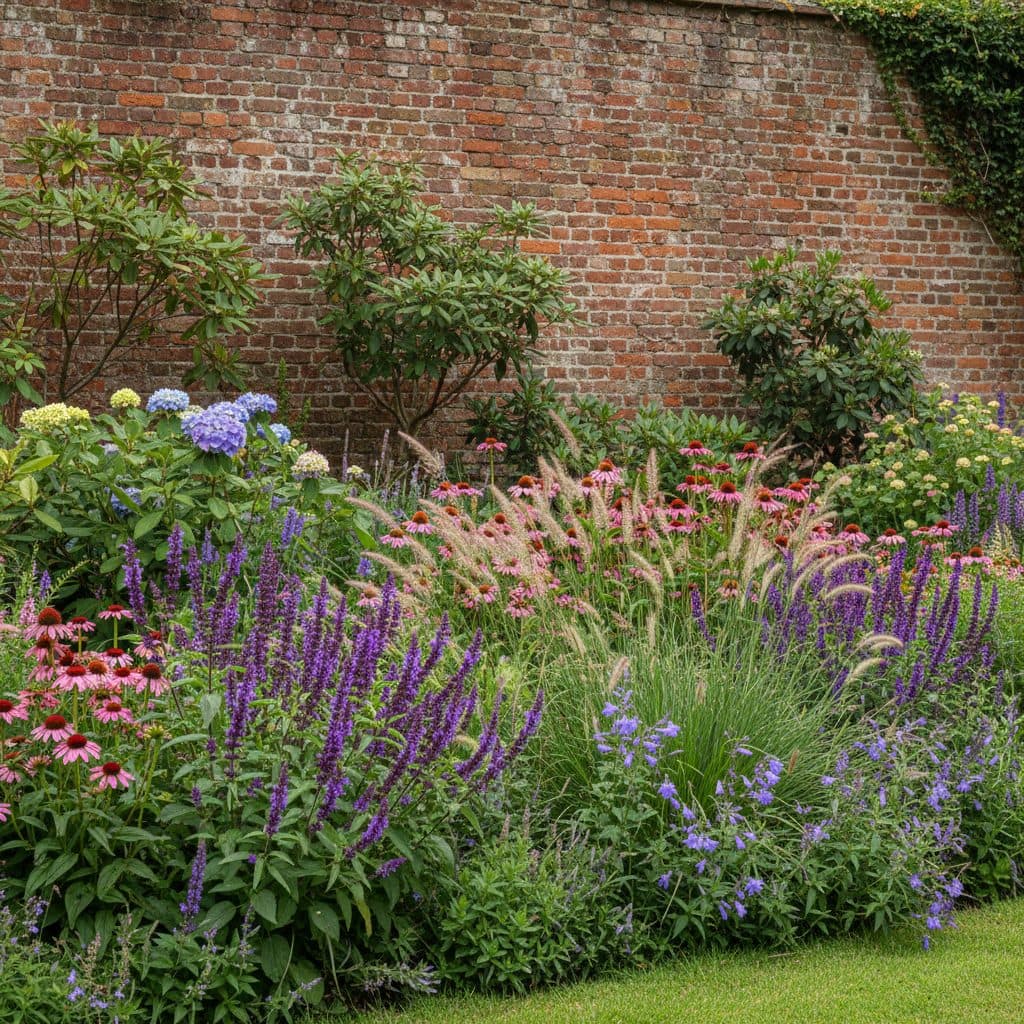
- Positioning against masonry walls: South-facing and west-facing brick walls absorb daytime warmth and create sheltered pockets that prevent light radiation frost.
- Mulching crowns: Apply a 10 to 15 cm layer of dry bracken, straw, or bark mulch over the crowns of dahlias and globe artichokes in late autumn. Note that true culinary ginger (Zingiber officinale) will rot in wet UK winter soils even in mild coastal areas; grow it in pots moved under cover, or look to hardy ornamental ginger lilies (Hedychium) for outdoor beds.
- Horticultural fleece: Wrap delicate shrub canopies with breathable fleece during forecast cold snaps. Avoid impermeable plastic sheeting, which traps condensation and leads to fungal rot.
- Cold frames and cloches: Simple unheated glass or polycarbonate structures raise ambient temperatures by 2°C to 4°C, sheltering tender seedlings. For winter propagation techniques, review winter sowing in milk jugs and explore frost-tolerant vegetables.