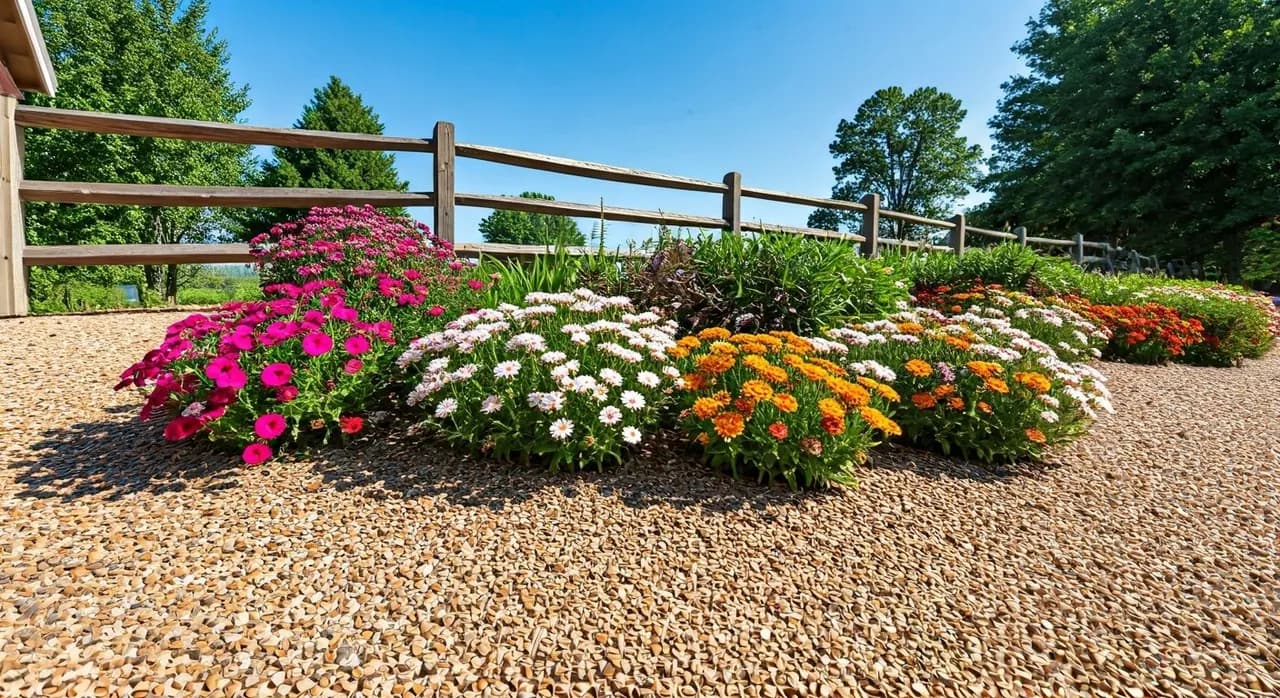
Key takeaways
- Xeriscape principles significantly reduce outdoor water use without sacrificing aesthetic appeal.
- Proper soil preparation, including adding organic matter, significantly improves water retention.
- Select drought-tolerant plants from families like Lamiaceae, focusing on species native to arid or semi-arid regions.
- Group plants by water needs (hydrozoning) to optimize irrigation efficiency and reduce consumption.
- Drip irrigation systems deliver water directly to roots, achieving high efficiency compared to sprinklers.
- Apply 2 to 4 inches of organic mulch to reduce evaporation and suppress weeds.
Quick answer: To design a low-water ornamental border for hot, dry summers in USDA zone 6, apply xeriscape principles like proper soil preparation, selecting drought-tolerant plants, hydrozoning, and using efficient irrigation and mulch. This approach can reduce water consumption by 50-75% while maintaining aesthetic appeal.
Across the American Southwest, where summer highs sit above 90°F for weeks and rainfall drops below 15 inches a year, watering efficiency matters. Outdoor landscaping accounts for up to 50% of household water use in arid cities [1]. A low-water border still delivers varied color and foliage texture without the bare, gravel-heavy yard many people picture when they hear xeriscaping.
The term xeriscape, coined in Denver in 1981, combines the Greek word “xeros” (dry) with “scape” (view), describing landscapes designed to conserve water [5]. However, a well-designed low-water ornamental border can be lush, inviting, and rich in biodiversity, supporting pollinators like bees and butterflies. By focusing on smart plant choices, thoughtful design, and efficient irrigation, you can cultivate a beautiful, water-wise garden that uses 50% to 75% less water than a conventional lawn and shrub bed [1].
Understanding xeriscape principles for aesthetic appeal
Xeriscaping is often misunderstood as simply replacing lawns with rocks and succulents. However, it is a comprehensive approach to landscape design that prioritizes water conservation while maintaining visual appeal. The core concept involves seven principles, including proper planning, soil improvement, appropriate plant selection, efficient irrigation, and the use of mulches [1]. For an ornamental border, the emphasis shifts from minimal planting to selecting plants that offer diverse forms, textures, and colors, creating a dynamic display even with reduced water input. In a typical USDA zone 7 garden, a traditional planting might require a significant amount of water per week during summer, but a xeriscape design can reduce this amount.
Planning your water-wise border
Effective planning is the foundation of any successful low-water border. Begin by observing your site: note sun exposure throughout the day, prevailing winds, and existing soil conditions. A detailed site analysis can reveal microclimates (areas that are hotter or cooler, wetter or drier) that influence plant choices. For instance, a south-facing wall in Arizona’s USDA zone 9 might experience temperatures significantly higher than an open area. Sketching your design, considering plant mature sizes and shapes, helps visualize the final look and prevents overcrowding. Aim for a layered effect, with taller plants at the back and shorter ones in front so each plant receives adequate light and air circulation. Consider the color palette; design resources suggest various color schemes for xeriscapes, from healthy to serene [3].
- site analysis: Map sun exposure, shade patterns, and wind direction.
- hydrozoning: Group plants with similar water needs together to reduce overall water consumption by 20% or more [1].
- mature size consideration: Account for a plant’s full size to prevent future crowding and ensure adequate air flow.
- color and texture planning: Select plants that provide year-round interest through foliage, flowers, and form.
- access and maintenance: Design paths or stepping stones for easy access to all parts of the border for weeding or pruning.
Soil preparation and plant selection for resilience
Good soil is the bedrock of a successful low-water garden. In many parts of the US, particularly in the arid West, soils can be compacted clay or sandy, both of which present challenges for water retention and drainage. Improving your soil’s structure and organic content is one of the most impactful steps you can take. For example, adding organic matter to the soil can dramatically increase its water-holding capacity, allowing it to retain moisture for longer periods between waterings. This is particularly important in regions like California’s Central Valley, where summer temperatures can reach 100°F and water conservation is critical.
Choosing resilient plants
Plant selection shapes the entire border. Start with regional natives or Mediterranean species that thrive in US zones 7-9 on minimal summer water once established. Mint-family perennials in Lamiaceae such as ornamental sages (Salvia spp.), lavenders (Lavandula spp.), and catmints (Nepeta spp.) bring dependable bloom and drought hardiness to xeriscapes [2]. Gray and silver foliage reflects up to 50% more sunlight than green leaves and handles harsh afternoon sun well. Mix species with lasting foliage, staggered bloom windows, and winter seed heads so the border holds color and draws pollinators from spring through fall.
- native species: Select plants indigenous to your region for optimal adaptation to local climate and soil conditions.
- mediterranean plants: Incorporate species like lavender, rosemary, and various sages that naturally tolerate hot, dry summers [2].
- succulents and cacti: Use these for striking architectural forms and extreme drought tolerance, requiring less than one inch of water per month once established.
- ornamental grasses: Choose varieties like ‘Karl Foerster’ feather reed grass or blue fescue for texture and movement with low water needs.
- pollinator magnets: Include plants like coneflower (Echinacea purpurea) and bee balm (Monarda didyma) that attract beneficial insects while being relatively drought tolerant, though it can be prone to powdery mildew in dry conditions with poor air circulation.
Efficient irrigation and mulching strategies
Even drought-tolerant plants need water, especially during establishment and prolonged dry spells. The key is to deliver water efficiently, minimizing waste. Traditional overhead sprinklers can lose 30% to 50% of their water to evaporation and runoff, particularly on hot, windy days [3]. Drip irrigation systems, by contrast, deliver water directly to the plant’s root zone, achieving application efficiencies of 90% or higher [3]. These systems use significantly less water, often significantly less water than sprinklers, and can be easily automated with a timer. For a small ornamental border, a simple drip line or soaker hose can be installed in a few hours, providing targeted hydration without wetting foliage, which can reduce disease incidence.
Mulch for water conservation
Mulch is a critical component of any low-water ornamental border. A layer of organic mulch (such as shredded bark, wood chips, or compost) reduces soil water evaporation, keeping the root zone cooler and moister [3]. Mulch also suppresses weed growth, eliminating competition for water and nutrients, and as it breaks down, it slowly adds organic matter to the soil, further improving its structure. In regions like USDA zone 8, where summer temperatures can exceed 95°F, mulch can keep soil temperatures significantly cooler. For areas with particularly intense sun exposure, consider a coarser mulch that allows some air circulation to prevent overheating the soil.
- drip irrigation: Install a drip system for precise water delivery, saving up to 50% of water compared to sprinklers.
- soaker hoses: Use these for linear beds, allowing water to slowly seep into the soil.
- smart controllers: Integrate weather-based controllers that adjust watering schedules based on local conditions, saving a significant amount of water.
- deep, infrequent watering: Water deeply to encourage sturdy root growth, allowing the top inch or two of soil to dry out between applications.
- rain barrels: Collect rainwater for supplemental irrigation, potentially saving hundreds of gallons over a summer season.
Ongoing care and seasonal considerations
Once your low-water ornamental border is established, ongoing care is relatively minimal compared to a traditional garden, but it is still necessary. Regular observation helps catch any issues early. Check plants for signs of stress, such as wilting or discolored leaves, which might indicate a need for water or a nutrient deficiency. In the first year after planting, even drought-tolerant plants will require more frequent watering to establish a strong root system. For example, a newly planted shrub in USDA zone 6 might need more frequent watering for the first few months, while an established one will require water less often during a dry spell.
Seasonal adjustments and long-term health
Adjust your watering schedule seasonally. In spring and fall, when temperatures are milder and rainfall is more consistent, you may need to reduce or even turn off supplemental irrigation. During hot, dry summers, increase watering frequency as needed, always aiming for deep, infrequent applications to encourage roots to grow deeper into the soil. Pruning should be done judiciously; remove dead or diseased branches to maintain plant health and shape. Avoid heavy pruning during extreme heat, as this can stress plants. Fertilize sparingly, if at all, as many drought-tolerant plants thrive in leaner soils and excessive fertilizer can encourage lush, water-hungry growth. Consider incorporating a greywater system to supplement your irrigation during dry periods, potentially saving thousands of gallons of potable water annually. With careful planning and maintenance, your ornamental border will provide beauty and ecological benefits for years, often requiring significantly less water than a conventional landscape.
- monitor plant health: Regularly inspect plants for signs of stress, pests, or disease.
- adjust irrigation seasonally: Reduce watering in cooler months and increase during hot, dry periods, but always aim for deep, infrequent applications.
- minimal fertilization: Most drought-tolerant plants perform best with little to no supplemental fertilizer.
- prune for health and shape: Remove dead or damaged growth, but avoid heavy pruning during peak heat or cold.
- replenish mulch: Annually top up your mulch layer to maintain the recommended 2 to 4 inch depth.
Water Savings: Properly designed xeriscapes can reduce outdoor water use by 50% to 75% compared to traditional landscapes [1].
Mulch Efficiency: A 2 to 4 inch layer of organic mulch can reduce soil water evaporation by up to 30% [3].